Black Painted Window Frames Inside vs Outside Trim Choices
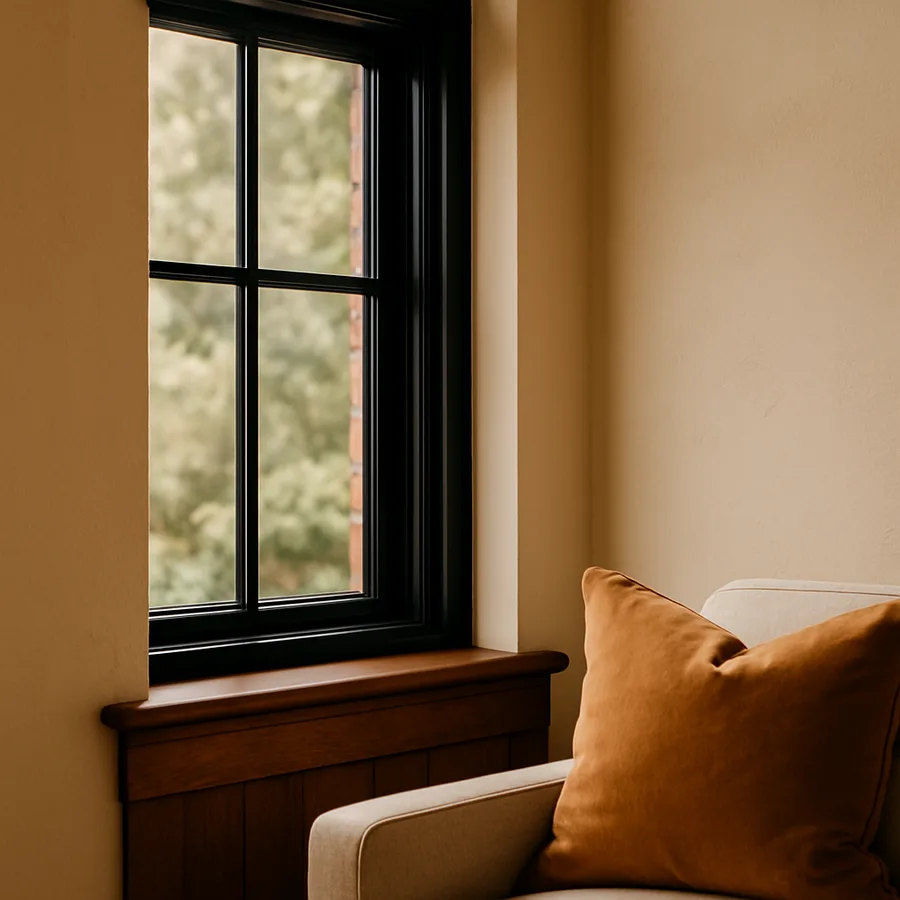
Few small design decisions reshape a home's character as decisively as painting the window frames black. White window trim disappears into the architecture, doing its job invisibly and asking nothing of the eye. Black painted window frames do the opposite. They transform every window into a graphic event, framing the view beyond like an oil painting in a gallery and adding immediate weight, contrast, and a sense of considered intent. The technique pulls equally from steel-framed industrial windows of the early twentieth century, the black-and-white modernism of European villas, and the dark sash traditions of Japanese teahouses. It is, by any reasonable measure, one of the most successful design moves of the past decade.
The choice that confuses many homeowners is not whether to paint the frames black, but where exactly to apply the black. The interior trim. The exterior trim. Both. The sash itself. The combinations multiply quickly, and each produces a visibly different result. The American Society of Interior Designers (ASID) has documented a substantial rise in black window treatments across both new construction and renovation projects, and editors at Better Homes and Gardens (BHG) report that roughly 38% of contemporary home buyers now actively prefer dark window frames as a design feature. Knowing the difference between the inside and outside trim choices is what separates a successful project from an expensive misstep.
What Each Choice Actually Does
Painting only the interior trim creates a frame around the view from inside the house without changing anything visible from the curb. From the kitchen, every window looks like a charcoal-bordered photograph. From the street, the house looks the same as it always did. This is the lowest-commitment version of the technique and the most reversible, since interior paint can be redone in a weekend if the family decides the look has run its course. It also lets the rest of the house exterior remain in any color or material the homeowner prefers, since the dark frames stay hidden behind any sun-facing curtain.
Painting only the exterior trim does the opposite. The street facade gains the crisp graphic punctuation that black frames provide, often dramatically improving the curb appeal of an otherwise unremarkable home. From inside, however, the windows continue to read as standard white-trimmed openings, since the black is invisible from the interior side. This option suits homeowners who want maximum exterior impact while keeping their interior color scheme intact, and it is especially common in older homes where dark exterior frames help disguise the irregularities of legacy window units.
Painting both is the most committed and most architecturally honest option. The frames read as black from every angle, the visual logic is consistent inside and out, and the home gains the unified intentionality that sets the most striking dark-frame projects apart. This is the choice professional designers most often recommend when the project is being executed as part of a broader renovation. The disadvantage is cost, complexity, and the difficulty of achieving an even, durable finish on the exterior side, which faces direct sun and weather. Have you considered which of these three strategies actually matches the way you experience your own home?
Choosing the Right Black
Not all blacks are equal. The most common mistake homeowners make is treating "black" as a single color, when in fact paint blacks vary substantially in undertone, depth, and reflectivity. A pure jet black with no undertone reads as crisp and architectural. A warm black with brown or red undertones reads as softer and more historic. A cool black with blue or green undertones reads as modern and slightly industrial. A charcoal or near-black gray reads quieter and forgives imperfections more easily than true black.
For window frames specifically, most designers favor a near-black with a slight undertone rather than a pure jet. The reason is practical: pure black absorbs nearly all visible light and shows every dust speck, water spot, and surface imperfection. A near-black with a hint of warmth or coolness retains the visual impact while disguising the daily realities of life on a window frame. Benjamin Moore (Benjamin Moore) and other major manufacturers maintain curated lists of "designer blacks" that have been specifically chosen for window and trim applications, and starting from those curated options is much faster than trying to evaluate every black in the fan deck.
Sample the chosen black at full scale on the actual window before committing. A swatch on a card looks completely different from a fully painted three-foot frame in the actual lighting of the room. Paint a primed sample board the size of a real window unit, prop it in front of an existing window, and live with it for a week at all times of day. The Master Painters Institute (Master Painters Institute) recommends evaluating dark trim colors in both direct sun and overcast light, since the same black can shift dramatically across lighting conditions.
Interior Application: Technique and Atmosphere
Black interior window trim works in nearly every room but produces different effects depending on the wall color it sits against. Against a warm white wall, the contrast is high and the frames pop crisply. Against a deep saturated wall, the frames blend more subtly and let the view itself dominate. Against a medium-tone wall, the frames appear almost like cast shadows, which can be elegant or muddy depending on the specific tones. Test the chosen black against the actual wall color before painting full frames.
The technique is straightforward but exacting. Remove or mask all hardware, sand the existing trim to break the gloss and ensure adhesion, prime with a stain-blocking primer rated for trim, and apply two thin coats of cabinet-grade or trim-grade enamel in a satin or semi-gloss sheen. Cut clean lines at the wall using a high-quality angled brush and quality painter's tape applied with care. Patience at the cut line is what separates trim work that looks professional from trim work that looks like a weekend warrior gave it a try.
Inside the frame, decide whether to paint only the trim moldings or also the sash, jamb, and any visible operating hardware. A fully blacked-out window unit reads as the most intentional and most graphic choice. A trim-only application leaves the sash and jamb in white, which can look sophisticated when done deliberately but can also look like an unfinished compromise if the visual logic is unclear. The National Kitchen and Bath Association (NKBA) has documented kitchen renovations where the black-window trick was the single most cited element when buyers described the room's character.
Exterior Application: Different Rules, Different Risks
The exterior side of a window frame faces conditions an interior frame never sees. Direct sun, rain, snow, ice, freeze-thaw cycles, and ultraviolet exposure all attack exterior paint relentlessly. A black exterior frame absorbs significantly more solar energy than a white one, raising the surface temperature on hot summer days to levels that can cause expansion, joint movement, and accelerated paint failure if the wrong product is used. Exterior black is not a casual choice, and the paint specification matters more than for any other exterior trim color.
Use only paints rated for exterior wood or metal trim, with explicit manufacturer guidance for dark colors. Look for products with high-quality acrylic resins, ultraviolet inhibitors, and color stability claims that have been backed by accelerated weathering tests. The National Association of Home Builders (NAHB) has published guidance on dark exterior trim color selection that emphasizes the need for paint products specifically engineered for thermal stability. Generic exterior paint can fade, chalk, or peel within just a few years on a south-facing window painted black.
Substrate condition matters enormously. Any rotted wood, failing caulk joints, or rusted metal must be repaired before painting. Black paint dramatically magnifies any underlying surface flaw, so what looked acceptable under the previous white paint will read as a major imperfection once the black goes on. Plan for substantially more prep time than a comparable white repaint, and accept that touch-ups will be needed every few years on the most weather-exposed elevations.
Inside vs Outside: How to Decide
The choice between interior, exterior, and both should follow from how the home is actually experienced. Interior-only makes sense in homes where the inside views matter most and the exterior architecture either does not benefit from contrast or is best left alone for historical reasons. It is also the right choice when budget is tight, since interior trim work is dramatically less expensive than exterior, and when reversibility matters, since interior repaints are far easier than exterior do-overs.
Exterior-only makes sense when the curb appeal of the home is the dominant priority and the interior already has a finalized color scheme that the homeowner does not want to disrupt. It is also a strong choice for spec homes, rentals, and properties intended for sale, since exterior dark trim has been shown in multiple market studies to increase perceived design value and command attention in listing photographs. The exterior-only approach also avoids the interior light-loss concern that some homeowners worry about with full black frames.
Both is the choice for committed projects where the dark-frame aesthetic is central to the entire design vision. It is the most expensive, the most complex, and the most rewarding when executed well. The visual logic is consistent from every viewpoint, the home reads as architecturally intentional, and the result tends to age gracefully because nothing about it feels accidental. Have you considered which of these three philosophies actually matches your reasons for wanting black frames in the first place?
Maintenance, Touch-Ups, and the Long View
Black window frames demand more visible maintenance than white frames simply because every speck of dust, water mineral spot, and surface scratch shows more clearly against the dark color. Plan for regular wiping with a soft damp cloth on interior frames, ideally weekly or biweekly, to keep dust accumulation from dulling the rich black appearance. Exterior frames benefit from a gentle hose rinse during routine outdoor cleaning to flush off rain residue and pollen.
Touch-up paint should be kept on hand from the original project. Save a labeled jar of each color used, store it in a temperature-stable location, and refresh small chips and scuffs as they appear rather than letting them accumulate. Annual visual inspection of exterior frames, with attention to any caulk failures or paint cracking at joints, allows small problems to be addressed before they become large repaints. The Master Painters Institute (Master Painters Institute) recommends a full inspection of dark exterior trim every 18 to 24 months in temperate climates, and more frequently in regions with extreme weather.
Plan for full repaint cycles as well. Interior black trim typically lasts seven to ten years before showing meaningful wear in normal residential use. Exterior black trim, depending on exposure and product quality, lasts five to eight years between major repaints, with the most weather-exposed elevations needing attention sooner than sheltered ones. Budget for these cycles in advance rather than being surprised by them, and the technique will continue rewarding the home for decades.
Conclusion: A Bold Choice With Real Discipline
Black window frames are one of those design decisions that reads as effortlessly stylish but actually rewards careful planning. The visual impact is immediate and powerful. The practical demands are real and ongoing. Homes that get the technique right share a few common traits: they choose the inside-versus-outside strategy deliberately, they pick a black with the right undertone for their architecture, they use paint products engineered for the conditions, they prepare the substrate properly, and they commit to the modest but ongoing maintenance that dark trim requires.
Begin with the smallest meaningful test. If you are considering interior frames, paint a single window in the room where you spend the most time, live with it for a month, and notice how the room actually changes. If you are considering exterior frames, paint a single window on a less-prominent elevation first, observe how it weathers across at least one full season, and use the experience to refine the product selection before committing across the whole facade. The lessons learned from a small test will save thousands of dollars and weeks of regret on a larger commitment.
The black-frame trend has earned its longevity by delivering real visual rewards to homes across nearly every architectural style. It is not a fad. It is a return to a centuries-old recognition that windows are framed openings, and that the frame deserves to be treated as architecture rather than as background. Decide this week which version of the technique fits your home, schedule the test window, and begin a project that will quietly elevate the way you see your home from every angle for years to come.
More Articles You May Like



Comments
Post a Comment