Closet Door Hardware Soft Close Track Upgrades for Smooth Glide
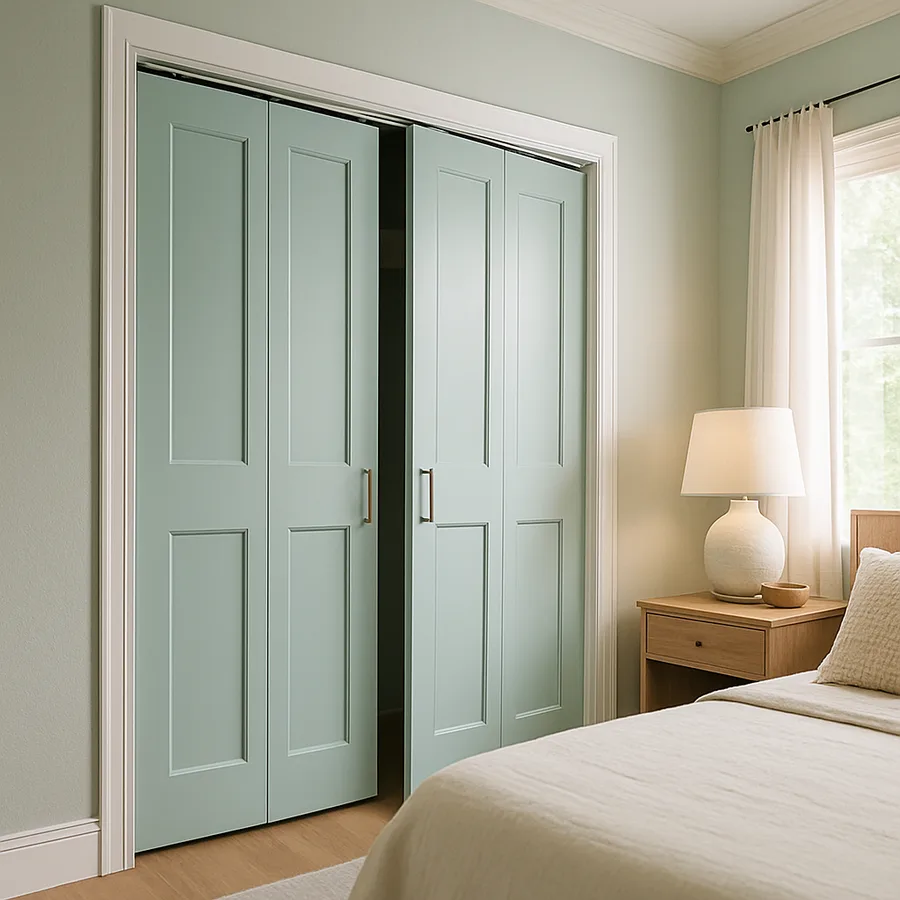
The first time you slide a closet door and hear nothing but a hush of nylon wheels easing into a damper, you understand instantly why soft close track upgrades have become one of the most requested retrofits in residential bedrooms. The hardware is small, mostly hidden, and quietly transformative. A door that once banged against its end stop now drifts to a stop with the calm of a luxury car door. The change is mechanical, but the experience is emotional, and that is exactly the territory where thoughtful interior design lives.
This guide unpacks the choices behind a successful upgrade: what the hardware actually does, which track styles are worth the investment, where homeowners typically misjudge weight ratings, and how a pro installer approaches the alignment work that makes the difference between a door that whispers shut and one that bounces back. Whether you are tuning a single bypass closet in a primary bedroom or specifying soft close hardware for an entire custom walk-in, the principles below apply.
Why Soft Close Hardware Has Quietly Taken Over Closet Design
Soft close mechanisms began in European kitchen cabinetry in the early 2000s and migrated outward as consumers began to expect the same effortless motion in every drawer, door, and slider. The National Kitchen and Bath Association (NKBA) has reported in successive design surveys that soft close hardware now appears in roughly nine of ten new kitchen cabinet specifications, and closet hardware has followed the same trajectory. According to the NKBA trend reporting, integrated motion control is now considered a baseline expectation rather than a premium upgrade in mid-tier and high-end work.
The benefits are not only acoustic. A door that arrests itself before impact protects the door panel, the jamb, the track, and any objects loaded near the closet opening. For families with small children, soft close hardware is also a finger-pinch safeguard, since the closing speed is governed by a hydraulic or pneumatic damper rather than the velocity imparted by a slammed push. The American Society of Interior Designers (ASID) has cited universal-design considerations as a major driver behind the broader move toward dampened motion in residential hardware specifications.
From an aesthetic standpoint, the upgrade also unlocks heavier door panels. Mirrored bypass doors, solid wood barn-style sliders, and oversized pivot panels all become viable in bedrooms once the hardware can manage their inertia gracefully. That has freed designers to reach for materials that were previously avoided because they slammed too aggressively at the end of travel.
Anatomy of a Modern Soft Close Closet Track System
To upgrade well, it helps to understand what you are buying. A typical top-hung sliding closet system has four functional groups working together.
The track itself is usually an extruded aluminum profile, single or double channel, mounted to the header above the closet opening. Heavier systems use steel-reinforced extrusions to prevent deflection across long openings. The roller carriage houses precision wheels, often nylon or polyurethane over sealed bearings, that run inside the track and bear the door's full weight. Adjustment bolts on the carriage allow vertical and lateral fine-tuning.
The soft close damper is the heart of the upgrade. It typically consists of a spring-loaded catch mounted at one or both ends of the track, paired with a small piston-style damper that engages a trigger on the roller carriage during the last few inches of travel. The catch grabs the trigger, the damper resists, and the door is pulled the rest of the way home at a controlled speed. Manufacturers such as Häfele and Blum publish detailed cutaway documentation of these mechanisms in their architectural specification libraries.
Finally, the floor guide keeps the door from swinging out at the bottom. On premium systems this is a low-profile pin-in-channel guide rather than a floor-mounted U-bracket, which preserves clean sightlines along the threshold.
Matching Hardware Capacity to Door Weight, Honestly
The single most common upgrade failure is undersizing. A homeowner replaces hollow-core bypass doors with framed mirror panels and reuses the original track, only to find the soft close action stutters or fails entirely within months.
Manufacturer load ratings are stated per carriage, not per door, and they assume the door is plumb, the track is level, and the hardware is operating within its rated cycle life. Most residential soft close kits are rated between 80 and 175 pounds per panel, with heavier-duty barn door variants reaching 220 pounds or more. Mirror panels, MDF flat-front sliders with thick veneer, and shaker doors with applied moldings can quickly approach the upper end of those ratings.
A useful rule of thumb is to specify hardware rated for at least 25 percent above the actual measured weight of the door panel, including any added trim, hardware, and finish layers. This headroom protects the damper, which is the most temperature-sensitive component in the assembly and tends to lose responsiveness when forced to operate near its rated maximum cycle after cycle. Have you measured the actual weight of the doors you plan to hang, or are you estimating from the spec sheet? A bathroom scale and a helper take three minutes and prevent the most expensive mistake in this category.
Track Profile Choices and the Geometry of a Smooth Glide
Not all tracks glide the same way. The internal profile of the extrusion governs how the wheels behave under load and how forgiving the system is to small variations in panel weight, room humidity, and installer accuracy.
Single-wheel carriages riding on a flat track are the simplest and least expensive option. They work well for lightweight doors but can chatter or skip on heavier panels because the contact patch is small and lateral loads can push the wheel off line. Twin-wheel carriages distribute the load and stay aligned much more reliably, which is why they appear on virtually every premium soft close system. Concave-profile tracks, where the wheel rides in a shallow trough rather than across a flat surface, add yet another layer of self-centering behavior and are quieter at the end of travel.
The track length should always exceed twice the door width by at least an inch, with extra clearance specified if the soft close catches need to engage cleanly. Pinching the layout to save header space is a frequent source of trouble, because the catch then sits too close to the wall and the carriage trigger may not fully clear it during opening cycles.
Installation, Alignment, and the Tuning Window That Matters
A soft close upgrade is only as good as its installation. Two doors with identical hardware can perform completely differently depending on how carefully the track was leveled, how the carriages were torqued, and how the dampers were timed.
The track must be level to within roughly one millimeter across its entire length. Out-of-level tracks cause doors to drift open or closed on their own, which not only annoys the user but also forces the soft close mechanism to fight gravity continuously. Headers that are even slightly bowed should be corrected with shims behind the track rather than by overtightening fasteners, which can warp the extrusion.
Carriage adjustment is done in three axes. Vertical bolts set the door's clearance from the floor and the alignment of the top edge to the underside of the track. Lateral adjustment sets the gap between bypass panels so they slide past each other without rubbing. Many quality kits also include a damper engagement adjustment, which allows the installer to fine-tune the exact distance from the closed position at which the soft close grab activates. Setting that engagement point too early makes the door feel sluggish for the entire final foot of travel; setting it too late produces a small but audible bump as the trigger snaps into the catch.
Lighting Standards from the Illuminating Engineering Society (IES) are sometimes overlooked here, but adequate task lighting at the closet opening makes alignment work substantially easier. A simple work light pointed up into the track during commissioning reveals the small misalignments that are invisible under typical bedroom ambient light.
Care, Cycle Life, and When to Replace Versus Re-Tension
Quality soft close hardware is rated for very long service lives, often 60,000 to 100,000 cycles, which translates to decades of normal residential use. Failures, when they occur, are usually localized to the damper rather than the track or wheels. The damper's hydraulic fluid loses viscosity slowly over time, especially in unconditioned spaces where temperatures swing widely.
The first sign of a tired damper is asymmetric closing speed: the door moves smoothly for the first portion of the soft close stroke but then accelerates and bumps lightly into the end stop. At that point the damper cartridge can typically be unclipped and replaced in a few minutes without removing the door or the track. Are you keeping the original installation paperwork in a labeled envelope so the replacement parts can be ordered by SKU rather than by guesswork five years later? Homeowners who do this almost universally report shorter and cheaper service calls.
Routine care is minimal. The track should be vacuumed every six months with a brush attachment to remove the fine carpet fiber and dust that otherwise accumulates around the wheels. Dry silicone spray, applied sparingly to the wheels and never to the damper itself, can restore quietness if a system begins to develop a faint squeak. Petroleum-based lubricants should be avoided because they attract dust and degrade nylon and polyurethane wheel materials over time.
Environmental conditions play a quiet but real role in long-term performance. Closets that share a wall with an exterior wall in cold climates can see meaningful temperature swings during winter, and the hydraulic fluid inside the damper cartridge thickens at low temperatures, producing a sluggish closing action that reverses itself once the room warms back up. This is normal behavior and not a defect. Persistent sluggishness across all seasons, however, points to a damper at the end of its useful life. Manufacturers including Häfele and similar architectural hardware suppliers publish operating temperature ranges in their specification sheets, and matching the hardware to the closet's actual climate exposure is a small detail that pays back in years of consistent feel. For closets in unconditioned outbuildings or garages, dampers rated for extended temperature ranges are the appropriate specification, and the modest cost premium is well justified by the reliability gain.
Finally, document the installation. A small adhesive label inside the closet header noting the manufacturer, model number, install date, and damper part number takes ninety seconds during the original installation and saves significant time on every future service call. The next homeowner, or your future self in a decade, will thank the person who made that small investment in record-keeping. Some installers now photograph the labeled track with a smartphone and store the image in the home's digital documentation folder, which is an even more durable record that will survive paint touch-ups and the inevitable degradation of adhesive labels over time.
Conclusion
Upgrading closet door hardware to a properly specified soft close track system is one of the highest-leverage small renovations in a bedroom. The materials cost is modest, the installation is contained to a few hours of skilled work, and the daily experience of the closet improves immediately and continues improving every time the door is touched. The combination of acoustic calm, mechanical protection, and universal-design safety pays back many times over across the life of the hardware.
The decisions that matter most are not the brand of the carriage or the finish of the visible trim. They are the honest measurement of door weight, the selection of a track profile suited to that weight, and the careful alignment work that lets the damper do its job at the end of travel. When those three are right, even a modest closet feels considered, and that quiet sense of considered detail is exactly what separates a finished interior from one that is merely furnished.
If you are planning a closet refresh in the months ahead, take the time before ordering hardware to weigh your panels, measure your opening twice, and review the manufacturer's installation guide end to end. The thirty minutes of preparation are the difference between a door you forget about because it works flawlessly and a door you remember every morning because it does not. Reach out to a qualified closet specialist in your area, request a written hardware specification with model numbers and weight ratings, and treat the upgrade as the small but meaningful piece of architecture it actually is.
Done well, a soft close closet track is invisible, silent, and entirely satisfying. That is the design goal worth pursuing.
More Articles You May Like



Comments
Post a Comment