Drop-In Sink vs Undermount for Laminate Countertops Cost Compared
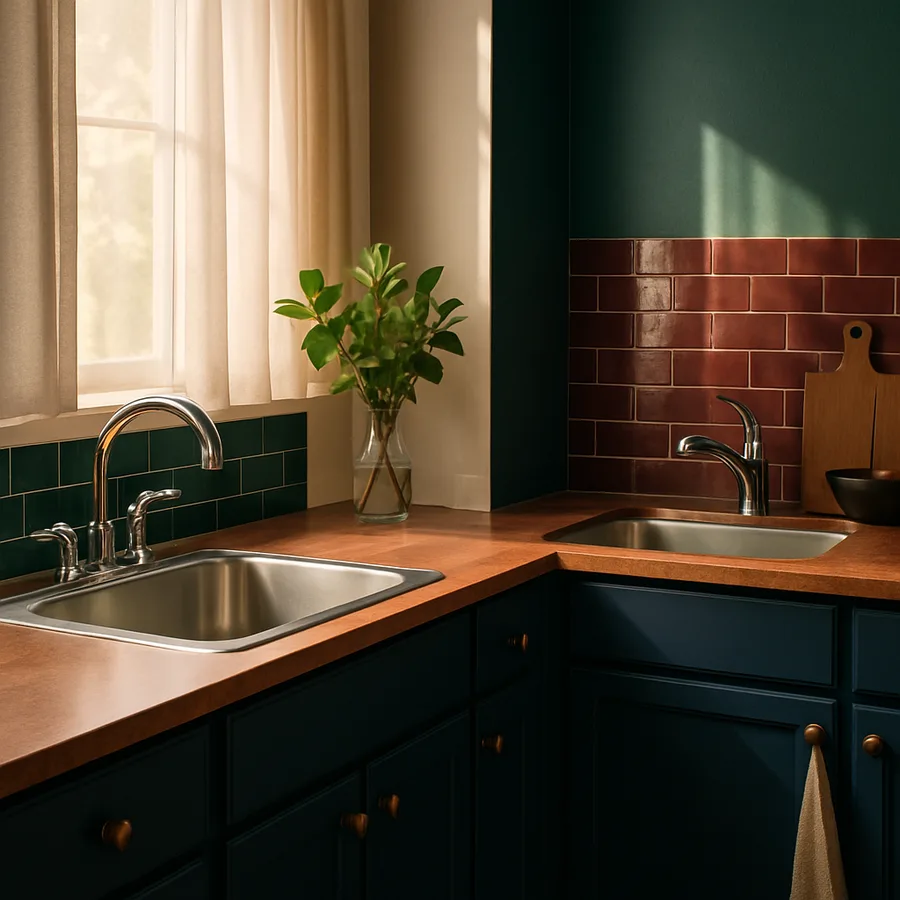
The decision between a drop-in and undermount sink on a laminate countertop used to be a non-decision. Laminate counters traditionally accepted only drop-in sinks because the substrate beneath the laminate was particleboard, and particleboard fails when exposed to the constant moisture of an undermount installation. That has changed. Modern engineered laminate counters with sealed edges and a class of sinks designed specifically for laminate undermounting have opened a real choice, and homeowners working with laminate budgets now face a pricing comparison that did not exist five years ago.
The choice still matters more on laminate than on stone. With a granite counter, both options work well, the cost difference is moderate, and the long-term outcome depends mainly on installation quality. With laminate, both options work, but the failure modes differ dramatically, and the total cost of ownership over ten years can vary by hundreds or thousands of dollars depending on how the counter responds to its inevitable encounters with water. This comparison goes beyond sticker price to the maintenance and replacement costs that actually determine which option saves money.
What Laminate Counters Actually Are And Why It Matters
Laminate is a thin layer of decorative paper or film bonded to a paper-resin top sheet, glued onto a substrate of particleboard or medium-density fiberboard. The decorative layer is durable against scratching and most household chemicals, but the substrate is vulnerable to water. When water penetrates the joint between the laminate top and the substrate, the substrate swells, the laminate delaminates, and the counter is effectively destroyed. This is why laminate counters fail almost exclusively at sink edges, never in the field of the counter.
The traditional drop-in sink on laminate works by clamping the sink rim against the laminate surface with a continuous bead of silicone caulk between them. The caulk is the only thing keeping water out of the substrate, and the caulk has a service life of three to seven years depending on usage and water chemistry. When the caulk fails, water enters the substrate, and the counter starts its slow death from the inside. According to data referenced in National Association of Home Builders remodeling research, water damage at sink openings is the leading cause of laminate counter replacement in homes more than ten years old.
Undermount installation on laminate solves the caulk-bead problem only if the substrate is engineered for it. Most standard laminate counters are not. Specialty laminate products with a moisture-resistant substrate and a factory-sealed sink cutout edge are now available from manufacturers including Wilsonart and Formica, and these products carry warranties that explicitly cover undermount installations. Installing an undermount sink on a standard laminate counter voids most warranties and produces a failure that no caulk can save.
The Drop-In Installation On Laminate
A drop-in sink on a standard laminate counter is the lowest-risk installation available, and the cost reflects the simplicity. The countertop is fabricated with a rectangular cutout sized for the sink's rim, the cutout edges are sealed with the manufacturer's recommended sealant, and the sink drops into place from above. The sink's rim sits on the counter surface, mounting clips draw it down from underneath, and a bead of silicone caulk seals the rim to the laminate. The installation takes two to three hours for a competent installer.
Materials cost for the sink itself is the same as for any other counter type, ranging from one hundred and fifty dollars for a basic stainless steel double-bowl up to seven or eight hundred for a premium thicker-gauge or composite sink. Installation labor on a drop-in is typically two hundred to three hundred and fifty dollars, including the cutout if it has not been pre-cut by the laminate fabricator. The total for a standard installation comes in around four hundred to one thousand dollars depending on sink choice.
The hidden cost is maintenance. The caulk bead around the rim should be inspected annually and replaced when it shows separation, discoloration, or brittleness. Replacement is a thirty-minute job using a utility knife, isopropyl alcohol, and a fresh tube of silicone, and the materials cost is under fifteen dollars. Houzz survey data suggests fewer than thirty percent of homeowners actually inspect their caulk on schedule, and the resulting failure rate is the dominant driver of laminate replacement.
The Undermount Installation On Engineered Laminate
An undermount sink on an engineered moisture-resistant laminate counter is a relatively new option, and it requires both the right counter product and the right sink. The counter must be a specifically marketed undermount-rated laminate with a sealed substrate and a factory or shop-sealed sink cutout. The sink must be one of the models rated for laminate undermounting, which typically have a wider mounting flange than standard undermount sinks to spread the load across more substrate surface.
The installation method differs from undermounts on stone. Rather than relying on epoxy-secured clips set into the underside of the counter, laminate undermounts are typically installed with a continuous metal rim that sandwiches the cutout edge between the sink rim and a clamping ring. This sandwich construction protects the cutout edge from water exposure and distributes the sink's weight across the entire perimeter rather than at point loads. The sink, the clamping rim, and the counter become a sealed unit.
Costs are higher than for drop-in installations. The engineered laminate counter itself costs roughly fifteen to thirty percent more than standard laminate, adding two hundred to four hundred dollars on a typical kitchen. The sinks rated for laminate undermounting are priced thirty to sixty percent above comparable standard undermounts, adding another one to three hundred dollars. Installation labor runs four to six hundred dollars because the clamping-rim installation takes longer and requires familiarity with the specific counter system. Total installed cost typically falls between nine hundred and seventeen hundred dollars, roughly double the drop-in equivalent.
Long-Term Cost Of Ownership Compared
The interesting comparison is not the installation cost but the ten-year total cost of ownership, including maintenance and any partial or full counter replacement. A well-maintained drop-in installation lasts the life of the counter, which on quality laminate is fifteen to twenty years. A poorly maintained drop-in installation, where the caulk is allowed to fail, results in counter replacement in seven to twelve years, which is a partial or full kitchen counter cost in the range of fifteen hundred to four thousand dollars.
An undermount on engineered laminate, properly installed, is designed to last the life of the counter without the caulk-bead maintenance burden. The clamping rim eliminates the failure point that drives drop-in failures, and the engineered substrate resists the moisture that destroys standard laminate. Manufacturer warranties typically cover the undermount system for ten years, which is unusually generous for laminate. The realized total cost of ownership for an undermount on engineered laminate is essentially the installation cost; there is little maintenance and no expected replacement within the warranty period.
The tipping point in the comparison depends on user behavior. If you are confident you will inspect and replace the caulk on schedule, the drop-in is the lower lifetime cost. If you are not confident, the undermount on engineered laminate may be cheaper over ten years even with the higher installation cost, because it eliminates the failure mode that produces the expensive counter replacement. The American Society of Home Inspectors has reported in its national surveys that caulk-line failures at sinks are among the most common findings in homes more than seven years old, suggesting that most homeowners do fall short of the inspection schedule.
Sink Material And Weight Constraints On Laminate
Laminate substrates have weight limits that constrain sink choice for both installation types, but the constraints affect undermount installations more severely. A drop-in sink rests its weight on the counter's top surface, which distributes the load across the rim's perimeter. An undermount sink hangs from the counter's underside, which concentrates the load at the clamping ring or mounting points. Heavy sinks like enameled cast iron, weighing one hundred and twenty pounds or more, are generally not recommended for laminate undermount installations even on engineered counters.
Stainless steel and lightweight composite sinks are the safer choices for laminate undermounts. Standard sixteen-gauge stainless single-bowl sinks weigh twenty-five to forty pounds, and the granite-composite sinks marketed for laminate undermounts typically weigh thirty-five to sixty pounds. Both fall well within the engineered substrate's load capacity. Cast iron, fireclay, and copper sinks weighing sixty pounds or more should be installed only as drop-ins on laminate, where the counter surface rather than the substrate carries the load.
Have you weighed your prospective sink choice and confirmed it falls within your counter manufacturer's specification? Many homeowners select a sink based on appearance and discover only at installation time that the weight exceeds the counter's capacity. The result is either a return-and-reselect cycle or, worse, an installation that meets short-term weight tolerance and fails over time as the substrate sags. NSF International certification on a sink confirms food-handling sanitation but does not address weight or substrate compatibility, so weight verification is a separate step.
Resale And Buyer Perception Comparisons
Real estate appraisal data from regional reports tracks how counter and sink choices affect home value, and the patterns are nuanced. In mid-market homes priced near the local median, a well-installed drop-in sink on quality laminate is treated as standard and produces no positive or negative appraisal effect. An undermount sink on engineered laminate appraises slightly higher, in the range of one to two percent of typical kitchen value, because it signals an updated kitchen and reduces buyer concerns about counter condition.
In luxury markets above the local median, both options on laminate are typically downgraded relative to stone, but the undermount installation reduces the downgrade. Buyers in luxury markets tend to read drop-in sinks on laminate as evidence that the kitchen has not been updated, while undermount installations read as recent investment even when the laminate itself is the limiting factor. The American Society of Interior Designers has tracked this in its market surveys, which note that perception lag persists; what was true of laminate ten years ago is no longer technically true today, but buyers still react to the older reality.
If you are renovating with a sale planned within five years, the cost-benefit analysis tilts toward whichever option produces the smaller perception penalty in your market. In some regional markets, the engineered-laminate undermount produces a sale-price uplift that exceeds the installation cost difference; in others, it does not. Houzz market reports broken down by region are a useful reference for these calculations, with data showing the undermount premium concentrated in coastal urban markets and less pronounced in inland and rural markets.
Conclusion
The comparison between drop-in and undermount sinks on laminate countertops is no longer the simple matter it was ten years ago. Engineered laminates with moisture-resistant substrates and laminate-rated undermount sinks have created a real choice, and the choice involves trade-offs in installation cost, maintenance burden, and long-term total cost of ownership. Both options are valid; the right one depends on the household's maintenance habits, budget, and time horizon for the kitchen.
For most homeowners with quality standard laminate counters, the drop-in remains the right choice because it is simpler, less expensive, and well-supported by widely available products. The maintenance burden of annual caulk inspection is real but manageable for anyone who takes a few minutes each year to look. For homeowners specifically choosing engineered laminate as their counter material, the undermount option is worth the additional cost for the elimination of the caulk-line failure mode and the resulting reduction in long-term replacement risk.
The investment in understanding the choice is small and the consequences are substantial. A counter replaced because of a slow water leak under a drop-in sink represents the dominant risk on standard laminate, and a homeowner who does not inspect caulk regularly is the most exposed to that risk. The corresponding risk on engineered laminate with a properly installed undermount is much smaller, but the higher installation cost is real and immediate. Pick the option that fits both your budget today and your willingness to maintain it over the years to come.
Before deciding between drop-in and undermount, request product specifications from your laminate fabricator, confirm the substrate's moisture rating, weigh your prospective sink, and review remodeling cost guidance from the National Association of Home Builders, design references on the National Kitchen and Bath Association site, and project photographs on Houzz to evaluate the visual difference for your kitchen.
More Articles You May Like



Comments
Post a Comment