Applying Peel-and-Stick Wallpaper Smoothly Without Air Bubbles
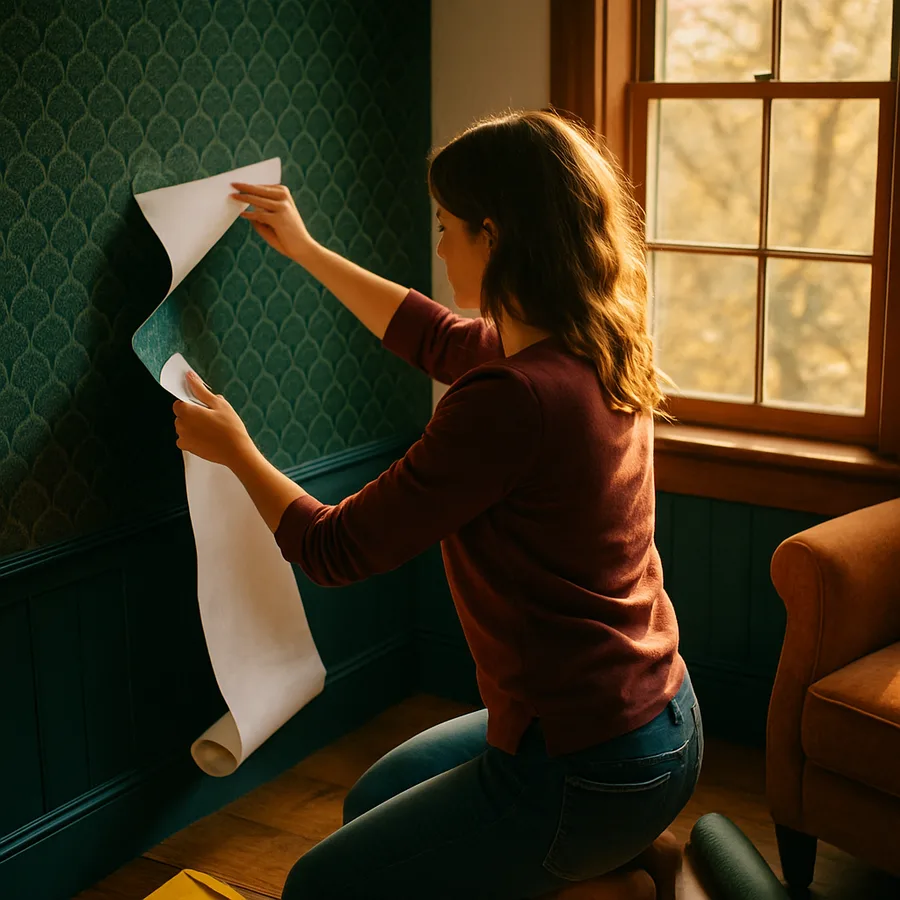
Air bubbles are the single most common reason a peel-and-stick wallpaper project ends in disappointment. They appear during installation, sometimes hours later as adhesive settles, and occasionally weeks afterward as humidity shifts. The good news is that almost every bubble is preventable, and the few that slip through are correctable in seconds with a small pin and a steady hand. The discipline required is mostly about patience, the right tools, and a sequence of small habits that professional installers internalize and home installers tend to skip.
This guide walks through the entire installation process with bubble prevention as the organizing principle. By the end, you will know how to evaluate your wall, choose the right tools, plan your panel layout, install panel by panel without trapping air, and fix the rare bubble that does appear. According to a 2024 customer service report shared by a major peel-and-stick manufacturer and referenced by Architectural Digest, more than 80 percent of warranty claims trace back to either inadequate wall preparation or improper smoothing technique. Both are entirely within the installer's control.
Why Bubbles Form in the First Place
Air bubbles form for one of three reasons. The first is trapped air during installation, when a panel is pressed onto the wall faster than air can escape from underneath. The second is poor adhesion to the wall surface, where the adhesive fails to bond evenly and small pockets remain where the paper is not actually stuck. The third is gas off-gassing from the wall surface itself, most commonly from undercured paint or from primer that was sealed before it fully dried.
Understanding which cause you are dealing with determines the fix. Trapped air during installation is the easiest problem to prevent and the easiest to correct. Poor adhesion is harder to fix after the fact and usually requires removing and reinstalling the affected panel. Off-gassing from undercured paint is the most frustrating because it can appear days or weeks after installation, sometimes long enough that you assume the project was successful. The American Society of Interior Designers has published technical guidance noting that the four-week paint cure window is not optional for wallcovering installations, and the off-gassing risk is the reason.
The good news is that all three causes share the same prevention strategy. Prepare the wall correctly, install slowly with good technique, and you eliminate the conditions that cause bubbles to form. The remaining work is just careful execution.
Tools That Make the Difference Between Smooth and Lumpy
The tool kit for a flawless install is small and inexpensive. The non-negotiable items are a four-foot level for marking plumb lines, a felt squeegee or wallpaper smoother for removing air, a sharp utility knife with fresh blades for trimming, a wide putty knife to guide trim cuts, and a clean microfiber cloth for surface preparation. Total cost is usually under thirty dollars, and most items are reusable across many projects.
The felt squeegee deserves special mention because it is the single tool most likely to be missing from a beginner's kit. Plastic squeegees are sold widely but they can scratch the printed surface of some wallpapers and they do not glide as smoothly as felt. A genuine felt-covered squeegee, sold by most peel-and-stick manufacturers and through specialty wallpaper retailers, conforms slightly to the wall and pushes air out without leaving marks. Once you have used one, you will not go back to plastic.
Optional but useful additions include a low-tack painter's tape for temporary panel positioning, a soft-bristle paint brush for working air out of stubborn corners, a hair dryer for activating adhesive in cool conditions, and a small spray bottle of water for what installers call wet installation, a technique we will return to later. Better Homes and Gardens and Apartment Therapy both publish recommended tool lists that align closely with this set, and the consensus is that the felt squeegee is the most underrated single tool in the kit.
Wall Preparation Done Right
Wall preparation is so important that it deserves its own section, even at the cost of repeating points from earlier sections. Start by cleaning the entire wall surface with warm water and a few drops of mild dish soap, applied with a clean microfiber cloth. Pay special attention to corners and the area near baseboards and ceiling, which collect dust that you will not see until the wallpaper highlights it. Rinse with clean water and a fresh cloth, then let the wall dry for at least two hours.
Inspect the dried wall under raking light from a clip lamp held parallel to the wall surface. This lighting reveals every imperfection, including small bumps from drywall mud splatter, popped nail heads, and proud paint drips. Address each imperfection. Sand bumps smooth with a fine-grit sanding sponge, drive popped nail heads back in and spackle, and shave drips flush with a sharp putty knife. Wipe the wall clean a second time after sanding.
The cure window for paint is the easiest step to skip and the most expensive to ignore. Latex paint reaches roughly 90 percent of full cure at three to four weeks under normal indoor conditions, according to research from the Paint Quality Institute. Installing peel-and-stick on undercured paint creates the conditions for both adhesion failure and delayed off-gassing bubbles. If you have just painted, set a calendar reminder for four weeks out and start the project then. Patience is the single most cost-effective decision in this entire process.
The Installation Sequence That Prevents Bubbles
The single most common installation mistake is peeling the entire backing off a panel before applying it to the wall. Once the full adhesive surface is exposed, you have very little control over where air enters as you press the panel against the wall, and bubbles are nearly guaranteed. The professional sequence is the opposite. Peel only the top eight to twelve inches of backing, align the top edge with your plumb line, press just the exposed adhesive to the wall, and then peel the rest of the backing away in increments as you smooth downward.
The smoothing motion itself matters. Always smooth from the center of the panel toward the edges, never from one edge across to the other. Center-out smoothing pushes air toward the nearest free edge where it can escape. Edge-to-edge smoothing pushes air ahead of the squeegee where it can become trapped against another fresh edge. Use the felt squeegee with light to medium pressure, working in overlapping strokes, and always keeping the leading edge of the panel slightly lifted until the squeegee passes underneath it.
For tall walls, work in sections of about two feet at a time. Smooth the section you have just exposed, then peel the next eight to twelve inches of backing and repeat. This rhythmic sequence is slower than rushing the whole panel at once, but it is the rhythm professional installers use and it is the rhythm that prevents bubbles. Have you ever watched a professional install wallpaper and noticed how unhurried they look? That measured pace is the technique itself.
Wet Installation: The Pro Trick for Difficult Patterns
For larger panels and especially for panels with patterns that need precise alignment, professional installers sometimes use a technique called wet installation. The method involves lightly misting the wall with water from a spray bottle before applying the panel. The water creates a temporary cushion between the adhesive and the wall, allowing the panel to slide into final position before the water evaporates and the adhesive bonds.
The technique requires care. Too much water dilutes the adhesive and can cause permanent adhesion problems. The right amount is a fine mist applied with a spray bottle held about eighteen inches from the wall, just enough to make the wall surface visibly damp without pooling. Apply the panel within thirty seconds of misting, smooth as normal with the felt squeegee, and let the installation cure for twenty-four hours before judging the result.
Not all peel-and-stick papers are compatible with wet installation. Manufacturer guidelines vary, and some woven substrates do not tolerate water well. Spoonflower publishes specific guidance for its papers, and Tempaper also addresses wet installation in its installation guides. Check the brand-specific guidance before you try the technique on a full project, and test on a small offcut first if you are uncertain.
Fixing Bubbles That Appear Anyway
Despite careful preparation and technique, occasional small bubbles do appear, especially in the first twenty-four hours as adhesive settles. Most can be fixed in under a minute. For small bubbles smaller than a dime, smooth them out with the felt squeegee, working from the bubble outward in the direction of the nearest free edge. The air will usually migrate to the edge and escape.
For stubborn bubbles that resist smoothing, the standard fix is the pin trick. Take a fine sewing needle or a small pin, puncture the bubble at its highest point, and gently press the air out with your finger or the felt squeegee. The puncture is essentially invisible at conversational distance, and the bubble disappears completely. Use a single pin hole, not multiple, and aim for a spot in the pattern where the puncture is least visible, such as a dark area or a textured detail.
For larger bubbles that indicate a real adhesion problem, the right fix is to lift the panel from the nearest edge, peel back to the bubble, and reapply with proper smoothing technique. This is more work, but it is the only fix that lasts. House Beautiful has covered installation troubleshooting in several of its DIY features, and the consensus advice is that lifting and reapplying is always preferable to leaving a bubble that you know will bother you.
For bubbles that appear days or weeks later, the cause is almost always undercured paint off-gassing. The fix is the same as for stubborn bubbles, the pin trick, and the lesson is to wait the full four weeks next time. Architectural Digest and the American Society of Interior Designers both reinforce this guidance, and adopting it will prevent the most common form of delayed-onset bubbling entirely.
Conclusion
Smooth, bubble-free peel-and-stick wallpaper installations are not the result of luck or talent. They are the result of a small number of disciplined habits applied consistently. Wash and inspect the wall under raking light. Wait four full weeks if the wall is freshly painted. Use the right tools, especially the felt squeegee. Peel the backing in increments rather than all at once. Smooth from the center of the panel outward. These five habits, applied every time, eliminate almost every bubble before it forms.
For the few bubbles that do appear, you have effective fixes at your disposal. Small bubbles smooth out. Stubborn bubbles surrender to a pin and a gentle press. Larger bubbles call for lifting and reapplying. Delayed bubbles point to an undercured paint surface and remind you to be patient on the next project. None of these fixes takes more than a few minutes, and none of them is visible at the distance from which the wall will normally be viewed.
Are you the kind of person who would rather spend an extra hour on preparation and avoid problems entirely, or the kind who prefers to install quickly and fix issues as they appear? Both temperaments can produce excellent results, but the first approach produces them more reliably, and the difference shows up most clearly on walls with strong natural light or with patterns where every imperfection is obvious. The choice is yours, and either way, the technique scales to whatever project you take on next.
Ready to install your next peel-and-stick project with professional results? Make a list of the tools you need, schedule the installation for at least four weeks after any wall painting, and set aside a full uninterrupted afternoon. Trust the slow rhythm of the professional sequence, and let the felt squeegee do its work. Subscribe to our newsletter for downloadable installation checklists, troubleshooting flowcharts, and short video tutorials from working installers.
More Articles You May Like



Comments
Post a Comment