Vintage Schoolhouse Lighting for Kitchens and Dining Rooms
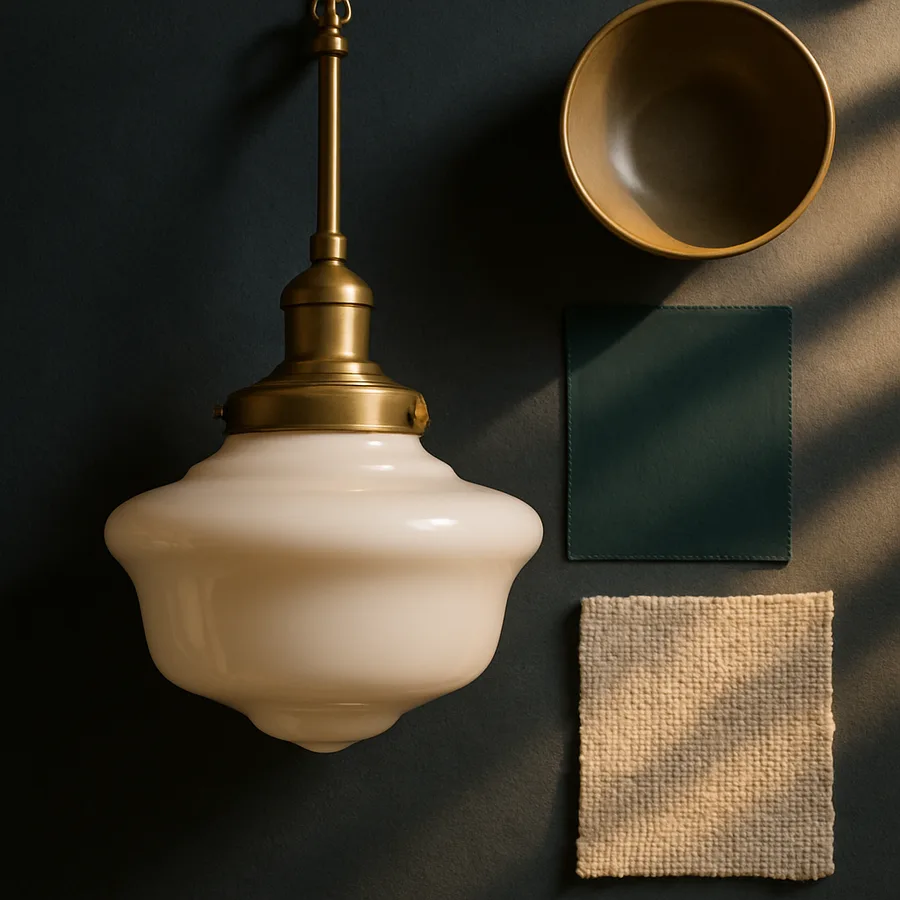
The Enduring Appeal of Schoolhouse Fixtures
Some design elements earn their staying power through decades of quiet, reliable service rather than flashy trend-cycle appearances. Schoolhouse lighting belongs firmly in this category. Originally designed for institutional use in American schools, factories, and public buildings during the early twentieth century, these fixtures featured simple milk glass shades in globe or cone shapes that diffused light evenly across large spaces. The design was driven by pure function: the translucent white glass eliminated harsh shadows, the rounded forms resisted dust accumulation, and the sturdy construction withstood years of daily use in high-traffic environments. That this utilitarian pedigree produced a fixture of genuine beauty is one of the happy accidents of American industrial design.
The schoolhouse fixture's migration from institutional spaces to residential kitchens and dining rooms began in earnest as homeowners started seeking alternatives to the ornate chandeliers and recessed lighting that dominated late twentieth-century interior design. The clean lines and honest materiality of schoolhouse fixtures offered a refreshing contrast, bringing warmth without fussiness and character without pretension. The American Lighting Association (ALA) has documented the steady growth in demand for vintage-inspired and reproduction schoolhouse fixtures, noting that they appeal across a remarkably wide range of design styles from farmhouse to mid-century modern to industrial loft.
What makes schoolhouse lighting particularly well-suited to kitchens and dining rooms is the quality of light it produces. The milk glass shade, whether original vintage or modern reproduction, acts as a natural diffuser that scatters light in all directions rather than focusing it downward in a harsh cone. This produces an ambient glow that illuminates the room evenly, reduces eye strain, and flatters both food and faces, qualities that matter enormously in spaces where people gather to cook and eat together. A well-chosen schoolhouse pendant over a kitchen island or dining table provides functional task lighting while simultaneously establishing a warm, welcoming atmosphere that overhead recessed fixtures cannot match.
The fixtures also carry a narrative quality that resonates with homeowners who value history and authenticity. An original schoolhouse globe salvaged from a demolished building carries the patina and minor imperfections of decades of use, connecting your kitchen to a broader story of American craftsmanship and community life. Even high-quality reproductions reference that history through their form and materials, evoking an era when everyday objects were built to last and designed with an unpretentious dignity that contemporary mass production frequently lacks. Have you ever noticed how certain objects seem to carry the weight of their history in a way that enriches the spaces they occupy?
Identifying Authentic Vintage Schoolhouse Fixtures
For collectors and homeowners who prefer the real thing, distinguishing authentic vintage schoolhouse fixtures from later reproductions requires attention to several telltale details. Original fixtures from the early to mid-twentieth century were typically produced by American manufacturers including Benjamin Electric, Crouse-Hinds, Wheeler Reflector, and Appleton Electric. The glass shades were hand-blown or pressed in molds, and close inspection reveals subtle variations in thickness, slight asymmetries, and occasionally tiny air bubbles trapped in the glass, all hallmarks of period manufacturing techniques that modern machine production eliminates.
The hardware components offer additional authentication clues. Original fitters, the metal pieces that connect the shade to the fixture body, were typically cast brass, stamped steel, or porcelain, and they bear the patina of age in ways that artificially distressed reproductions cannot perfectly replicate. Porcelain socket housings, common on industrial-grade schoolhouse fixtures, develop a fine network of surface crazing over decades that indicates genuine age. The wiring on original fixtures must always be replaced for safety regardless of apparent condition, so the presence of old cloth-covered wire is historically interesting but should never be energized. A qualified electrician can rewire vintage fixtures with modern components while preserving the external appearance.
Where do you find authentic vintage schoolhouse fixtures? Architectural salvage dealers are the most reliable source, with established firms like Rejuvenation (now part of Williams-Sonoma), Schoolhouse Electric, and Olde Good Things maintaining curated inventories of vintage lighting. Online marketplaces including eBay, Chairish, and 1stDibs offer broad selection but require more buyer knowledge to distinguish genuine vintage from reproductions or imported copies. Estate sales, building demolition sales, and antique shows in areas with older institutional architecture, particularly the industrial Northeast and Midwest, occasionally yield exceptional finds at reasonable prices. The National Trust for Historic Preservation maintains resources connecting preservation-minded homeowners with salvage dealers who specialize in architectural elements from historically significant buildings.
Pricing for authentic vintage schoolhouse fixtures varies widely based on condition, rarity, manufacturer, and size. Common milk glass globe pendants in good condition typically range from seventy-five to three hundred dollars each, while larger industrial fixtures, unusual shade shapes, or pieces with documented provenance from notable buildings can command significantly more. Compared to high-end contemporary designer pendants that often cost five hundred dollars or more, vintage schoolhouse fixtures offer remarkable value, delivering both authentic character and proven durability at a price point accessible to most renovation budgets.
Seven Ways to Use Schoolhouse Pendants in the Kitchen
Over the kitchen island is the most popular placement for schoolhouse pendants, and for good reason. A row of two or three matching pendants suspended at equal heights above an island creates a visual rhythm that anchors the kitchen's central workspace. The standard recommendation is to hang pendants so the bottom of the shade sits approximately thirty to thirty-six inches above the countertop surface, placing the light at a height that illuminates the work surface without obstructing sight lines across the island. For islands six feet or longer, three pendants spaced twenty-four to thirty inches apart provide even coverage without crowding. The milk glass diffusion ensures that the light falls softly across the entire counter rather than creating the bright-spot-and-shadow pattern that open-bottom pendants produce.
Flanking the kitchen sink, a pair of smaller schoolhouse fixtures mounted as wall sconces or short pendants provides dedicated task lighting for dishwashing and food preparation. This placement is particularly effective when the sink is positioned beneath a window, where overhead fixture installation may be impractical. The sconce-mounted versions typically use smaller shades, in the six- to eight-inch diameter range, scaled to complement the window and surrounding wall space. Better Homes and Gardens kitchen lighting guides consistently recommend layered lighting approaches that combine ambient, task, and accent sources, and sink-flanking schoolhouse fixtures contribute a task layer that is both functional and visually appealing.
As a single statement pendant in a breakfast nook or eat-in kitchen area, a larger schoolhouse globe in the twelve- to sixteen-inch diameter range commands attention without overwhelming the space. Hung lower than island pendants, typically twenty-eight to thirty-two inches above the table surface, a single large globe creates an intimate pool of light that defines the dining area within the larger kitchen. This application works particularly well with original vintage fixtures, where the scale and character of a large hand-blown globe makes a stronger impression than smaller pendants. In a pantry or butler's pantry, a small schoolhouse flush mount or semi-flush mount provides clean, even illumination in a confined space where pendant drops would be impractical.
As under-cabinet task lighting alternatives, small schoolhouse-inspired fixtures mounted beneath upper cabinets or open shelves offer a characterful alternative to strip lighting. While LED strips are more efficient for pure task illumination, small schoolhouse fixtures contribute decorative value that integrated strip lighting cannot. In a kitchen hallway or mudroom that connects to the kitchen, schoolhouse flush mounts maintain the fixture language throughout adjacent spaces, creating a cohesive lighting narrative that extends beyond the kitchen itself. Above a kitchen pass-through or bar, schoolhouse pendants at bar-height provide focused lighting for seating areas while maintaining visual connection to the kitchen's fixture theme. Each of these seven applications demonstrates the fixture's versatility and its ability to work at different scales and mounting positions throughout the kitchen environment.
Schoolhouse Fixtures in the Dining Room
The dining room presents a different set of opportunities and considerations for schoolhouse lighting. Where kitchen applications tend toward multiple smaller fixtures providing task-oriented illumination, dining room installations often call for a single statement fixture or a carefully composed grouping that serves as the room's visual centerpiece. A large schoolhouse globe pendant, fourteen to eighteen inches in diameter, hung at the proper height above a dining table creates a warm, diffused pool of light that flatters food, creates an intimate atmosphere, and provides a focal point that anchors the room's composition.
The proper hanging height for a dining room pendant is a function of table size, ceiling height, and personal preference, but the general guideline places the bottom of the fixture approximately thirty to thirty-six inches above the table surface. In rooms with ceilings above eight feet, the fixture can hang slightly higher, and adding a few inches of chain or rod maintains proportion without sacrificing illumination quality. The National Kitchen and Bath Association (NKBA), whose scope extends to dining spaces in its design guidelines, recommends that dining fixture width should be approximately one-half to two-thirds the width of the table it illuminates, a proportion that schoolhouse globes achieve naturally on standard dining tables.
For longer dining tables or more formal settings, a linear arrangement of three schoolhouse pendants replaces the single-fixture approach with a composition that provides more even light distribution across the table's length. This treatment works exceptionally well with rectangular and oval tables, creating a visual cadence overhead that parallels the table's horizontal emphasis. The pendants should be hung at identical heights and spaced evenly, with the outer fixtures positioned roughly above the table's quarter-points rather than its ends. This arrangement prevents the dim ends that a single centered fixture can create on longer tables, ensuring that guests at every seat enjoy the same quality of light.
Mixing schoolhouse fixtures with other lighting types in the dining room adds depth and flexibility. Wall sconces flanking a sideboard or buffet, a floor lamp in a corner, or recessed accent lights highlighting artwork all contribute layers that allow the room's mood to shift between bright daytime meals and intimate evening gatherings. The schoolhouse pendant provides the primary ambient layer, while these supplementary sources add warmth, drama, and visual interest. A dimmer switch on the pendant circuit is a small investment that dramatically expands the fixture's range, allowing full brightness for homework and game nights and a soft glow for dinner parties.
Reproduction Options: Quality Sources and What to Look For
Not every homeowner wants the responsibility or uncertainty of sourcing vintage fixtures, and the reproduction schoolhouse lighting market has matured to offer excellent alternatives that honor the original designs while incorporating modern electrical components and safety certifications. Schoolhouse Electric, founded in Portland, Oregon, has built its entire brand identity around faithful reproductions of early American lighting, producing fixtures with hand-blown glass shades and period-appropriate hardware that are virtually indistinguishable from originals. Their manufacturing process uses many of the same techniques as the original factories, including hand-blown glass production at partner glassworks that maintain traditional craft methods.
Rejuvenation, another Portland-based manufacturer now under the Williams-Sonoma umbrella, offers an extensive line of schoolhouse-inspired fixtures in a range of sizes, finishes, and configurations. Their catalog includes everything from simple globe pendants to elaborate multi-light chandeliers that adapt the schoolhouse aesthetic for more formal applications. Barn Light Electric, based in Titusville, Florida, produces American-made schoolhouse fixtures with a focus on customization, offering dozens of finish options and shade styles that allow homeowners to tailor the fixture to their specific design vision. Each of these manufacturers produces fixtures that are UL-listed, properly rated for their intended applications, and backed by warranties that vintage fixtures obviously cannot offer.
When evaluating reproduction quality, several factors separate superior products from mediocre imitations. The glass shade should be genuinely blown or pressed glass, not molded plastic or resin, which lacks the light-diffusing properties and visual depth of real glass. Hold the shade up to a light source: authentic milk glass shows subtle variations in opacity and thickness, while synthetic imitations appear uniformly flat. The metal components, fittings, canopies, and rods, should be solid brass, cast iron, or steel with quality plating or powder coating, not thin stamped metal that flexes when handled. The fixture's weight is a reliable indicator: quality reproduction schoolhouse fixtures have a satisfying heft that reflects their solid construction.
Budget-friendly options exist for homeowners working with tighter renovation budgets. Companies like Ikea, West Elm, and various direct-to-consumer lighting brands offer schoolhouse-inspired fixtures at lower price points that capture the general aesthetic without the material quality of premium reproductions. These fixtures can serve well in secondary spaces or as interim solutions while saving for higher-quality pieces in primary rooms. However, in a kitchen or dining room where the fixture serves as a daily focal point and is subject to close inspection, investing in a quality reproduction or authentic vintage piece delivers a level of satisfaction and visual impact that budget alternatives struggle to match.
Installation Considerations and Complementary Design Choices
Proper installation is essential for both safety and aesthetic impact. Pendant height has already been discussed for specific applications, but the general principle bears repeating: the fixture should be low enough to illuminate its target surface effectively and create visual intimacy, but high enough that it does not obstruct sight lines or become a head-bumping hazard. In kitchens with varying counter heights, island pendants and sink fixtures may need different drop lengths to maintain a consistent visual line. A licensed electrician should handle all installation work, particularly when adding new electrical boxes for fixtures where none existed before, and should verify that the ceiling box is rated for the fixture's weight.
The hardware finish of your schoolhouse fixtures should relate to, though not necessarily match, other metal elements in the kitchen or dining room. Brushed brass pendant hardware pairs naturally with brass cabinet pulls and warm-toned faucets. Matte black fixtures complement iron hardware and dark-framed windows. Polished nickel or chrome options tie in with stainless steel appliances and contemporary cabinetry hardware. According to the American Society of Interior Designers, mixing two or three metal finishes within a room creates visual interest and avoids the overly coordinated look that can make a space feel showroom-designed rather than personally curated. Schoolhouse fixtures are available in enough finish options to participate in virtually any metal palette.
Complementary design choices reinforce the schoolhouse aesthetic without creating a theme-park effect. Subway tile backsplashes, butcher block countertops, open shelving, apron-front sinks, and simple Shaker or flat-panel cabinetry all share the schoolhouse fixture's honest, unpretentious character. These elements belong to the same design family, rooted in early American functional design, without being so specific that the kitchen feels like a period recreation. The goal is a space that feels timeless and personal, where the schoolhouse fixtures are one voice in a conversation rather than the only speaker in the room.
Bulb selection has a significant impact on the quality of light your schoolhouse fixtures produce. The milk glass shade is designed to diffuse and soften whatever light source it contains, so a warm-toned LED bulb in the 2700K color temperature range produces the golden, incandescent-quality glow that these fixtures are known for. Higher color temperatures, above 3500K, create a cooler, more clinical light that works against the warmth the fixture is meant to provide. Edison-style filament LED bulbs, while popular, are generally unnecessary in schoolhouse fixtures since the shade conceals the bulb entirely; a standard A19 or A21 LED in warm white provides optimal illumination at a fraction of the filament bulb's cost. Is the current lighting in your kitchen and dining room creating the atmosphere you want, or is it a compromise you have simply grown accustomed to?
Conclusion: Lighting That Tells a Story
Vintage schoolhouse lighting brings something to kitchens and dining rooms that most contemporary fixtures cannot: a sense of history, honesty, and quiet confidence that makes a space feel grounded rather than decorated. Whether you source authentic vintage fixtures from architectural salvage or invest in quality reproductions from manufacturers who honor the original craft, these fixtures contribute a warmth and character that transcends trend cycles. They looked right in kitchens a century ago, they look right today, and they will continue to look right decades from now, which is more than most lighting choices can claim.
The practical virtues are equally compelling. Milk glass diffusion produces flattering, even illumination that enhances both food preparation and dining experiences. The simple forms are easy to clean and maintain. The fixtures are available at price points from budget-friendly to premium, and the installation requirements are no more complex than any standard pendant or flush mount. The American Lighting Association notes that lighting is consistently cited as one of the most impactful and cost-effective upgrades in kitchen and dining room renovations, and schoolhouse fixtures deliver that impact with a distinctive personality that generic recessed or track lighting simply cannot match.
If your kitchen or dining room lighting has been an afterthought, a builder-grade fixture you never got around to replacing or a trendy pendant that already feels dated, consider what a schoolhouse fixture could bring to the space. Visit an architectural salvage dealer to hold an original globe in your hands and see the quality of light it produces. Browse the catalogs of quality reproduction manufacturers to find the size, finish, and configuration that suits your space. The right fixture is out there, carrying a century of proven design integrity, waiting to bring its quiet, warm glow to your most important rooms.
Start by measuring your island or dining table, noting the ceiling height, and identifying the metal finish family that works with your existing hardware. Then reach out to one of the manufacturers or salvage sources mentioned in this article and request samples or a consultation. The path from uninspired overhead lighting to a kitchen or dining room that glows with warmth and character is shorter than you might think.
More Articles You May Like



Comments
Post a Comment