Wallpaper Panel Headboard Ideas Without Committing to Full Walls
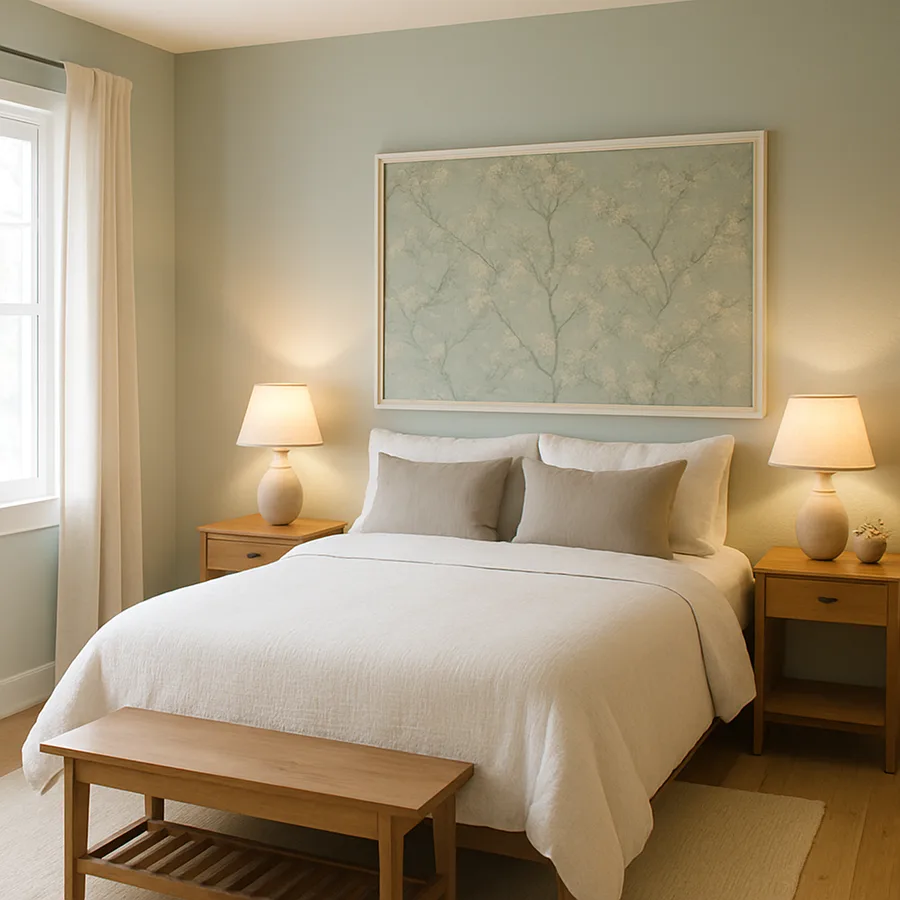
Wallpaper has enjoyed a decisive comeback in residential interiors, but many homeowners still hesitate to paper an entire wall. The reasons are reasonable: cost, commitment, the difficulty of removing dated patterns down the road, and the sheer visual weight of a fully papered room. A smart middle path has emerged in the last several years - the wallpaper panel headboard, a contained rectangle or shaped area of wallpaper placed directly behind the bed that delivers all the drama of a statement wall with a fraction of the square footage, cost, and commitment. According to a recent trend report from House Beautiful, searches for framed wallpaper panels jumped 212% over the last year, with bedroom applications leading the category.
This guide explores the design logic behind wallpaper panels, the five most flattering panel shapes, installation techniques that do not damage walls, and the styling decisions that separate a gallery-worthy panel from a craft project. Before you begin, consider two questions: Do I want the panel to feel like a piece of art or like built-in architecture? And do I own or rent the space? Both answers shape which approach will serve you best.
Why Panels Outperform Full Walls in Most Bedrooms
A full accent wall of patterned wallpaper can feel overwhelming, especially in a bedroom where the goal is rest. Pattern repeats at that scale can create visual noise that the brain registers as stimulation - not ideal at 10pm. A contained panel behind the bed gives the eye a clear focal point and then lets the surrounding wall space breathe. The American Society of Interior Designers (ASID) has long recommended that bedrooms use focal-point strategies rather than all-over pattern for exactly this reason.
There is also a cost argument. Designer wallpapers from brands like Schumacher, Cole & Son, and House of Hackney routinely run $200 to $400 per roll. A full accent wall in a typical bedroom might require three to five rolls, totaling $600 to $2,000 in paper alone. A wallpaper panel measuring 60 by 70 inches, by contrast, rarely needs more than a single roll, bringing your materials cost under $300 even for premium paper.
Finally, panels are removable without professional help. If you tire of the pattern in three years, you lift the panel off the wall, not an entire wall's worth of paper. This flexibility matters enormously for renters and for homeowners who understand that their taste evolves. A recent Zillow Consumer Housing Trends Report found that 58% of homeowners changed at least one major design finish within five years of purchase - pattern fatigue is real and predictable.
Five Panel Shapes and When to Use Each
Panel shape is the single biggest design decision you will make, and it should be driven by ceiling height, bed size, and the architectural character of your room. Here are the five shapes that consistently deliver strong results.
The rectangle panel is the workhorse. Simple, architectural, and easy to install, a rectangle should extend roughly 6 inches beyond the width of the bed on each side and rise to within 12 to 18 inches of the ceiling. Frame the rectangle with slim picture-frame molding or half-round trim for a classical effect, or leave it unframed for a cleaner modern look.
The arch panel is the current favorite of high-design bedrooms. An arch softens the geometry of the room and creates an implied headboard even when no physical headboard is present. Arches work best in rooms with at least 9-foot ceilings; in lower-ceilinged spaces, the arch can feel compressed. Use a shallow arch (radius to height ratio of 1:3) rather than a dramatic semicircle.
The paneled grid breaks the space into two or three stacked or side-by-side rectangles separated by molding. This approach references traditional millwork and works especially well in older homes with existing panel-style trim. The grid also lets you play with two coordinating papers within the same installation.
The irregular organic shape is the boldest move. Cutting wallpaper into an asymmetrical shape (think: cloud, blob, amoeba) and mounting it behind the bed creates a gallery-art moment. This works only with graphic, color-forward papers and requires confident styling to avoid looking craft-like. Designers featured in Architectural Digest have used this technique in children's rooms and guest bedrooms to great effect.
The ceiling-extending panel carries the paper from behind the bed up and onto the ceiling above the bed, creating a canopy effect. This is a committed move but spectacular in smaller bedrooms where it adds perceived height and drama simultaneously.
Peel-and-Stick Versus Traditional Paste: Which to Choose
Modern peel-and-stick wallpapers have become genuinely good. The printing quality from brands like Tempaper, Chasing Paper, and Spoonflower now rivals traditional paper at normal viewing distances. Peel-and-stick removes without residue, repositions during installation, and suits renters perfectly. The tradeoff is that peel-and-stick does not adhere well to textured walls and can lift at edges in rooms with high humidity.
Traditional paste-the-wall or pre-pasted papers offer broader design selection (especially in premium print houses), often feel more substantial to the touch, and hold up better in humid bathrooms or next to radiators. However, removal eventually requires steam, scoring, and patience. The Wallcoverings Association (WA) reports that professionally installed traditional wallpaper lasts on average 15 years before needing replacement, while peel-and-stick typically peaks at 3 to 5 years in good condition.
For a contained panel, peel-and-stick is usually the smarter choice. The small square footage means you can afford premium paper from a peel-and-stick brand, installation is forgiving, and future-you will thank present-you for the easy removal. Ask yourself: Will I still want this exact pattern in five years? If the answer is maybe, peel-and-stick is the right call.
Installation Step-by-Step With Zero Wall Damage
Start by measuring twice and drawing your panel outline on the wall with a light pencil or, better, with painter's tape. Step back and evaluate the proportions from multiple angles and at different times of day. The panel should feel deliberate, centered on the bed, and in scale with the wall.
Clean the wall with a lightly damp microfiber cloth and let it dry fully - at least 30 minutes. Any dust or residue will compromise adhesion. For peel-and-stick, start from the top center and work downward and outward, peeling only a small section of backing at a time. A plastic smoothing tool (the same one upholsterers use for fabric) pushes out bubbles and creases.
For a framed panel, install the frame molding first, leaving the interior rectangle exposed. Paint the molding to match or contrast the wall, paper the interior, and seal the edges with a thin bead of paintable caulk for a crisp line. This approach looks professionally built and conceals the paper edges completely.
If you are papering an arch, cut the paper into a rectangle first, install it, then use a pencil and a flexible curve template to draw your arch before trimming the excess with a sharp utility knife. Never try to pre-cut the arch shape and install it - the paper will shift during application.
Pairing Wallpaper With Headboards, Sconces, and Bedding
A wallpaper panel changes how every other element in the room reads, so coordinate with care. If you are using a physical headboard in front of the panel, keep its fabric or material quiet - a solid linen, a simple wood frame, or a low-profile upholstered shape works best. Busy tufted velvet competing with a botanical print is usually too much.
Flanking sconces or pendant lights anchor the panel and read as a designed moment rather than a papered afterthought. Unlacquered brass, matte black, and antique bronze all pair well with most wallpaper palettes. Position sconces at roughly 60 inches from the floor and 30 to 36 inches from the centerline of the bed.
For bedding, pull one color from the wallpaper and echo it subtly in the shams, lumbar pillow, or throw. Avoid matching too closely - the point is to reinforce the palette, not to mirror it. Designers writing for Better Homes & Gardens consistently recommend a 70/20/10 ratio: 70% neutral bedding, 20% secondary color drawn from the paper, 10% accent.
Budget Breakdown and Where to Splurge
A reasonable wallpaper panel budget ranges from $120 for a minimal peel-and-stick installation to $600 for a framed premium paper with custom molding. Here is how that breaks down:
- Peel-and-stick paper - $60 to $180 for a single roll, enough for most panels
- Premium traditional paper - $200 to $400 per roll
- Picture-frame molding - $30 to $80 depending on profile and length
- Paint for molding - $15 to $40 for a sample or quart
- Installation tools (smoother, sharp blade, level) - $20 to $40
Splurge on the paper itself rather than the frame or tools. The paper is the visible star, and inexpensive papers often print with lower color depth and less durable inks. According to the Residential Construction Manufacturers Association (RCMA), premium wallpapers hold their color integrity 40% longer than economy options under equivalent light exposure.
Conclusion: Commitment-Light Drama for the Bedroom
The wallpaper panel headboard is a rare design move that scales down the commitment without scaling down the impact. You get the pattern, the color, the craftsmanship of a papered wall, and the sculptural focal point of a framed art piece - all while leaving 80% of your wall surface untouched, easy to repaint, and neutral. For renters, this is one of the few truly high-design interventions that causes zero damage. For owners, it is a flexible way to test bold patterns without living through a regret cycle.
The psychological benefit matters too. Bedrooms should feel intentional, curated, and personal without being overwhelming. A contained panel frames the bed the way a good mat frames a photograph - it elevates the subject and signals that someone with taste made a deliberate choice. That clarity calms the space rather than crowding it.
If you are ready to try this, pick a paper first and let every other decision follow from it. Order a sample, tape it to the wall, and live with it for three days before ordering the full roll. Photograph the sample at morning, noon, and evening to see how the pattern shifts with light. Choose peel-and-stick for your first attempt, pick a rectangle or arch shape, and schedule one full uninterrupted Saturday afternoon for installation.
The question worth asking before you order: Which pattern would I still love if every other element in the room stayed exactly the same for the next seven years? The answer is usually quieter and more textural than the first pattern that caught your eye - and that is exactly the paper that will make the panel sing.
Matching Paper Patterns to Your Existing Room Palette
One mistake I see repeatedly is choosing wallpaper based on a social media image rather than the actual palette of the room it will live in. A bold emerald palm print that photographs beautifully in someone else's beige bedroom may clash completely against your warm cream walls and gray bedding. Before ordering, pull every fabric in your bedroom - bedding, curtains, rug - into natural daylight and lay them next to your wallpaper sample. Ask yourself: Does the paper complete this grouping or does it feel like a visitor?
For cool-palette rooms (gray walls, white bedding, silver hardware), lean into papers with blue, sage, lavender, or black-and-white palettes. For warm-palette rooms (cream walls, linen bedding, brass hardware), choose papers with terracotta, ochre, muted red, warm green, or sepia. Mixing warm paper into a cool room or vice versa can work, but only if you also introduce a second mediating element that bridges the temperature shift. The International Association of Color Consultants (IACC) calls this the rule of thermal continuity - every accent should have a second supporting element that ties it to the overall temperature of the room.
If you are uncertain, choose a wallpaper with a neutral background and patterned detail rather than a saturated field color. A cream or oat background with pattern printed on top reads as warm and adaptable even if your palette shifts slightly over time. Saturated backgrounds lock you into a specific color story that is harder to reshape around.
Where to Source Wallpaper Panels and Sample Strategies
The wallpaper market has expanded dramatically over the past decade, and the best selections now come from a mix of major brands and small independent artists. For premium traditional papers, Schumacher, Cole & Son, Farrow & Ball, and de Gournay offer archive-quality prints that have been produced for decades. For peel-and-stick, Tempaper, Chasing Paper, Walls Need Love, and Spoonflower lead the field in print quality and design range. The American Society of Interior Designers (ASID) maintains a trade-member directory that lists approved wallpaper vendors for professional projects.
Always order samples before buying full rolls. Most brands offer samples for $5 to $15, which is negligible compared to the cost of a wrong full roll. Tape samples to your wall at exactly the position the final panel will occupy and live with them for a minimum of three full days. Photograph them in morning, afternoon, and evening light. A pattern that looks gorgeous in a showroom or product photo can read completely different under your specific light conditions.
One practical tip: buy slightly more paper than you calculate you need. Even contained panels require alignment matching at seams, and a mistake during installation may require a re-cut. Ordering 10% extra is standard industry practice and gives you insurance against errors. You can always save the extra scrap for a future smaller project - a framed piece of art, a drawer liner, or a switch plate cover.
More Articles You May Like



Comments
Post a Comment