Tongue and Groove Ceiling Planks for Porches and Bathrooms
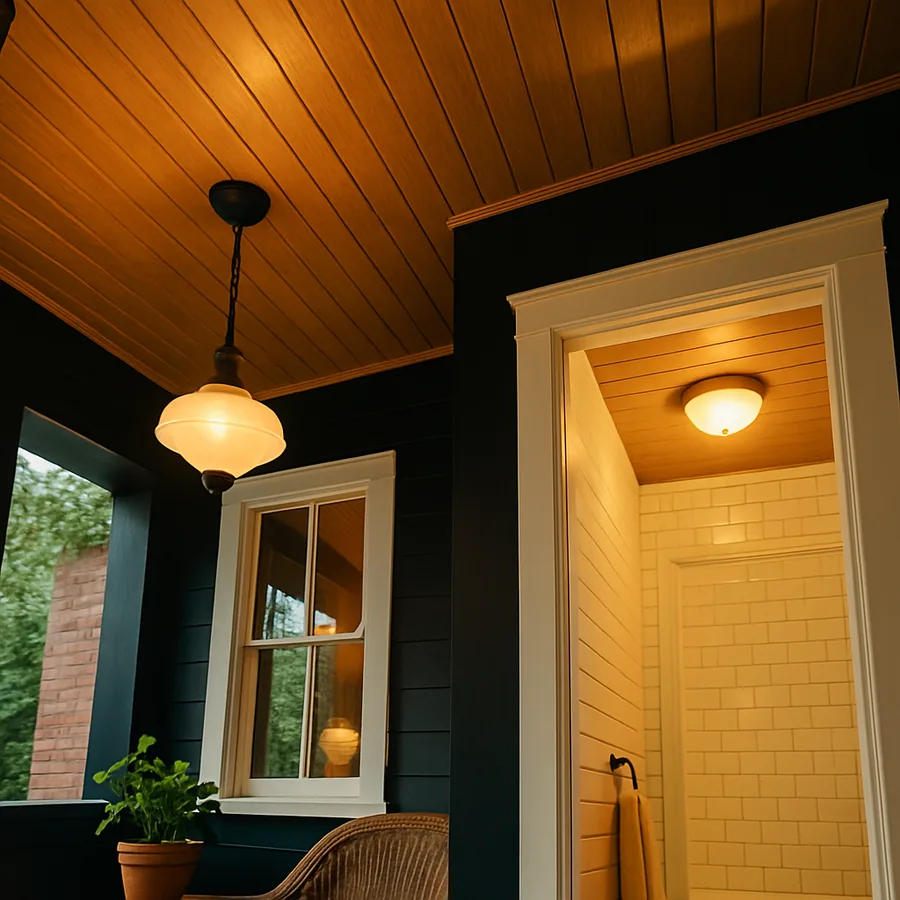
Ceilings are frequently the most neglected surface in residential design, dismissed as blank expanses of white drywall that serve no purpose beyond enclosing the room from above. Yet designers and architects have long understood that a thoughtfully finished ceiling transforms the entire spatial experience of a room, adding warmth, texture, and a sense of enclosure that drywall simply cannot provide. Tongue and groove ceiling planks represent one of the most enduring and effective ceiling treatments available, offering a natural wood aesthetic with an interlocking joint system that produces a tight, seamless surface without visible fasteners. The National Association of Home Builders reports that wood ceiling treatments appear in approximately 18 percent of new custom homes, a figure that has nearly doubled over the past eight years as homeowners increasingly recognize the ceiling as a design opportunity rather than an afterthought. Porches and bathrooms, two spaces where the ceiling is often visible at closer range and where moisture management is a critical concern, represent ideal candidates for tongue and groove installation. This comprehensive guide covers material selection, installation best practices, moisture protection strategies, and design considerations specific to these demanding environments.
Why Tongue and Groove Excels on Ceilings
The tongue and groove joinery system, in which a protruding ridge on one plank edge fits into a corresponding channel on the adjacent plank, has been used in construction for centuries because it solves several practical problems simultaneously. On ceilings, this interlocking mechanism is especially valuable because it allows each plank to be blind-nailed through the tongue, hiding the fastener beneath the groove of the next plank and producing a surface free of visible nail heads. This clean appearance is difficult to achieve with butt-jointed boards, which require face-nailing that leaves a grid of filled holes across the finished surface. The interlocking joint also prevents individual planks from curling, cupping, or shifting independently, because each board is physically connected to its neighbors and the assembly functions as a unified panel rather than a collection of separate pieces.
The visual warmth that wood planks bring to a ceiling is their most immediate appeal. Where a flat drywall ceiling reads as industrial and generic, a planked ceiling introduces the organic grain patterns, subtle color variations, and linear rhythm of natural wood that the human eye finds inherently pleasing. Research published by the American Institute of Architects in their annual home design trends survey indicates that natural material finishes consistently rank among the top five features that homebuyers identify as desirable in a new home, with wood ceilings specifically mentioned as a distinguishing luxury element. On porches, a wood plank ceiling evokes the classic American tradition of the covered veranda, connecting the home to its landscape and creating a transitional space that feels neither fully indoors nor fully exposed. In bathrooms, a planked ceiling adds spa-like warmth that counters the hard, cold surfaces of tile, stone, and porcelain that dominate the rest of the room.
Beyond aesthetics, tongue and groove planks offer practical advantages for ceiling applications that are sometimes overlooked. The planks can conceal wiring, junction boxes, and other overhead mechanicals that would otherwise require careful drywall finishing around each penetration. In remodeling situations where an existing ceiling is damaged, stained, or textured with an outdated popcorn finish, tongue and groove planks can be installed directly over the old surface, eliminating the messy and labor-intensive process of scraping, skimming, and refinishing the existing drywall. This overlay capability makes tongue and groove a favorite among renovation contractors who need to deliver a premium ceiling finish on a practical timeline and budget.
The acoustic properties of a wood plank ceiling also differ meaningfully from drywall. Wood absorbs and diffuses sound more effectively than the hard, reflective surface of painted gypsum board, which can produce an echo-chamber effect in rooms with hard floors and minimal soft furnishings. In a bathroom with tile walls and floors, a tongue and groove ceiling introduces just enough sound absorption to soften the acoustic environment and reduce the harsh reverberations that make small bathrooms feel sterile and unwelcoming. On porches, the wood surface dampens the sound of rain striking the roof above, transforming what could be an overwhelming noise into a muted, pleasant backdrop.
Material Options for Moisture-Prone Environments
Selecting the right wood species or composite material is the most consequential decision in any tongue and groove ceiling project, and it becomes especially critical in the moisture-rich environments of porches and bathrooms. Western red cedar has long been the gold standard for exposed porch ceilings because its natural oils, specifically thujaplicins, provide exceptional resistance to moisture, rot, insect damage, and fungal growth without any chemical treatment. Cedar's warm reddish-brown tones weather gracefully to a silver-gray patina when left unfinished, or they can be preserved indefinitely with a clear penetrating oil finish that enhances the grain without forming a surface film that can peel or blister in humid conditions. The aromatic quality of cedar is an additional benefit that many homeowners appreciate, lending a subtle, pleasant scent to the porch environment.
For projects where cedar's premium price point, typically six to nine dollars per square foot, stretches the budget uncomfortably, southern yellow pine and Douglas fir offer viable alternatives at roughly half the cost. These species lack cedar's natural rot resistance and require treatment with a quality exterior-rated primer and paint or a penetrating stain-and-sealant system to perform in exposed porch environments. When properly finished, pine and fir tongue and groove ceilings can last decades on a covered porch, though they will require recoating every three to five years to maintain their protective barrier. The trade-off is straightforward: lower upfront material cost in exchange for higher ongoing maintenance commitment. For homeowners who enjoy periodic maintenance as part of home stewardship, this trade-off makes good economic sense.
Bathroom ceiling applications demand a different material calculus because the moisture exposure is more intense and more frequent than even an open porch experiences. Steam from hot showers saturates the air with moisture that condenses on the coolest surfaces in the room, and the ceiling is almost always one of those surfaces. PVC and composite tongue and groove products, manufactured by companies like Versatex and Royal Building Products, are completely impervious to moisture and will never rot, warp, swell, or support mold growth regardless of humidity levels. These synthetic products are available in profiles that closely replicate the dimensions and groove patterns of traditional wood planks, and they accept paint readily for a finished appearance that is virtually indistinguishable from painted wood at ceiling height.
If the authentic look and feel of real wood is non-negotiable for your bathroom ceiling, several strategies can make it work. Cypress, teak, and ipe are tropical hardwoods with natural moisture resistance that rivals or exceeds cedar, though their cost and limited availability place them firmly in the premium category. A more accessible approach uses standard wood planks finished with a marine-grade polyurethane or a penetrating epoxy sealer that waterproofs the wood surface while remaining vapor-permeable enough to allow trapped moisture to escape rather than blistering. Whatever material you choose, ensure that your bathroom has an adequately sized exhaust fan, rated at a minimum of one CFM per square foot of floor area according to the ASHRAE ventilation guidelines, to remove humid air before it can condense on and potentially damage the ceiling surface.
Installation Planning and Structural Considerations
Successful tongue and groove ceiling installation begins well before the first plank is lifted into position, with careful planning that addresses substrate preparation, layout strategy, and the physical logistics of working overhead. The most important structural consideration is identifying and mapping your ceiling joists or furring strips, because every tongue and groove plank must be fastened into solid framing to support the weight of the installation and resist gravity's constant downward pull. Unlike wall installations where the planks lean against the substrate and friction helps hold them in place, ceiling planks rely entirely on their fasteners to remain overhead, making secure attachment to framing absolutely essential. Use a stud finder to locate joists and mark their positions with chalk lines across the ceiling before beginning installation.
For new construction or open-framing situations, tongue and groove planks can be nailed directly to the ceiling joists spaced at 16 or 24 inches on center. In renovation scenarios where the planks are being installed over an existing drywall or plaster ceiling, furring strips, typically one-by-three lumber strips, should be screwed through the existing ceiling into the joists at 16-inch intervals to provide a reliable nailing surface. The furring strips also create a slight air gap between the existing ceiling and the new planks, which improves ventilation and reduces the risk of moisture being trapped between the layers. On porches, ensure that the structural framing is level and that any sagging joists are shimmed or sistered to create a flat plane before installing the planks, because undulations in the framing will produce a wavy ceiling surface that is highly visible in raking light.
Layout planning determines how the planks will run across the ceiling and where the starting and ending rows will fall. The general rule is to run planks perpendicular to the joists so each plank crosses multiple framing members for secure attachment. Begin installation at the wall that is most visible from the room's primary vantage point, using full-width planks along this starting wall where the eye naturally lands first. The final row along the opposite wall may need to be ripped to a narrower width to fit, and placing this cut row at the less visible wall minimizes its visual impact. If the ceiling is wider than the available plank lengths, stagger the end joints randomly across adjacent rows to avoid creating visible lines that draw the eye and weaken the structural integrity of the assembly.
How do you handle the physical challenge of working overhead for extended periods? Ceiling installation is significantly more fatiguing than wall work because you are constantly reaching above your head while supporting the weight of the plank and your nailer simultaneously. Building a simple T-shaped support from two-by-fours, sometimes called a deadman, allows you to prop one end of a plank against the ceiling while you fasten the other end, eliminating the need for a second person on straightforward runs. For longer planks or complex layouts with many cuts, having a helper hold planks in position while you nail dramatically improves both speed and accuracy. Take regular breaks to rest your arms and shoulders, and consider wearing a lightweight hard hat or bump cap for protection against dropped tools and materials.
Finishing and Sealing Strategies for Longevity
The finishing system you apply to your tongue and groove ceiling directly determines its appearance, durability, and maintenance requirements for the next decade or more, making it one of the most important decisions in the entire project. For porch ceilings, the traditional Southern approach is to paint the tongue and groove planks in a solid color, with the pale blue-green shade known as "haint blue" being the most iconic choice. This tradition, rooted in the Gullah Geechee culture of the Lowcountry Southeast, holds that the blue color mimics water or sky and discourages insects and spirits from lingering on the porch. Whatever the folklore, the practical reality is that haint blue and other light ceiling colors visually recede, making the porch feel taller and more open, and the paint provides a durable moisture barrier when applied over a quality exterior primer.
Clear finishes that showcase the natural wood grain are increasingly popular on both porch and bathroom ceilings as the broader design trend toward natural materials continues to gain momentum. On porch ceilings, marine-grade spar varnish provides excellent UV and moisture protection but requires recoating every two to three years as it gradually breaks down under sun exposure. Penetrating oil finishes like Penofin or Cabot Australian Timber Oil soak into the wood fibers rather than forming a surface film, which means they cannot peel or blister and they weather more gracefully, simply fading over time rather than cracking. The trade-off is that penetrating oils provide less visible protection than film-forming varnishes, and they may need refreshing annually in exposed conditions.
Bathroom ceilings present the most demanding finishing scenario because they must resist not just occasional moisture contact but regular, intense exposure to warm, humid air. A minimum of two coats of marine-grade polyurethane or exterior-grade spar varnish over a sealed and primed surface creates a robust moisture barrier on real wood planks. Semi-gloss or gloss sheens are recommended for bathroom ceilings because they are less porous than flat or satin finishes, providing better moisture resistance while also reflecting more light in typically dim bathroom environments. Pay particular attention to the plank edges, end grain, and the inside surfaces of the tongue and groove joints, as these are the areas most vulnerable to moisture infiltration. Sealing all surfaces of each plank before installation, not just the face, prevents moisture from wicking into exposed wood grain from the back side where you cannot see or address the damage until it becomes severe.
Have you considered the color of your ceiling in relation to the room's lighting and dimensions? A common mistake is selecting a wood tone or paint color that makes the ceiling feel oppressively low, which is particularly problematic on porches where the ceiling may already be at a modest eight-foot height. Lighter wood species like white pine, poplar, and maple, or painted finishes in white, cream, or pale blue, keep the ceiling feeling elevated and airy. Darker species like walnut and mahogany, while stunning on accent ceilings in rooms with generous height, can make a standard-height ceiling feel heavy and enclosing. In bathrooms, where the ceiling is typically at its closest to the occupant and lighting is often directly overhead, lighter tones almost always produce a more pleasant result than dark ones.
Design Variations and Creative Applications
While the standard horizontal plank installation is the most common tongue and groove ceiling treatment, several design variations can create dramatically different visual effects using the same basic material. Coffered tongue and groove ceilings combine planked panels with a grid of exposed beams, either structural or decorative, that divide the ceiling into rectangular sections. Each section is filled with tongue and groove planks running perpendicular to the adjacent sections, creating a checkerboard pattern of alternating grain directions that adds visual complexity and architectural significance to the overhead plane. This treatment works especially well in formal living rooms, dining rooms, and master bedrooms where the ceiling deserves the same design attention as the walls and floor.
Diagonal plank installation at 45 degrees transforms a standard rectangular room by breaking the predictable parallel lines of conventional installation and introducing dynamic energy that draws the eye across the ceiling. This orientation works particularly well on small porch ceilings and in bathrooms where the room's compact dimensions can make standard horizontal planking feel monotonous. The trade-off is increased material waste, typically 15 to 20 percent more than horizontal installation, and more complex cutting at the wall perimeters where each plank meets the walls at an angle. The visual payoff, however, is substantial: a diagonal planked ceiling feels custom and architectural in a way that standard horizontal installation cannot match.
Mixed-width planking uses tongue and groove boards of two or three different widths installed in a random or patterned sequence that creates visual rhythm and depth. A combination of three-inch, five-inch, and seven-inch planks, for example, produces a surface that feels more organic and less manufactured than a ceiling of uniform-width boards. This approach works beautifully with natural-finish wood where the different widths showcase varying amounts of grain pattern and color variation. Some manufacturers sell tongue and groove products specifically packaged as mixed-width bundles for this application, ensuring that all the widths share the same profile dimensions and thickness for seamless interlocking. The National Wood Flooring Association notes that mixed-width installations have gained significant popularity as designers seek to replicate the authentic, hand-sawn appearance of historical construction.
Can tongue and groove planks work on a vaulted or cathedral ceiling? Absolutely, and vaulted ceilings are arguably where planked surfaces make their most dramatic impact. The long, unbroken plank runs that a vaulted ceiling accommodates showcase the full length and grain of the wood in a way that a flat, eight-foot ceiling cannot. Installation logistics are more challenging on a vault because scaffolding replaces step ladders and gravity is working against you at steeper angles, but the structural approach is the same: fasten into the rafters, stagger end joints, and work from the bottom of the vault upward to let each row's groove capture the tongue of the row below. The finished result, a soaring expanse of warm wood overhead, consistently ranks among the most impactful architectural features in residential design and adds measurable value to a home's appraised worth.
Bringing Warmth Overhead with Confidence
Tongue and groove ceiling planks offer a rare combination of visual beauty, structural reliability, and practical moisture management that makes them ideally suited for the demanding environments of porches and bathrooms. The interlocking joint system ensures a tight, seamless surface that resists the movement and gapping that would plague other plank installations in humid and temperature-variable conditions. Whether you choose the natural rot resistance of cedar, the affordability of painted pine, or the bulletproof moisture immunity of PVC composites, there is a tongue and groove product engineered for your specific environment and design goals.
The key to a successful installation lies in respecting the unique challenges of overhead work: mapping your framing precisely, selecting a finishing system appropriate for your moisture exposure level, and planning your layout to place the cleanest rows where they will be most visible. These preparatory steps require patience and attention to detail, but they are the foundation upon which a beautiful and durable planked ceiling is built. Shortcuts in preparation invariably produce compromises in the finished product that will be visible for as long as the ceiling is in place.
Consider how a planked ceiling could transform your own porch or bathroom from a utilitarian enclosure into a space with genuine architectural character. The covered porch becomes an outdoor room with the warmth and intimacy of an interior space. The bathroom transitions from a functional necessity into a retreat with the natural, spa-like ambiance that makes daily routines feel a little more luxurious. These experiential upgrades come at a modest material cost and can be accomplished as a weekend project by a reasonably skilled homeowner with basic tools and a willingness to work overhead.
Start by measuring your ceiling area, researching material options at your local building supply center, and ordering enough material to complete the project plus a 10 to 15 percent overage for cuts and waste. Allow the material to acclimate in the installation space for at least 72 hours before beginning work, and invest in quality stainless steel or galvanized fasteners that will not rust or stain the wood in humid conditions. With thoughtful planning and careful execution, your new tongue and groove ceiling will reward you with beauty and satisfaction every time you look up.
More Articles You May Like



Comments
Post a Comment