Terraced Garden Walls for Sloped Backyard Outdoor Rooms
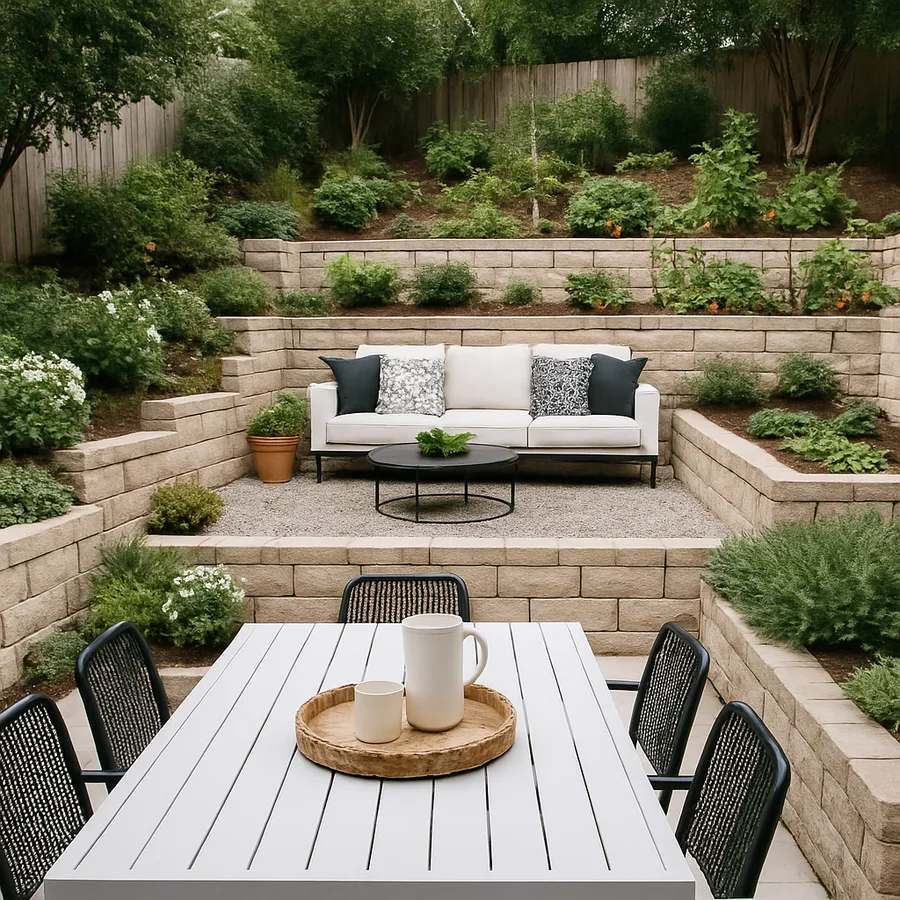
The Hidden Potential of a Sloped Backyard
A sloped backyard is often viewed as a liability rather than an asset. Homeowners look at that grade and see mowing challenges, drainage headaches, and unusable space that sits idle season after season. But here is a different perspective: that slope is raw material waiting to be shaped into something far more interesting than a flat lawn could ever be. Terraced garden walls transform vertical grade changes into a series of horizontal outdoor rooms, each with its own purpose and personality, creating a layered landscape that is both functional and visually striking. Where a flat yard offers one plane of possibility, a terraced slope offers three, four, or even five distinct living areas stacked into the same footprint.
The concept is ancient and proven. Terracing has been used for thousands of years in agricultural societies around the world, from the rice paddies of Southeast Asia to the vineyard slopes of Tuscany and the Andes mountain communities of South America. The American Society of Landscape Architects (ASLA) recognizes terracing as one of the most effective strategies for managing sloped residential properties, combining erosion control, water management, and usable space creation in a single intervention. What was once a farming necessity has become a sophisticated landscape design technique that adds both function and substantial property value to residential lots.
According to the National Association of Realtors (NAR), well-executed hardscaping projects, including retaining walls and terraced outdoor living spaces, recover approximately sixty to seventy percent of their cost at resale, with some high-end installations exceeding that figure in competitive housing markets. This makes terracing not only a lifestyle improvement but a sound financial decision for homeowners who plan to sell within the next decade. The key qualifier is "well-executed," since poorly built retaining walls can become liabilities rather than assets, a distinction we will address in detail later in this guide.
What could your sloped backyard become? Picture a lower terrace with a fire pit surrounded by built-in stone seating. A mid-level patio with a dining table shaded by a pergola. An upper terrace with raised garden beds overflowing with vegetables and cutting flowers. Stairways connecting each level, flanked by ornamental plantings that spill over the wall edges. The slope that once felt like wasted space becomes the most compelling feature of your property, a landscape with depth, variety, and the kind of spatial drama that flat yards simply cannot achieve.
Five Approaches to Terrace Wall Construction
The material and method you choose for your terrace retaining walls will define both the aesthetic and the longevity of your outdoor rooms. Natural stone is the most visually rich option, offering colors, textures, and shapes that vary by region and geology. Pennsylvania fieldstone, Tennessee ledgestone, Colorado buff sandstone, and New England granite each carry a distinct character that ties the landscape to its geographic context. Dry-stacked stone walls, built without mortar, have a rustic informality that suits cottage and naturalistic garden styles, while mortared stone provides a cleaner, more architectural look appropriate for formal or contemporary landscapes.
Poured concrete represents the opposite end of the aesthetic spectrum, offering clean lines and smooth surfaces that suit modern and minimalist landscape design. Concrete walls can be formed into virtually any shape, finished with textures ranging from board-formed wood grain to polished smoothness, and colored with integral pigments or surface stains. For contemporary homes, a series of poured concrete terrace walls with crisp edges and uniform surfaces creates a sculptural landscape that reads as an extension of the architecture. The structural integrity of poured concrete is excellent, making it suitable for tall walls and heavy loads, though proper engineering and reinforcement are essential.
Segmental retaining wall blocks, manufactured concrete units that interlock without mortar, offer a middle-ground solution that balances aesthetics, durability, and cost. Major manufacturers like Belgard, Pavestone, and Unilock produce block systems in a range of colors, textures, and sizes that can mimic natural stone convincingly or present a clean, uniform face. The interlocking design makes these systems more forgiving of minor settlement than mortared walls, and many systems are engineered for walls up to several feet tall without requiring structural reinforcement. For homeowners seeking a professional result at a moderate price point, segmental block walls deserve serious consideration.
Timber retaining walls using pressure-treated landscape timbers or railroad ties provide the most affordable option for low walls, generally those under three feet. The warm, organic appearance suits woodland and naturalistic garden settings, though timber walls have a shorter lifespan than stone or concrete, typically fifteen to twenty-five years depending on climate and drainage conditions. For terraces that are primarily garden beds rather than living spaces, timber walls offer a practical and budget-friendly solution that can be replaced or upgraded as the landscape matures. A fifth option, gabion walls filled with stone or recycled materials, provides an industrial-modern aesthetic with excellent drainage characteristics and growing popularity among landscape architects working with contemporary residential properties.
Engineering the Terrace: Drainage, Footings, and Structural Integrity
Beautiful terrace walls that fail structurally are worse than no walls at all, which is why engineering fundamentals must precede aesthetic decisions. Every retaining wall, regardless of material, contends with two primary forces: the lateral earth pressure of the soil it holds back and the hydrostatic pressure of water that accumulates behind it. Ignoring either force leads to wall failure, which can manifest as tilting, bulging, cracking, or in severe cases, catastrophic collapse. Walls taller than four feet in most jurisdictions require engineering review and a building permit, and even shorter walls benefit from professional design input when they support living spaces above or below.
Drainage is arguably the single most critical factor in retaining wall longevity. Water is the enemy of every retaining wall, and managing it effectively requires a multi-layered approach. Behind the wall, a drainage aggregate layer of clean gravel, typically twelve inches deep, provides a channel for water to move downward rather than building pressure against the wall face. At the base of this gravel layer, a perforated drainage pipe collects water and directs it to a daylight outlet at the wall's end or to a storm drain connection. Filter fabric separates the gravel from the native soil, preventing fine particles from clogging the drainage system over time. Skipping or skimping on any of these components is the single most common cause of premature retaining wall failure.
Footing design depends on wall height, material, and soil conditions. Stone and concrete walls generally require a poured concrete footing that extends below the frost line, with dimensions determined by the wall's height and the loads it will bear. The International Code Council (ICC) publishes residential building code requirements that specify minimum footing dimensions for retaining walls, though local jurisdictions may impose additional requirements based on soil type and seismic considerations. Segmental block walls use a compacted gravel base rather than a poured footing, relying on the weight and interlocking geometry of the block system for stability. In either case, the base must be perfectly level and adequately compacted; a wall built on a poor foundation will telegraph that deficiency within the first few seasons.
For terraces that will support living spaces, meaning patios with furniture, outdoor kitchens, hot tubs, or other loaded uses, the structural requirements increase significantly. A terrace wall supporting a patio with a stone outdoor kitchen must account for loads that a simple garden bed wall never encounters. This is where a licensed structural or geotechnical engineer earns their fee many times over, designing a wall system that safely handles the intended use over a multi-decade lifespan. The cost of engineering, typically one to three thousand dollars for a residential terrace project, is modest relative to the total project budget and provides both safety assurance and compliance documentation that may be required for permits and insurance purposes.
Designing Outdoor Rooms on Each Terrace Level
With the structural framework established, the creative work of designing outdoor rooms on each terrace level begins. The most successful terraced landscapes assign a clear purpose to each level, creating a progression of experiences as you move through the space. A common and effective arrangement places active entertaining spaces on the levels closest to the house, where access to the kitchen and indoor living areas is easiest, and transitions to quieter, more contemplative spaces on the upper or more distant terraces. This functional zoning mirrors the way indoor floor plans organize public and private spaces, and it ensures that each level gets regular use rather than being forgotten.
The lowest terrace, if it sits near the house's main level, often serves as the primary outdoor dining and cooking area. A paved patio surface in natural stone, concrete pavers, or brick provides a stable, level foundation for a dining table and chairs. An outdoor kitchen built into or against the retaining wall that defines the level above integrates seamlessly into the architecture of the terrace, with countertops, a built-in grill, and storage concealed within the wall structure. The retaining wall itself becomes a design feature, serving as a backdrop for the dining area and potentially incorporating built-in bench seating, planter pockets, or integrated lighting that makes the wall functional as well as structural.
Mid-level terraces offer opportunities for lounge and recreation spaces that benefit from the elevated vantage point. A fire pit terrace with built-in stone seating and a view down across the lower levels creates a gathering spot with natural drama. A hot tub or plunge pool set into a mid-level terrace, with the retaining wall providing privacy screening from below, takes advantage of the grade change to create a sense of seclusion. Even a simple lawn panel on a mid-level terrace, framed by planted walls on two sides, provides a flat play area for children or pets that the original slope could never offer. How would you use a private, level outdoor room with views across your own landscape?
Upper terraces, the farthest from the house and often the highest, are ideal for garden beds and quiet retreat spaces. Raised planting beds built directly into the terrace walls take advantage of the excellent drainage that terraced construction provides, making them superb for vegetables, herbs, and cutting flowers. A small seating area tucked among the garden beds, perhaps just a single bench or a pair of chairs, creates a destination that rewards the climb with the best views of the entire property. The Houzz landscape design community has documented hundreds of terraced garden installations where the uppermost terrace, originally the most neglected part of the slope, became the homeowner's favorite outdoor spot precisely because of its elevation and sense of remove from the house.
Planting Strategies for Terraced Walls and Beds
Plants are what transform terraced walls from engineering projects into living landscapes, and the planting strategy should be planned with as much care as the wall construction itself. Wall-edge plantings that cascade over the top of each retaining wall soften the hard lines of stone or concrete and create a lush, layered effect that makes the terraces feel established and mature. Trailing rosemary, creeping thyme, silver falls dichondra, and trailing lantana are excellent choices for sunny exposures, while creeping jenny, sweet woodruff, and ferns serve the same purpose in shadier conditions. These plants should be positioned within six to twelve inches of the wall edge so they spill over naturally without requiring training.
Within the terrace beds themselves, planting in layers from front to back creates depth and visual interest on each level. Low groundcovers and edging plants occupy the front of the bed nearest the wall edge, mid-height perennials and ornamental grasses fill the middle ground, and taller shrubs or small trees anchor the back of the bed against the wall above. This layered approach ensures that each terrace presents a full, three-dimensional planting composition when viewed from below, which is the primary vantage point for most terraced landscapes. The American Horticultural Society (AHS) recommends selecting plants based on your USDA hardiness zone and the specific microclimate conditions each terrace face presents, since south-facing walls will be significantly warmer and drier than north-facing ones even within the same yard.
Irrigation planning for terraced landscapes requires special attention because water behavior on slopes differs fundamentally from flat ground. Each terrace level should have its own irrigation zone, allowing independent control of watering frequency and duration based on that level's specific exposure and plant selections. Drip irrigation is generally preferred over spray systems for terraced beds because it delivers water directly to root zones without runoff, and it avoids wetting wall faces where moisture can cause staining or promote moss growth. The drainage layer behind each retaining wall provides a secondary benefit here: excess irrigation water that percolates through the soil encounters the gravel drainage system and is directed away from the wall structure rather than building hydrostatic pressure.
Seasonal interest is a design goal worth pursuing in terraced plantings. Because the terraces are visible from the house and from each other, a landscape that offers color and texture in every season is far more rewarding than one that peaks for a few weeks in spring and then subsides into monotony. Evergreen shrubs and ornamental grasses provide winter structure. Spring bulbs and flowering trees deliver early color. Summer perennials and annuals fill the warm months. Fall foliage and berry-producing shrubs extend the show into autumn. Planning a twelve-month planting calendar for each terrace level ensures that the landscape earns its investment throughout the entire year, not just during the growing season.
Lighting, Stairs, and Connecting the Levels
The stairways and pathways that connect terrace levels deserve as much design attention as the terraces themselves, since these transitions are where movement, safety, and aesthetics intersect. Stairs should be wide enough for two people to walk side by side, typically forty-two to forty-eight inches, and constructed with generous treads (minimum twelve inches deep) and comfortable risers (six to seven inches high). Natural stone treads set into the retaining wall at each level change create an integrated look, while freestanding stair structures in matching material provide a more formal, architectural approach. Handrails may be required by code for stair runs exceeding a certain height, and wrought iron or cable rail systems provide safety without obstructing views across the terraced landscape.
Alternative circulation paths add flexibility and visual interest. A gently switchbacking gravel path that traverses the slope between terraces provides an accessible route for those who prefer not to use stairs, and it creates a journey through the landscape that reveals each level gradually rather than all at once. Stepping stones set into planted slopes offer a casual, garden-path quality that suits informal landscapes. For properties with significant elevation changes, a combination of stairs and sloped paths ensures that every terrace is accessible to family members of all ages and abilities, a consideration that becomes increasingly important as households age in place.
Landscape lighting transforms terraced gardens after dark, extending the usable hours and creating dramatic effects that daytime views cannot match. Wall-integrated lighting, where low-voltage LED fixtures are set into the retaining wall faces, washes each wall surface with warm light and illuminates the terrace below. Step lights built into stair risers provide safe navigation between levels while creating a glowing pathway up the slope. Uplights positioned at the base of specimen trees or architectural plantings cast dramatic shadows against upper terrace walls. Path lights along walkways define circulation routes. The layered effect of all these elements working together transforms the terraced landscape into an entirely different experience at night, one that often becomes the homeowner's preferred way to enjoy the space.
The American Society of Interior Designers has increasingly recognized the importance of treating outdoor spaces with the same design rigor as interior rooms, and lighting is one of the areas where this principle matters most. A lighting designer or landscape architect experienced in outdoor illumination can develop a plan that balances safety, ambiance, and energy efficiency, typically using a low-voltage LED system controlled by a smart transformer that allows scheduling and dimming. The cost of a professional lighting plan and installation adds roughly ten to fifteen percent to the overall terrace project budget, an investment that dramatically increases the space's usability and emotional impact.
Conclusion: From Problem Slope to Prized Landscape
A sloped backyard is not a problem to be tolerated but an opportunity to be seized. Terraced garden walls convert that challenging grade into a series of distinct outdoor rooms, each with purpose, personality, and a connection to the levels above and below. The investment in proper engineering, quality materials, thoughtful planting, and integrated lighting creates a landscape asset that grows in value and beauty with every passing season. What begins as a construction project ends as a living environment that fundamentally changes how you use and experience your outdoor space.
The critical takeaway from this guide is that successful terracing requires equal attention to engineering and aesthetics. Beautiful walls built on inadequate footings or without proper drainage will fail, while structurally sound walls designed without attention to proportion, material, and planting will feel cold and institutional. The best terraced landscapes achieve both, delivering structural integrity that lasts decades and visual beauty that improves with age. Working with a landscape architect who understands both the engineering and the artistry of terraced construction is the surest path to this dual outcome.
If your sloped backyard has been nagging at you every time you look out the window, take the first concrete step: contact a landscape architect or design-build firm that specializes in hardscape and retaining wall construction, walk the slope together, and start imagining what those levels could become. Most firms offer initial consultations that include a site assessment and preliminary concept discussion, giving you a realistic sense of scope and budget before any commitment is required.
Your slope is not a flaw in your property. It is the raw material for a landscape with depth, drama, and distinction that your neighbors with flat yards can only admire from a distance. The question is not whether the transformation is possible but when you will decide to begin.
More Articles You May Like



Comments
Post a Comment