Sunroom Furniture Layouts for Three-Season and Four-Season Rooms
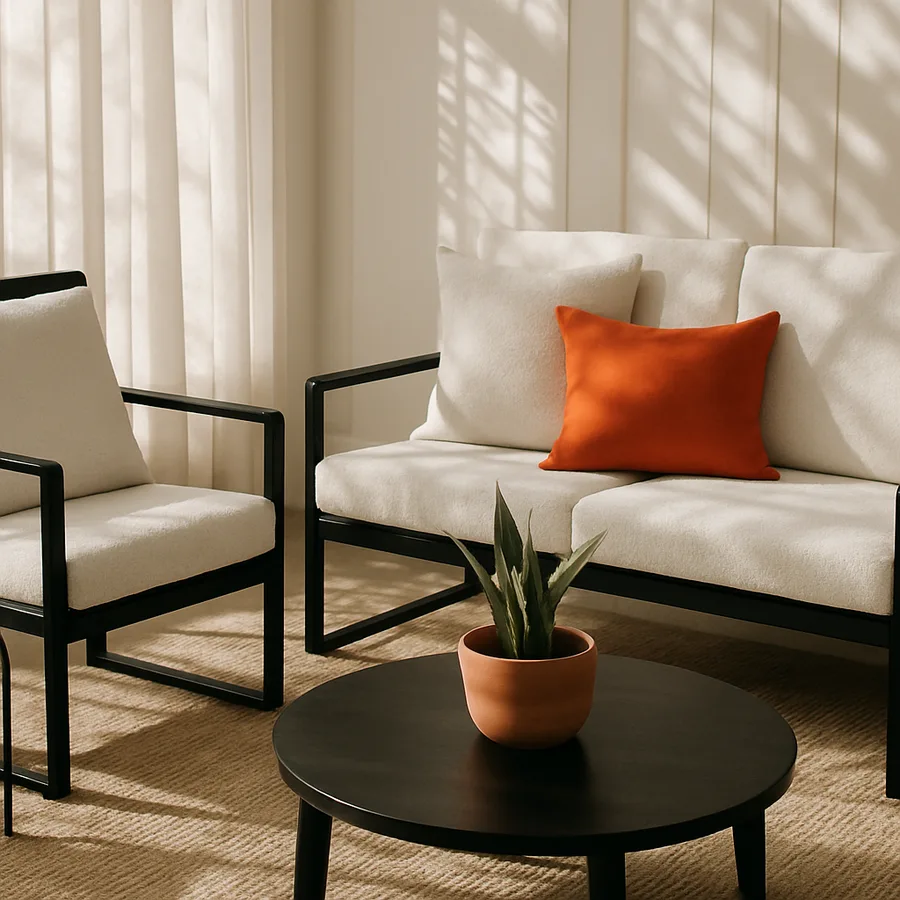
The sunroom sits in an awkward place in the American floor plan. It is not quite a living room, not quite a porch, and not quite a conservatory, and the furniture choices that work in any of those three rooms individually tend to fail in a sunroom if they are carried over without adjustment. The shape of the room is often long and narrow. The glass on three walls limits where you can push a sofa. The temperature swings, even in a four-season addition, are more dramatic than in the rest of the house. And the light, which is the whole reason you built the room, makes fabrics and finishes fade unless they are chosen for it.
Laying out furniture for a sunroom is therefore a design problem with unusual constraints. This guide works through the major layout archetypes, the differences between planning a three-season and a four-season space, and the specific choices around anchor pieces, circulation, textiles, and zoning that separate a sunroom that gets used every day from one that becomes a glorified storage room for folded blankets. According to the American Institute of Architects (AIA) Home Design Trends Survey, informal outdoor-connected living spaces remain among the most-requested residential features, and a well-furnished sunroom is exactly that feature in its built form.
Three-Season vs Four-Season: What Changes for Furniture
The three-season sunroom is typically unheated or only supplementally heated. It lives in the shoulder seasons and summer, and gets closed up from roughly November through March in cold climates. That means the furniture inside either has to tolerate cold, damp, and the occasional freeze-thaw cycle, or it has to be designed for easy removal and storage each fall. The four-season sunroom is fully conditioned, usually insulated to the same standard as the rest of the house, and furnished more like any other living room.
The practical consequence is that three-season rooms benefit from outdoor-rated or performance fabrics throughout, aluminum or resin-wicker frames, and cushions that can be stacked in a garage over winter. Four-season rooms can host traditional upholstered sofas, wool rugs, and wood frames, but still benefit from fabrics rated for UV exposure because the sun load even through low-E glass will bleach ordinary cotton and linen over a few seasons. Sunbrella and Perennials are two well-known performance fabric brands that publish lightfastness ratings, typically 1,500 hours of UV exposure or more; look for that number on the tag rather than trusting catalog adjectives.
Reading the Room: Shape, Traffic, and View
Before you order a single cushion, do three things. Draw the room to scale, including every doorway and window. Mark the primary circulation path from the house door to the exterior door (if there is one). And spend an afternoon in the room at three different times of day, noting where the sun hits, where the breeze comes from, and what view each sitting position gives you. A remarkable number of furniture disasters come from laying out the room on paper without spending that afternoon in it first.
Sunrooms tend to fall into a few common shapes. The narrow appendage, about 10 to 12 feet deep by 14 to 20 feet long, is the most common new addition and it struggles with conventional seating arrangements. The square bump-out, roughly 12 by 12 or 14 by 14, is easier because it accepts a standard L-shaped grouping. The wraparound, which turns a corner of the house, is rarest and invites two distinct zones separated by the corner. Each shape has a natural layout, and fighting that natural layout almost always produces uncomfortable results.
- Circulation clearance: keep primary paths at least 36 inches wide per ADA comfort guidance.
- Conversation distance: 8 to 10 feet between facing seats is the upper limit for easy talking.
- Rug sizing: furniture legs on the rug is a stronger look than just a small island in the middle.
- View axes: at least one seat should face the best outdoor view head-on.
Anchor Pieces: Sofa, Sectional, or Pair of Chairs?
The single biggest layout decision is the anchor piece. A sofa runs 72 to 96 inches and visually dominates a small sunroom. A sectional eats floor space but creates a single unified conversation zone. A pair of matching chairs feels airier but seats only two and is less flexible for family gatherings. Each has a place, and the right choice comes from how you actually use the room.
In a narrow sunroom, a full sofa pushed against the solid wall (the house side, not the glass) can work, but it often blocks the view for whoever sits on it. A better solution for narrow rooms is often a loveseat plus two swivel chairs. The swivels let occupants face each other when they want to talk and face the view when they want to read. This arrangement also keeps the backs of upholstered pieces away from the windows, where fabric fade is most aggressive. The American Society of Interior Designers (ASID) has long recommended swivel seating for transition rooms precisely because it solves the which-way-should-I-face problem that defines a sunroom.
In a square sunroom, an L-shaped sectional along two solid walls is often the best use of space, leaving the two glass walls open for circulation and view. If the two exterior walls are opposite each other, a sectional no longer works, and you fall back to a sofa plus two chairs arrangement centered on a coffee table. One reader recently asked whether a pair of daybeds could replace the sofa entirely; in a four-season sunroom used for afternoon reading and occasional naps, that is actually an excellent choice and worth recommending more often than the design magazines suggest.
Layout Archetypes That Actually Work
Over dozens of sunroom projects, a few layouts appear again and again because they solve the shape-and-glass problem reliably. Below are the five most useful.
1. The Long Bowling Alley. For narrow rooms, split the long axis into two zones. At one end, a reading chair with a side table and a floor lamp. At the other end, a small two-seater sofa with a coffee table. A runner rug connects the two zones without unifying them. This solves the too-long-for-one-grouping, too-narrow-for-two-sofas trap.
2. The Central Huddle. For square rooms, a U-shaped grouping around a central coffee table. This maximizes conversation, minimizes circulation path conflicts, and leaves each glass wall clear for the view.
3. The View-Forward Row. For rooms with one exceptional view, a sofa and two chairs all facing the same direction, cinema-style, with a low bench or ottoman in the center serving as coffee table. This arrangement works best in wraparound corners where one glass wall has the dominant sight line.
4. The Daybed Plus Desk. For rooms that serve a double purpose, a daybed against one wall and a small writing desk against another. The desk gets the daylight; the daybed gets the nap. This is increasingly common in post-pandemic home offices.
5. The Dining Transition. For sunrooms that also function as breakfast rooms, a round pedestal table for four in the center of the room plus a single accent chair in a corner. Round tables circulate better than rectangular tables in rooms this size.
Materials, Fabrics, and the UV Problem
Even a four-season sunroom with good low-E glazing passes through enough UV to bleach unprotected fabrics within 18 to 36 months. The National Fenestration Rating Council notes that typical low-E coatings block 40 to 70 percent of UV, which is better than clear glass at roughly 25 percent, but not zero. Plan on performance fabrics or plan on replacing cushion covers.
For frames, aluminum holds up best to both UV and humidity. Teak is beautiful and tolerates weather but turns silver-gray unless oiled; some homeowners love the gray patina and some find it dreary. Resin wicker tolerates UV better than natural rattan, which dries out and cracks within a few years of direct sun. Wood frames in a four-season room are fine as long as they are not touching glass or resting against cold walls where condensation will wick into the joints.
- Performance fabrics: Sunbrella, Perennials, Crypton, all with published UV ratings.
- Frame materials: powder-coated aluminum, teak, resin wicker, finished hardwood.
- Rug fibers: polypropylene outdoor rugs for three-season, wool or wool-blend for four-season.
- Accent textiles: UV-resistant throw pillows, linen-blend curtains with UV backing.
On the question of throw pillows specifically: buy twice as many as you think you need. They fade, they get left outside in an unexpected rain, and they are the cheapest way to refresh a sunroom each spring. Many designers budget 200 to 400 dollars per year just for replacement pillows and covers. For sourcing, the ASID designer directory is a useful starting point, and the AIA home design resources cover the architectural context.
Lighting, Fans, and Evening Use
Sunrooms are designed for the sun, but they are used in the evening too, and bad evening lighting is the single most common complaint from sunroom owners. The standard ceiling-height fan with a single light kit is rarely enough. Plan for three layers: ambient, task, and accent. Ambient comes from the ceiling fan fixture or a recessed array around the perimeter soffit. Task comes from a floor lamp at each seating position. Accent comes from a table lamp or two, plus string lights if you have a porch-style ceiling.
Ceiling fans deserve their own discussion. A four-season sunroom has a genuine climate to manage; warm glass walls in summer create convection loops that a fan disrupts helpfully, while a three-season room needs a fan just for summer comfort. Look for an ENERGY STAR rated fan with a DC motor; those are roughly 60 percent more efficient than AC-motor fans and run noticeably quieter. Size the fan to the room: a 12-by-14 sunroom wants a 52-inch blade span; a 10-by-20 room benefits from two 44-inch fans rather than one.
How often do you actually use your sunroom after dark? If the answer is almost never, a modest single-fixture approach is fine. If it is every evening from May through October, treat the lighting like you would treat a primary living room's.
Zoning, Storage, and the Pet Question
A surprising amount of sunroom frustration comes from lack of storage. These rooms accumulate throw blankets, magazines, potted plants in their off-season, binoculars, board games, and the occasional stray pet toy. Plan storage into the furniture itself. A storage ottoman under the coffee table, a bench with a hinged lid under a window, or a low console behind the sofa can each absorb a surprising volume of clutter.
Zoning within the room is equally important. Even in a 12-by-14 room, creating two distinct zones (a conversation zone and a reading zone, or a dining zone and a lounging zone) makes the space feel larger and more usable. A simple change of rug, a different light fixture, or a low plant stand as a divider is enough. Avoid actual walls or tall dividers, which defeat the openness that made you build the sunroom in the first place.
Pets deserve a paragraph of their own. Sunrooms are famously cat and dog magnets; the warm tile floor and the view of the yard combine irresistibly. If you have pets, specify fabrics accordingly. Performance weaves, tight loop piles, and leather or faux-leather surfaces all survive claws better than linen or velvet. A washable throw draped over the favored dog-spot cushion saves the cushion itself. And a small pet bed in the warmest corner usually ends up more popular than whichever chair you meant them to stay off of.
Conclusion
Sunroom furniture layout is an exercise in respect for the room's peculiarities. The glass walls, the temperature swings, the UV load, and the awkward shapes demand different choices than a conventional living room would, and those choices reward careful thought. Start with the room's shape, choose the right anchor piece for that shape, specify fabrics that will not fade, and build in at least two distinct zones so the room feels intentional rather than leftover.
Three-season and four-season rooms diverge mostly on materials and thermal comfort. A three-season room wants outdoor-grade everything, plus a storage plan for winter. A four-season room wants UV-rated fabrics but can otherwise host a conventional living-room setup. The common ground is circulation, light, and the decision to face seating toward the view rather than away from it. Owners who get that last point right almost always love their sunrooms; owners who get it wrong almost always redecorate within three years.
Budget is surprisingly flexible. A well-laid-out 12-by-14 sunroom can be furnished for 2,500 to 5,000 dollars at the economical end using performance fabrics from mid-market brands, or it can run 15,000 dollars and up with designer pieces. The layout itself does not cost more; only the pieces inside it do. That is the good news: thoughtful planning is free, and it is the single highest-return investment you can make in the project.
Your action step this week: measure your sunroom at its longest and widest dimensions, sketch the door locations and window walls, and then tape out a proposed layout on the floor with blue painter's tape before buying anything. Sit in the tape outlines. Walk the circulation paths. If the layout survives 48 hours of that simulation without feeling wrong, you have found the arrangement that will serve the room for the next decade.
More Articles You May Like



Comments
Post a Comment