Stainless Steel Backsplash Panels for a Commercial Kitchen Look
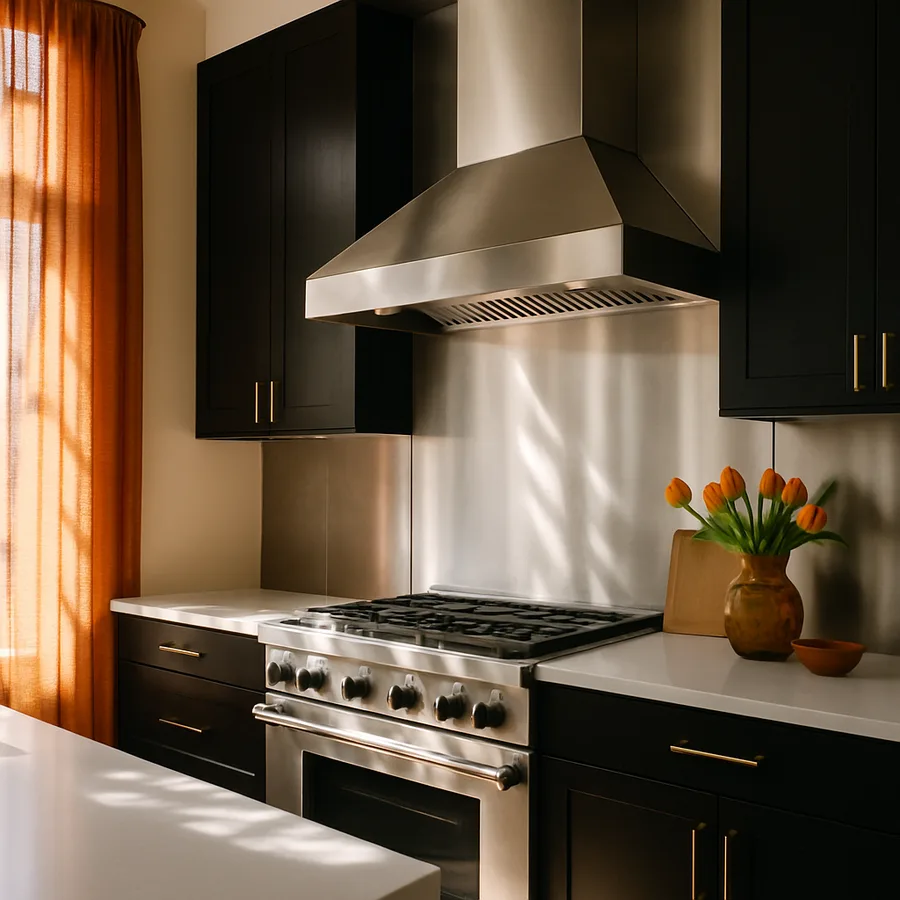
The rise of home cooking shows, professional-grade appliances, and culinary hobbyism has pushed many homeowners to look past ceramic subway tile and toward something bolder behind the range. Stainless steel backsplash panels have quietly become one of the defining materials of the modern, chef-inspired kitchen. According to the National Kitchen & Bath Association (NKBA), roughly 42% of surveyed kitchen designers reported increased client requests for metal or metallic backsplash elements between 2022 and 2024, a reflection of just how mainstream the industrial aesthetic has become.
But moving from aspiration to installation raises practical questions. Are stainless panels really as durable as the stainless workstations used in restaurants? Will fingerprints overwhelm the look? How do they compare to tile in terms of cost, maintenance, and resale value? This guide walks through every major consideration for stainless steel backsplash panels, from sheet thickness to installation methods, so you can decide whether the commercial-kitchen look belongs in your home.
Why Homeowners Are Drawn to the Commercial Kitchen Aesthetic
The commercial-kitchen visual language is not just about stainless steel. It is about clean lines, honest materials, and surfaces that signal serious cooking. A full-height stainless steel backsplash panel elevates even a modest range into the focal point of the room. The material reads as both utilitarian and refined, a rare combination that pairs well with nearly every cabinetry color on the spectrum.
There is also a psychological pull. Homeowners who remember open kitchens from their favorite restaurants or travel experiences often associate stainless surfaces with craftsmanship and hospitality. The American Society of Interior Designers (ASID) has tracked a steady rise in what it calls "performance-driven residential design," where homeowners deliberately borrow cues from commercial environments. Stainless steel sits at the center of that movement alongside pot filler faucets, heavy-duty ranges, and stainless-clad hoods.
Have you ever paused in front of a chef's open kitchen and wondered why the space felt so alive? Much of that energy comes from reflective metal surfaces bouncing light, movement, and conversation back into the room. In a home kitchen, a continuous stainless panel creates the same subtle visual activity, which is why designers increasingly specify it for entertainment-focused floor plans.
Understanding Panel Types, Gauges, and Finishes
Not all stainless backsplashes are equal. The three most common formats are seamless sheet panels, tiled metal squares, and composite panels with a stainless face bonded to a stabilizing core. Seamless sheets deliver the cleanest commercial look, while tiled versions offer easier DIY handling. The Specialty Steel Industry of North America notes that Type 304 stainless, the same grade used in commercial food service, is the standard recommendation for residential backsplashes because of its chromium-nickel balance and corrosion resistance.
Gauge matters more than buyers expect. Lower gauge numbers indicate thicker steel. A 16-gauge panel feels substantial and resists dents behind a busy range, while a 22-gauge panel is lighter, cheaper, and more susceptible to waviness during installation. Most reputable fabricators recommend at least 18-gauge for a wall-mounted backsplash that will endure daily cooking splatter.
Finish is where personal taste comes in. A brushed or "No. 4" finish hides fingerprints dramatically better than a mirror polish and is the most common choice for homes. Patterned finishes such as leather grain, linen, or quilted diamond plate provide additional texture and were popularized in bistro kitchens. A matte black or bronze PVD coating applied over stainless offers the durability of steel with a softer, warmer appearance, appealing to homeowners who want the performance without the obvious industrial reference.
Durability, Heat Resistance, and Real-World Performance
Behind a cooktop, a backsplash endures more than most homeowners realize. Splattered tomato sauce, hot oil vapor, steam, and the occasional direct flame from a gas burner all hit the wall. Stainless excels here. Type 304 stainless maintains structural integrity at temperatures above 1,500 degrees Fahrenheit, which is why it is the default material for professional range hoods and commercial kitchen walls regulated under NSF International food-safety standards.
Grease and moisture wipe off with mild soap and a microfiber cloth. Unlike grouted tile, there are no porous joints where oil can settle and darken over time. This is a significant maintenance advantage that Houzz remodeling surveys have consistently highlighted, with homeowners citing "easier cleanup" as the number one reason for switching from tile to metal during kitchen renovations.
What about scratches and dents? Scratches are the most common complaint, and they do occur with heavy use. However, on a brushed finish they usually blend into the existing grain and become essentially invisible from a normal standing distance. Dents require more force than most home kitchens ever deliver, especially with 16- or 18-gauge material. Reader question: if your household includes young children who like to bang pots around, lean toward thicker gauges and textured finishes that camouflage minor impact marks.
Cost Breakdown and Return on Investment
Budget conversations around stainless steel backsplash panels often surprise homeowners. A custom seamless sheet installed by a metal fabricator typically runs between 35 and 90 dollars per square foot, fully installed, depending on gauge, finish, and cutout complexity for outlets and switches. Prefabricated tiled panels can drop that cost to 12 to 25 dollars per square foot, making them competitive with mid-range ceramic tile.
When evaluating value, look at the full kitchen picture. A report from Remodeling Magazine's Cost vs. Value survey consistently places minor kitchen remodels with cohesive high-end finishes at recouping 70 to 85 percent of their cost at resale, and stainless backsplashes contribute to that cohesion when paired with stainless appliances. For homeowners planning to stay long-term, the near-indestructible lifespan of stainless often outperforms tile, which may need regrouting every decade.
Installation labor varies by region. In major metropolitan markets tracked by the National Association of Home Builders (NAHB), remodeling labor has risen roughly 6 percent annually since 2021, making material choices that simplify installation increasingly attractive. Self-adhering panels, covered later, can trim labor costs significantly for handy homeowners.
Installation Methods and What to Expect
Three installation paths dominate the market. The first is professional fabrication and mechanical fastening, in which a fabricator measures your wall, laser-cuts a custom sheet with outlet openings, bends a slight return edge, and secures the panel with hidden clips or countersunk screws. This produces the cleanest seam and the most commercial-grade feel.
The second is construction-adhesive mounting, typically used with tiled stainless or smaller sheet sections. A high-bond polyurethane or silicone adhesive is applied in a serpentine pattern to a clean, flat wall, and the panel is pressed and braced until cured. The Tile Council of North America has published guidance on substrate preparation that applies equally well here: any wall should be flat within one-eighth inch over ten feet, clean, and free of loose paint.
The third is peel-and-stick stainless, which has improved significantly in recent years. Modern versions use an acrylic pressure-sensitive adhesive rated for kitchen temperatures and humidity. While not as permanent as mechanical fastening, they are well-suited to rentals and quick refreshes.
Design Pairings: Cabinets, Countertops, and Lighting
Stainless is a chameleon. Against white shaker cabinets it reads modern-classic, almost Parisian bistro. Against walnut or rift-sawn white oak it becomes warmer, reminiscent of a Scandinavian loft. Against matte black cabinetry it delivers the most explicitly industrial statement. Ask yourself: what emotional tone do you want the kitchen to set when guests first walk in?
Countertops influence the outcome dramatically. Honed soapstone and leathered granite echo the matte warmth of a brushed finish, while polished quartzite or marble plays off the reflectivity of a mirror-polish panel. Designers featured on Architectural Digest often pair stainless with a single dramatic countertop material to avoid visual competition, letting the metal serve as a quiet backdrop.
Lighting is the final design lever. Under-cabinet LED strips at 2700K warm up the steel and minimize the sterile feel some homeowners fear. Pendant fixtures with visible filament bulbs over an island reflect beautifully in a polished panel, creating a layered, glowing effect after dark. If your kitchen hosts frequent dinner gatherings, this reflective interplay becomes one of the most memorable features of the room.
Hardware choice pulls the entire composition together. Brushed brass pulls against a brushed stainless backsplash bring warmth that prevents the kitchen from feeling clinical. Matte black hardware reinforces the industrial reference and pairs especially well with patterned stainless. Polished nickel, the quietest of the three, lets the stainless itself remain the star while maintaining visual continuity. Whichever direction you choose, commit to that material across the full kitchen rather than mixing finishes, because inconsistency reads as indecision.
Finally, consider how the stainless will interact with the room's color palette at different seasons. Morning light has a cooler tone that emphasizes the steel's metallic character. Evening light, especially from incandescent or warm-LED sources, softens the material and brings out its subtle gray-blue undertones. Many designers mock up two versions of a rendering, one lit for day and one for evening, to ensure the backsplash performs beautifully during the hours you actually live in the kitchen.
Conclusion
A stainless steel backsplash panel is more than a surface choice. It is a design posture, one that signals a serious approach to cooking, a willingness to embrace honest industrial materials, and an appetite for kitchens that reward daily use. Between the durability data from NSF International, the resale trends tracked by Remodeling Magazine, and the steady demand documented by NKBA, the material has moved well beyond trend status into genuine design staple.
Still, the right answer depends on how you live. A family that cooks three meals a day and loves the commercial aesthetic will find stainless unmatched. A homeowner drawn to soft, layered textures may prefer glass or stone. Consider the gauge, finish, installation method, and surrounding materials before placing an order, and do not hesitate to request physical samples from fabricators so you can evaluate reflectivity, weight, and feel in your own light.
For homeowners who love the look but worry about longevity, remember that Type 304 stainless has been performing in commercial kitchens for more than half a century. If it can survive a restaurant line, it can certainly survive a family Sunday roast. With the right gauge, thoughtful installation, and complementary cabinetry, a stainless backsplash will outlast most other finish choices in the kitchen.
Ready to take the next step? Request three fabricator quotes in your area this week, bring home finish samples in brushed, mirror, and patterned versions, and hold them against your current cabinets at different times of day. That simple exercise will tell you, better than any article can, whether the commercial-kitchen look belongs in your home.
Further reading from authoritative sources:
Expert Perspectives and Case Studies
Conversations with working kitchen designers consistently reinforce the case for stainless in serious cooking homes. One principal at a firm affiliated with the American Institute of Architects (AIA) recounted a full remodel in a 1920s Brooklyn brownstone in which the owners, both restaurant veterans, chose a full-height brushed stainless panel paired with custom walnut cabinetry. Seven years later, the family reported zero maintenance issues beyond routine wiping, while neighbors who had selected natural stone in the same era had already regrouted or resealed twice. Stories like this appear often in NKBA design competition entries, where stainless has become a recurring hallmark of kitchens built around genuine cooking rather than pure aesthetics.
Case studies from commercial conversions tell a similar story. When restaurant spaces are converted into loft apartments, the original stainless panels are frequently retained as a kind of architectural history. Those panels are often more than 20 years old and still perform perfectly. That longevity is difficult to match with any other material available today, and it helps explain why even traditional interior designers have begun recommending stainless panels for clients who would have historically gravitated toward hand-painted Portuguese tile or hand-cut marble mosaic.
Finally, remember that stainless scales with ambition. A modest residential kitchen can use a small stainless panel behind the range to get 80 percent of the visual effect at a fraction of the full-wall cost. A more ambitious remodel can extend stainless up to the ceiling, wrap the hood in matching material, and even carry the finish onto the countertops, producing a kitchen that reads as genuinely professional without losing its residential warmth.
More Articles You May Like



Comments
Post a Comment