Top 5 Trending Interior Design Styles You Need to Try This Year
Interior design trends do not emerge in a vacuum. They arise from broader cultural currents: shifts in how people work, evolving attitudes toward sustainability, and a collective reassessment of what makes a home feel genuinely restful. The American Society of Interior Designers (ASID) tracks these patterns through annual surveys, and their most recent data confirms that homeowners are gravitating toward styles that prioritize substance over spectacle. Functionality, material honesty, and emotional comfort now outrank visual novelty in consumer preference rankings.
Professional designers working across residential and hospitality sectors report that clients arrive at initial consultations with increasingly specific requests. They reference particular textures, color temperatures, and spatial feelings rather than broad labels. This sophistication among homeowners has pushed the industry to refine its offerings, producing five distinct styles that dominate the current landscape. Each one represents a philosophy of living as much as an aesthetic choice.
Which rooms in your home feel most aligned with how you actually spend your time, and which feel like they belong to a different era of your life? That question is worth sitting with before choosing a direction, because the most successful redesigns start from honest self-assessment rather than trend chasing.
Japandi: The Enduring East-Meets-North Aesthetic
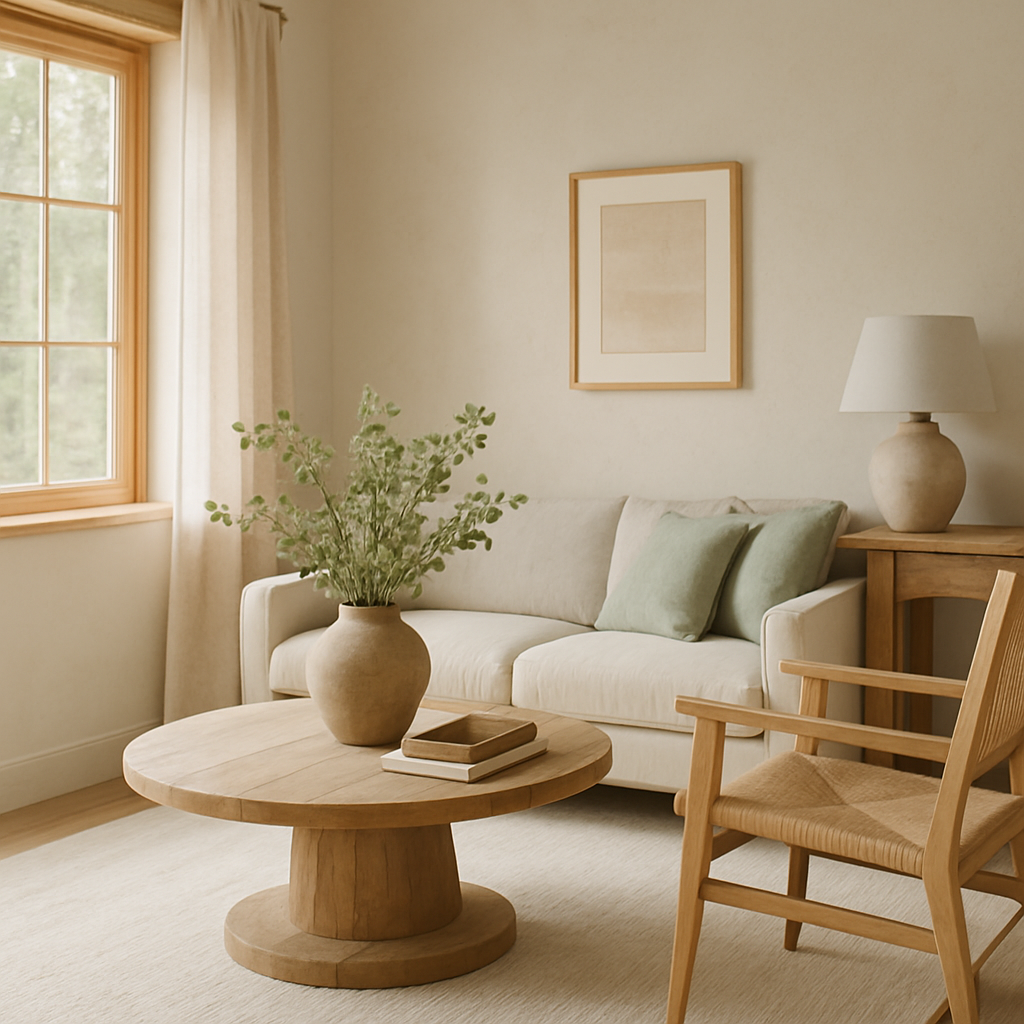
Japandi has proven itself far more durable than skeptics predicted when the style first surfaced around 2018. The fusion of Japanese wabi-sabi philosophy with Scandinavian functionalism produces interiors that feel calm without feeling cold. Core principles include appreciation for imperfection, reliance on natural materials, and a disciplined approach to object placement. Every item in a Japandi room exists because it is useful, beautiful, or both. Nothing occupies space merely to fill it.
Material selection drives the Japandi look more than any single piece of furniture. Light-toned woods like ash and birch create a Scandinavian foundation, while darker accents in walnut or charred cedar introduce Japanese gravity. Textiles tend toward raw linen, undyed wool, and cotton in muted earth tones. Hardware, when visible at all, appears in matte black or brushed brass. The NCIDQ has noted that Japandi principles translate exceptionally well to small spaces because the style's emphasis on open floor area makes rooms feel larger than their square footage suggests.
Adopting Japandi does not require a full renovation. Begin by editing your existing possessions. Remove decorative objects that serve no functional purpose and store or donate furniture that crowds traffic paths. Replace synthetic throw pillows with linen or hemp alternatives. Swap chrome fixtures for matte black ones. These incremental changes accumulate into a noticeably different spatial experience within a single weekend and a modest budget of a few hundred dollars.
Biophilic Design: Nature as a Design Partner
The biophilic design movement operates on a premise supported by decades of environmental psychology research: humans function better, physically and mentally, in spaces that reference the natural world. The International Interior Design Association (IIDA) has published guidelines urging designers to incorporate at least three biophilic elements in every residential project. These elements fall into three categories: direct nature contact (plants, water, sunlight), indirect nature reference (natural materials, organic shapes, nature imagery), and spatial conditions found in nature (prospect, refuge, complexity).
Direct nature contact remains the most accessible entry point. A cluster of large-scale plants, such as fiddle-leaf figs, monstera, or bird-of-paradise specimens, can anchor a living room corner with dramatic visual impact. Herb gardens mounted on kitchen walls provide both greenery and practical harvesting opportunities. Indoor water features, from wall-mounted cascades to freestanding stone fountains, introduce soothing ambient sound that masks traffic noise and creates a sense of enclosure. AD PRO has documented a 35% increase in designer-specified indoor water features over the past two years.
Indirect biophilic strategies require more planning but deliver lasting results. Selecting stone countertops with visible veining, hardwood floors with pronounced grain patterns, and textiles in organic shapes rather than geometric repeats all reinforce the nature connection at a subconscious level. Even color choices matter: greens, browns, warm whites, and sky blues register as natural in the human visual system, promoting relaxation. The investment can range from minimal, with paint and textiles, to substantial, with stone and reclaimed timber installations running upward of $10,000 per room.
Quiet Luxury: Refined Restraint
Quiet luxury as a design philosophy asks a provocative question: what happens when you remove every element that exists solely to impress and keep only what genuinely improves daily life? The result is a space defined by material quality, thoughtful proportion, and invisible craftsmanship. Walls finished in hand-applied lime wash rather than standard latex paint. Doors hung on concealed hinges that close with a satisfying, weighted click. Upholstery in fabrics that feel extraordinary against skin but photograph as simple solids.
This style appeals strongly to homeowners who have cycled through several trends and arrived at a desire for permanence. A quiet luxury kitchen features handleless cabinetry in a single tone, countertops in honed natural stone, and integrated appliances that maintain flush surfaces. Nothing calls attention to itself individually, but the cumulative effect communicates deliberate care. Houzz editorial data shows that searches for "timeless kitchen design" have overtaken "modern kitchen design" for the first time in the platform's history.
Executing quiet luxury well often requires professional guidance because the style's power lies in details that non-designers tend to overlook. The specific profile of a baseboard molding, the temperature of white used on trim versus walls, the ratio of a sofa's seat depth to its back height: these decisions determine whether a room reads as serene or simply plain. Budget between $8,000 and $15,000 per room for a designer-guided quiet luxury transformation that includes furniture, finishes, and soft furnishings.
Maximalist Eclecticism: Curated Abundance
On the opposite end of the spectrum from Japandi and quiet luxury sits maximalist eclecticism, a style that celebrates personal history, global influences, and fearless color. This approach rejects the notion that a cohesive room requires a single aesthetic thread. Instead, it relies on the homeowner's curatorial eye to assemble objects from different periods, cultures, and materials into arrangements that feel vibrant and deeply personal. The ASID has observed that maximalist projects frequently score highest in client satisfaction surveys because they reflect individual identity rather than a prescribed formula.
Successful maximalism follows invisible rules. Scale must vary, mixing large anchor pieces with smaller collected objects. Color, though abundant, needs a unifying thread: a recurring hue or tonal range that ties disparate items together. Texture diversity keeps the eye engaged without causing fatigue. A maximalist living room might pair a velvet Chesterfield sofa with a Moroccan wool rug, Indonesian carved wood side tables, and framed textile art from Oaxaca, all unified by a warm palette of burgundy, amber, and forest green.
How many objects in your home carry genuine personal stories, and how many are placeholders you never got around to replacing? Maximalism works best when every item has provenance, whether purchased during travel, inherited from family, or made by a known artisan. Start by gathering your most meaningful possessions and arranging them as a focal gallery in one room. The emotional resonance of authentic objects creates an atmosphere no catalog purchase can replicate, and building a maximalist collection over time is part of the style's appeal.
Modern Organic: Sculptural Forms in Natural Materials
Modern organic design bridges the gap between biophilic warmth and contemporary minimalism. The style features furniture and fixtures with sculptural, often asymmetric forms, crafted from natural materials like solid wood, stone, and handblown glass. Think of a dining table with a live-edge walnut top supported by a single curved steel leg, or a pendant light made from woven rattan in an irregular globe shape. The forms reference nature without literally reproducing it.
This approach has gained significant traction in residential design because it photographs beautifully while also feeling inviting in person. The IIDA highlighted modern organic as a top emerging category in their annual trend forecast, noting that it appeals to a demographic that finds pure minimalism too austere and traditional styles too predictable. Key designers working in this space draw inspiration from mid-century sculptors, Japanese woodworking traditions, and Brutalist architecture, synthesizing these references into pieces that feel fresh and timeless simultaneously.
Anchoring a room in modern organic style typically starts with one or two statement furniture pieces. A sculptural lounge chair, a freeform console table, or an oversized ceramic floor vase can establish the vocabulary for an entire room. Supporting pieces should be simpler in form to avoid visual competition, following the design principle that every room needs both soloists and chorus members. Expect to invest $2,000 to $6,000 in anchor pieces from independent makers, with more accessible options available from retailers who have adopted the aesthetic for mass production.
Choosing Your Direction: A Framework for Decision-Making
With five strong styles competing for attention, the selection process can feel paralyzing. A practical framework starts with three questions. First, how do you want your home to feel when you walk through the front door? The answer filters immediately: if you want calm, Japandi and quiet luxury lead. If you want energy, maximalism and color blocking call. If you want grounding, biophilic and modern organic respond. Second, what is your maintenance tolerance? Maximalist rooms require more dusting and organizing; Japandi rooms demand vigilance about clutter.
Third, consider your timeline. Quiet luxury and modern organic often depend on sourcing specific pieces that may have lead times of eight to twelve weeks. Japandi and biophilic design can be implemented more quickly because they rely on subtraction and readily available natural materials. Maximalism, paradoxically, works best when built gradually over months or years, since the collected-over-time quality is central to its authenticity. The NCIDQ recommends that homeowners set a two-year vision rather than trying to complete a full transformation in a single sprint.
Professional designers can blend elements from multiple styles into a cohesive whole, which is often the most satisfying outcome for homeowners who resonate with more than one approach. A living room might combine Japandi spatial discipline with biophilic plant arrangements and one or two modern organic statement pieces. The role of a skilled designer is to manage the proportions so the blend feels intentional rather than confused. Initial design consultations typically run $250 to $500 and can save thousands in avoided missteps down the road.
Conclusion
The five styles explored here, Japandi, biophilic design, quiet luxury, maximalist eclecticism, and modern organic, represent the strongest currents in residential interior design this year. Each one addresses a real psychological or practical need, which explains their staying power beyond seasonal trend cycles. The common denominator across all five is intentionality: a deliberate process of choosing what belongs in your space and, equally important, what does not.
Rather than committing to a single style immediately, spend two weeks observing your current habits at home. Notice which rooms you gravitate toward and which you avoid. Pay attention to the lighting, textures, and colors that make you feel most at ease. These observations form a personal design brief that is more useful than any trend report, because it is grounded in your actual behavior rather than aspirational imagery.
When you are ready to act, start with the room where you spend the most waking hours. Apply one style deliberately, live with it for a month, and assess honestly whether the change improved your daily experience. If it did, expand into adjacent rooms. If it did not, revisit the framework questions and try a different direction. The goal is not a home that impresses strangers on the internet but one that genuinely supports the life you lead within its walls.



Comments
Post a Comment