Slide-In Range vs Freestanding: Which Looks More Built In
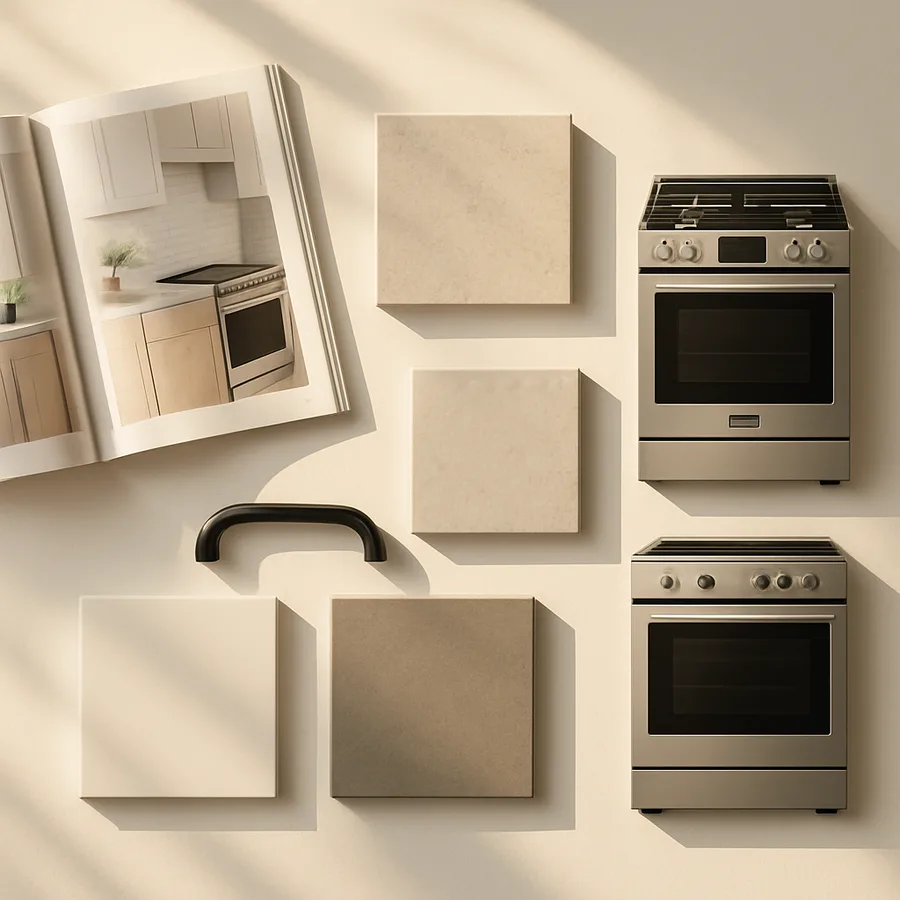
When homeowners browse kitchen showrooms or scroll through renovation portfolios, the ranges that catch their eye almost always share one visual quality: they look like they belong, as though the kitchen were designed around the appliance rather than the appliance being dropped into an available slot. That seamless, built-in appearance is the defining promise of the slide-in range, and it represents the primary reason buyers pay a premium for this configuration over the traditional freestanding model. But the distinction between these two range types extends beyond aesthetics into practical considerations of installation, cost, countertop compatibility, and kitchen layout. According to the Association of Home Appliance Manufacturers, slide-in ranges now account for roughly 30 percent of all range sales in the United States, up from just 15 percent a decade ago, reflecting the growing consumer appetite for a polished, custom kitchen look without the cost of a fully professional installation.
Defining the Physical Differences
A freestanding range is designed to stand on its own, with finished side panels that allow it to be placed anywhere in the kitchen, including at the end of a cabinet run where one side is exposed. The control panel sits on a raised backguard behind the cooking surface, a vertical strip typically 3 to 6 inches tall that houses the knobs or touch controls for both the cooktop burners and the oven. This backguard creates a visible break between the range and any backsplash behind it, and it adds height above the counter plane that can look mismatched with the surrounding cabinetry. The range rests on its own legs or a base frame and does not require any cabinetry modification for installation beyond an appropriately sized gap between base cabinets.
A slide-in range eliminates the rear backguard entirely, placing all controls on the front of the appliance, either on a panel above the oven door or integrated into the cooktop surface. The sides of a slide-in range are unfinished because they are designed to be concealed by the adjacent countertop and cabinets. The range slides backward into the cabinet opening until its slightly overhanging cooktop edges rest on top of the counter surface on both sides, creating a continuous line from counter to cooking surface to counter. This overlap seals the gaps between the range and the adjacent cabinets, preventing food debris from falling into the crevices and giving the installation a custom, integrated look.
The front-mounted controls of a slide-in range place the knobs at the front edge of the appliance, which changes the ergonomic interaction. The cook no longer reaches across hot burners to adjust the back controls, a meaningful safety improvement especially in households with children. However, front-mounted knobs are more accessible to toddlers, which is why many slide-in ranges include child lock features that disable the controls. The visual result of front-mounted controls is a cleaner profile when viewed from the side or across the kitchen, because the cooking surface presents an uninterrupted flat plane at counter height.
The depth of the two range types also differs in ways that affect the built-in appearance. Most freestanding ranges are 25 to 27 inches deep, which matches standard base cabinet depth but may sit slightly forward of the counter edge or slightly recessed depending on the specific model and counter overhang. Slide-in ranges are typically designed to align precisely with standard 25-inch-deep base cabinets and 1.5-inch countertop overhangs, so the front face of the oven door sits flush with or very slightly behind the adjacent cabinet faces. This flush alignment is one of the most visually impactful differences between the two types, and it is the detail that most strongly creates the impression of a built-in installation.
The Visual Impact on Overall Kitchen Design
The built-in look that a slide-in range achieves extends its visual benefit beyond the range itself to the entire kitchen composition. When the range sits flush with the countertop and the backsplash runs continuously behind the cooking surface without interruption from a backguard, the eye perceives the kitchen as a unified, intentionally designed space. The backsplash becomes a continuous canvas, whether it is subway tile, natural stone, or a slab of quartz, and the range appears as an integrated element of the cabinetry rather than a separate appliance placed between cabinets. Kitchen designers at the National Kitchen and Bath Association consistently cite the continuous backsplash as one of the top three visual upgrades that elevate a kitchen from builder-grade to custom in perceived quality.
The freestanding range's backguard, by contrast, creates a visual interruption that draws attention to the range as a separate object inserted into the kitchen's surface plane. Even when the backguard is the same finish as the range front, its height above the counter level breaks the horizontal lines that give a kitchen its sense of order and calm. In a kitchen with upper cabinets flanking the range, the backguard sits awkwardly between the counter and the bottom of the hood or upper cabinets, occupying visual space that could otherwise be filled with continuous backsplash tile. For kitchens pursuing a minimalist or contemporary aesthetic, this interruption is particularly jarring and is frequently cited as the primary reason for upgrading from a freestanding to a slide-in model.
Color and finish consistency also plays a role in the built-in perception. The sides of a freestanding range are finished in the same color as the front, usually stainless steel, white, or black, so when viewed from the side, the range presents a uniform appliance appearance. The sides of a slide-in range are typically painted black or left as raw metal because they are meant to be hidden. If a slide-in range is installed at the end of a cabinet run with one side exposed, the unfinished panel is visible and requires a separate side panel accessory, available from most manufacturers for $50 to $150, to maintain the aesthetic. This is an important detail that buyers sometimes overlook when choosing between the two types.
The range hood or microwave-hood combination mounted above the range also interacts differently with each type. Above a freestanding range, the backguard creates a small shelf-like surface that tends to accumulate grease and dust in a hard-to-clean location. Above a slide-in range, the flat cooktop surface transitions cleanly to the backsplash, and the hood mounts directly to the wall with no awkward gap or ledge below it. This cleaner junction is easier to maintain and looks more polished, reinforcing the impression that every element of the kitchen was designed to work together.
Installation and Countertop Compatibility
Installing a freestanding range is as simple as sliding the appliance into the gap between base cabinets and connecting the utility supply. No cabinetry modifications are needed beyond ensuring the gap is the correct width, typically 30 or 36 inches. The range's own legs support its weight, and the finished sides mean that minor gaps between the range and the adjacent cabinets, while cosmetically undesirable, are structurally inconsequential. This simplicity makes freestanding ranges the default choice in rental properties, spec-built homes, and any kitchen where quick appliance swaps without cabinetry changes are a priority.
Slide-in range installation requires more precision. The countertop on both sides of the range opening must be cut or specified to allow the range's cooktop edges to overlap, creating the seamless look that defines the slide-in concept. If you are replacing a freestanding range with a slide-in model in an existing kitchen, the countertop may need to be trimmed or the counter opening may need to be widened slightly to accommodate the slide-in's different dimensions. Granite, quartz, and other stone countertops require professional cutting by a fabricator, which adds $200 to $500 to the installation cost. Laminate countertops can be cut on-site by a skilled installer.
The anti-tip bracket is a critical installation component for both range types but is especially important for slide-in models. This L-shaped metal bracket attaches to the floor or wall behind the range and engages with the range's rear foot or frame to prevent the appliance from tipping forward if excessive weight is placed on an open oven door. The Consumer Product Safety Commission (CPSC) has documented serious injuries and fatalities from range tip-over incidents, particularly involving children, and requires anti-tip brackets to be installed with every range. Slide-in ranges often come with brackets specifically designed for their mounting configuration, and the bracket must be installed before the range is pushed into its final position.
Do you know whether your existing countertop can accommodate the overlap dimensions of a slide-in range, or will the counter openings need to be modified? Checking the installation specifications of your chosen slide-in model against your current counter dimensions before purchasing avoids the unpleasant surprise of discovering that the countertop needs professional modification on installation day. Most manufacturers publish detailed installation guides with exact cutout dimensions, and reviewing these documents with your installer or contractor before the appliance arrives ensures a smooth installation process.
Price Comparison and Value Proposition
The price premium for a slide-in range over a comparable freestanding model from the same manufacturer typically falls between $300 and $800, depending on the brand and feature level. At the entry level, a quality freestanding gas or electric range costs $600 to $1,200, while a comparable slide-in model costs $1,000 to $1,800. In the mid-range segment, freestanding models run $1,200 to $2,500 and slide-in models $1,800 to $3,500. At the premium tier, the price gap narrows proportionally because both types share the same high-end features, materials, and cooking performance, with the slide-in premium representing a smaller percentage of the total price.
The value proposition of the slide-in premium depends on the context of the kitchen. In a kitchen undergoing a full renovation where new cabinetry, countertops, and backsplash are already in the budget, the incremental cost of a slide-in range is easily justified by the visual upgrade it delivers. The continuous backsplash alone would cost several hundred dollars less if it terminated at a freestanding range's backguard, so the effective premium is partially offset. In a kitchen where only the range is being replaced and the existing cabinetry and countertop will remain, the slide-in premium must be evaluated against potential countertop modification costs that may push the total upgrade expense higher.
From a resale perspective, the National Association of Realtors kitchen trend reports indicate that slide-in ranges are increasingly expected in mid-range and premium kitchen renovations. Real estate agents in competitive markets report that a freestanding range in an otherwise well-appointed kitchen can create a perception of inconsistency that undermines the renovation's overall impression. While quantifying the exact resale impact of a range type is difficult, the directional evidence suggests that the slide-in configuration contributes to the cohesive, high-quality kitchen appearance that drives buyer interest and supports stronger offers.
It is worth noting that the operating costs, energy consumption, cooking performance, and reliability of slide-in and freestanding ranges are virtually identical when comparing models with the same burner configuration, oven capacity, and feature set from the same manufacturer. The premium is entirely for the form factor and the built-in aesthetic, not for superior cooking capability. A buyer whose primary concern is cooking performance and whose kitchen aesthetics are a secondary priority will find no functional reason to pay the slide-in premium and can invest the savings in higher-quality cookware, a better range hood, or other kitchen upgrades with a more direct impact on cooking results.
When a Freestanding Range Is the Better Choice
Despite the aesthetic advantages of slide-in ranges, there are several scenarios where a freestanding model is not just acceptable but genuinely preferable. The most common is the end-of-run installation, where the range sits at the terminus of a cabinet row with one side exposed to the room. Slide-in ranges with their unfinished sides look incomplete in this position unless a matching side panel is purchased and installed, and even then, the panel may not perfectly match the cabinet finish. A freestanding range with its factory-finished sides looks natural and complete in an end-of-run position without any additional accessories or modifications.
Budget-conscious renovations where the existing countertop will be retained also favor freestanding ranges. If the current counter has a standard range opening sized for a freestanding model, switching to a slide-in may require countertop modifications that add cost and risk, particularly with natural stone countertops that are difficult to cut precisely on-site. In these cases, a high-quality freestanding range in a contemporary finish can deliver a kitchen upgrade that looks fresh and modern without triggering a cascade of countertop and cabinetry changes.
Rental properties and investment properties where appliance durability and replaceability are prioritized over aesthetics are natural territory for freestanding ranges. The simpler installation means that a failed range can be swapped for a replacement of the same size in under an hour, with no countertop adjustments and no cabinetry modifications. The freestanding form factor also spans a wider range of price points, giving landlords and property managers more options for finding reliable, affordable replacements when appliances reach the end of their service life.
Are you planning to stay in your home for the long term, or is this renovation intended to position the property for sale within the next few years? The answer significantly influences whether the slide-in premium represents a worthwhile investment. Long-term residents benefit from the daily visual and functional satisfaction of a built-in look, while short-term owners should evaluate whether the local buyer market values the upgrade enough to recoup the cost. In either case, the decision should be deliberate rather than defaulting to whichever model happens to be on sale.
Achieving a Built-In Look Without a Slide-In Range
For homeowners who want to improve the built-in appearance of their kitchen without replacing a functional freestanding range, several aftermarket and design strategies can close the visual gap. Range gap covers, also called stove gap fillers, are T-shaped silicone or stainless steel strips that fill the narrow gaps between a freestanding range and the adjacent countertops. These inexpensive accessories, typically $10 to $30, prevent food debris from falling into the gaps and create a cleaner visual line between the appliance and the counter, addressing one of the most visually distracting aspects of a freestanding installation.
A more impactful upgrade is installing a backsplash that extends above the backguard to the bottom of the range hood or upper cabinets, visually integrating the backguard into the wall treatment rather than leaving it as a standalone feature. When the backsplash tile or panel extends seamlessly from the counter to the hood, the backguard reads as part of the wall rather than part of the range, significantly reducing the visual disruption. This approach works best with backguard finishes that are close in color to the backsplash material, allowing the eye to glide over the transition without catching on a color mismatch.
Custom trim kits and filler panels offered by some cabinet manufacturers can frame a freestanding range so that it appears more intentionally integrated with the surrounding cabinetry. These panels attach to the base cabinets on either side of the range and overlap the range's edges slightly, mimicking the built-in overlap of a slide-in range. The panels are finished to match the cabinet fronts and can include decorative molding that echoes the cabinet door style, creating a cohesive appearance that bridges the gap between the freestanding range and the custom cabinetry surrounding it.
Ultimately, the built-in look is as much about the details surrounding the range as about the range itself. A freestanding range flanked by beautifully detailed cabinetry, a continuous backsplash, a well-proportioned range hood, and carefully selected gap covers can look remarkably polished and intentional. Consult with a kitchen designer about the full range of options for achieving your desired aesthetic, whether that involves a slide-in range, strategic accessories for a freestanding model, or a completely different appliance configuration.
Conclusion
The slide-in range delivers a more built-in appearance than the freestanding range, and this is not a subjective judgment but an objective result of its design: the eliminated backguard, the counter-overlapping cooktop edges, the front-mounted controls, and the flush depth alignment all contribute to an installation that looks integrated with the surrounding kitchen rather than inserted into it. For kitchens undergoing a full renovation where the cabinetry, countertops, and backsplash are all part of the project scope, the slide-in range is the natural choice for achieving a polished, contemporary result.
The freestanding range, however, remains a versatile, practical, and often entirely appropriate option. Its lower price, simpler installation, finished sides for exposed placements, and wider availability at every price point make it the pragmatic choice for many kitchens. The visual gap between the two types can be narrowed significantly with thoughtful accessory choices and backsplash design, and a well-selected freestanding range in a carefully detailed kitchen can look far better than a slide-in range in a kitchen where the surrounding details were neglected.
The most important takeaway is that the range is one element in a kitchen composition, and its built-in appearance depends as much on what surrounds it as on its own form factor. Investing in continuous backsplash treatment, gap management, consistent cabinet detailing, and a well-proportioned range hood amplifies the visual impact of whichever range type you choose. These supporting details transform the range from a standalone appliance into an integrated component of a kitchen that looks designed rather than assembled.
Whether you lean toward the seamless integration of a slide-in or the practical versatility of a freestanding model, make the decision with a clear understanding of how each type interacts with your specific kitchen layout, countertop material, and design goals. Visit a showroom where both types are displayed in kitchen vignettes, stand at the cooktop height, operate the controls, and observe the visual differences from across the room. The hands-on comparison consistently reveals preferences that product specifications and photographs cannot fully communicate.
More Articles You May Like



Comments
Post a Comment