Pot Filler Faucet Installation Height and Placement Over Stoves
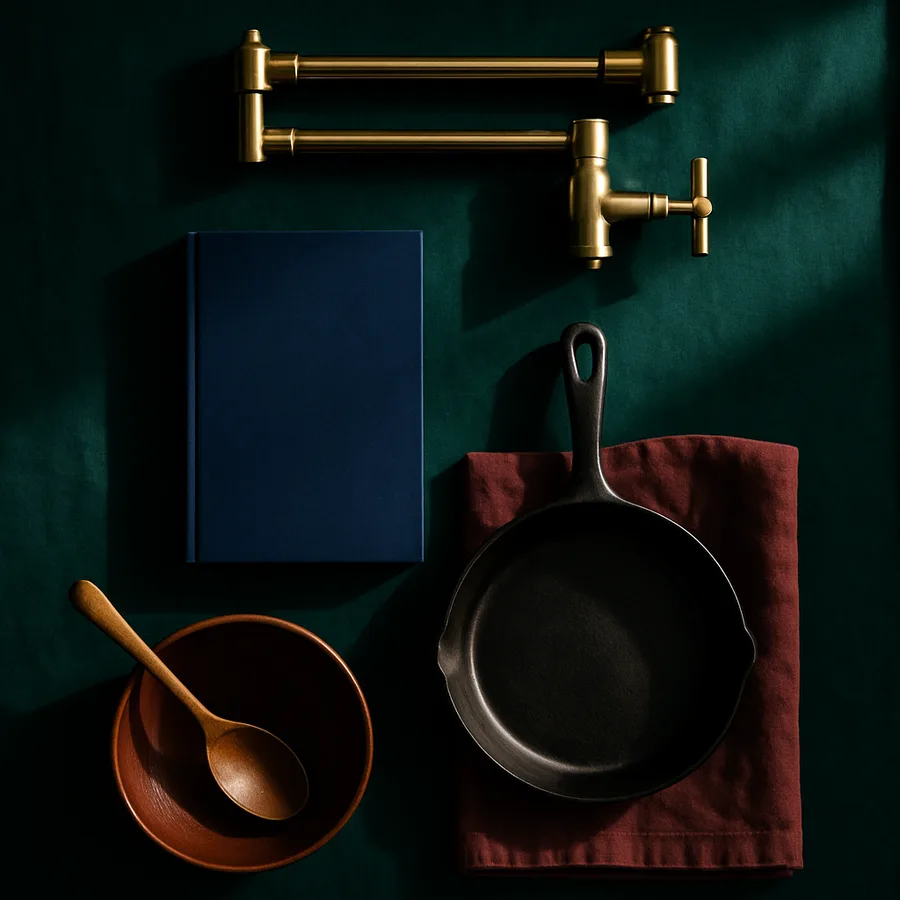
Installing a pot filler faucet above your stove can transform the way you cook, but getting the height and placement right is absolutely critical to the success of the project. According to the National Kitchen and Bath Association (NKBA), improper fixture placement is among the top five kitchen renovation mistakes that homeowners regret within the first year of completion. A pot filler mounted too high forces you to stretch uncomfortably, while one placed too low creates clearance issues with your tallest stockpots and can even become a safety hazard when burners are in use. The stakes are high because repositioning a pot filler after installation typically requires opening up the wall, rerouting plumbing, and repairing tile or backsplash material.
The popularity of pot fillers has surged in recent years, with the American Society of Interior Designers (ASID) reporting that pot filler installations grew by approximately 38 percent between 2019 and 2024 in upscale kitchen remodels. This growth reflects a broader trend toward professional-grade kitchen amenities in residential settings. Whether you are building a new home or renovating an existing kitchen, understanding the precise measurements and placement considerations ensures your pot filler functions beautifully for decades. Getting this detail right during the rough-in plumbing stage saves thousands of dollars compared to correcting a mistake after the backsplash and wall finishes are already complete.
This guide walks through every factor that influences pot filler height and placement, from industry standards and stove dimensions to backsplash materials and personal ergonomics. You will find specific measurements, common pitfalls to avoid, and practical advice drawn from professional kitchen designers and licensed plumbers. By the end of this article, you will have the confidence to communicate your exact requirements to your contractor and ensure the installation goes smoothly the first time.
Understanding the Standard Installation Height for Pot Fillers
The widely accepted standard installation height for a pot filler faucet is between 18 and 24 inches above the cooktop surface. This range has been established through decades of kitchen design practice and reflects a balance between reach, clearance, and aesthetics. The NKBA recommends that homeowners start with the 20-inch mark as a baseline and adjust from there based on personal height and the size of cookware they use most frequently. Taller individuals often prefer the higher end of the range, while shorter cooks may find a height closer to 18 inches more comfortable for daily use.
Measuring from the correct reference point is essential and a detail that many homeowners overlook. The measurement should be taken from the top of the cooking grate or the flat cooktop surface, not from the countertop or the top of the stove frame. On a gas range, the grate surface is typically one to two inches higher than the surrounding counter, which can throw off your calculation if you are not precise. For electric or induction cooktops, the measurement is more straightforward because the cooking surface is usually flush with or very close to the counter height. Taking the measurement from the wrong reference point is one of the most common errors that leads to a pot filler being installed at an uncomfortable height.
Beyond raw height numbers, you should also consider the arc of the faucet spout when it swings from the resting position to the active position over the pot. A dual-swing pot filler arm extends significantly further than a single-swing model, and the spout drops lower at full extension due to the geometry of the joints. Testing this arc with the specific model you plan to install is highly recommended before the rough-in plumbing is completed. Many plumbing showrooms have display models that allow you to simulate the reach and height, and spending thirty minutes at a showroom can prevent a costly mistake in your kitchen.
The wall stub-out location, where the water supply pipe exits the wall, is typically placed about two inches above the desired spout height to account for the downward angle of the valve body and handle assembly. Your plumber will need the exact specifications of your chosen pot filler model to position the stub-out correctly, so selecting your fixture before the rough-in stage is not optional but rather a critical step in the timeline. Providing your plumber with the manufacturer's installation template ensures the stub-out lands in precisely the right spot.
Horizontal Placement and Centering Over the Stove
Getting the horizontal placement right is just as important as the height, yet it receives far less attention in most planning conversations. The ideal position for a pot filler is centered over the stove, aligned with the back burners rather than the front burners. Centering the pot filler over the back burners allows you to fill large pots without reaching over active flames on the front burners, which is a significant safety consideration that the Consumer Product Safety Commission (CPSC) has highlighted in its kitchen safety guidelines. This placement also keeps the faucet arm out of the way during most cooking activities because the back burners are used less frequently for active stirring and sauteing.
For standard 30-inch ranges, centering the pot filler means placing the stub-out approximately 15 inches from either side of the range opening. On a 36-inch professional range, the center point shifts to 18 inches from each side. However, if your range has an asymmetric burner layout with a griddle or grill section on one side, you may want to offset the pot filler toward the side with the larger burners where you are most likely to use large stockpots. Discussing the burner layout with your kitchen designer ensures the pot filler serves the burners you actually use for boiling water and making soups or stocks.
The depth of the pot filler swing is another horizontal consideration that affects placement. When fully extended, a standard dual-arm pot filler reaches approximately 20 to 24 inches from the wall. This reach should allow the spout to clear the front edge of your largest pot when it sits on the back burner. If the pot filler cannot reach far enough, you will find yourself sliding heavy pots toward the back of the stove to fill them, which defeats the purpose of the fixture. Conversely, if the pot filler extends too far beyond the front edge of the stove, it creates a head-bumping hazard and looks disproportionate when folded back against the wall.
In kitchen islands with a cooktop, pot filler placement becomes more complex because there is no wall directly behind the cooking surface. Some designers solve this by running the supply line up through the ceiling and mounting a ceiling-mounted pot filler, while others incorporate a short knee wall or backsplash panel behind the island cooktop specifically to support a wall-mounted pot filler. Each approach has different structural and plumbing requirements, so involving your architect or structural engineer early in the planning process is essential for island installations.
Accounting for Stove Type and Backsplash Material
The type of stove you have significantly influences where your pot filler should be placed, and this is a variable that many generic installation guides overlook. A freestanding range sits away from the wall with a small gap behind it, which means the pot filler needs to reach further forward compared to a slide-in or built-in range that sits flush against the backsplash. The depth difference between a freestanding and a slide-in range can be as much as three to four inches, and that difference directly affects whether the pot filler spout can comfortably reach your largest pot on the back burner. Measuring the actual distance from the wall to the center of the back burner with your specific range in place gives you the reach requirement for your pot filler selection.
Professional-grade ranges from manufacturers like Viking, Wolf, and Thermador often have deeper bodies and higher backsplash panels than standard residential models. These taller backsplash panels can interfere with pot filler installation if the faucet is not mounted high enough to clear the panel. Some professional ranges have backsplash panels that extend 10 to 12 inches above the cooktop, which pushes the minimum pot filler height higher than the standard 18-inch starting point. Checking the range specifications for backsplash height before finalizing the pot filler stub-out location prevents a conflict between the two fixtures.
The backsplash material also affects installation logistics, though it does not change the ideal height or placement. Tile backsplashes are the most forgiving because the stub-out can be positioned between tiles and the escutcheon plate covers any gaps. Stone slab backsplashes, such as marble or quartzite, require the plumber to coordinate closely with the stone fabricator so that the hole is core-drilled in exactly the right location before the slab is installed. A misplaced hole in a natural stone slab is essentially irreparable without replacing the entire piece, which can cost thousands of dollars depending on the material. Planning the pot filler location before the stone template is made is a non-negotiable step in high-end kitchen projects.
For brick or shiplap backsplashes, the texture and thickness of the material can affect how the escutcheon plate sits against the wall. Brick surfaces may require a flat mounting block behind the escutcheon to create a level surface for a clean seal. Shiplap has grooves that can create gaps around the base of the pot filler if not properly addressed with caulking or a larger escutcheon plate. These material-specific details are easy to overlook during the planning phase but can create frustrating aesthetic issues if discovered after the installation is complete.
Ergonomic Considerations Based on User Height
The ergonomics of pot filler placement deserve careful thought because the standard 18-to-24-inch range assumes an average user height. If the primary cook in your household is significantly taller or shorter than average, adjusting the installation height can make a meaningful difference in daily comfort. A person who stands five feet two inches tall has a very different comfortable reach zone than someone who is six feet tall, and a pot filler installed at a one-size-fits-all height may feel awkward for either user. The goal is to position the faucet handle at a height where you can comfortably operate it without reaching overhead or bending forward.
One practical method for determining your ideal height involves standing in front of your stove and holding your arm out at a comfortable working angle, roughly 90 to 110 degrees at the elbow. The point where your hand naturally rests is approximately where the pot filler handle should be located. Having a helper mark this spot on the wall with painter's tape gives you a personalized reference point that you can then compare against the standard range. If your comfortable height falls within 18 to 24 inches above the cooktop, you are in the standard zone and any pot filler model will work. If it falls outside that range, you may need to select a model with a longer or shorter arm to compensate.
Households with multiple cooks of different heights face a compromise situation. In these cases, targeting the middle of the standard range, around 20 to 21 inches, tends to work reasonably well for most people. Another approach is to install the pot filler slightly higher and choose a model with a longer arm that drops lower at full extension, effectively bringing the water stream closer to shorter users while keeping the handle accessible to taller users. The flexibility of dual-arm pot fillers makes them more adaptable to varying user heights compared to single-arm models, which have a more fixed operating position.
Accessibility considerations are also worth mentioning, particularly for aging-in-place kitchen designs. The Universal Design principles recommended by the Center for Universal Design at North Carolina State University suggest that kitchen fixtures should be operable with minimal force and without tight grasping or twisting motions. Lever-handle pot fillers are easier to operate than knob-style handles for people with limited hand strength or dexterity. Positioning the handle on the side closest to the user's dominant hand also reduces awkward reaching across the body when turning the water on and off.
Common Mistakes That Lead to Costly Repositioning
The most expensive mistake in pot filler installation is placing the rough-in plumbing in the wrong location. Once the water supply line is set in the wall, moving it requires cutting open the wall, rerouting pipe, patching drywall, and repairing or replacing the backsplash material. According to plumbing contractors surveyed by Remodeling Magazine, the average cost to reposition a pot filler stub-out after initial installation ranges from 800 to 2,500 dollars depending on the wall construction and backsplash material. This cost is entirely avoidable with proper planning during the rough-in phase, which is why selecting your pot filler model and confirming the stub-out location before the walls are closed should be treated as a firm project milestone.
Another common error is failing to account for the valve body depth. The valve body of a pot filler extends several inches into the wall cavity, and in some cases, it can conflict with horizontal blocking, electrical wiring, or ductwork inside the wall. If the wall behind your stove contains a vent duct for the range hood, the duct may occupy the exact space where the pot filler valve body needs to go. Discovering this conflict after the wall is finished leads to either a costly relocation or a compromised installation where the pot filler protrudes further from the wall than intended. Having your plumber verify the wall cavity depth and check for obstructions during the rough-in inspection eliminates this risk.
Installing the pot filler too close to the range hood or microwave above the stove is a mistake that affects both aesthetics and function. If the pot filler handle sits within a few inches of the range hood bottom, it creates a cramped visual appearance and can make it difficult to operate the handle without bumping into the hood. The minimum recommended clearance between the top of the pot filler handle and the bottom of the range hood is six inches, though eight to ten inches provides a more comfortable operating margin. This clearance requirement effectively caps the maximum height for the pot filler and should be factored into the height decision alongside the minimum clearance above the cooktop.
Overlooking the need for a dedicated shut-off valve is a less obvious but important planning detail. Because pot fillers supply water but have no drain, any leak from the faucet or connections drips directly onto the stove and potentially into the wall behind it. A dedicated shut-off valve accessible inside a nearby cabinet allows you to completely isolate the pot filler water supply without affecting other kitchen fixtures. Many building codes now require this dedicated shut-off, and even where it is not required by code, including one is a sensible precaution that costs very little during the rough-in stage.
Working With Your Contractor to Finalize Placement
Clear communication with your contractor is the single most important factor in getting your pot filler placement right, and this communication needs to happen well before any tile or backsplash work begins. Start by providing your plumber with the manufacturer's installation guide for your specific pot filler model, which includes the recommended stub-out location relative to the faucet centerline. Different brands and models have different offsets, and assuming a generic position without consulting the documentation is a recipe for misalignment. Many manufacturers also provide a cardboard mounting template that can be taped to the wall to verify the position visually before any cutting or drilling takes place.
Scheduling a pre-tile walkthrough with your plumber, tile installer, and kitchen designer present at the same time is an investment of an hour that can save thousands of dollars in corrections. During this walkthrough, the pot filler stub-out location should be confirmed against the actual stove position, the backsplash layout, and the range hood clearance. Having all three trades in the room together allows them to identify and resolve any conflicts in real time rather than discovering problems sequentially after each trade completes their portion of the work. This collaborative approach is especially important in high-end kitchens where the materials are expensive and mistakes are costly to fix.
If you are renovating an existing kitchen and adding a pot filler where one did not exist before, the plumbing route from the nearest cold water supply to the stove wall becomes a significant planning consideration. The supply line may need to travel through the floor, ceiling, or an adjacent wall cavity, and the route affects both the cost and the timeline of the installation. In older homes with plaster and lath walls, running new supply lines can be more invasive than in homes with standard drywall construction. Getting a detailed scope of work from your plumber that includes the supply line route, any wall opening and patching required, and the timeline for each step helps you plan the rest of your renovation schedule around the pot filler installation.
Finally, consider scheduling a functional test before the backsplash is installed. Once the stub-out is in place and the pot filler is temporarily connected, you can verify the height, reach, and swing arc with your actual cookware on the actual stove. Filling your largest stockpot during this test confirms that the pot filler functions exactly as intended. If any adjustment is needed, it is far easier and cheaper to make before the backsplash tile or stone is installed than after. This test takes only a few minutes but provides peace of mind that your pot filler will perform perfectly for years to come.
Conclusion
Getting the installation height and placement of your pot filler faucet right requires careful planning that starts well before any plumbing work begins. The standard height range of 18 to 24 inches above the cooktop surface provides a solid starting point, but your final decision should account for your specific stove type, range hood clearance, backsplash material, and the physical comfort of the people who will use the kitchen most. Taking precise measurements from the correct reference points and testing the fit with your actual cookware eliminates guesswork and prevents costly repositioning after the fact.
The horizontal placement deserves equal attention, with centering over the back burners being the safest and most practical default position. Your stove type, burner layout, and whether you have a freestanding or built-in range all influence where the pot filler should sit on the horizontal axis. Coordinating with your plumber, tile installer, and kitchen designer simultaneously during the planning phase ensures that all trades are aligned on the final position before any permanent work begins.
Have you measured the distance from your cooktop to the spot where you plan to install your pot filler? What type of backsplash material are you working with, and have you confirmed clearance with your range hood? These are questions worth answering before your next meeting with your contractor.
If you are planning a kitchen renovation that includes a pot filler, bookmark this guide and share it with your contractor so everyone on the project is working from the same set of measurements and expectations. A well-placed pot filler is one of those small details that elevates a kitchen from functional to truly exceptional, and getting it right on the first try is always worth the extra planning effort.
More Articles You May Like



Comments
Post a Comment