Mixing Faucet Finishes in Kitchens and Bathrooms Intentionally
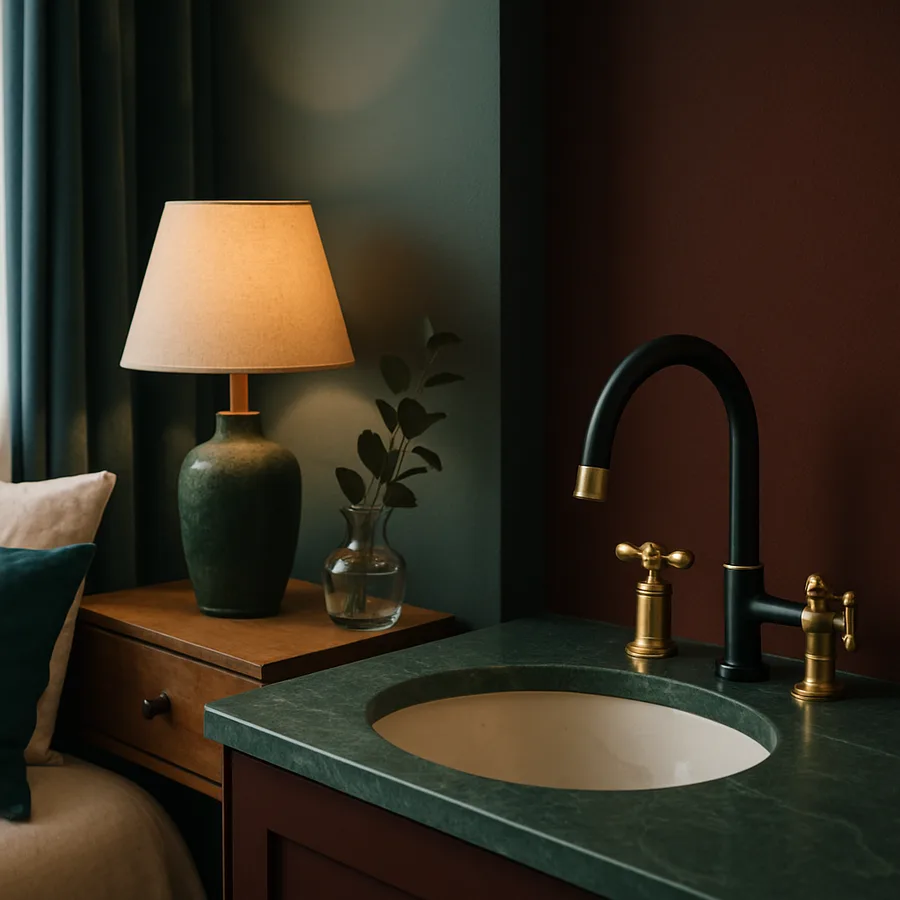
For decades, the default advice from kitchen and bathroom designers was simple: pick one metal finish and use it everywhere. Chrome faucet, chrome towel bar, chrome showerhead, chrome cabinet pulls. While this approach guarantees a safe, coordinated look, it also produces spaces that can feel predictable and one-dimensional. Designers today increasingly advocate for intentional mixed metals, a strategy that layers two or three complementary finishes within a single space to create depth, visual interest, and a curated aesthetic that reflects the homeowner's personality. According to a report by Houzz, 42 percent of homeowners who completed kitchen renovations in the past two years incorporated at least two different metal finishes, up from just 18 percent five years ago. This article provides a structured framework for mixing faucet finishes successfully, covering the principles that prevent mixed metals from looking chaotic, the combinations that work reliably, and the common mistakes that undermine the effect.
Mixing metals is not about throwing together whatever finishes happen to be on sale. It requires intention, proportion, and an understanding of how different metals interact with light and with each other. Done well, a mixed-metal room feels layered, sophisticated, and personal. Done poorly, it looks like a collection of mismatched afterthoughts. The difference lies entirely in the approach, and the guidelines here will ensure your results fall firmly in the first category.
The Foundational Rule of Dominant and Accent Finishes
Every successful mixed-metal scheme begins with establishing a dominant finish and one or two accent finishes. The dominant finish should account for approximately 60 to 70 percent of the metal surfaces in the room. This is typically the finish used for the largest or most visually prominent fixtures: the kitchen faucet, the showerhead, or the vanity faucet. The accent finish occupies the remaining 30 to 40 percent, appearing on secondary elements like cabinet hardware, towel bars, light fixture frames, or mirror edges. This ratio creates a clear visual hierarchy that reads as intentional rather than accidental.
Consider a kitchen where brushed nickel serves as the dominant finish on the main faucet, pot filler, and sink grid. Matte black might appear as the accent on cabinet pulls, the range hood trim, and pendant light fixtures. The eye registers brushed nickel as the room's metallic identity and perceives the matte black accents as deliberate contrast points that add dimension. Reversing the ratio, with matte black dominant and brushed nickel as the accent, would create an entirely different mood: darker, more dramatic, and more contemporary. Neither ratio is inherently better; the choice depends on the overall design direction.
Problems arise when two finishes are used in roughly equal proportions without a clear hierarchy. A bathroom with polished chrome on the faucet, brushed gold on the towel bar, polished chrome on the showerhead, and brushed gold on the cabinet pulls creates a visual ping-pong effect where the eye bounces between the two finishes without settling on either as the anchor. The result feels indecisive. Committing to one finish as dominant and disciplining the accent finish to secondary surfaces resolves this tension immediately.
A third accent metal, used very sparingly, can add an additional layer of richness. A brass drawer pull on a bathroom vanity, when the dominant finish is brushed nickel and the primary accent is matte black, introduces warmth without creating complexity. However, the third metal should appear on no more than one or two items in the room. The National Kitchen and Bath Association (NKBA) recommends limiting mixed-metal palettes to three finishes maximum per room to maintain visual coherence, and most designers agree that two finishes plus one subtle accent is the sweet spot.
Combinations That Designers Rely On Repeatedly
Brushed nickel and matte black is the most popular mixed-metal combination in contemporary kitchens and bathrooms, and for good reason. Both finishes are muted and non-reflective, which prevents either from overpowering the other. Their colour contrast, warm silver against deep black, creates definition without visual noise. This pairing works in virtually every design style, from Scandinavian minimalism to modern farmhouse, making it the safest starting point for homeowners new to mixing metals. Brushed nickel as the dominant faucet finish with matte black cabinet hardware is the most common configuration, but the reverse also works in kitchens with dark cabinetry where matte black fixtures blend into the background and nickel hardware provides relief.
Polished chrome and brushed gold offers a more glamorous, high-contrast combination suited to transitional and contemporary-luxe interiors. Chrome's cool brightness against gold's warm glow creates a temperature contrast that adds energy to a space. This combination appears frequently in high-end hotel bathrooms and designer showhouses, where the interplay of warm and cool metals creates a cosmopolitan atmosphere. The key to making it work is ensuring the chrome and gold surfaces are not directly adjacent; separating them with a neutral surface like a stone countertop or painted wall allows each finish to breathe.
Brushed brass and polished nickel creates a subtler tonal variation within the warm-metal family. Both finishes share golden undertones, so the contrast is gentle rather than dramatic. This combination suits traditional and transitional homes where bold contrast would feel jarring. Using polished nickel on the faucet and brushed brass on cabinet hardware or light fixtures produces a layered warmth that feels collected over time, as though each piece was chosen individually across different eras rather than purchased as a matched set. Interior design firms affiliated with the American Society of Interior Designers (ASID) frequently employ this combination in heritage-style renovations where the goal is authentic character rather than showroom precision.
Oil-rubbed bronze and brushed gold is a less common but increasingly popular pairing for rustic, bohemian, and globally-inspired interiors. The deep chocolate tones of oil-rubbed bronze ground the space, while brushed gold accents introduce lightness and warmth. This combination works exceptionally well in bathrooms with natural stone, wood accents, and earthy colour palettes. Because both finishes have warm undertones, they coexist harmoniously despite their different values on the light-dark spectrum. The trick is using oil-rubbed bronze on larger fixtures and gold on smaller accessories, maintaining the dominant-accent hierarchy.
Room-by-Room Application Strategies
In kitchens, the faucet is almost always the dominant metal element because of its size, central position, and frequent visibility. Cabinet hardware, while distributed across a larger area, consists of smaller individual pieces that collectively read as an accent. This natural hierarchy makes kitchens the easiest room in which to mix metals. Start by selecting the faucet finish, then choose hardware that contrasts intentionally. Appliance finishes, whether stainless steel, black stainless, or panel-ready, should be treated as a neutral backdrop rather than a third metal in the mix. If you have a stainless steel refrigerator, its finish will visually align with brushed nickel or polished chrome without demanding to be matched exactly.
In primary bathrooms, the mixing opportunity extends across faucets, showerheads, towel bars, robe hooks, toilet paper holders, and light fixtures. With so many individual metal elements, the dominant-accent ratio requires deliberate planning. A reliable strategy is to keep all plumbing fixtures, the faucet, showerhead, and tub filler, in the dominant finish, and assign the accent finish to accessories and lighting. This groups the metals by function: plumbing in one finish, hardware in another. The functional logic behind the grouping makes the mix feel purposeful rather than random.
Powder rooms offer the greatest creative freedom for metal mixing because they are small, self-contained spaces typically used by guests. A striking combination that might feel overwhelming in a large master bath can work beautifully in a four-by-six-foot powder room where every element is visible simultaneously and the overall impact is contained. A polished brass faucet against a black-framed mirror with chrome sconces, for example, creates a jewel-box effect that makes a small room feel special. Powder rooms are ideal testing grounds for bold mixed-metal ideas before committing to them in larger spaces.
How should you handle the transition between rooms? In open floor plans where the kitchen is visible from the living area and adjacent powder room, maintaining the dominant finish across the sightline creates continuity. The accent finishes can change from room to room without disrupting the flow, because the dominant metal provides a consistent thread. In homes with closed floor plans and distinct room transitions, each room can operate with its own metal palette independently, as long as internal consistency within each space is maintained.
Common Mistakes and How to Avoid Them
The most frequent mistake in mixed-metal design is treating every fixture decision as independent. Homeowners who select a faucet finish they love, then choose cabinet hardware based on a separate inspiration image, then pick a light fixture because it was on sale, end up with three metals that were never evaluated as a group. The result is a room where nothing conflicts outright but nothing coordinates either. Before purchasing any fixture, lay out your full metal palette on paper or in a digital design tool. List every metal element in the room and assign each to either the dominant or accent category. This exercise takes ten minutes and prevents weeks of second-guessing after installation.
Another common error is over-mixing by introducing too many finishes. Chrome faucet, brushed gold hardware, oil-rubbed bronze towel bar, polished brass light fixture: four metals in a single bathroom creates visual chaos regardless of how beautiful each individual piece might be. The eye needs a resting point, and too many competing finishes deny it one. If you find yourself drawn to more than two or three finishes, narrow the field by eliminating the finish that has the least support from the room's colour palette and material choices.
Ignoring the undertone relationships between finishes is a subtler but equally damaging mistake. Metals can be broadly categorised as warm-toned (brass, gold, bronze, copper) or cool-toned (chrome, polished nickel, stainless steel). Mixing within a temperature family, such as brushed brass with oil-rubbed bronze, is almost always harmonious because the shared warmth creates kinship. Mixing across temperature families, such as polished chrome with brushed gold, requires more care to ensure the contrast feels intentional. The safest approach is to use no more than one warm and one cool finish per room, allowing the contrast to function as a design feature rather than a distraction.
Finally, forgetting to account for fixed metals already present in the space leads to unintended clashes. The chrome drain in your bathtub, the stainless steel dishwasher panel, the black iron gas pipe feeding your range: these permanent metal elements are part of your palette whether you chose them or not. Acknowledge them, and either match or contrast with them deliberately. Pretending they do not exist while planning your faucet and hardware finishes sets up conflicts that become obvious only after the renovation is complete and the budget is spent.
Practical Tools for Planning Your Mixed-Metal Palette
Several digital and physical tools can help you visualise a mixed-metal scheme before committing to purchases. Houzz and Pinterest allow you to create ideabooks and boards where you can collect images of rooms that use the combinations you are considering. Look for at least five to seven examples of your chosen pairing in spaces similar to yours in size, lighting, and style. If the combination works consistently across multiple examples, it will likely work in your space as well.
Physical finish samples are invaluable and often available free from manufacturers. Kohler, Delta, Moen, and most hardware companies offer sample chips or small finish swatches that you can hold against your countertop, cabinetry, and wall colour to evaluate compatibility under your specific lighting. Arrange the samples according to where each finish will appear in the room: faucet sample near the sink, hardware sample against the cabinet door, light fixture sample at eye level near the mirror. This spatial arrangement simulates the final result far more accurately than holding all samples in a cluster on the countertop.
For homeowners comfortable with technology, design applications like RoomSketcher and the Houzz visualiser tool let you swap fixture finishes in a digital rendering of your space. While these tools cannot perfectly replicate the reflective qualities of metal, they provide a useful approximation that helps identify combinations that feel balanced or unbalanced before any money is spent. Even a rough digital mockup is better than relying entirely on imagination when mixing metals.
Consulting with a professional designer, even for a single paid session, can provide clarity that hours of independent research cannot. A designer brings trained eyes that have evaluated hundreds of finish combinations and can quickly identify which pairings will succeed in your specific space. Many designers offer two-hour consultation packages specifically for finish and material selection, typically costing between 150 and 300 dollars. This modest investment can save you from purchasing and returning multiple sets of hardware and accessories while searching for the right combination through trial and error.
Conclusion
Mixing faucet finishes in kitchens and bathrooms is no longer a design risk but rather a widely embraced strategy for creating rooms with character and depth. The practice succeeds when guided by the dominant-accent hierarchy, when finishes are chosen as a coordinated palette rather than as isolated decisions, and when the number of metals is limited to two or three per room. These principles are simple to follow and consistently produce results that look professional and intentional.
The combinations that work most reliably, brushed nickel with matte black, polished chrome with brushed gold, and the nuanced warm-on-warm pairings, have been validated by thousands of successful installations in homes across every style category. You do not need to be a trained designer to execute a mixed-metal scheme; you need only the discipline to plan before purchasing, the patience to evaluate samples in your own lighting, and the restraint to resist adding one more finish to an already complete palette.
Start with the faucet, the room's metallic anchor, and build outward. Test your chosen pairing with physical samples under your lighting. Maintain the 60-40 dominant-accent ratio across all metal surfaces. Follow these steps, and the mixed-metal look you admire in design magazines will be the same look your guests admire in your home. The only question left is which combination speaks to your style. Gather your samples and find out.
More Articles You May Like



Comments
Post a Comment