Pergola With Retractable Canopy: Shade Solutions for Hot Days
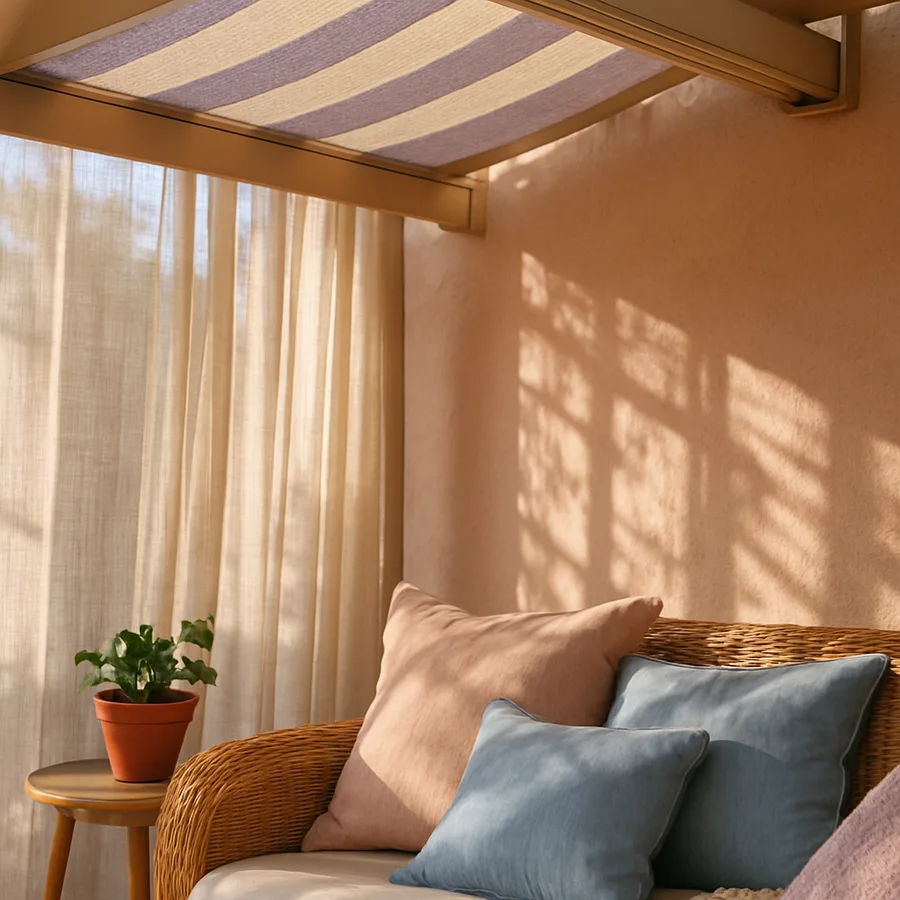
The Problem With Traditional Pergolas on Hot Days
A traditional open-rafter pergola is one of the most beautiful structures you can add to an outdoor living space, but beauty alone does not keep you comfortable when the afternoon sun drives temperatures above 90 degrees and the UV index climbs into dangerous territory. The open lattice of beams and rafters that defines a pergola's architectural character provides only about 25 to 30 percent shade coverage at midday, which is enough to create attractive shadow patterns on the ground but nowhere near enough to make the space usable during peak heat hours. Homeowners who invested thousands of dollars in a gorgeous pergola and then discovered they could not sit under it comfortably between noon and five o'clock during summer months understand this frustration intimately. The pergola becomes an ornamental frame rather than a functional shelter, admired from inside the air-conditioned house rather than enjoyed as intended.
Adding a retractable canopy system to a pergola solves this fundamental usability problem while preserving the open-air character that makes pergolas architecturally appealing in the first place. When closed, the canopy provides full shade coverage that can reduce the perceived temperature beneath the structure by 15 to 20 degrees compared to direct sun exposure. When retracted, the canopy disappears into a compact bundle at one end of the pergola, restoring the open-rafter view and allowing full sunlight through for the cooler months, overcast days, or evening gatherings when shade is unnecessary. This adaptability transforms a pergola from a single-purpose decorative structure into a multi-season outdoor room that responds to conditions rather than imposing a fixed level of coverage regardless of the weather.
The American Society of Landscape Architects (ASLA) identifies retractable shade systems as one of the fastest-growing categories in residential outdoor design, with installation rates increasing approximately 40 percent annually over the past three years. This growth reflects a broader shift in how homeowners think about outdoor spaces, moving from purely decorative landscaping toward functional outdoor rooms that provide genuine comfort and usability across a range of weather conditions. The retractable canopy pergola sits at the intersection of architecture and function, offering the visual elegance of an open timber structure with the practical utility of an adjustable shade system that responds to your needs in real time.
Understanding how a retractable canopy integrates with a pergola requires looking at the system as a whole rather than treating the canopy as an accessory bolted onto an existing structure. The pergola's dimensions, beam spacing, rafter depth, and structural capacity all influence which canopy systems are compatible, how the fabric tracks or guides are mounted, and how much modification the existing structure needs to support the additional hardware. A pergola designed from the outset to accommodate a retractable canopy will look cleaner, function more smoothly, and cost less to complete than one retrofitted after construction. If you are planning a new pergola, incorporating canopy provisions into the initial design is the single most valuable decision you can make for long-term satisfaction with the finished structure.
Manual Systems: Simple, Reliable, and Affordable
Manual retractable canopy systems use a straightforward mechanical approach where the fabric panel slides along guide wires or tracks mounted to the pergola rafters, pulled into position by hand or with a simple crank mechanism. The most common manual design threads the canopy fabric through stainless steel guide cables tensioned between the pergola's end beams, with the fabric gathered into accordion-style folds when retracted and pulled flat to provide coverage when extended. This cable-guided approach is elegant in its simplicity because it has very few components that can fail: the cables, the fabric panel, the end attachment points, and optionally a pulley system that provides mechanical advantage for larger canopies. There are no motors, no electrical connections, no remote controls, and no circuit boards, which means there is nothing that requires professional service when something eventually wears out.
The practical limitations of manual systems center on convenience and scale. Manually extending and retracting a canopy on a small pergola covering a 10-by-12-foot area is easy and takes about 30 seconds, but the same task on a large pergola spanning 16 by 20 feet requires noticeably more effort because of the greater fabric weight and friction across longer guide cables. Wind management is another consideration, because a manually operated canopy relies on the homeowner to retract it before strong winds arrive rather than responding automatically to weather changes. If you are away from home when an unexpected storm develops, a manual canopy left in the extended position can suffer fabric damage or place stress on the guide cables and mounting points that exceeds their design load. For homeowners who are frequently present when the canopy is deployed and who are covering a modest-sized pergola, manual systems deliver excellent value at a fraction of the motorized alternative's cost.
Installation costs for manual retractable canopy systems reflect their mechanical simplicity. A complete cable-guided manual system for a 10-by-14-foot pergola, including marine-grade stainless steel cables, turnbuckle tensioners, the canopy fabric panel, and all mounting hardware, typically costs between $800 and $2,000 for materials depending on fabric quality. Professional installation adds $500 to $1,000 for a straightforward retrofit on an existing pergola with accessible rafter structures. Many homeowners install cable-guided manual systems themselves over a weekend, as the project requires only basic tools, a drill, and the ability to work from a ladder. The Better Homes & Gardens outdoor project guides include step-by-step instructions for several manual canopy configurations that have been tested and refined through reader feedback over multiple seasons.
The fabric selection for manual systems deserves careful attention because the canopy spends much of its life gathered in folds at one end of the pergola, and not all outdoor fabrics tolerate repeated folding and bunching without developing permanent crease marks or accelerated wear at fold points. Solution-dyed acrylic fabrics like Sunbrella are the gold standard for manual retractable canopies because they resist creasing, maintain their color and water repellency through years of folding cycles, and dry quickly when gathered in their bunched position after rain. Less expensive polyester fabrics can work adequately for one to three seasons but tend to develop permanent fold lines and lose their water-resistant coating faster, which creates damp spots in the bunched fabric that promote mildew growth. For a manual system that you intend to use for five or more years, investing in premium acrylic fabric saves money over the long term by avoiding the need for early fabric replacement.
Motorized Systems: Convenience and Sophistication
Motorized retractable canopy systems replace manual operation with electric motors that extend and retract the canopy at the touch of a button, through a smartphone app, or automatically in response to sun and wind sensors. The convenience advantage is immediately obvious, but the deeper benefit is that motorized systems actually get used more frequently than manual ones because they eliminate the small friction of physical effort that causes many homeowners to leave a manual canopy in whatever position it was last set. When extending the canopy requires nothing more than tapping a button on your phone as you walk outside, you are far more likely to deploy it for even short periods of outdoor use, which means you extract more value from your pergola investment over time.
The mechanical components of a motorized system include a tubular motor housed within the canopy roller mechanism, guide tracks or cables along which the fabric travels, and a control unit that receives input from wall switches, remote controls, or smart home integration platforms. Higher-end systems add wind sensors that automatically retract the canopy when wind speed exceeds a programmable threshold, typically 25 to 35 miles per hour, and sun sensors that deploy the canopy when UV intensity reaches a set level. These automated responses protect the canopy from wind damage when you are not home and ensure shade coverage arrives when conditions demand it, even if you are occupied indoors and have not noticed the sun position shifting. According to the International Code Council (ICC), motorized awning and canopy systems installed on residential structures must comply with electrical codes governing low-voltage outdoor installations, which typically means the motor circuit must be GFCI-protected and the wiring must be rated for wet locations.
The installation complexity and cost of motorized systems reflect their additional components and the electrical work they require. A complete motorized retractable canopy system for a 12-by-16-foot pergola costs between $3,000 and $8,000 for the hardware and fabric, with professional installation adding $1,500 to $3,000 depending on the electrical infrastructure already available at the pergola location. If your pergola does not currently have electrical service, running a dedicated circuit from the house panel adds another $500 to $1,500 depending on distance and routing complexity. These costs are substantially higher than manual alternatives, but the five-to-ten-year cost of ownership narrows the gap when you factor in the increased usage, the wind-damage protection provided by automatic retraction, and the reduced wear on fabric that is always tensioned properly by the motor rather than unevenly pulled by hand.
Is the convenience of motorized operation worth two to four times the cost of a manual system for your specific situation? The answer depends honestly on how often you use your pergola and how sensitive you are to the minor effort of manual operation. If your pergola is your primary outdoor living space and you use it daily during warm months, motorized operation with weather sensors will meaningfully improve your daily experience and protect your investment autonomously. If your pergola sees occasional weekend use and you are comfortable walking over to pull the canopy when needed, a manual system provides the same shade quality at a fraction of the price. The Hearth, Patio, and Barbecue Association (HPBA) consumer survey data shows that homeowners with motorized canopy systems report using their pergola spaces an average of 35 percent more hours per month than those with manual systems, which suggests the convenience factor has a measurable impact on outdoor living behavior.
Fabric Selection and UV Protection Performance
The canopy fabric is the component that actually blocks the sun, and its performance characteristics determine how much thermal relief, UV protection, and visual comfort the system provides. UV Protection Factor (UPF) ratings quantify how much ultraviolet radiation a fabric blocks, and outdoor canopy fabrics range from UPF 25 at the low end to UPF 50 or higher at the premium end. A UPF 50 fabric blocks approximately 98 percent of UV radiation, which provides meaningful skin protection for people spending extended time beneath the canopy. The Skin Cancer Foundation recommends a minimum UPF rating of 30 for shade structures used during peak sun hours, and most name-brand outdoor canopy fabrics meet or exceed this threshold. Checking the specific UPF rating of your chosen fabric rather than assuming all outdoor fabrics provide adequate protection is an important health consideration, particularly for families with children who spend long hours playing under the pergola.
Thermal performance varies significantly between fabric types and colors in ways that directly affect comfort beneath the canopy. Light-colored fabrics in white, cream, and pale gray reflect more solar energy than they absorb, keeping the air temperature beneath the canopy noticeably cooler than darker fabrics that absorb heat and radiate it downward. However, lighter fabrics also transmit more visible light, creating a bright, glare-prone environment that can make reading, screen viewing, and relaxed conversation less comfortable. Medium tones like sand, taupe, and sage green strike a practical balance by reflecting enough solar energy to maintain comfort while transmitting less visible light, and these neutral middle tones also tend to complement a wider range of house colors and outdoor furnishing palettes than either very light or very dark canopy colors.
Water management during rain events is a canopy performance factor that many first-time buyers overlook until their first summer thunderstorm sends water cascading off the fabric in unexpected directions. Retractable canopy fabrics fall into two categories: water-repellent fabrics that shed light rain and dry quickly but allow water through during sustained heavy rain, and waterproof fabrics with sealed seams that provide complete rain protection until they are retracted. Water-repellent acrylic fabrics like Sunbrella are the most popular choice for retractable pergola canopies because they breathe well, resist mildew, and handle the folding cycles of retractable operation without damage. Waterproof PVC-coated polyester fabrics provide absolute rain protection but trap more heat, resist airflow, and can develop crease damage from repeated folding. For most residential pergola applications where the canopy's primary purpose is sun shade rather than rain shelter, water-repellent acrylic fabric performs better across the full range of demands.
Fabric longevity depends on the interaction between material quality, UV exposure intensity, and maintenance practices. Premium solution-dyed acrylic canopy fabrics carry manufacturer warranties of five to ten years against UV degradation and color fading, and real-world performance often exceeds these warranty periods in moderate climates. The Architectural Digest outdoor design editors recommend retracting the canopy whenever shade is not actively needed, which reduces cumulative UV exposure and significantly extends fabric lifespan. Cleaning the fabric twice per year with a mild soap solution and soft brush prevents the accumulation of pollen, tree sap, and bird deposits that can permanently stain the surface if left to bake in the sun. These simple maintenance habits can extend a quality canopy fabric's effective life from the warranted five years to eight or even ten years before fading or loss of water repellency necessitates replacement.
Sizing and Shade Coverage Planning
Effective shade planning for a retractable canopy pergola requires understanding that the sun is not directly overhead for most of the day, and the shadow cast by your canopy shifts position continuously as the sun moves across the sky. At midday in summer, a canopy covers almost exactly the area directly beneath it. By mid-afternoon, the shadow has shifted significantly to one side, potentially leaving the seating area you intended to shade in direct sun while shading empty ground several feet away. Orienting the long axis of your pergola east-to-west maximizes shade coverage during the afternoon hours when sun intensity and heat accumulation peak, because the sun crosses the southern sky and a canopy oriented perpendicular to the sun's path intercepts more radiation across a wider time window than one oriented parallel to it.
The canopy should extend beyond the boundaries of your seating or dining area by at least two to three feet on all sides to maintain shade coverage as the sun angle changes throughout the day. A dining table that measures four by eight feet needs a shade canopy of at least eight by fourteen feet to keep all seated positions shaded from late morning through mid-afternoon without requiring constant canopy repositioning. This sizing principle is the single most common oversight in pergola canopy planning, and it results in canopies that provide excellent shade at noon but leave half the seating area exposed by three o'clock. The American Society of Heating, Refrigerating, and Air-Conditioning Engineers (ASHRAE) solar geometry tables provide precise sun angle data for any latitude and time of year, and using these tables to model your specific location's shadow patterns produces far more accurate sizing than rules of thumb or visual estimation.
Pergola height influences shade effectiveness in ways that counterbalance aesthetic preferences for tall, airy structures. A canopy mounted at eight feet above the patio surface casts a tighter, more defined shadow than the same canopy at twelve feet because the higher mounting point allows more angled sunlight to pass beneath the canopy edges and reach the seating area below. Lower canopy heights provide better shade coverage but can make the space feel enclosed, while higher canopy heights feel more open but sacrifice afternoon shade performance. The optimal height for most residential retractable canopy pergolas falls between nine and ten feet, which balances headroom, shade coverage, and visual proportion. Ceilings above eleven feet should incorporate additional shade strategies like side curtains or supplementary shade sails to compensate for the reduced effectiveness of the overhead canopy alone.
How much temperature reduction can you realistically expect from a retractable canopy? Field measurements conducted by the Lawrence Berkeley National Laboratory on residential shade structures show that fabric canopies with UPF ratings above 30 reduce the radiant temperature experienced by a person seated beneath them by 12 to 22 degrees Fahrenheit compared to direct sun exposure, with the variation depending primarily on fabric color, ground surface material, and ambient wind speed. This radiant temperature reduction makes the difference between a patio that feels intolerably hot at 95 degrees ambient temperature and one that feels pleasantly warm at the same ambient temperature. The shade does not lower the air temperature, but it eliminates the direct solar radiation on your skin that accounts for most of the discomfort you experience on hot days, which is why shaded outdoor spaces feel dramatically more comfortable than their air temperature alone would suggest.
Bringing It All Together for Your Pergola
The path from an underused open pergola to a comfortable shade-equipped outdoor room begins with assessing your existing structure's compatibility with a retractable canopy system. Inspect your pergola's beams and rafters for the structural capacity to support canopy hardware, which adds relatively little weight but introduces lateral forces from wind loading on the extended fabric that the original structure may not have been designed to resist. A structural engineer or experienced pergola contractor can evaluate your specific structure and recommend reinforcements if needed, which is a modest investment that prevents the much larger cost of structural failure during a wind event. If your pergola is still in the planning phase, communicate your canopy intentions to the designer or builder from the outset so that beam sizing, rafter spacing, and connection details account for the canopy system from the beginning.
Choose between manual and motorized operation based on honest self-assessment rather than aspirational thinking. If you consistently forget to close windows before rainstorms, leave garden tools out overnight, and generally prefer low-maintenance solutions, a motorized system with weather sensors will protect itself when you do not. If you are attentive to outdoor conditions, enjoy hands-on interaction with your living space, and want to minimize cost and complexity, a manual system will serve you well for many years. Both system types provide identical shade quality when deployed; the only difference is how they get from retracted to extended and back, and neither approach is inherently superior.
Factor the canopy fabric replacement cycle into your long-term budget planning. Even the best outdoor fabric has a finite lifespan in direct sun exposure, and you should expect to replace the canopy panel once every seven to twelve years depending on climate intensity and how diligently you retract the canopy when shade is not needed. Replacement fabric panels for most retractable systems cost between $500 and $2,000 depending on size and material quality, and the replacement process is straightforward enough for most homeowners to complete without professional help. Designing your system with standard fabric dimensions rather than custom sizes ensures that replacement panels remain available years into the future, even if the original system manufacturer changes their product line.
Start enjoying your pergola on the hottest days of summer instead of retreating indoors when the temperature climbs. Measure your pergola's rafter span and post height, determine whether electrical service is available for a motorized option, and request quotes from at least two local awning or shade specialists who can assess your structure in person and recommend the system that best fits your pergola's dimensions, your climate, and your budget. The difference between a pergola you admire from inside the house and one you actually live under on a blazing afternoon is a retractable canopy that puts shade control in your hands exactly when you need it most.
More Articles You May Like



Comments
Post a Comment