Elevate Your Home's Interior with Electric Vehicle Charging Solutions
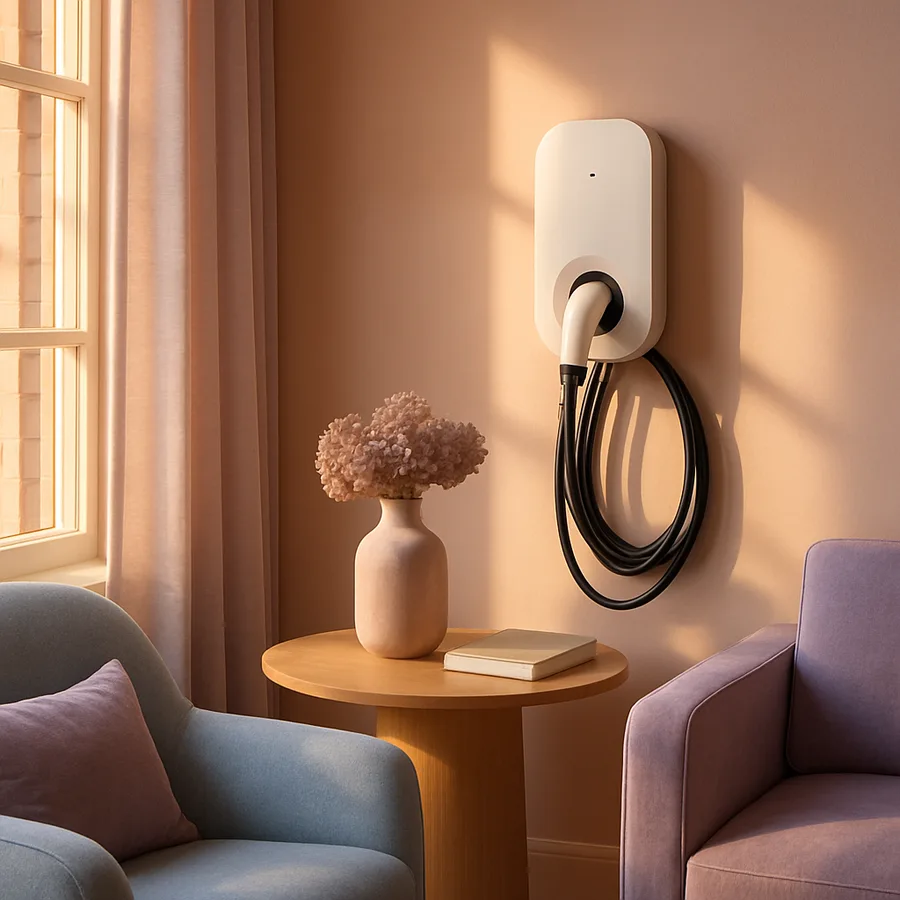
The rapid adoption of electric vehicles has created an unexpected design challenge that sits squarely at the intersection of automotive technology and residential interior design. As more homeowners bring electric vehicles into their daily lives, the need to integrate charging infrastructure into homes has moved from a fringe concern to a mainstream design consideration. The American Society of Interior Designers (ASID) reports that requests for EV charging integration in residential projects have increased dramatically, with designers now routinely fielding questions about how to accommodate charging equipment without compromising the aesthetic integrity of garages, mudrooms, and entryways. This convergence of technology and design represents a fascinating new frontier for interior professionals and homeowners alike.
The challenge is real and multifaceted. Standard Level 2 home charging stations arrive as industrial-looking boxes with thick cables, indicator lights, and mounting hardware that was clearly engineered for function rather than form. For homeowners who have invested considerable time and resources in creating cohesive, beautiful living environments, the prospect of bolting an ugly gray box to the wall of their garage or carport can feel like a significant compromise. Yet the convenience of home charging, which accounts for roughly 80% of all EV charging according to the U.S. Department of Energy, makes it an essential feature for electric vehicle owners. The question is not whether to install home charging, but how to do so in a way that enhances rather than detracts from your home's design story.
This article explores the many ways that thoughtful interior design can transform EV charging from an eyesore into an asset, turning a purely functional installation into a design feature that communicates sophistication, environmental consciousness, and forward-thinking style. From custom cabinetry solutions to purpose-built charging alcoves, the options for elegant integration have expanded considerably as both the design industry and charging equipment manufacturers respond to consumer demand for beauty alongside functionality. Whether you are building a new home, renovating an existing garage, or simply looking for ways to make your current charging setup more visually appealing, the strategies outlined here will help you approach the project with confidence and creativity.
The Design Landscape of Home Charging Equipment
Understanding the current state of home charging hardware is essential before exploring design integration strategies. Home EV chargers fall into two primary categories: Level 1 chargers, which use standard 120-volt household outlets and charge slowly, and Level 2 chargers, which require 240-volt circuits and deliver a full charge overnight. Most design-conscious homeowners opt for Level 2 units because they offer practical charging speeds and come as dedicated, wall-mounted stations that can be thoughtfully incorporated into a space. The International Interior Design Association (IIDA) has begun including EV charging considerations in its residential design guidelines, reflecting the technology's growing importance in home planning. Major manufacturers including ChargePoint, JuiceBox, Tesla, and Wallbox have responded to design-conscious consumers by releasing units with increasingly refined aesthetics.
The physical footprint of modern Level 2 chargers has decreased significantly, with most units now measuring roughly the size of a small briefcase. This compact form factor opens up possibilities for placement and concealment that were impractical with earlier, bulkier models. Color options have expanded beyond industrial gray to include white, black, and even custom-color units that can coordinate with surrounding surfaces. Some premium models, like those from Wallbox, have been designed in collaboration with industrial designers and feature sculptural forms, LED accent lighting, and materials like tempered glass that would look at home in a contemporary art gallery. Houzz surveys indicate that homeowners increasingly view their charging stations as design objects rather than mere appliances, a shift in perception that has driven manufacturers to invest heavily in the visual appeal of their products.
Beyond the charger itself, the associated infrastructure including electrical panels, conduit runs, cable management systems, and outlet placements all affect the visual outcome of an installation. A beautifully designed charger mounted on a wall with exposed conduit snaking across the ceiling and down through mismatched junction boxes will still look like an afterthought. Comprehensive design planning that addresses the entire charging ecosystem, from the electrical panel to the charging cable's resting position, is what separates a truly integrated installation from one that merely features an attractive appliance on an otherwise neglected wall. Working with both an electrician and a design professional ensures that every visible element meets both safety codes and aesthetic standards.
Garage and Carport Design Strategies
The garage represents the most common location for home EV charging, yet it remains one of the most neglected spaces in residential design. For decades, garages have been treated as purely utilitarian zones, warehouses for vehicles, tools, and overflow storage rather than intentional extensions of the home's interior. The arrival of EV charging provides a compelling reason to rethink the garage as a designed space worthy of the same attention given to kitchens and living rooms. ASID designers recommend approaching garage redesign with the same principles applied to any interior space: establishing a cohesive color palette, selecting appropriate materials, creating functional zones, and incorporating adequate lighting. The result is a space that welcomes you every time you step out of your vehicle rather than greeting you with bare concrete and exposed studs.
Wall treatment around the charging station offers the most impactful design opportunity. Rather than mounting the charger directly on raw drywall or exposed concrete block, consider creating a feature wall using materials that complement your home's interior design language. Slatwall panels in wood tones, painted pegboard systems, corrugated metal accents, or even high-quality epoxy-coated surfaces can transform the charging area into a deliberate design moment. The National Council for Interior Design Qualification (NCIDQ) emphasizes the importance of material continuity between adjacent spaces, so if your garage connects to a mudroom or hallway finished in shiplap or stone veneer, extending those materials into the garage creates a sense of intentional flow. Custom cabinetry flanking the charger can conceal electrical components, store charging accessories, and provide the structured storage that keeps the garage organized and visually calm.
Flooring upgrades dramatically elevate the garage's overall aesthetic and create a more comfortable environment for the few minutes you spend near the charger each day. Epoxy floor coatings, interlocking tile systems, and polished concrete finishes all offer durable, attractive alternatives to bare concrete that resist stains from tire marks and the occasional drip. Houzz professionals report that garage floor upgrades consistently rank among the highest-satisfaction renovations, with homeowners often surprised by how dramatically a finished floor changes their perception of the entire space. Designating the charging area with a subtle change in floor color or pattern, such as a lighter tile zone beneath and around the vehicle's charging port, creates a visual cue that reinforces the space's purpose while adding graphic interest to the floor plane. Have you considered how a simple floor upgrade might change your daily experience of pulling into your garage?
Bringing Charging Indoors: Mudroom and Entry Integration
For homeowners whose garage connects to the house through a mudroom, laundry room, or entry hall, the transition zone between car and home presents unique opportunities for EV charging integration. While the charger itself typically remains in the garage, the design of the connecting space can reference and celebrate the home's electric vehicle lifestyle in ways that feel organic and sophisticated. IIDA design guidelines recommend treating transition spaces as "decompression zones" where the mental shift from driving to dwelling occurs, and incorporating subtle nods to your EV lifestyle within this context can reinforce the sense of intentional living that drew you to electric vehicles in the first place. A well-designed mudroom that accommodates both your family's daily gear and your vehicle's charging routine becomes a powerful expression of values-driven design.
Practical integration might include a dedicated shelf or drawer for charging cable storage, a small display panel showing real-time charging status, or a hook system for organizing portable charging accessories. Some homeowners install a secondary display screen in the mudroom that mirrors the charger's status information, allowing them to monitor charging progress without returning to the garage. Smart home integration takes this further by connecting the charger to whole-house automation systems that display charging data on kitchen tablets or bathroom mirrors alongside weather forecasts and calendar events. The key design principle is seamlessness: these technological elements should feel like natural components of the home's information architecture rather than afterthought additions bolted onto an existing design framework.
Material choices in the transition space should bridge the more rugged garage environment and the refined interior of the home. Durable yet attractive flooring such as large-format porcelain tile, luxury vinyl plank, or sealed natural stone handles the foot traffic and occasional dirt tracked in from the garage while maintaining a polished appearance that connects visually to adjacent living spaces. Wall finishes can transition from the garage's more utilitarian surfaces to the home's finished walls through the use of wainscoting, tile accents, or paint color gradients. Built-in benches with storage underneath provide seating for removing shoes while concealing charging accessories, cleaning supplies, and other items that would otherwise clutter the space. Every element should serve the dual purpose of supporting your daily routine and contributing to a cohesive visual narrative that flows from vehicle to living space without jarring interruptions.
Concealment Versus Celebration: Two Design Philosophies
Interior designers working with EV charging installations generally approach the challenge from one of two philosophical positions: concealment or celebration. The concealment approach seeks to hide the charging equipment behind cabinet doors, within closets, or behind decorative panels, treating it as a necessary but visually unwelcome element similar to a water heater or electrical panel. The celebration approach, conversely, treats the charger as a design feature to be highlighted, framed, and displayed as a statement of the homeowner's commitment to sustainable living and technological sophistication. Neither approach is inherently superior; the right choice depends on your personal aesthetic preferences, the architectural style of your home, and how prominently you wish your environmental values to feature in your design narrative. NCIDQ-certified designers often help clients navigate this decision by exploring both options through renderings or mood boards before committing to a direction.
Concealment strategies range from simple to elaborate. At the simplest level, a hinged cabinet door mounted over the charger and its cable creates an instant visual screen that can be finished to match surrounding cabinetry. More elaborate approaches include motorized panel systems that slide or pivot to reveal the charger when needed and conceal it when not in use, recessed niches with roller doors, or full closet builds with ventilation provisions that house the entire charging assembly behind a single flush door. According to research from the National Association of Home Builders, approximately 55% of homeowners currently prefer some degree of concealment for their home technology infrastructure, suggesting that hiding the charger aligns with majority preferences. The critical technical consideration with any concealment strategy is ensuring adequate ventilation around the charger, as these units generate heat during operation and require airflow to function safely and maintain their warranty.
Celebration strategies lean into the charger's presence as a design element. This might involve mounting the unit on a contrasting accent wall, framing it with architectural molding or LED strip lighting, or placing it within a purpose-designed alcove that treats it like a piece of mounted sculpture. Some designers create "charging galleries" that display the charger alongside related objects such as framed maps of road trip routes, artistic prints of electric vehicles, or shelves holding scale model cars. The celebration approach works particularly well in contemporary and modern interiors where technology is embraced as an aesthetic element, and in homes where the owners feel strongly about signaling their environmental values to visitors. Do you see your EV charger as something to hide away or as a conversation piece that reflects your lifestyle choices?
Smart Home Integration and Digital Design Elements
The convergence of EV charging technology and smart home ecosystems opens design possibilities that extend well beyond the physical charger itself. Modern Level 2 chargers connect to home Wi-Fi networks and integrate with platforms such as Apple HomeKit, Google Home, and Amazon Alexa, allowing charging schedules, energy monitoring, and cost tracking to be managed from anywhere in the home. For interior designers, this connectivity creates opportunities to incorporate digital interfaces, energy dashboards, and automated routines into the home's overall design scheme. ASID has highlighted smart home integration as a defining feature of contemporary residential design, noting that the most successful implementations treat technology as an invisible servant rather than a visible master, with interfaces that appear only when needed and recede into the background when not.
Energy monitoring displays represent one of the most visually engaging integration opportunities. Wall-mounted tablets or dedicated screens in kitchens, home offices, or hallways can display real-time data on EV charging progress, household energy consumption, and solar panel production in elegant, graphically designed interfaces. Some homeowners commission custom dashboard designs that match their home's aesthetic, transforming raw data into beautiful visualizations that function as both information sources and living art. The Houzz community has embraced these energy dashboards as a new category of wall decor, with designers creating custom frames and mounting solutions that integrate screens seamlessly into gallery walls or built-in shelving units. When well executed, an energy dashboard becomes a subtle but powerful symbol of the homeowner's engagement with sustainable living.
Automated routines that coordinate EV charging with other home systems offer both practical benefits and design implications. Programming your charger to begin at off-peak electricity hours, dim the garage lights to a low amber glow during overnight charging, and send a notification to your bedroom display when charging is complete transforms a simple plug-in action into an orchestrated experience. Lighting automation deserves particular attention: programmable LED strips that change color based on charging status, shifting from blue during active charging to green when complete, add a functional and visually engaging element to the garage that requires no screens or displays to interpret. These automated lighting cues can extend into the home itself, with a subtle color shift on a hallway accent light confirming that your vehicle is charged and ready for the morning commute without requiring you to open an app or walk to the garage.
Planning for the Future: Adaptable Design Solutions
The electric vehicle industry is evolving rapidly, and charging technology will continue to advance in ways that are difficult to predict with certainty. Designing your home's charging integration with adaptability in mind protects your investment and ensures that your space can accommodate future changes without requiring complete redesigns. The IIDA recommends what it calls "future-flexible" design, an approach that builds in extra capacity, accessible infrastructure, and modular components that can be upgraded, relocated, or expanded as needs change. For EV charging specifically, this means oversizing electrical circuits, installing conduit with pull strings for future wire runs, and choosing mounting solutions that can accommodate different charger form factors as you upgrade vehicles or switch manufacturers.
Multi-vehicle households face particular planning challenges, as the number of chargers needed may increase over time. If your household currently has one electric vehicle but anticipates adding a second, designing the garage to accommodate two charging stations from the outset is far more cost-effective and aesthetically successful than retrofitting later. This might mean running electrical service for two circuits even if only one charger is installed initially, creating symmetrical design features that currently frame one charger but will eventually frame two, or choosing a wall treatment that can be extended without visible seams or patches. The NCIDQ standards emphasize that anticipating future needs is a hallmark of professional-quality design, distinguishing thoughtful planning from reactive problem-solving.
Bidirectional charging technology, which allows electric vehicles to feed stored energy back into the home during power outages or peak demand periods, represents the next major evolution in home EV charging. This vehicle-to-home capability will require additional hardware including transfer switches, battery management systems, and potentially dedicated subpanels that will need to be accommodated within the home's design framework. Forward-thinking homeowners are already designating spaces adjacent to their charging stations for this future equipment, even if the technology is not yet available for their specific vehicle. Building in a dedicated utility closet or cabinet space near the charging area ensures that when bidirectional charging becomes available, the installation can proceed without disrupting finished surfaces or requiring visible compromises to your carefully designed space. Consider what your garage will need to look like in five or ten years, and design for that future rather than merely for today.
Conclusion
Integrating electric vehicle charging into your home's interior design is an opportunity to demonstrate that sustainability and style are not just compatible but mutually reinforcing. The days of accepting an industrial gray box on a bare garage wall as the inevitable price of electric vehicle ownership are over. Through thoughtful material selection, strategic placement, smart concealment or celebration strategies, and forward-looking planning, your charging infrastructure can become a seamless and even beautiful component of your home's design narrative. The investment in design-conscious charging integration pays dividends every single day, transforming the mundane act of plugging in your vehicle into a moment that reinforces your commitment to living intentionally.
Whether you choose to conceal your charger behind custom cabinetry or display it proudly on an accent wall, the principles of good interior design apply: coherent material palettes, intentional lighting, clean lines, and appropriate scale create installations that feel purposeful rather than accidental. As the ASID, IIDA, and Houzz communities continue to develop best practices for this emerging design category, the range of available solutions will only expand, giving homeowners ever more options for achieving the perfect balance between technological function and aesthetic excellence.
Start your planning today by assessing your current garage or charging area with fresh eyes. Photograph the space, note what works and what does not, and begin collecting images of charging installations that appeal to you. Consult with both an electrician and a design professional to understand the technical requirements and creative possibilities specific to your home. The result will be a charging environment that you look forward to using each day, one that elevates the everyday ritual of powering your vehicle into an experience worthy of the thoughtfully designed home that surrounds it.
More Articles You May Like



Comments
Post a Comment