Automated Window Shade Routines for Morning Light and Privacy
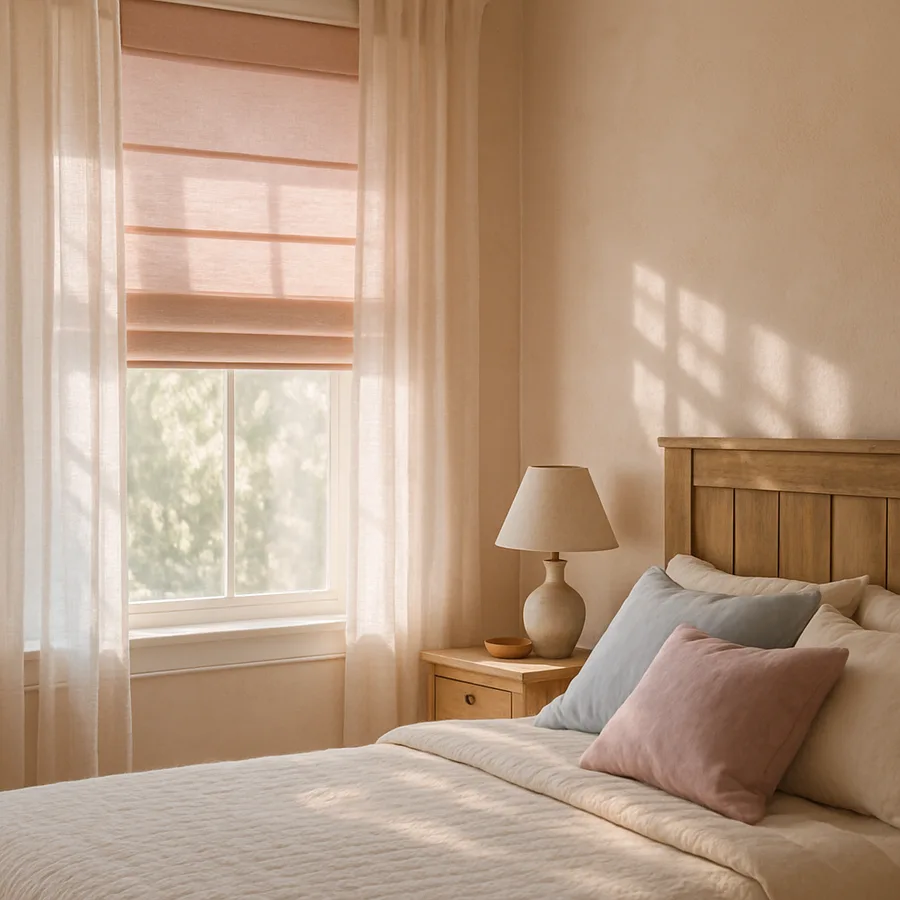
Why Smart Shade Automation Matters for Daily Comfort
Waking up to natural light has a measurable impact on circadian rhythm and overall well-being, yet most homeowners still rely on manual blinds that stay in one position all day. Automated window shades solve this tension by allowing precise scheduling of when light enters and when privacy takes over. The ability to program shades to rise gradually at sunrise means you can wake naturally without an alarm, while ensuring they close again before the streetlights come on. According to the American Society of Interior Designers (ASID), controlled natural lighting is among the top five factors influencing residential satisfaction in post-occupancy surveys. This is not merely about convenience; it is about designing a home environment that actively supports how you live.
The technology behind motorized shades has matured significantly over the past decade, making it accessible to a much wider range of budgets. Systems from manufacturers like Lutron, Hunter Douglas, and IKEA now offer options ranging from a few hundred dollars to premium whole-home installations. What once required hardwired electrical connections can now run on rechargeable battery packs with solar trickle chargers. The barrier to entry has dropped low enough that renters can install and remove these systems without modifying walls or window frames. Have you considered how much time you spend each day adjusting blinds across multiple rooms?
Beyond the personal comfort angle, automated shades contribute to measurable energy savings. The U.S. Department of Energy estimates that smart window coverings can reduce heating and cooling costs by up to 15 percent when programmed to respond to sunlight and temperature patterns. South-facing windows that receive intense afternoon sun can have shades lower automatically during peak heat hours, reducing the load on air conditioning. In winter, the same shades can open during sunny hours to capture passive solar warmth and close at dusk to add an insulating layer. This kind of responsive behavior is something manual operation simply cannot replicate consistently.
The psychological benefit of waking with light rather than an abrupt alarm deserves attention as well. Research published by the National Sleep Foundation indicates that gradual light exposure in the thirty minutes before your target wake time improves alertness and mood throughout the morning. Automated shade routines can be configured to begin opening slowly at a set time, mimicking a natural sunrise even in rooms that face north or are blocked by neighboring structures. This transforms a simple window covering into a wellness tool that quietly works in the background of your daily life.
Choosing the Right Motorized Shade System for Your Home
The first decision when selecting an automated shade system is whether to go with a hardwired or battery-powered setup. Hardwired systems draw power from your home's electrical wiring and never need battery changes, but they require professional installation and typically cost more upfront. Battery-powered systems are far easier to install as a retrofit project, though they require periodic recharging every three to six months depending on usage frequency. For homeowners planning a renovation, hardwired is the clear long-term choice, while battery-powered suits those who want automation without construction.
Compatibility with your existing smart home ecosystem is another critical factor. Most major shade manufacturers now support Apple HomeKit, Google Home, Amazon Alexa, and Samsung SmartThings, but not all systems support every platform equally. Lutron's Caseta and RA3 lines, for example, use their own bridge device and integrate broadly, while IKEA's FYRTUR and KADRILJ shades work through the DIRIGERA hub. Before purchasing, confirm that the shade system communicates with whatever voice assistant or automation platform you already use. Nothing is more frustrating than buying hardware that sits in a silo, unable to participate in the routines you want to build.
Fabric selection matters more than many buyers realize when it comes to balancing light and privacy. Sheer fabrics filter light beautifully but offer minimal privacy at night when interior lights are on. Blackout fabrics provide total darkness and complete privacy but eliminate all natural light when closed. A dual-shade system that layers a sheer roller with a blackout roller on the same bracket gives you the best of both worlds, though at a higher price point. The Houzz community forums contain extensive homeowner reviews of specific fabric and opacity combinations that can help narrow your choices before visiting a showroom.
Size and mounting style round out the selection process. Inside-mount shades fit within the window casing for a clean, built-in appearance, but they require precise measurements with very little tolerance for error. Outside-mount shades attach above or around the frame, offering more light blockage at the edges and more forgiveness in measurement. Ceiling-recessed pockets hide the shade housing entirely for a minimal look, though they require architectural planning during construction or renovation. Each approach affects both the aesthetic result and the degree to which light leaks around the edges of the shade.
Programming Morning Light Routines That Actually Work
The most effective morning shade routine is not a single event but a graduated sequence. Rather than all shades snapping open at the same moment, consider programming bedroom shades to begin rising thirty minutes before your alarm, reaching about fifty percent by wake time. Kitchen and living area shades can open fully five minutes after your alarm, so the common spaces are bright and ready when you walk in. Bathroom shades, if you have them, might open to a partial sheer position that lets in light without exposing the interior. This layered approach mimics the natural progression of moving through your home in the morning.
Most smart home platforms allow you to tie shade schedules to sunrise and sunset times rather than fixed clock times. This is especially useful because sunrise shifts by several minutes each day across the seasons. A fixed 6:30 AM open command works in March but leaves you in the dark at 6:30 AM in December and opens far too late in June. Sunrise-offset scheduling keeps the routine aligned with actual daylight conditions year-round without manual adjustment. You set it once, specifying something like "sunrise minus twenty minutes," and the system recalculates daily.
What happens on weekends or days off when you want to sleep in? The best automation platforms support schedule variations by day of week or integration with calendar apps. You can create a "weekday" routine and a "weekend" routine with a later opening time, or link the shades to a "sleep in" scene that you trigger with a voice command or phone tap the night before. Some users tie this to their phone alarm: if no alarm is set for the next morning, the shades default to a later schedule. This level of flexibility prevents the automation from feeling rigid or intrusive.
Testing and refining the routine over the first two weeks is essential. You may discover that the bedroom shade rises too fast, creating a jarring brightness, or that a particular window catches a glare that hits you directly in the eyes at a certain position. Adjusting the speed, the percentage of opening, and the exact timing by five or ten minutes can make the difference between a routine that feels magical and one that feels annoying. Keep notes during the adjustment period so you remember what you changed and why, since most shade apps do not log historical schedule edits.
Privacy Routines for Evening and Nighttime
Morning routines get most of the attention, but evening privacy routines are equally important and arguably more consequential for security. As interior lights turn on and exterior light fades, uncovered windows become transparent from the outside. A well-designed evening routine closes shades progressively as rooms transition into use: living room shades lower at dusk, bedroom shades close when the bedtime routine begins, and any ground-floor windows facing public areas close earliest of all. The American Society of Interior Designers recommends thinking about privacy in terms of zones, treating street-facing, neighbor-facing, and garden-facing windows differently.
Integrating shade automation with lighting scenes strengthens both privacy and ambiance. When you activate an "evening" or "movie night" scene, the shades can close simultaneously as the lights dim to a warm tone. This coordination eliminates the common scenario of turning on a bright lamp and only then realizing the shades are still wide open. If your lighting and shade systems share a common platform, building these combined scenes takes only a few minutes in the app. The result is a home that feels intentionally designed rather than piecemeal.
For rooms that face busy streets or close neighbors, consider using top-down/bottom-up shades that can be partially closed from the bottom for privacy while remaining open at the top for light and sky views. Motorized versions of this style are available from several manufacturers and add a layer of nuance that fully open or fully closed cannot achieve. A bathroom, for instance, can keep the lower half covered at all times while the upper portion opens during the day for natural light. This approach is particularly effective in dense urban settings where windows at eye level are the primary privacy concern.
A "vacation mode" or "away" routine adds a security dimension to your shade automation. Programming shades to open and close on a semi-random but realistic schedule while you are traveling makes the home appear occupied. This goes beyond simple light timers because shades moving throughout the day create visible activity from the outside. Some systems allow you to record a week of normal shade activity and replay it while you are away, which produces a convincingly natural pattern. Do you currently have any strategy for making your home look occupied when you travel?
Integrating Shades With Other Smart Home Systems
The real power of automated shades emerges when they communicate with other devices in your home. A thermostat that knows the shades are closed can reduce cooling output because the solar heat gain has been cut. A security system that detects you have left the building can trigger all shades to close for privacy and insulation. A media system that enters "watch mode" can lower the shades in the room with the projector while leaving the rest of the house open. These cross-device automations require a central hub or platform that can coordinate between brands, such as Home Assistant, Apple Home, or SmartThings.
Weather-responsive automation is an underused but highly practical integration. A weather service connection can close shades automatically when the forecast shows intense sun and high temperatures, even if you are not home. On overcast days, shades can remain open longer since glare and heat gain are minimal. Some advanced setups use outdoor light sensors mounted near windows to make real-time adjustments based on actual conditions rather than forecasts. The National Fenestration Rating Council (NFRC) publishes data on solar heat gain coefficients for windows that can help you calibrate how aggressively your shades should respond to sun exposure.
Voice control deserves mention as the simplest form of integration. Being able to say "close the bedroom shades" while lying in bed eliminates the need to find a phone or walk to a switch. Grouping shades by room and creating named scenes like "good morning," "movie time," and "goodnight" makes voice commands intuitive for every member of the household, including guests. The voice interface also serves as a useful override when the automated schedule does not match an unusual day, such as staying home sick or hosting a daytime gathering where you want the shades in a specific position.
If you are building or renovating, consider requesting pre-wiring for shade motors during the construction phase, even if you do not plan to install motorized shades immediately. Running low-voltage wiring to each window location costs very little during open-wall construction but becomes expensive and disruptive as a retrofit. The Architectural Digest design guides consistently recommend future-proofing window locations with power and data access, treating it as an investment that preserves options regardless of when you choose to automate.
Common Mistakes and How to Avoid Them
The most frequent mistake homeowners make is automating too many shades at once without testing the routines incrementally. Starting with one or two rooms, typically the master bedroom and the main living area, lets you learn the system, refine the schedules, and understand the quirks of your specific hardware before scaling to the entire house. Rushing to automate every window often leads to frustration when routines conflict or when shades in lesser-used rooms drain batteries without providing noticeable benefit. A phased approach also spreads the cost over time.
Neglecting to account for seasonal sun angle changes is another common oversight. A shade position that blocks glare perfectly in January may be completely ineffective in July when the sun is at a much higher angle. Building seasonal variations into your routines, or better yet, using a sun-tracking algorithm available in platforms like Home Assistant, ensures the shades remain effective throughout the year. Without this adjustment, you will find yourself manually overriding the automation during certain months, which defeats the purpose of setting up the system in the first place.
Forgetting about manual override accessibility can create problems, especially for households with children, elderly residents, or guests who are not comfortable with smart home technology. Every motorized shade should retain a manual control option, whether that is a wall-mounted button, a simple remote, or a pull chain. Relying exclusively on an app or voice commands means that a Wi-Fi outage or a dead phone battery can leave someone unable to adjust a window covering. Redundancy in control methods is not a luxury; it is a practical necessity for a system that is supposed to simplify daily life.
Finally, underestimating the importance of shade motor noise is a surprisingly common issue. Cheaper motors can produce a noticeable hum or buzz that becomes irritating when shades operate in a quiet bedroom during early morning hours. Before committing to a system, listen to the motor in a showroom or watch unsponsored video reviews that capture the actual operating sound. Premium motors from Lutron and Hunter Douglas are engineered to be nearly silent, which matters enormously when the shade is rising two feet from your sleeping head at six in the morning.
Conclusion: Building a Shade Routine That Fits Your Life
Automated window shade routines represent one of the most practical and immediately rewarding smart home investments available. Unlike many gadgets that require behavioral changes or learning curves, a well-programmed shade system simply works in the background, delivering better mornings, more comfortable afternoons, and secure evenings without asking anything of you. The combination of natural wake-up light, responsive energy management, and reliable privacy creates a tangible improvement in daily home life that most users notice within the first week.
The key to success is starting with clear priorities: identify which rooms matter most, decide whether morning light or evening privacy is your primary motivation, and choose a system that fits both your budget and your existing smart home platform. From there, the programming itself is straightforward, and the refinement period is short. Within two weeks of installation, most homeowners have a stable routine that runs without intervention for months at a time, requiring only minor seasonal tweaks.
If you have been considering automated shades but have not yet taken the step, begin with a single room and a battery-powered system to test the concept with minimal commitment. The experience of waking to gradual natural light or walking into a home where the shades have already adjusted for the evening is genuinely transformative in a quiet, daily way. Start by identifying the one window in your home that causes the most friction, whether from morning glare, evening exposure, or constant manual adjustment, and automate that window first.
The broader trajectory of home automation is moving toward environments that anticipate needs rather than respond to commands, and window shades are one of the simplest places to experience that shift firsthand. As sensor technology and AI-driven scheduling continue to improve, the shades in your home will only get better at knowing what you need before you ask. The foundation you build now with a basic routine will scale naturally as the technology evolves.
More Articles You May Like



Comments
Post a Comment