Oversized Cabinet Pulls vs Small Knobs: Visual Impact Compared
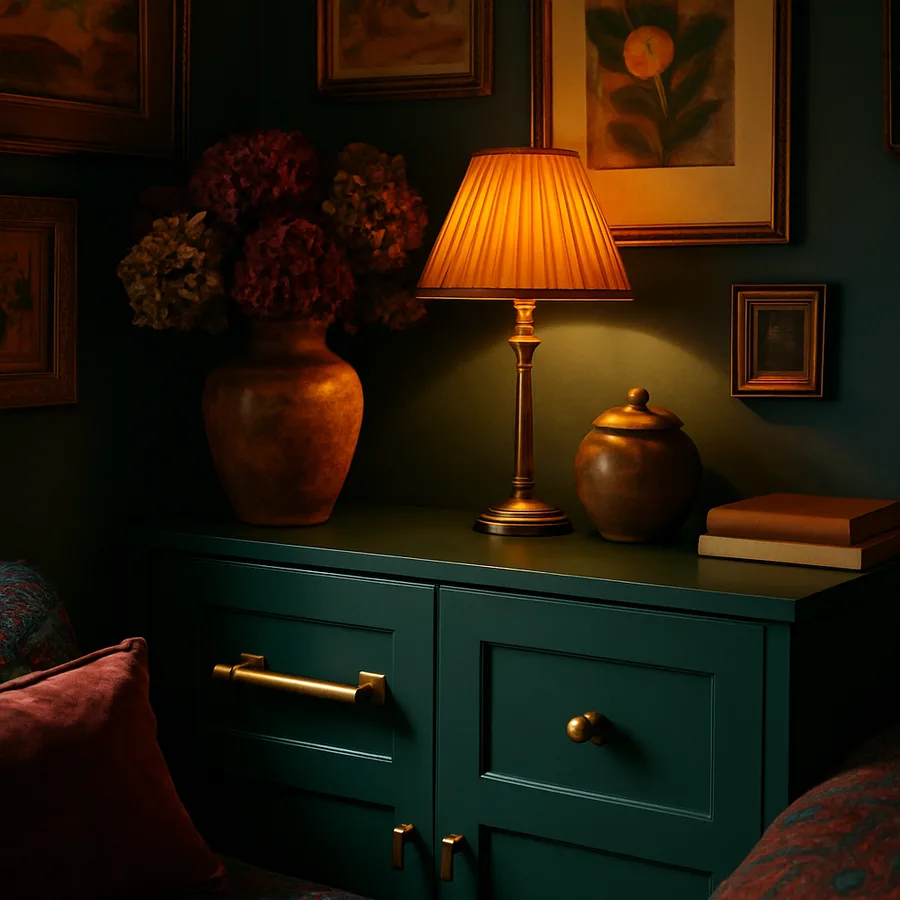
The choice between oversized cabinet pulls and small knobs is one of the most consequential yet underestimated decisions in kitchen and bathroom design. These two hardware categories represent fundamentally different approaches to the relationship between functional hardware and visual design: small knobs minimize the hardware's presence, allowing the cabinetry itself to dominate the composition, while oversized pulls assert the hardware as an active design element that shapes the room's character as forcefully as the cabinet color or countertop material. Neither approach is inherently superior, but each produces dramatically different results, and understanding how scale, proportion, and repetition interact with your specific cabinetry is essential to making a selection that achieves your design goals. According to the National Kitchen and Bath Association (NKBA), hardware selection ranks among the top five decisions that influence a kitchen's perceived quality and style, yet it receives a fraction of the deliberation time that consumers devote to countertop and cabinet selections.
How Scale Creates or Reduces Visual Emphasis
The fundamental principle governing the visual impact of cabinet hardware is the relationship between the hardware's size and the surface area of the cabinet door or drawer front it occupies. A 1-inch round knob on a standard 15-by-24-inch cabinet door covers less than one percent of the door's face, creating a small point of visual interest that the eye registers briefly before returning to the larger surface of the door panel. An 8-inch bar pull on the same door spans more than half the door's width and introduces a strong horizontal line that fundamentally changes how the eye reads the door's proportions. This relationship between hardware size and door size is not merely additive - it is multiplicative, because the hardware pattern repeats across every door and drawer in the room.
Consider a kitchen with twenty cabinet doors and ten drawer fronts. Thirty small knobs create thirty tiny focal points distributed across the cabinetry, producing a subtle dot pattern that provides texture without direction. Thirty oversized pulls create thirty bold linear accents that collectively establish a dominant horizontal or vertical rhythm across the entire kitchen. The visual difference between these two configurations is comparable to the difference between a room with small scattered artwork and a room with large statement pieces - both are valid approaches, but they create fundamentally different spatial experiences. The American Society of Interior Designers (ASID) has emphasized in its annual trend analyses that hardware scale is increasingly being treated as a primary design variable rather than a secondary accessory choice.
The impact of scale extends beyond the hardware itself to the perceived proportions of the cabinetry. Small knobs allow cabinet doors to read at their actual dimensions, while oversized horizontal pulls visually widen narrow doors and oversized vertical pulls visually heighten short doors. Designers exploit this optical effect deliberately, selecting pull orientation and length to compensate for awkward cabinet proportions that result from kitchen layout constraints. A narrow 12-inch-wide cabinet flanking a range hood, for instance, can be made to feel less pinched by a vertical pull that emphasizes height rather than a horizontal pull that calls attention to the narrow width.
What visual rhythm do you want to establish across your cabinetry, and how does hardware scale support that rhythm? This question deserves deliberation before any hardware is ordered, because the answer shapes not just the hardware selection but potentially the orientation, placement, and even the finish of the hardware you choose. Spending ten minutes with painter's tape on your cabinet doors - marking the approximate footprint of different pull lengths - provides spatial information that no product photograph can convey.
Small Knobs: When Restraint Becomes the Statement
Small cabinet knobs carry a design logic rooted in restraint, subtlety, and the philosophy that beautiful cabinetry should speak for itself. This approach has deep historical precedent: fine furniture makers from the 18th and 19th centuries treated hardware as a discreet functional element subordinate to the wood grain, joinery, and carved details of the cabinet itself. In contemporary kitchens, small knobs serve this same function when the cabinet doors feature distinctive panel profiles, prominent wood grain, or painted finishes in statement colors where the color itself is the design feature. A bold sage green Shaker kitchen, for example, may benefit from small brass knobs that accent the green without competing with it, allowing the color to fill the visual field uninterrupted.
The proportional sweet spot for small knobs falls between 1 inch and 1.5 inches in diameter for round knobs, and between 1 inch and 2 inches for square or geometric alternatives. Below 1 inch, knobs become difficult to grip comfortably, particularly for users with arthritis or reduced hand strength - a consideration that the National Association of Home Builders (NAHB) addresses in its Aging-in-Place design guidelines by recommending a minimum grip diameter of 1.25 inches for residential cabinet hardware. Above 1.5 inches, round knobs begin to project far enough from the cabinet face to catch sleeves and apron strings, a practical annoyance in a working kitchen.
Material and finish selection become critically important for small knobs because each piece carries high visual concentration relative to its size. A small knob is scrutinized more closely than a large pull simply because the eye can take in the entire object in a single glance, and any flaw in finish quality, proportion, or detail is immediately apparent. This is why small knobs tend to be the category where premium materials and finishes have the greatest payoff: a solid unlacquered brass knob with a precisely machined profile and a subtle weight in the hand delivers a quality signal that an inexpensive hollow-backed alternative cannot, and the per-piece cost difference of five to ten dollars is manageable when multiplied across the relatively small number of pieces a kitchen requires.
Knobs offer a practical advantage in kitchens where clearance is tight. Cabinet doors adjacent to appliance panels, perpendicular walls, or other doors that swing into overlapping paths need hardware with minimal projection from the door face. A knob's compact profile avoids the interference that a long pull can create in these constrained locations, allowing doors to open fully without contacting adjacent surfaces. This functional consideration sometimes resolves the aesthetic debate independently: if your kitchen layout includes multiple tight-clearance locations, knobs may be the only option that allows all doors to operate freely.
Oversized Pulls: Making Hardware the Hero
Oversized cabinet pulls operate on the opposite design principle: they declare the hardware as a central element of the kitchen's visual identity rather than a supporting player. A pull measuring 8 to 12 inches in length occupies substantial real estate on the cabinet door, introducing a line of metal or mixed material that becomes as defining as the door panel itself. This boldness is the point. In kitchens with flat-panel or slab-front cabinets, where the door surface is an uninterrupted plane without rails, stiles, or raised panels to create visual interest, oversized pulls supply the architectural detail that the door design intentionally omits. The pull becomes the door's feature, and the door becomes the pull's canvas.
The linear quality of oversized pulls is their most powerful visual attribute. A horizontal pull creates a line that runs parallel to the countertop edge, the base molding, and the upper cabinet soffit, reinforcing the horizontal strata that define kitchen architecture. A vertical pull creates a line perpendicular to these horizontals, adding dynamic tension and drawing the eye upward. Either orientation, repeated across the kitchen's full array of cabinets, establishes a geometric pattern strong enough to read as an intentional design motif rather than a functional accommodation. Interior design publications and the portfolios of firms like Studio Maclean consistently feature oversized pulls as the hardware of choice in kitchens designed to photograph with maximum graphic impact.
The ergonomic advantages of oversized pulls are significant and often underappreciated. A long pull can be grasped at any point along its length, accommodating different hand positions, grip strengths, and approach angles. This flexibility makes oversized pulls inherently more accessible than knobs, which require the fingers to locate and close around a single small target. For households that include children, elderly family members, or anyone with limited hand mobility, the oversized pull provides easier, more comfortable operation without requiring any specialized adaptive hardware. The grip force required to open a drawer using a 10-inch pull is distributed across the hand rather than concentrated in the fingertips, reducing the strain that repetitive opening and closing can produce over time.
Cost considerations for oversized pulls differ from knobs in important ways. The per-piece price for an oversized pull is typically higher - ranging from $8 to $25 for quality options compared to $3 to $15 for knobs of equivalent finish quality. However, oversized pulls are often used only on drawers while upper cabinet doors receive complementary knobs in a mixed hardware configuration, which can reduce the total number of expensive pulls needed. A kitchen with twelve drawers fitted with $15 pulls and eighteen upper cabinet doors fitted with $5 knobs totals $270 - comparable to the cost of thirty $9 knobs, demonstrating that the mixed approach can achieve the visual impact of oversized pulls without a proportionally larger budget.
Mixed Configurations: The Professional Approach
Professional kitchen designers rarely use a single hardware type uniformly across all cabinetry. The standard professional approach combines pulls on drawers and knobs on doors, or uses different pull sizes for upper versus lower cabinets, creating visual variety within a coordinated scheme. This mixed configuration leverages the specific strengths of each hardware type where they are most appropriate: pulls on drawers, where the horizontal grip surface aligns with the drawer's sliding motion and provides the leverage needed to open loaded drawers, and knobs on upper cabinet doors, where the compact form suits the lighter doors and the pivoting open-close motion that does not benefit from a long grip surface.
The design logic behind mixed configurations reflects how the eye naturally divides a kitchen into zones. Lower cabinets and drawers occupy the zone below the countertop, which receives the most direct interaction and the most sustained visual attention during food preparation and cooking. Upper cabinets occupy a secondary zone above the countertop that is typically viewed from a greater distance and interacted with less frequently. Differentiating hardware between these zones reinforces the architectural distinction between them while keeping the overall scheme unified through shared finish and design family. A 10-inch matte black pull on the lower drawers paired with a 1.25-inch matte black knob on the upper doors creates clear zonal hierarchy without visual conflict.
Appliance panels, pantry doors, and full-height cabinet towers present special considerations in mixed configurations. These large surfaces exist at a different scale than standard cabinet doors and drawers, and they often benefit from hardware that matches their larger proportions. A 12-inch or 18-inch appliance pull on a refrigerator panel or a tall pantry door provides both the visual weight and the functional leverage that these heavy or large-format doors require. Using the same finish as the drawer pulls but at a larger scale creates a proportional harmony that makes the tall element feel integrated with the base cabinetry rather than isolated from it.
How do professional designers decide the specific combination for a given kitchen? The process typically begins with the drawer pulls, which occupy the most visually prominent band across the kitchen and therefore set the dominant hardware tone. Upper cabinet hardware is then selected to complement without competing, usually in a smaller scale and simpler profile from the same manufacturer's collection. Specialty hardware for appliance panels and tall units is sized proportionally to the surface area it serves. This hierarchical approach ensures that the hardware scheme has a clear primary accent supported by secondary and tertiary elements, mirroring the compositional structure that designers use for all aspects of interior space planning.
The Proportion Formula That Designers Use
Professional designers working at firms affiliated with the American Society of Interior Designers use a proportion-based approach to hardware sizing that removes guesswork from the selection process. The guideline states that a drawer pull should span approximately one-third the width of the drawer front it occupies. For a standard 24-inch-wide drawer, this formula suggests an 8-inch pull. For a 30-inch drawer, a 10-inch pull. For a narrow 15-inch drawer, a 5-inch pull. This one-third ratio produces visual balance between the hardware and the surface: the pull is large enough to register as a design element but not so large that it overwhelms the drawer front or leaves inadequate visual margin on either side.
For cabinet doors, the sizing relationship shifts because doors are typically taller than they are wide, and the hardware occupies a position offset from center rather than centered. The guideline for door pulls suggests a length equal to one-third the door's height when mounted vertically, or one-third the door's width when mounted horizontally. Vertical mounting is more common on doors because it places the pull in the natural grasp zone - typically centered at 36 inches above the floor for base cabinets and at the lower edge for upper cabinets - while a horizontal pull on a door can interfere with the visual reading of the door's panel proportions.
Projection from the cabinet face - how far the hardware stands proud of the door surface - is the often-overlooked third dimension of proportion. Most bar pulls project between 1.25 and 1.75 inches from the door face, providing adequate finger clearance for a comfortable grip. Flat or semi-recessed pulls project less than an inch and create a sleeker profile that works well in narrow corridors or adjacent to high-traffic pathways. Oversized pulls with projection greater than 2 inches make a bold dimensional statement but increase the risk of snagging clothing and accumulating debris on the bar's interior surface. Matching the projection depth to the room's traffic patterns is a practical dimension of the proportion decision.
Test your preferred proportions by holding a ruler or dowel of the intended pull length against each cabinet door and drawer front, stepping back to view the proportion from normal standing distance, and adjusting as needed. The one-third guideline is a starting point, not an absolute rule: some doors look better with slightly shorter pulls that leave more visual breathing room, while some large drawer fronts benefit from pulls that approach half the drawer width for a more commanding presence. Your eye and your specific cabinetry have the final word, and the investment of fifteen minutes with a measuring stick prevents the expense of returning hardware that does not suit the proportions of your particular cabinets.
Making the Decision: Factors Beyond Aesthetics
While visual impact drives most hardware decisions, several practical factors should inform the choice between oversized pulls and small knobs and may legitimately override purely aesthetic preferences. Household composition is the first consideration: homes with young children, elderly residents, or family members with mobility limitations benefit from the accessibility advantages of pulls, which require less grip precision and less force to operate than knobs. The Americans with Disabilities Act (ADA) guidelines for commercial spaces specify lever-operated and pull-operated hardware rather than round knobs, and these accessibility principles apply equally in residential settings where ease of use affects daily quality of life.
Cabinet construction quality influences how well different hardware types perform over time. Pulls distribute their force across two mounting points, which means the mechanical stress on each individual screw is lower than the stress on the single mounting screw of a knob. For cabinet doors and drawer fronts made from MDF, particleboard, or thin plywood, this distributed load reduces the risk of screw pullout that can occur when a heavily loaded drawer is opened with a single-point knob. If your cabinets are built from solid hardwood or high-quality furniture-grade plywood, either hardware type will perform reliably; if the construction is lighter, pulls offer a mechanical advantage that extends the cabinet's service life.
Maintenance and cleaning differ modestly between the two categories. Small knobs have a simple geometry that wipes clean with a single circular motion. Oversized pulls accumulate dust, cooking grease, and debris in the gap between the bar and the cabinet face, requiring a more deliberate cleaning motion to address the bar's interior surface. In kitchens where cooking produces significant airborne grease - frequent frying, wok cooking, or grilling - the cleaning demand on pulls is noticeably higher than on knobs. This practical reality leads some professional kitchen designers to recommend knobs for cabinets directly flanking the range, even in kitchens that use pulls everywhere else, creating a functional exception within the mixed hardware scheme.
Ultimately, the most confident hardware decision is one that accounts for how your household actually uses the kitchen, not how a magazine kitchen appears in a styled photograph. Oversized pulls deliver maximum visual drama and superior ergonomics. Small knobs offer restraint, clearance advantages, and a lower profile that keeps the focus on the cabinetry. Mixed configurations capture the best of both. Whichever direction you choose, commit to it fully, install it consistently, and let the hardware define the character of the space with the authority that its repeated presence across dozens of cabinet surfaces commands. Your kitchen deserves hardware selected with the same care you devoted to every other surface in the room - and the visual payoff will prove the effort worthwhile.
More Articles You May Like



Comments
Post a Comment