Mudroom Bench Storage Ideas for Families With Small Entryways
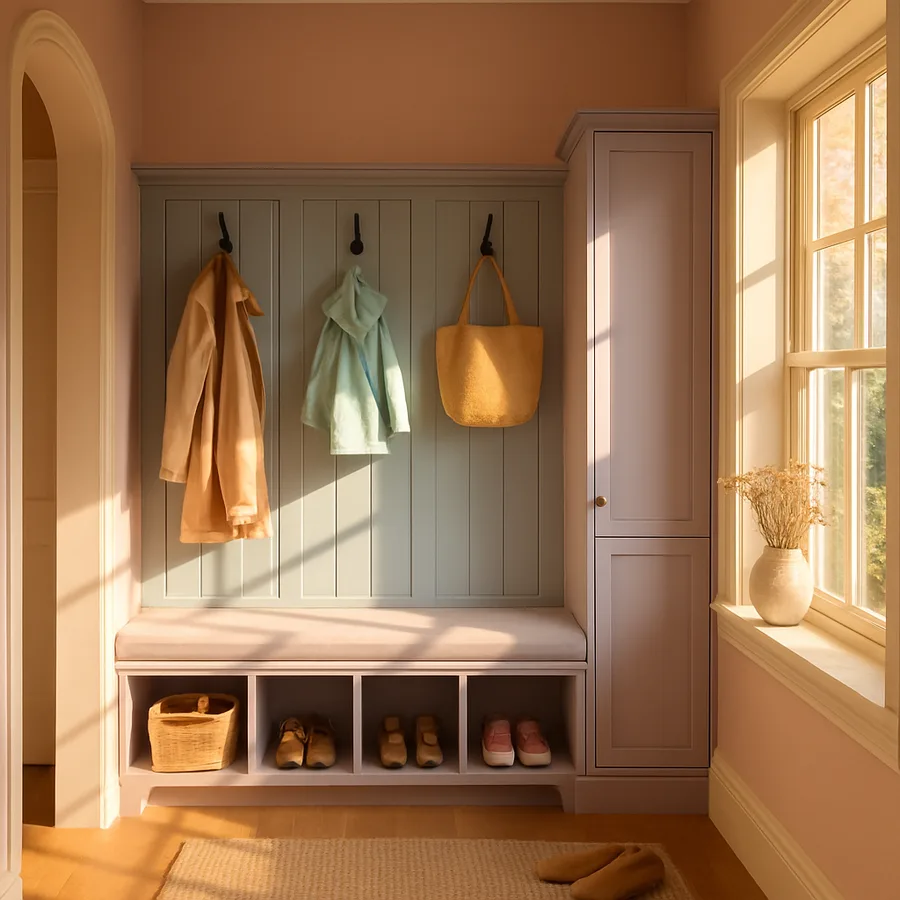
Understanding Why Small Entryways Need Harder-Working Furniture
A small entryway does not mean a family has fewer shoes, coats, backpacks, and daily essentials to manage. It means those items have less room to live, which makes the design of every single piece of furniture in that space exponentially more important. The average American family of four cycles through eight to twelve pairs of shoes at the front door during any given season, according to the American Cleaning Institute. Add school bags, sports equipment, dog leashes, and seasonal outerwear, and the volume of daily-use items at the entry point becomes staggering relative to the typical three-by-six-foot mudroom footprint found in many older homes and apartments.
The mudroom bench is the anchor piece that either makes or breaks a compact entry's functionality. Unlike a simple shoe rack or a row of wall hooks, a well-designed bench serves triple duty: it provides seating for putting on and removing shoes, concealed or semi-concealed storage for items that need to disappear, and a visual anchor that prevents the entry from looking like a disorganized dumping ground. When a bench fails to perform all three functions, families compensate with floor piles, door-handle bags, and chair-draped coats that make the entryway feel smaller and more chaotic than it actually is.
The National Association of Home Builders (NAHB) has found that dedicated mudroom or entry storage consistently ranks among the most desired features for family buyers, yet the physical space allocated to this function has actually decreased in many newer construction floor plans as square footage shifts toward open-concept living areas. This tension between demand and available space is exactly what makes bench selection and configuration so critical. The right bench compensates for architectural limitations with clever engineering that stores more in less linear footage.
Have you ever measured your actual entryway floor space and compared it to the volume of items your family drops there daily? Most families are shocked by the disparity. A forty-two-inch bench that incorporates a lift-top seat, lower shoe shelf, upper cubby, and wall-mounted hooks above it can manage the equivalent of a six-foot open closet, but only when each component is sized and configured with intention. The following sections break down exactly how to achieve that density without making the space feel cramped or inaccessible.
Built-In Bench Designs That Maximize Every Inch
A built-in mudroom bench offers the greatest storage density per square foot because it is custom-fitted to the exact dimensions of the space, eliminating the dead zones that freestanding furniture inevitably creates. The most effective built-in configuration starts with a bench depth of fifteen to eighteen inches from wall to front edge, a seat height of seventeen to nineteen inches for comfortable adult seating, and full utilization of the wall above for hooks, shelves, or closed cabinets extending to within twelve inches of the ceiling. This vertical approach triples the usable storage compared to a bench-only solution.
Under-bench storage comes in three primary configurations, each suited to different family needs. Open cubbies divided by vertical partitions allow quick drop-and-grab access and work well for families with young children who need to see their belongings to use them independently. Drawers with full-extension slides provide concealed storage that keeps the entry looking clean but requires an extra step to access. Lift-top bench seats split the difference, hiding contents from view while still allowing fast, one-motion access that does not require pulling or sliding. Many families find that a combination of two cubbies and one drawer per child provides the ideal balance.
The American Society of Interior Designers (ASID) notes that built-in mudroom storage should be designed around the specific items it will hold, not generic dimensions pulled from a catalog. Measure your family's actual shoe sizes, backpack depths, and coat lengths before finalizing any built-in design. A cubby designed for adult men's size twelve boots requires a different interior dimension than one sized for a kindergartener's sneakers. This measurement-first approach prevents the common frustration of built-ins that look beautiful but cannot actually accommodate the items they were intended to store. What would happen if you measured your family's tallest pair of boots and widest backpack right now and compared those dimensions to the cubbies you are considering?
For renters or homeowners who want built-in aesthetics without permanent construction, consider modular cabinet systems that mount to the wall with a few screws and can be removed without significant wall damage. Companies like IKEA's Kallax line and ClosetMaid's stackable cubes offer affordable, reconfigurable options that mimic custom built-in appearance when installed at consistent heights and painted to match the wall color. Topping a row of wall-mounted cabinets with a cut-to-fit butcher block or painted MDF plank creates a bench surface that is visually indistinguishable from a true built-in at a fraction of the cost and commitment.
Shoe Storage Solutions That Actually Work for Families
Shoes are the single largest volume category in most family mudrooms, and they are also the most problematic because they are dirty, oddly shaped, and needed in a hurry. The standard approach of lining shoes along the floor beneath a bench wastes vertical space and creates the cluttered, kicked-around appearance that undermines the entire entry's organization. A more effective solution is an angled shoe rack that tilts shoes heel-down at a thirty-degree angle, allowing two vertical tiers of shoes in the same floor space that one flat row would occupy. This simple geometric change doubles shoe capacity without adding any width to the bench.
Pull-out shoe drawers represent the cleanest visual solution because they hide footwear completely behind a drawer face that matches the bench cabinetry. When closed, the bench appears streamlined and uncluttered. When opened, shoes sit in organized rows with enough spacing to grab any pair without disturbing others. The ideal drawer depth for family shoe storage is sixteen to eighteen inches, which accommodates men's shoes up to size thirteen placed toe-to-heel. Full-extension drawer slides are mandatory for this application because standard three-quarter extension leaves the back portion of the drawer inaccessible, which is exactly where items get lost and forgotten.
Boot storage requires separate consideration because tall boots collapse without support and occupy twice the vertical space of regular shoes. Boot trays positioned beside or beneath the bench with removable inserts that allow boots to stand upright solve both the structural and the moisture management challenges. For small entryways that cannot accommodate a separate boot station, consider wall-mounted boot clips that hold boots upside down by their soles, allowing them to dry while occupying zero floor space. This approach is particularly valuable during winter months when wet boots would otherwise saturate a lower shelf.
According to Better Homes and Gardens (BHG), the most common shoe storage mistake in family mudrooms is underestimating future capacity needs. Children's feet grow, activities change, and seasonal footwear accumulates. Design your shoe storage for thirty percent more capacity than your family currently requires, and use the excess space for off-season rotation. A well-planned shoe system should accommodate growth for at least three to five years without requiring reconfiguration, which means building in flexibility from the start rather than trying to retrofit later.
Vertical Storage Tricks for Tight Spaces
When floor space is limited, the walls become your primary storage resource, and the area above a mudroom bench is the most valuable vertical real estate in the entryway. The zone between the top of a seated person's head, approximately fifty-four inches from the floor, and the ceiling line is underutilized in most mudrooms. Wall-mounted hooks at forty-eight to fifty-four inches accommodate children's daily-use jackets and bags. A second row at sixty-six to seventy-two inches handles adult coats and longer items. This dual-height hook system serves the entire family from a single column of wall space no wider than six inches.
Shelf placement above the bench should follow a functional hierarchy. The lowest shelf, typically twelve to sixteen inches above the seat, holds daily items like sunglasses, wallets, and keys. A middle shelf at thirty to thirty-six inches above the seat stores baskets containing gloves, hats, and scarves. The highest shelf, as close to the ceiling as practical, houses infrequently accessed items like seasonal gear or emergency supplies. This tiered access system means the most-used items require the least effort to reach, which is the organizational principle that determines whether a storage system actually gets used consistently by every family member.
Pegboard systems mounted above a mudroom bench offer the ultimate flexibility for families whose storage needs change seasonally or as children age. A four-by-two-foot pegboard panel can support hooks, baskets, shelves, and clips that rearrange in seconds without new hardware or wall damage. Paint the pegboard to match the wall color for a built-in appearance, or leave it in a contrasting tone as a deliberate design feature. The Container Store and similar retailers offer pegboard accessories specifically designed for entry storage, including key hooks, mail sorters, and sunglasses holders that integrate seamlessly into the system.
Do not overlook the back of the entry door as storage space. Over-the-door organizers with clear pockets hold mittens, sunscreen, dog waste bags, and other small items that otherwise clutter surfaces or get lost in drawers. Heavy-duty over-the-door hook racks hold significantly more weight than adhesive hooks and require no wall modification. For families with multiple children, assigning each child a different color of basket, hook, or cubby label eliminates the morning scramble of searching through mixed belongings and builds independent organizational habits that reduce daily friction at the door.
Materials and Finishes That Survive Family Life
A mudroom bench endures more physical abuse per square inch than almost any other piece of furniture in the home. Wet shoes, muddy cleats, dropped backpacks loaded with textbooks, and the repeated impact of sitting and standing place enormous demands on the bench surface, supporting structure, and finish. Choosing materials rated for this abuse is not a luxury consideration. It is the difference between a bench that looks good for a decade and one that deteriorates within a year. Solid hardwood such as maple, oak, or birch provides the most durable bench seat, capable of being refinished multiple times as wear accumulates.
For painted finishes, which are the most popular choice for mudroom benches, the paint formulation matters as much as the color selection. Standard latex wall paint will chip and scuff within weeks on a bench surface. Instead, use a cabinet-grade enamel or a dedicated furniture paint like Benjamin Moore Advance or Sherwin-Williams ProClassic, which cure to a harder, more scuff-resistant film than standard interior paint. Apply with a foam roller for a smooth finish, allow full cure time of seven to fourteen days before use, and expect to touch up high-wear areas annually as part of normal maintenance.
The bench seat itself benefits enormously from a removable cushion rather than a bare wood or painted surface. A washable cushion cover in a durable outdoor fabric like Sunbrella provides comfort, protects the underlying surface from direct impact, and can be thrown in the washing machine when muddy handprints and spilled drinks inevitably occur. Secure the cushion with ties or non-slip matting to prevent it from shifting during use. The National Kitchen and Bath Association recommends performance fabrics for all high-traffic seating applications, and the mudroom bench qualifies as one of the hardest-working seats in any home.
Hardware selection for mudroom storage receives less attention than it deserves. Basket pulls, drawer slides, hinges, and hooks all experience daily cycling that quickly exposes quality differences. Choose hooks rated for at least fifteen pounds each if they will hold backpacks and heavy coats. Specify soft-close drawer slides to prevent slamming and extend hardware life. Select basket pulls or cup handles rather than knobs for drawers and doors, because pulls can be operated with one hand or even an elbow when the other hand holds groceries, a child, or a leash. Every friction-reducing detail compounds into a storage system that the whole family actually uses consistently.
Putting It All Together: A Complete Small Mudroom Plan
Assembling these individual components into a cohesive small mudroom requires a planning sequence that starts with precise measurement and ends with a realistic assessment of daily traffic patterns. Begin by measuring the total available wall length and depth in your entryway, then subtract twelve inches from the depth for comfortable passage when someone is seated on the bench. This remaining depth defines your maximum bench footprint. A bench depth of twelve inches is workable for children, fifteen inches is comfortable for most adults, and eighteen inches is generous but may encroach on the passage zone in very narrow entries.
Next, inventory every item that currently lives in or passes through the entryway over a one-week period. This exercise consistently reveals items that homeowners did not consciously account for: the umbrella that leans in the corner, the reusable shopping bags that hang on the doorknob, the dog leash draped over the stair railing, the mail that accumulates on the nearest flat surface. Each of these items needs a designated home within the mudroom system, or they will continue to create visual clutter regardless of how beautiful the bench itself is. The one-week inventory is the single most valuable planning step and costs nothing but attention.
Color and material choices should prioritize durability and easy cleaning over trend appeal. White and light gray painted benches photograph beautifully but show every scuff mark and muddy handprint. Medium tones like sage green, warm gray, or navy hide wear more effectively while still feeling fresh and intentional. If you prefer white, commit to the maintenance schedule it requires or choose a white-washed wood finish that incorporates the underlying grain texture and makes wear look intentional rather than neglected. The National Association of Home Builders reports that mudroom finishes rank among the top five areas where homeowners wish they had chosen more durable options.
The final consideration is establishing and enforcing the organizational system once built. The most brilliantly designed mudroom bench will devolve into chaos within weeks if the family does not adopt clear habits around its use. Assign specific cubbies or hooks to each family member and label them during the initial adjustment period. Conduct a five-minute nightly reset where displaced items return to their assigned locations. This habit formation period typically lasts two to three weeks before the system becomes automatic. Start planning your small entryway mudroom bench by measuring your available wall space this weekend and completing the one-week item inventory, then use those specific dimensions and item counts to select or design a bench configuration that truly fits your family's daily life.
More Articles You May Like



Comments
Post a Comment