Layering Sheer Curtains With Blackout Panels for Bedrooms
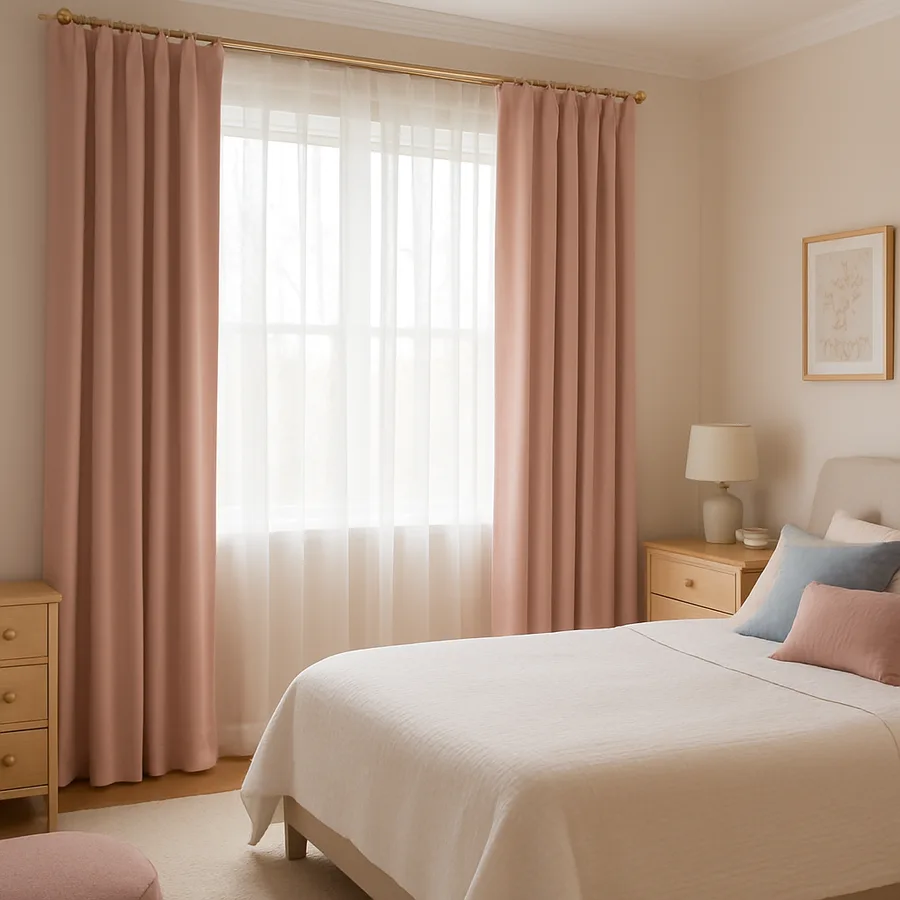
Why the Two-Layer Approach Works Better Than Choosing One
Most bedroom window decisions present a frustrating trade-off. Sheer curtains let soft, diffused daylight fill the room and create an airy atmosphere, but they offer almost no light blocking for sleep and minimal privacy after dark when interior lights make everything visible from outside. Blackout panels deliver total darkness and complete privacy, but they transform the bedroom into a sealed cave during daytime hours, blocking the natural light that makes a room feel alive and connected to the outdoors. Layering both fabrics on the same window eliminates this compromise entirely, giving you independent control over two separate qualities of light from a single window treatment.
The concept is straightforward: sheer curtains hang on an inner rod or track closest to the glass, and blackout panels hang on an outer rod or track closer to the room. During the day, the blackout panels stay open while the sheers filter and soften incoming light, creating the bright-but-gentle atmosphere that makes bedrooms feel welcoming. At night or during naps, the blackout panels close over the sheers to block all external light and provide full privacy. This dual-layer system functions like having two completely different window treatments that occupy the same space and can be deployed independently based on the time of day and your immediate needs.
Interior designers have used layered window treatments in high-end bedrooms for decades, and the approach has become increasingly popular in mainstream residential design. The American Society of Interior Designers (ASID) identifies layered curtains as one of the most requested bedroom features among clients seeking both functionality and visual richness. The layered look adds depth and dimension to the window wall that a single treatment cannot achieve, creating visual interest even when both layers are fully open and framing the window from the sides. That decorative density signals a room that has been thoughtfully designed rather than quickly furnished.
The practical benefits extend beyond light control and aesthetics. Two layers of fabric provide superior thermal insulation compared to a single layer, reducing heat loss through the window in winter and blocking solar heat gain in summer. The trapped air pocket between the sheer and blackout layers acts as an insulating buffer that improves the window's effective R-value. The U.S. Department of Energy reports that properly installed window treatments can reduce heat loss through windows by up to 25 percent, and dual-layer treatments maximize this benefit because they create a more complete seal across the window opening than any single panel can achieve alone.
Choosing the Right Sheer Fabric for the Inner Layer
The sheer curtain layer serves three purposes simultaneously: it filters and diffuses daylight, provides daytime privacy from exterior sightlines, and establishes the window's daytime aesthetic character. Not all sheer fabrics perform these functions equally, and the fabric you choose for the inner layer shapes the quality of light in the bedroom more than any other single decision in the layering process. A tightly woven sheer in polyester or nylon diffuses light effectively and blocks more exterior visibility, but it reduces the total volume of light entering the room. A loosely woven sheer in cotton or linen allows more light through and offers a softer, more organic texture, but provides less daytime privacy from close-range viewing.
Voile is the most popular sheer fabric for bedroom layering because it balances transparency, light diffusion, and privacy at a moderate price point. Voile is a plain-weave fabric, typically polyester or a polyester-cotton blend, with a smooth surface that hangs in clean, straight folds and filters light into a soft, even glow without creating harsh shadows or hotspots. A standard voile panel in white or ivory provides approximately 40 to 60 percent light transmission, which is bright enough to illuminate the room naturally while softening the directional glare that bare windows produce. Voile resists wrinkling better than natural fiber sheers and maintains its drape through years of opening, closing, and washing without developing the permanent creases that some fabrics acquire over time.
Linen sheers offer a distinctly different character that appeals to homeowners seeking a more natural, textured aesthetic. The irregular weave of linen creates subtle variations in transparency that produce a dappled, organic light pattern on walls and floors, quite different from the uniform glow of voile. Linen sheers wrinkle deliberately and beautifully, with soft creases that add to rather than detract from their visual appeal, and they develop a softer hand with each washing. The trade-off is that linen sheers cost two to four times as much as polyester voile panels, they shrink if washed in hot water, and they require more careful handling during laundering. For primary bedrooms where the sheer layer is a focal point of the design, the investment in linen is justified by the quality of light and texture it contributes.
Color choice for the sheer layer influences the bedroom's mood more than you might expect. White and ivory sheers produce a neutral, clean light that works with any wall color and decor style. Soft gray sheers create a cooler, more contemporary light that pairs well with blue-gray and charcoal bedroom palettes. Blush or champagne sheers add a warm, flattering tint to the incoming light that is particularly beautiful in bedrooms with warm wall tones and metallic accents. Avoid strongly colored sheers in deep reds, greens, or blues for the bedroom layer, because they tint the entire room's natural light with that color cast, which can feel oppressive in a space where you spend extended hours. A Better Homes & Gardens reader survey found that 82 percent of respondents who regretted a curtain purchase cited color choice as the primary reason, with overly saturated sheers being the most common specific complaint.
Selecting Blackout Panels That Complement the Sheers
The blackout layer must block light effectively when closed, hang attractively when open, and coordinate visually with the sheer layer without competing for attention. True blackout fabric achieves total light blocking through one of two methods: a dense, tightly woven face fabric that is inherently opaque, or a lighter face fabric bonded to a separate blackout lining that does the actual blocking. The bonded-lining approach is more versatile because it allows you to choose the face fabric based on color, texture, and drape while the hidden lining handles the light-blocking function. This means your blackout panels can be made from velvet, linen, cotton sateen, or any fabric that suits your design, with the blackout capability added as an invisible functional layer behind the decorative surface.
Weight and drape are critical considerations for the blackout panels because they hang on the outer rod, closest to the room, where their silhouette is most visible. Heavy blackout fabrics like velvet and lined cotton duck produce deep, luxurious folds that hang with authority and create a strong visual frame around the window. Lighter blackout fabrics, such as microfiber or polyester with a foam blackout backing, hang in softer folds that feel more casual and take up less visual space when stacked to the sides. The weight also affects the hardware required: heavy blackout panels need a sturdy rod rated for the combined weight of two or more panels per window, while lighter blackout fabrics work on standard curtain rods without risk of sagging or pulling out of the wall anchors.
How much contrast should exist between the sheer and blackout layers in your bedroom? The answer depends on whether you want the layers to blend into a cohesive ensemble or stand as distinct visual elements. A monochromatic approach, such as white sheers with ivory or light gray blackout panels, creates a unified, serene window treatment where the layers merge visually and the overall effect is calm and understated. A contrasting approach, such as white sheers with navy, charcoal, or deep green blackout panels, creates a dramatic window wall where the blackout panels function as bold accent pieces that anchor the room's color scheme. Both approaches are valid, and the choice should follow the bedroom's existing design direction rather than establishing a new one.
The American Society of Interior Designers recommends considering the blackout panels from the outside of the home as well as the inside. If your bedroom faces a street or a neighbor, the exterior-facing side of the blackout panel is visible through the sheer layer during the day and directly visible when the sheers are also open. Blackout panels with a white or neutral backing present a clean, uniform appearance from the street, while panels with colored or patterned backing can look inconsistent from the exterior if different bedrooms use different colors. Many blackout fabrics are manufactured with a standard white backing specifically to address this concern, maintaining neighborhood aesthetics regardless of the interior-facing color.
Hardware and Mounting Methods for a Clean Layered Installation
The hardware system determines whether your layered curtains look intentional and polished or cobbled together and awkward. The two primary mounting options for layered treatments are double curtain rods and ceiling-mounted tracks, and each has distinct advantages. Double rods use a single set of brackets that supports two parallel rods at different distances from the wall: the inner rod holds the sheers and the outer rod holds the blackout panels. Double rods are widely available, relatively inexpensive at 30 to 80 dollars per window, and easy to install with standard tools. Their main limitation is visual bulk; the double bracket system projects further from the wall than a single rod and is visible above the curtains unless concealed by a valance or cornice.
Ceiling-mounted tracks eliminate the visible bracket problem by attaching directly to the ceiling or inside a ceiling-mounted pocket, placing the curtain attachment point above the sightline. Dual-channel ceiling tracks provide two parallel rails for independent operation of each layer, and the curtains hang from small glide hooks that travel silently along the track. This system produces the cleanest possible look because there is no visible hardware above the curtains, and the panels hang from ceiling height, creating a dramatic floor-to-ceiling drape that makes windows and rooms feel taller. Ceiling tracks cost between 50 and 150 dollars per window for quality dual-channel systems, and installation is slightly more involved than rod mounting because the track must be anchored into ceiling joists or blocking for secure support.
Rod and track placement relative to the window frame significantly affects the finished appearance. Mounting the rod or track 4 to 8 inches above the top of the window frame, and extending it 6 to 12 inches beyond each side of the frame, creates the illusion of a larger window by allowing the curtain panels to stack on the wall beside the window rather than covering the glass when open. This wider, higher mounting is one of the simplest and most effective tricks for making a bedroom feel more spacious and the windows more generous. The National Kitchen and Bath Association (NKBA) recommends this approach as standard practice for layered bedroom treatments, noting that it maximizes natural light during the day by keeping all fabric off the glass when both layers are open.
Curtain rings, hooks, and heading styles affect both the look and the ease of daily operation. Grommet-top panels slide easily on a rod and create uniform, modern pleats, but they cannot be used on tracks. Pinch-pleat panels with drapery hooks work on both rods (via rings) and tracks (via glide hooks) and produce the most tailored, structured silhouette. Rod-pocket panels thread directly onto the rod without rings, which creates a gathered, casual look but makes the panels difficult to slide open and closed, a significant drawback for blackout panels that you will be operating daily. For the sheer layer, which often stays in a fixed position, a rod pocket or tab top is acceptable. For the blackout layer, which opens and closes every day, rings or hooks that allow smooth, effortless movement are strongly recommended to prevent the daily frustration of tugging at fabric that bunches and sticks on the rod.
Achieving Professional Results With Proper Measurements and Proportions
Curtain length is the single most visible indicator of whether a layered treatment looks professional or amateur, and the margin for error is surprisingly small. For bedrooms, the three acceptable length options are floor-length (panels ending exactly at the floor with no break), floor-plus (panels extending one to two inches beyond the floor and barely touching), and puddle (panels pooling three to six inches on the floor for a romantic, luxurious effect). Panels that end one or two inches above the floor look like they were measured wrong, and panels that hover at mid-calf or sill height look like they belong in a kitchen, not a bedroom. Both layers should end at the same length for visual consistency, which means measuring for the sheers and blackout panels to the same floor point from their respective rod or track heights.
Width is the other dimension that separates a generous, professional-looking treatment from a skimpy, budget-compromised one. Each curtain panel should measure 1.5 to 2 times the width of the area it needs to cover when closed. For a 60-inch-wide window with rods extending 10 inches beyond each side, the total coverage width is 80 inches, which means each blackout panel should be 60 to 80 inches wide to achieve proper fullness when closed. The sheers typically need even more fullness, at 2 to 2.5 times the coverage width, because the thin fabric looks sparse and flat without generous gathering. Skimping on width is the most common mistake in curtain installation, and it is especially noticeable in layered treatments where the relationship between the fuller sheer layer and the outer blackout layer should feel balanced and intentional.
Does the pattern or texture of your blackout fabric require careful matching across adjacent panels? Solid and micro-textured fabrics are forgiving because there is no pattern alignment to worry about, but patterned blackout panels, such as those with stripes, damask prints, or large-scale geometric motifs, require careful matching at the seams where panels meet when closed. Pattern matching adds 15 to 25 percent to the fabric required because sections must be cut at specific repeat intervals to align correctly, which generates waste. For layered treatments in bedrooms, most designers recommend solid blackout panels specifically to avoid the complexity and cost of pattern matching, reserving pattern for the sheer layer (if any) where the translucent fabric renders the pattern as a subtle suggestion rather than a precise line that demands alignment.
The stacking space required when both layers are open is a measurement that many homeowners forget to account for. When the blackout panels are pulled to the sides, the folded fabric occupies a stack width of approximately one-third of each panel's flat width. For a pair of 60-inch-wide blackout panels, the open stacks occupy about 20 inches on each side of the window. The sheer stacks add another 8 to 12 inches per side. If the rod does not extend far enough beyond the window frame to accommodate these stacks, the open curtains will cover part of the glass even when fully open, reducing the daylight entering the room. Plan the rod extension to accommodate the stack width of both layers, and you will enjoy full, unobstructed glass during the day with all the coverage you need at night.
Maintenance, Cleaning, and Keeping Both Layers Fresh
Layered curtains collect dust and allergens at approximately double the rate of a single treatment because two fabric surfaces are exposed to room air, and the trapped air space between layers can harbor dust particles that settle on the inner face of the blackout panels and the outer face of the sheers. Regular maintenance prevents buildup from becoming visible or triggering allergies. A monthly pass with a vacuum cleaner fitted with a soft brush attachment removes surface dust from both layers without taking them down, and this routine alone keeps the treatment looking fresh between deeper cleanings. Focus the vacuum on the top six inches of each panel, where dust accumulates fastest due to the rising thermal current along the window surface.
Sheer curtains benefit from laundering every three to six months, depending on the room's dust exposure and whether the household includes allergy sufferers. Most polyester voile and synthetic sheer fabrics are machine washable on a gentle cycle with cold water and can be tumble dried on low heat or, preferably, re-hung damp and allowed to dry in place, which eliminates wrinkles through gravity. Linen sheers should be washed on a delicate cycle with cool water and either air dried flat or hung damp; machine drying linen causes excessive shrinkage and can permanently alter the fabric's drape. According to the International Fabricare Institute, sheer curtains that are laundered regularly last 30 to 40 percent longer than those that are cleaned only when visibly soiled, because embedded grime weakens fabric fibers over time and accelerates tearing along fold lines.
Blackout panels require less frequent cleaning because their heavier, denser fabric resists dust penetration better than sheer material, and most blackout fabrics are treated with stain-resistant finishes that repel surface soiling. An annual cleaning is sufficient for most bedrooms, and the method depends on the fabric type. Polyester and microfiber blackout panels can often be machine washed, though the blackout backing should be checked for peeling or bubbling after the first wash to confirm it tolerates the process. Velvet, silk, and dry-clean-only blackout panels should be professionally cleaned using solvent-based methods that do not compromise the blackout lining's adhesion to the face fabric. The cost of professional cleaning for a pair of blackout panels ranges from 30 to 60 dollars, a modest annual expense that preserves the panels' appearance and extends their functional life.
Ironing and steaming are sometimes necessary after laundering, particularly for natural fiber panels that wrinkle during the wash and dry process. A handheld garment steamer is the safest and most efficient tool for curtain care because it removes wrinkles without requiring you to take the panels down or set up an ironing board. Steam the panels while they hang on the rod, working from top to bottom and holding the steamer three to four inches from the fabric surface. Avoid steaming the blackout backing directly, as concentrated heat can melt or delaminate the coating; instead, steam only the face fabric side. A quality handheld steamer costs 30 to 50 dollars and pays for itself within a single season of curtain maintenance by eliminating the cost and inconvenience of professional pressing.
Conclusion: A Bedroom Investment That Pays Off Every Morning and Evening
Layering sheer curtains with blackout panels transforms a bedroom window from a source of compromise into a source of control. The morning light that filters through the sheers makes waking up gentler and more natural. The blackout darkness that descends when you close the outer panels makes falling asleep faster and staying asleep easier. These are not small quality-of-life improvements; they compound across hundreds of mornings and nights into a material difference in how rested and comfortable you feel in your own bedroom.
The technical execution matters as much as the concept. Quality fabrics, proper fullness, accurate lengths, and smooth-operating hardware are what separate a layered treatment that feels luxurious from one that feels like two mismatched curtains hung on the same window. Invest in hardware that makes daily operation effortless, because a blackout panel that is difficult to close will eventually stay open, defeating its purpose entirely.
Ready to transform your bedroom windows? Start with your bedroom's existing color palette and light conditions, choose a sheer fabric that produces the daytime atmosphere you want, then select blackout panels that coordinate without competing. Mount everything wide and high, measure twice, and give both layers the fullness they need to hang with the generosity that makes curtains look intentional rather than incidental. The result will be a bedroom window that works as hard as you need it to while looking exactly as polished as you want it to.
More Articles You May Like



Comments
Post a Comment