Inside the Creative Process: A Day in the Life of an Interior Design Studio
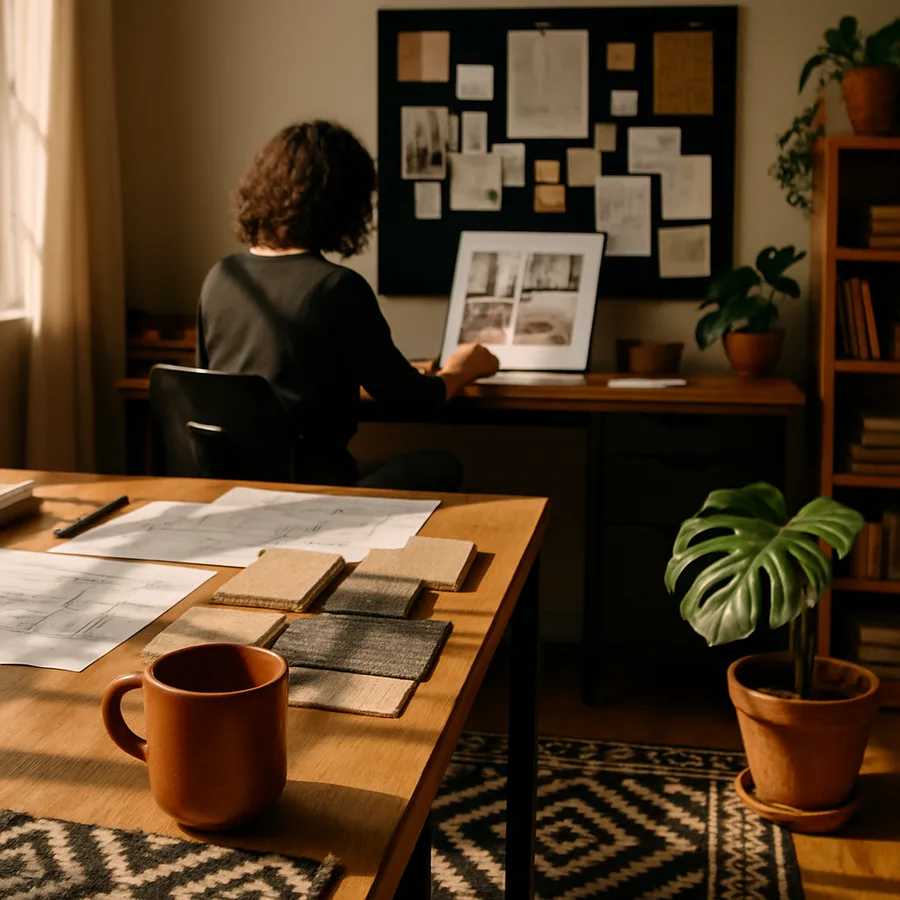
The polished portfolio images on a design studio's website tell only a fraction of the story. Behind every stunning reveal photograph lies months of research, deliberation, sourcing, revision, and problem-solving that rarely make it into the public narrative. For clients, collaborators, and aspiring designers, understanding what actually happens inside a working studio demystifies the profession and illuminates why thoughtful interior design demands both creative talent and operational discipline. According to the American Society of Interior Designers (ASID), the average residential interior design project involves over 200 individual decisions, from structural modifications to the thread count of decorative pillows. Each of those decisions passes through a studio workflow that balances artistry with logistics.
This article offers an immersive look at a typical day inside a mid-size interior design studio. While no two firms operate identically, the rhythms described here reflect patterns common to practices that the International Interior Design Association (IIDA) and Houzz have identified as industry benchmarks. Whether you are considering a career in interior design, preparing to hire a designer for your home, or simply curious about the creative process, this behind-the-scenes perspective will deepen your appreciation for the discipline.
Have you ever looked at a finished interior and wondered how many conversations, sketches, and sample reviews it took to arrive at that seemingly effortless result? The answer, as you will discover, is far more than most people imagine.
The Morning Huddle and Project Prioritization
Most interior design studios begin the day with a brief team meeting, sometimes called a huddle or stand-up, that sets the agenda and surfaces any urgent issues. In a studio managing four to six active projects simultaneously, the morning huddle ensures that every team member knows which tasks demand immediate attention and which can wait. A senior designer might flag that a tile shipment for a bathroom renovation has been delayed by two weeks, triggering a discussion about alternative sourcing or schedule adjustments. A junior designer might present a preliminary furniture layout for a new residential project, seeking feedback before investing further hours in refinement.
These meetings rarely last more than fifteen minutes, but their impact on studio efficiency is substantial. ASID practice management guidelines emphasize that clear daily communication reduces costly errors and prevents the kind of silo thinking where one team member unknowingly duplicates or contradicts another's work. Studios that skip daily check-ins often find themselves spending far more time later untangling miscommunications and correcting mistakes that could have been caught early.
The morning huddle also serves a less tangible but equally important function: it reinforces the studio's creative culture. When designers share progress, challenges, and discoveries with each other every morning, a collective intelligence develops. A solution that one designer found for a lighting problem on a commercial project might inspire an approach to a completely different challenge on a residential one. This cross-pollination of ideas is one of the great advantages of studio practice over solo work.
After the huddle disperses, the studio transitions into focused project work. Designers settle at their workstations, open their project management platforms, and begin tackling the day's priorities. For some, that means diving into AutoCAD or SketchUp to develop detailed floor plans. For others, it means reviewing product specifications or preparing materials for an afternoon client presentation. The shift from communal discussion to individual concentration happens quickly, and most studios protect these morning focus hours from interruptions.
Concept Development and Design Exploration
The concept development phase is where interior design most closely resembles art. Designers explore spatial possibilities, test color relationships, experiment with material pairings, and search for the narrative thread that will give a project its distinctive identity. This phase can involve anything from sketching by hand on trace paper to building digital models in rendering software to physically arranging fabric swatches and finish samples on a pinboard.
What distinguishes professional concept development from casual decorating is the rigor of the research that underlies it. Before a designer proposes a Mediterranean-inspired palette for a coastal home, they will have studied historical precedents, climate considerations, the client's lifestyle patterns, and the architectural character of the existing structure. The NCIDQ examination tests this capacity for informed design thinking, ensuring that certified professionals can articulate the reasoning behind their creative choices.
Concept development is also inherently iterative. A designer might develop three distinct directions for a single project, each exploring a different mood, palette, or spatial organization. These options are not random alternatives; they represent carefully considered responses to the same design brief, each emphasizing different priorities. Presenting multiple concepts gives the client genuine agency in the creative process without asking them to make decisions they are not equipped to make. Instead of choosing between hundreds of individual finishes, the client selects a holistic direction, and the designer refines from there.
Studios that produce exceptional work tend to protect concept development time fiercely. It is tempting to rush through this phase when deadlines loom, but the ideas generated during concept exploration inform every subsequent decision in the project. A weak concept leads to a disjointed interior where individual elements might be attractive but fail to cohere. A strong concept, by contrast, provides a decision-making framework that simplifies the thousands of choices ahead, because every option can be evaluated against the guiding vision.
Material Selection and Vendor Coordination
By midday, many studio members transition to material selection and vendor coordination, a phase that requires both aesthetic sensitivity and logistical precision. Selecting materials for an interior design project involves evaluating candidates on appearance, durability, maintenance requirements, lead time, cost, and environmental impact. A marble countertop that looks exquisite in a showroom sample might prove impractical for a family kitchen due to its susceptibility to etching from acidic foods. A beautiful handwoven rug might carry a sixteen-week lead time that makes it incompatible with the project schedule.
The sourcing process typically involves a combination of online research, showroom visits, and vendor consultations. Houzz research indicates that professional designers maintain active relationships with an average of thirty to fifty vendors and suppliers, a network built over years of practice. These relationships provide access to trade pricing, advance notice of new product launches, and the kind of candid performance feedback that public reviews cannot always deliver. When a designer knows from experience that a particular fabric mill's production quality has declined, that knowledge saves the client from an expensive mistake.
Vendor coordination also demands meticulous documentation. Every material selection must be recorded with its full specification, including color code, pattern repeat, finish type, and lot number. Studios use specification sheets and procurement tracking systems to ensure that the exact material approved by the client is the one that arrives on site. A single digit transposed in a tile order can result in the wrong shade appearing in a completed bathroom, a mistake that is costly and demoralizing to correct after installation.
For studios committed to sustainable practice, the material selection phase also involves evaluating environmental certifications. IIDA sustainability resources guide designers toward products with Greenguard, Cradle to Cradle, or Forest Stewardship Council certifications, each addressing different aspects of environmental and health performance. Integrating these criteria into the selection process adds complexity but ensures that the finished space meets both aesthetic and ethical standards.
Client Presentations and Feedback Sessions
Afternoons in a design studio frequently revolve around client interactions. Whether conducted in person at the studio, on site at the project location, or via video conference, client presentations are the moments when all the research, concept work, and material selection come together for evaluation. A well-prepared presentation guides the client through the design rationale, showing how each recommendation connects to their stated goals, lifestyle, and budget.
Effective client presentations follow a narrative structure. Rather than simply displaying a list of product selections, a skilled designer tells the story of the space, beginning with the overarching concept, moving through the spatial layout, pausing at key material and color decisions, and concluding with a visualization of the finished result. This storytelling approach, which ASID identifies as a best practice for client communication, helps clients understand not just what the designer is proposing but why each choice was made.
Feedback sessions can be among the most challenging moments in the design process. Clients bring their own aesthetic preferences, practical concerns, and emotional associations to every decision, and those perspectives sometimes conflict with the designer's recommendation. A client might love the idea of an all-white kitchen until the designer explains the maintenance reality of white marble with young children in the house. Navigating these conversations requires diplomacy, clarity, and a genuine respect for the client's autonomy.
The best studios approach feedback not as an obstacle but as essential creative input. A client's reaction to a proposed palette, even if it is negative, contains valuable information about their sensibilities and priorities. Designers who listen carefully to feedback and integrate it thoughtfully produce interiors that truly reflect their clients rather than merely showcasing their own taste. The NCIDQ competency framework includes client communication as a critical skill area, recognizing that technical and creative excellence means little if the designer cannot build a productive working relationship.
Technical Documentation and Construction Coordination
While concept work and client interactions may be the most visible aspects of studio life, technical documentation and construction coordination occupy a significant portion of every designer's week. Interior design projects, particularly those involving structural modifications, require detailed drawings that communicate precisely what needs to be built, installed, or modified. These drawings include floor plans, reflected ceiling plans, elevations, millwork details, electrical layouts, and plumbing specifications.
According to a Houzz industry survey, construction-related errors account for approximately 25 percent of budget overruns on interior design projects, and the majority of those errors trace back to ambiguous or incomplete documentation. Studios that invest in thorough construction drawings and clear specification packages reduce this risk substantially. The time spent producing meticulous documents during the design phase saves multiples of that time during construction by eliminating the need for on-site improvisation and rework.
Construction coordination also involves regular site visits during the build phase. Designers meet with contractors, tradespeople, and project managers to review progress, resolve unforeseen issues, and ensure that the work matches the design intent. A wall color that looked correct on a small paint chip might read differently across an entire room, and only an in-person evaluation can catch that discrepancy before it becomes permanent. Similarly, the exact positioning of lighting fixtures, the alignment of tile patterns, and the height of built-in shelving all require on-site verification.
For designers who hold NCIDQ certification, the ability to produce and interpret technical documents is a professional requirement, not an optional skill. The certification examination tests knowledge of building codes, accessibility standards, construction methods, and life safety systems, ensuring that certified designers can navigate the technical dimensions of their projects with confidence. This technical competence is what enables interior designers to collaborate effectively with architects, engineers, and contractors as equal professionals.
Reflection, Administration, and Creative Renewal
As the studio day winds down, attention shifts to administrative tasks and the kind of reflective thinking that sustains creative energy over the long term. Administrative duties include invoicing, timesheet review, proposal preparation for prospective clients, and the ongoing management of studio operations such as insurance, licensing, and continuing education. ASID and IIDA both require members to complete continuing education credits to maintain their professional standing, and many designers use late-afternoon hours to review industry publications, attend webinars, or study new materials and technologies.
Reflection is an undervalued but essential component of creative practice. Designers who spend every working hour in reactive mode, responding to emails, meeting deadlines, and solving immediate problems, eventually deplete the creative reserves that fuel their best work. Studios that build time for reading, gallery visits, travel, and cross-disciplinary exploration consistently produce more innovative interiors than those that operate in a perpetual state of urgency.
Some studios formalize this creative renewal through regular design critiques, where the team gathers to review a completed or in-progress project with fresh eyes. These sessions encourage honest evaluation of what worked, what fell short, and what lessons can be carried forward to future projects. The critique tradition, borrowed from architectural and fine art education, prevents studios from settling into comfortable formulas and pushes the entire team toward continuous improvement.
The day in a design studio concludes much as it began, with a sense of purpose and a long list of tasks awaiting tomorrow's attention. For those drawn to a profession that blends creativity with problem-solving, aesthetic ambition with practical constraint, and individual expression with deep collaboration, the rhythms of studio life offer a uniquely satisfying career. If this glimpse behind the scenes has sparked your curiosity, consider visiting an open studio event or reaching out to a local design firm to learn more about the profession firsthand. The interior design community is remarkably generous with its knowledge, and your next conversation with a designer might be the beginning of a transformative relationship with the spaces you inhabit.
More Articles You May Like



Comments
Post a Comment