Maximize Small Spaces: Innovative House Interior Design Ideas You Need
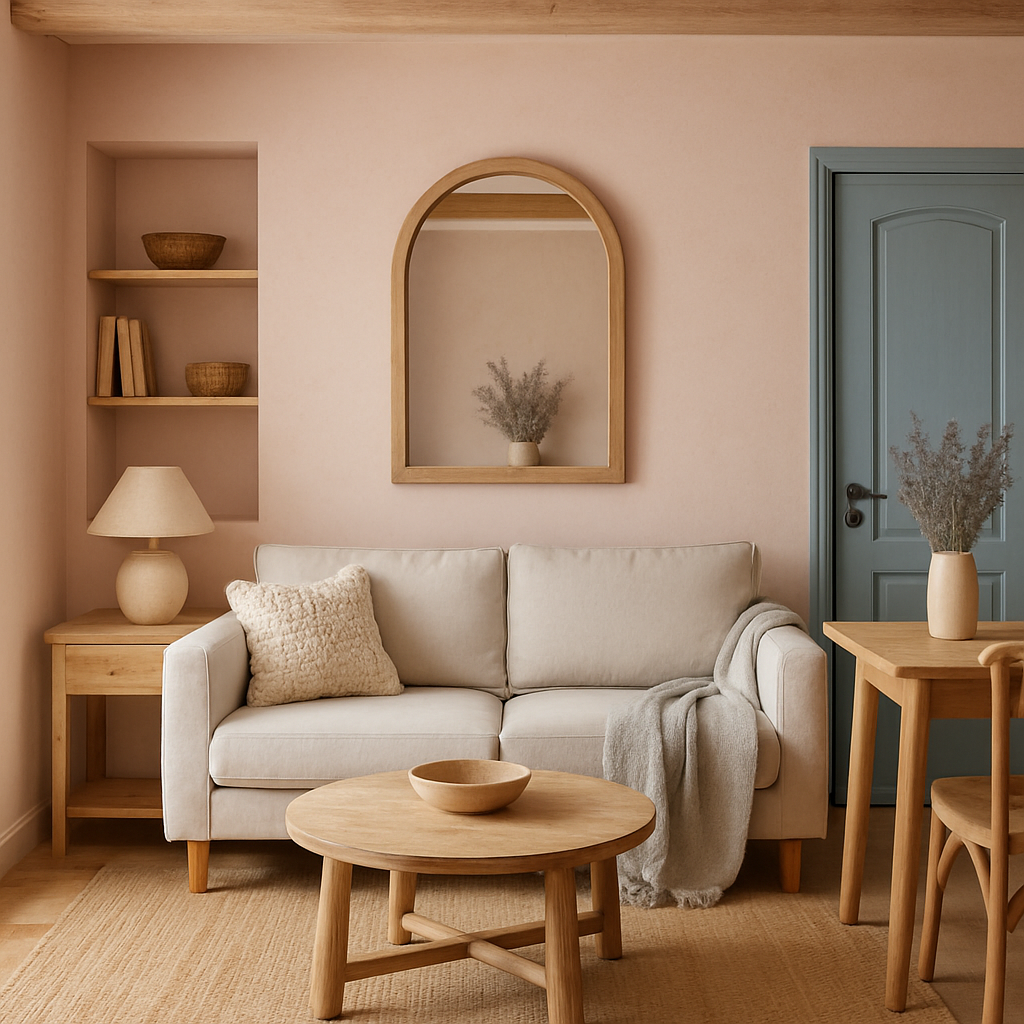
Does living in a compact home mean you have to compromise on style, comfort, or functionality? The answer is a resounding no. Small-space design has become one of the most dynamic and innovative disciplines within the interior design profession, attracting creative solutions that rival anything found in sprawling estates. Rising property costs and growing urbanization have made compact living a reality for millions of households, and the design industry has responded with ingenious approaches that prove square footage is far less important than spatial intelligence. The American Society of Interior Designers (ASID) reports that demand for small-space consultations has increased by over 35 percent in recent seasons, reflecting a cultural shift toward quality of space rather than quantity. In this guide, you will discover innovative strategies for transforming every corner of your home into a hardworking, beautiful, and deeply personal environment, regardless of its size.
Vertical Space Is Your Greatest Untapped Asset
Most homeowners think of floor space when they consider room capacity, but the vertical dimension of a room offers an equally valuable, and frequently overlooked, resource for storage, display, and functional design. Floor-to-ceiling shelving, wall-mounted cabinets, and hanging storage systems draw the eye upward and create the impression of greater height while dramatically increasing usable storage volume. Designers certified through the National Council for Interior Design Qualification (NCIDQ) frequently emphasize that vertical thinking is the single most impactful shift a small-space dweller can make. When you stop viewing walls as passive boundaries and start treating them as active surfaces for organization and display, the entire geometry of your home changes in your favor.
Lofted elements represent the ultimate expression of vertical design. In rooms with ceilings above nine feet, a lofted sleeping platform can liberate the entire floor below for a living area, workspace, or lounge. Even in rooms with standard ceiling heights, elevated storage platforms, overhead cabinet runs, and high-mounted artwork create visual layers that add perceived depth and interest. Consider installing floating shelves in a staircase pattern ascending one wall, creating a dynamic visual feature that doubles as book storage or a display for collected objects. The key is to maintain consistent visual language across all vertical elements, using matching materials and finishes to ensure that the height-oriented design reads as intentional architecture rather than afterthought storage.
Vertical gardens and hanging planters bring biophilic design into small spaces without consuming any floor area. A living wall system mounted in a kitchen or bathroom introduces color, texture, and air-purifying greenery while occupying zero footprint. Macrame plant hangers, wall-mounted pocket planters, and even magnetic spice gardens on kitchen backsplashes all capitalize on vertical territory that would otherwise sit empty. What would your entryway feel like if the walls offered both a place to hang your coat and a cascade of trailing greenery that greeted you every time you walked through the door? Vertical design transforms that vision into reality, and it costs far less than adding square footage through renovation.
Multifunctional Furniture Changes Everything
In a small home, every piece of furniture must justify its footprint by serving more than one purpose. The market for multifunctional furniture has exploded in recent seasons, offering sophisticated solutions that would have been unimaginable a decade ago. Murphy beds that fold into elegant wall units, dining tables with integrated storage drawers, and ottomans that open to reveal hidden compartments all reflect a design philosophy where adaptability is paramount. The International Interior Design Association (IIDA) highlights multifunctional furniture as one of the most significant categories of innovation in residential design, noting that manufacturers are now collaborating directly with interior designers to develop pieces that meet specific spatial challenges without compromising aesthetic standards.
When selecting multifunctional furniture, prioritize transformation mechanisms that are smooth, intuitive, and require minimal effort. A sofa bed that takes twenty minutes and two people to convert is not truly multifunctional; it is a compromise that discourages use. Modern wall beds equipped with counterbalanced mechanisms can be deployed in seconds by a single person, and many integrate sofa seating, desks, or shelving into the same unit. Expandable dining tables with self-storing leaves, nesting side tables that tuck into a single footprint, and modular shelving systems that reconfigure from bookcase to room divider to media center all embody the principle that great small-space design is about engineering as much as aesthetics.
Custom-built multifunctional solutions offer another level of optimization that off-the-shelf products cannot match. Interior designers charging between $150 and $500 per hour often recommend commissioning bespoke furniture for the most space-constrained areas of a home. A built-in window seat with drawers beneath, a bed platform with pull-out desk and closet storage, or a kitchen island on locking casters that slides against the wall when not in use are all examples of custom solutions that extract maximum value from minimum space. The upfront investment in custom work pays for itself through the floor area it reclaims and the daily convenience it provides over the lifetime of the home.
Optical Illusions Expand Perceived Space
The psychology of spatial perception offers a powerful toolkit for making small rooms feel larger than their physical dimensions. Color, light, reflection, and pattern all influence how the brain processes the boundaries of a space, and strategic manipulation of these variables can create dramatic illusions of openness and depth. Light colors reflect more light than dark ones, which is why pale walls, ceilings, and flooring tend to make rooms feel more expansive. However, the conventional wisdom that small rooms must always be white is an oversimplification. A small room painted in a single rich, saturated color can actually feel larger than one with contrasting trim and wall colors, because the uniform tone dissolves visual boundaries and makes it harder for the eye to define the edges of the space.
Mirrors are the most accessible and effective tool for expanding perceived space. A large floor-to-ceiling mirror placed opposite a window doubles the apparent depth of a room while amplifying natural light. Mirrored furniture, mirrored backsplashes, and even mirrored closet doors serve similar functions on a smaller scale. AD PRO has featured numerous projects where strategically placed mirrors transformed cramped apartments into airy, luminous environments that feel twice their actual size. Beyond flat mirrors, reflective surfaces like polished metal hardware, glass tabletops, and high-gloss lacquer finishes all contribute to the light-bouncing effect that counteracts the visual compression of small dimensions. Have you considered where in your home a single well-placed mirror could change the entire feel of a room?
Pattern scale and orientation also influence spatial perception. Vertical stripes on walls or curtains draw the eye upward and create an impression of greater ceiling height. Horizontal lines in flooring or wall paneling can make a narrow room feel wider. Large-scale patterns, counterintuitively, can make small rooms feel bigger than tiny patterns, because the brain interprets fewer pattern repeats as evidence of a larger surface area. The NCIDQ includes spatial perception principles in its certification curriculum, recognizing that the ability to manipulate visual experience is one of the most valuable skills a professional designer can offer. When physical expansion is not possible, perceptual expansion becomes the next best strategy.
Smart Storage Eliminates Visual Clutter
Clutter is the mortal enemy of small-space living. Even a beautifully designed compact home will feel cramped and chaotic if surfaces are covered with unsorted belongings. The solution is not simply owning fewer things, though mindful editing certainly helps, but rather creating a storage infrastructure so comprehensive and accessible that every object in the home has a designated place. Houzz data indicates that storage optimization is the number one concern cited by homeowners in spaces under 1,000 square feet, surpassing both aesthetic preferences and budget considerations. A home with excellent storage feels calm, organized, and surprisingly spacious regardless of its actual dimensions.
Concealed storage is particularly important in small spaces because it maintains clean visual lines while keeping essentials within reach. Recessed medicine cabinets, built-in bench seats with hinged lids, under-stair pull-out drawers, and toe-kick drawers beneath kitchen cabinets all exploit spaces that would otherwise be wasted. The Japandi design philosophy, which has gained tremendous popularity in compact-living circles, emphasizes this principle of hidden functionality: every surface appears serene and uncluttered, but behind panel doors and beneath platforms lies an organized system that supports the routines of daily life. Interior designers who specialize in small spaces often spend as much time planning storage infrastructure as they do selecting finishes and furnishings.
Digital organization tools complement physical storage systems by reducing the volume of objects that need to be stored in the first place. Digitizing documents, photographs, media collections, and reference materials eliminates the need for filing cabinets, bookshelves, and media centers that consume precious floor area. Smart home integration takes this further: a single tablet mounted on the wall can replace a cookbook shelf, a stereo system, a thermostat panel, and a security monitor, consolidating multiple functions into a device no larger than a picture frame. The most innovative small-space designers think about storage not just as a physical challenge but as a systems-design problem, where analog and digital solutions work together to minimize the material footprint of modern life.
Zoning Open Plans Without Walls
Open floor plans are common in smaller homes and apartments because removing walls maximizes the perception of space. However, a completely undifferentiated open space can feel chaotic and unfocused, lacking the sense of purpose that defined rooms provide. The challenge is to create distinct functional zones, for cooking, dining, working, relaxing, and sleeping, without reintroducing the visual barriers that walls would create. ASID design principles recommend using changes in flooring material, area rugs, lighting zones, ceiling treatments, and furniture arrangement to delineate areas while preserving the openness that makes the floor plan work.
Furniture placement is the most flexible and reversible method of zoning an open plan. A sofa positioned with its back to the dining area creates a natural boundary between living and eating zones without blocking light or sightlines. A bookshelf oriented perpendicular to a wall serves as both a room divider and a storage solution. A kitchen island or peninsula defines the boundary between cooking and living areas while providing additional counter space and seating. The advantage of furniture-based zoning is that it can be reconfigured instantly as needs change, accommodating everything from a quiet evening at home to a dinner party for twelve with nothing more than rearranging a few key pieces.
Lighting design is an equally powerful zoning tool that operates on a subtler level. Pendant lights hung low over a dining table define that area as a distinct gathering point, even when the table sits in the middle of a larger open room. A floor lamp beside a reading chair creates a pool of warm light that signals relaxation and solitude. Recessed spotlights above a kitchen counter establish that zone as a workspace with task-appropriate illumination. By creating multiple independently controlled lighting circuits within a single open room, you effectively build invisible walls that appear and disappear at the touch of a switch. Smart lighting systems with programmable scenes take this concept even further, allowing you to transform the entire mood and function of your home with a voice command or a tap on your phone.
Bringing Light and Air Into Compact Rooms
Natural light is the most effective tool for making a small room feel spacious and welcoming, yet many compact homes suffer from limited window area or unfavorable orientation. Maximizing the light you do receive becomes a critical design priority. Remove heavy curtains and replace them with sheer linen panels or minimal roller shades that allow daylight to flood in while still providing privacy. Keep window sills clear of objects that block light penetration, and avoid placing tall furniture directly in front of or beside windows where it would cast shadows into the room. The IIDA recommends positioning reflective surfaces, mirrors, glass, or polished metals, directly opposite or adjacent to windows to bounce incoming light deeper into the space.
When architectural modifications are possible, consider enlarging existing windows, adding interior transoms above doorways, or installing tubular skylights that channel rooftop sunlight into windowless interior rooms. Even replacing a solid interior door with a glass-paneled alternative can significantly increase the light transfer between adjacent rooms, creating a brighter, more connected environment throughout the home. Studies conducted by environmental design researchers indicate that occupants of well-lit small spaces report satisfaction levels comparable to those living in larger homes with average lighting, suggesting that light quality can functionally substitute for square footage in terms of perceived comfort and wellbeing.
Air circulation deserves equal attention in compact spaces, where stale air and accumulated cooking odors can make rooms feel stuffy and confined regardless of their visual design. Ceiling fans, even in rooms with low ceilings when flush-mount models are used, keep air moving and contribute to thermal comfort year-round. Cross-ventilation through strategically placed operable windows creates natural airflow that refreshes the environment without mechanical assistance. For bathrooms and kitchens without exterior windows, high-quality extraction fans with quiet operation ratings prevent moisture buildup and maintain the crisp, clean atmosphere that reinforces the sense of spaciousness created by your visual design choices. When a small home breathes well, it feels open and alive rather than enclosed and static.
Curating Decor With Disciplined Restraint
Decorating a small space requires a fundamentally different mindset than decorating a large one. In a generous room, you can layer accessories, display collections, and introduce decorative elements with relative freedom because the volume of the space absorbs visual complexity. In a compact room, every object competes for attention, and even a few unnecessary items can tip the balance from curated to cluttered. The quiet luxury approach is particularly well-suited to small spaces: select fewer objects of higher quality and greater personal significance, and give each one room to be appreciated. A single large piece of artwork makes a stronger statement in a small room than a gallery wall of twenty small frames, and it leaves the surrounding wall space clean and uninterrupted.
Scale is one of the most common mistakes homeowners make when decorating small spaces. Paradoxically, choosing furniture and decor that is too small can make a room feel even more cramped, because numerous tiny pieces create visual fragmentation. A generously scaled sofa in a compact living room actually anchors the space more effectively than a loveseat plus two armchairs plus a collection of accent tables, because it reduces the number of individual elements the eye must process. Similarly, one large area rug that extends beneath all the furniture in a seating group unifies the floor plane and makes the room feel cohesive, whereas a small rug floating in the center of the room chops the floor into disconnected segments.
Editing is an ongoing discipline rather than a one-time event. As seasons change and life evolves, new objects inevitably enter the home, and maintaining the visual clarity of a small space requires regular assessment. Adopt a one-in-one-out policy for decorative items and clothing. Rotate displayed collections rather than showing everything at once. Periodically step back and photograph each room with your phone, since the camera reveals clutter and imbalance that the eye has become habituated to over time. Designers featured on Houzz often recommend this photographic exercise as a simple but remarkably effective tool for maintaining the disciplined restraint that small-space living demands. When every item in your home earns its place through beauty, function, or emotional resonance, the result is a space that feels abundant rather than constrained.
Conclusion
Living in a compact home is not a limitation to overcome but an invitation to design with greater creativity, intention, and precision. The strategies explored in this guide, from vertical space utilization and multifunctional furniture to optical illusions and disciplined decor curation, demonstrate that innovative design thinking can deliver comfort, beauty, and functionality at any scale. Professional organizations like ASID, NCIDQ, and the IIDA continue to advance small-space design as a specialized discipline, developing new resources and certifications that reflect its growing importance in the built environment. The most impactful changes often begin with a single decision: mounting shelves to reclaim a wall, investing in a transforming furniture piece that eliminates the need for a spare room, or simply rearranging what you already own to create better flow and function. What one change would make the biggest difference in the smallest room of your home? Start there, and let the momentum carry you forward into a living environment that proves, once and for all, that great design has nothing to do with size.
More Articles You May Like



Comments
Post a Comment