Feng Shui Front Door Colors Based on Compass Direction
Why Your Front Door Color Matters in Feng Shui
In feng shui philosophy, the front door is referred to as the "mouth of chi", the primary entry point through which life force energy flows into your home. Every person, opportunity, and blessing that enters your life symbolically passes through this threshold. The color you paint your front door is not merely a decorative choice; it is a deliberate signal that either welcomes or deflects specific types of energy based on the door's compass orientation. Getting this alignment right is considered one of the most powerful and accessible feng shui adjustments a homeowner can make.
The International Feng Shui Guild (IFSG) identifies front door color as one of the top three recommendations made during residential consultations, alongside bed placement and clutter removal. The reason is simple: the front door affects the entire household because all chi entering the home passes through it first. A door color that harmonizes with the directional energy of its facing orientation strengthens the flow of beneficial chi, while a conflicting color can weaken or scatter the energy before it even reaches your interior spaces.
The practical impact extends beyond metaphysics. A study referenced by the National Association of Realtors (NAR) found that homes with front doors painted in colors that contrast attractively with the facade sold up to 6 percent faster than homes with doors that blended into the exterior. While that study measured curb appeal rather than chi flow, the overlap is notable: feng shui-recommended door colors tend to be intentional, confident choices that naturally stand out and create visual interest. The right color simultaneously satisfies both ancient wisdom and modern real estate strategy.
How do you determine which color is right for your door? The answer begins with a compass. Stand inside your home facing out through the front door and note the direction you are looking. That outward-facing direction is your front door's compass orientation, and it determines which of the five feng shui elements governs your entrance. Each element has associated colors that feed and strengthen its energy. The following sections map every compass direction to its element and ideal color palette.
North-Facing Doors: Water Element Colors
A front door facing north is governed by the water element in the feng shui bagua map. Water energy represents career, life path, and the flow of opportunities. The colors that nourish and strengthen a north-facing door are those associated with water itself and with the metal element that feeds water in the productive cycle of the five elements. This gives north-facing homeowners a palette that includes black, dark navy blue, charcoal gray, and white or metallic tones such as silver, pewter, and brushed nickel finishes.
Black is the most traditional feng shui choice for a north-facing front door. It directly represents water energy at its deepest and most powerful. A glossy black door conveys sophistication, depth, and authority, qualities that feng shui associates with career advancement and professional recognition. The Architectural Digest exterior design team has repeatedly featured black front doors as a timeless choice that works across architectural styles from colonial to contemporary. In feng shui terms, this popularity reflects an instinctive cultural alignment with water-element energy at the entrance.
Dark navy blue offers a softer alternative to black while remaining firmly within the water-element spectrum. Navy communicates calm confidence and intellectual depth, making it particularly suitable for homes belonging to professionals in knowledge-based careers such as consulting, education, law, or technology. If pure black feels too stark for your home's exterior, navy provides the same elemental support with a warmer visual impression. Pair it with brass or gold hardware to introduce a small accent of earth energy that grounds the flowing water without overpowering it.
Colors to avoid on a north-facing door include earth tones such as terracotta, sandy brown, and yellow. In the five-element cycle, earth weakens water by absorbing it, so these colors actively work against the natural energy of a north-facing entrance. Red and bright orange, representing fire, also conflict with water energy because fire and water are opposing forces. A north-facing door painted fire-engine red would create an elemental clash that feng shui practitioners associate with career obstacles and financial instability. Have you checked which direction your front door faces yet? The compass reading takes thirty seconds and determines everything that follows.
South-Facing Doors: Fire Element Colors
The south direction is ruled by the fire element, which governs fame, reputation, recognition, and visibility in the community. South-facing homes receive the most direct sunlight in the northern hemisphere, and feng shui sees this abundant light energy as a natural amplifier that the door color should complement rather than suppress. The ideal colors for a south-facing front door are red, burgundy, bright orange, strong coral, and warm purple or magenta. These hues feed the fire element and magnify the qualities of visibility and social connection.
Red is the quintessential feng shui front door color for south-facing homes. It is the most auspicious color in Chinese culture, symbolizing luck, prosperity, protection, and joyful celebration. A red front door on a south-facing home creates what practitioners call a "double fire" effect: the natural fire energy of the south direction amplified by the fire color of the door. The Feng Shui Society in the United Kingdom notes that red south-facing doors are the single most common recommendation in their consultation database, accounting for nearly 30 percent of all door color advice given to members' clients.
If red feels too bold for your taste or your home's architectural style, consider deep burgundy or wine tones. These colors carry fire energy with greater subtlety, suiting traditional homes, brick facades, and neighborhoods where a bright red door might feel out of character. Warm plum and eggplant shades work similarly, especially on homes with darker siding or stone exteriors. The fire energy is present in any color with a warm red or orange undertone, so you have considerable latitude within the fire-element spectrum to find a shade that matches your personal aesthetic.
South-facing doors should avoid water-element colors including black, dark blue, and deep gray. Water extinguishes fire in the elemental cycle, and using these colors on a south-facing door is believed to dampen your visibility, reputation, and social connections. White and metallic colors, representing metal, are also less favorable because metal weakens fire energy over time. Earth tones like brown and tan are neutral on south-facing doors: they neither help nor harm significantly, as earth is produced by fire and does not conflict with it, but they also fail to actively strengthen the fire energy that a south-facing entrance naturally supports.
East and South-East Facing Doors: Wood Element Colors
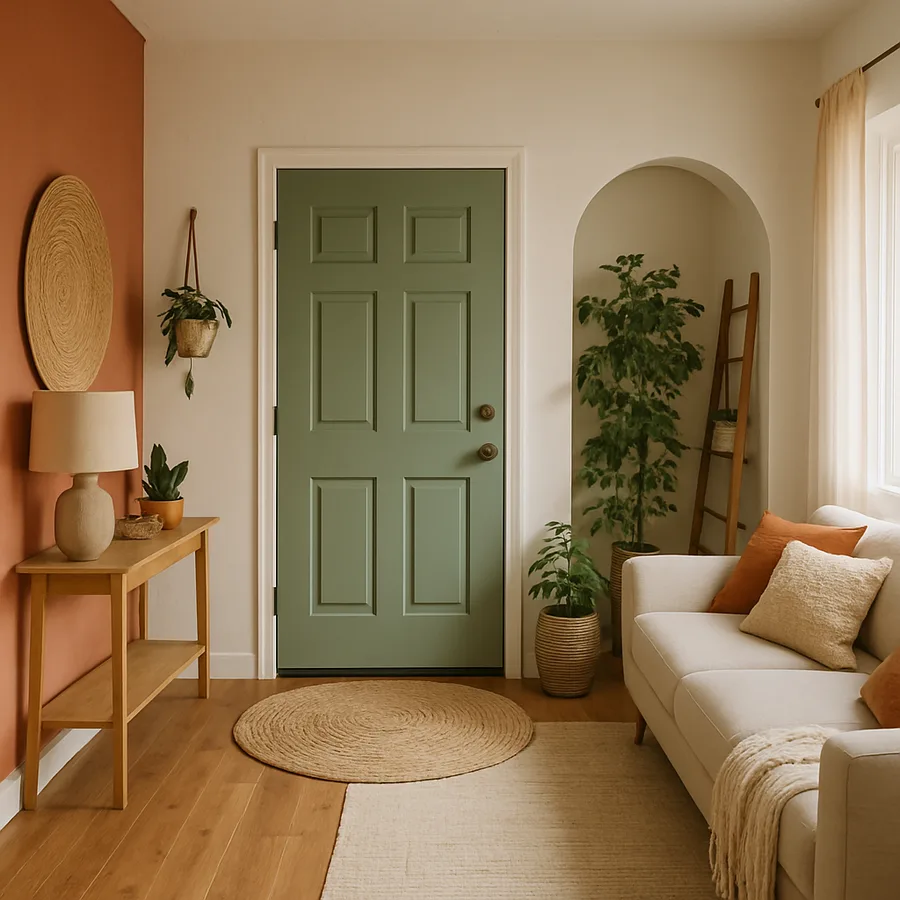
Doors facing east or south-east fall under the influence of the wood element. The east direction governs family, health, and new beginnings, drawing energy from the sunrise that appears on this horizon each morning. The south-east direction is specifically associated with wealth, abundance, and financial growth. Both directions thrive with colors that represent wood energy and the water energy that nourishes wood in the productive cycle. The recommended palette includes green in all shades, from sage to emerald, as well as brown, tan, teal, and medium blue.
Green is the most direct expression of wood-element energy for east-facing doors. A rich hunter green or forest green communicates health, vitality, and organic growth, all qualities aligned with the east's association with family wellness and fresh starts. For south-east facing doors specifically, green also carries wealth symbolism because growing plants represent expanding abundance. The Better Homes & Gardens exterior color trend reports have noted a sustained increase in green front door popularity, with sage green and eucalyptus tones leading the trend across multiple consecutive years.
Brown and natural wood tones directly represent the wood element in its solid, mature form. A stained wood door in walnut, oak, or mahogany finish is intrinsically aligned with east and south-east energy without any paint required. This approach is especially fitting for Craftsman, rustic, and farmhouse-style homes where a painted door might conflict with the architectural character. If you choose to stain rather than paint, select a warm-toned stain that enhances the wood's natural grain rather than a cool gray wash that pulls the color toward the metal element.
Medium blue and teal shades work as secondary choices for east and south-east doors because water feeds wood in the elemental cycle. A front door in cerulean blue or deep teal nourishes the wood energy of these directions without overwhelming it. This option is particularly useful when the home's exterior color scheme already includes green, such as sage-colored siding, and a green door would blend in rather than stand out. Colors to avoid on east and south-east facing doors include white, silver, and metallic finishes, as metal chops wood in the destructive cycle. Red and strong orange are also unfavorable because fire burns wood, potentially depleting the health and wealth energy these directions are meant to support.
West and North-West Facing Doors: Metal Element Colors
The west and north-west directions are governed by the metal element, which represents creativity, children, helpful people, travel, and mentorship. West-facing doors specifically channel energy related to creative projects and the wellbeing of children in the household. North-west facing doors are associated with travel opportunities, mentorship from influential people, and the support of benefactors. The ideal color palette for both directions centers on white, cream, gray, metallic silver, gold, brass tones, and soft pastels that echo metal's clean, precise energy.
White is the strongest representation of metal energy and is the most commonly recommended color for west-facing doors. A crisp, clean white door projects clarity, openness, and fresh possibility. It works exceptionally well on homes with darker exteriors where the white door creates a bright focal point that draws the eye and, according to feng shui, draws chi into the home. The National Association of Realtors data on exterior paint preferences shows white and off-white front doors consistently ranking among the top three choices for buyer appeal, reinforcing the practical curb-appeal benefits alongside the feng shui rationale.
Gray in lighter shades provides a more contemporary alternative to white while staying within the metal-element spectrum. Dove gray, warm greige, and silver-toned grays all feed metal energy. These tones pair especially well with modern and transitional architecture, offering sophistication without the starkness of pure white. For north-west facing doors where mentorship and helpful-people energy is the priority, feng shui practitioners often recommend warm metallic finishes: a door with gold-leaf accents, a brass kick plate, or a brushed-nickel door panel adds metallic energy in a textured, layered way that flat paint cannot replicate.
Soft pastel shades including pale lavender, blush pink, and light peach are acceptable for west-facing doors because they carry enough metallic lightness to harmonize with the element. These colors are particularly recommended by the American Feng Shui Institute for households with young children, as the west direction's association with offspring is amplified by gentle, nurturing tones. Avoid red, bright orange, and strong fire colors on west and north-west doors because fire melts metal in the elemental cycle, potentially undermining creative projects, weakening mentorship connections, and creating an energetically combative entrance. Earth tones are neutral-to-positive since earth produces metal, making them a safe fallback if metal colors do not appeal to your taste.
North-East and South-West Facing Doors: Earth Element Colors
The north-east and south-west directions are governed by the earth element, representing knowledge, self-cultivation, love, marriage, and partnerships. A north-east facing door channels energy related to personal growth, education, and spiritual development. A south-west facing door governs romantic partnerships, committed relationships, and the nurturing bonds that sustain a household. Earth energy is stabilizing, grounding, and protective, and the door colors should reinforce these qualities. The recommended palette includes warm yellow, sandy beige, terracotta, ochre, light brown, and warm taupe.
Yellow is the most vibrant earth-element color and makes a striking choice for north-east or south-west facing doors. A warm golden yellow communicates warmth, welcome, and intellectual curiosity, aligning perfectly with the north-east's knowledge energy. For south-west facing doors, a softer butter yellow or warm saffron tone projects nurturing warmth associated with partnership and love. The Houzz curb appeal study reported that yellow front doors generated 20 percent more saves and likes than the platform average, suggesting a broad appeal that transcends feng shui practice and taps into a universal association between yellow doors and friendly, inviting homes.
Terracotta and burnt sienna shades are deeply connected to earth energy, evoking clay, soil, and the natural landscape. These warm, rich tones work particularly well on adobe-style, Mediterranean, and southwestern homes where the earthy color palette extends throughout the exterior. On a south-west facing door, terracotta reinforces the nurturing partnership energy with a warmth that feels both grounded and romantic. Sandy beige and warm taupe offer quieter alternatives for homeowners who prefer subtle earth tones that blend harmoniously with stone, brick, or wood siding without creating a strong contrast.
Is your front door in the north-east or south-west position? If so, you have an excellent opportunity to strengthen either your learning journey or your closest relationships through color alone. Earth-element doors should avoid green and strong wood colors because wood depletes earth by drawing nutrients from it in the elemental cycle. Water colors including black and deep blue are also unfavorable since water erodes earth. Fire colors like red and orange are mildly positive because fire produces earth in the productive cycle, making them acceptable accent colors for hardware or accessories even though earth tones should dominate the door itself.
Choosing and Applying Your Feng Shui Door Color
Selecting your feng shui front door color is a straightforward process once you know your compass direction. Stand inside your doorway facing outward, take a compass reading, identify the governing element from the guide above, and choose a color within that element's palette that appeals to your personal taste and complements your home's exterior. The feng shui principle provides the range of appropriate colors; your aesthetic preference determines the specific shade within that range. This combination of ancient guidance and personal expression is exactly how feng shui is meant to function in practical application.
Before committing to a full repaint, test your chosen color with a sample pot applied to a two-foot square section of the door. View the sample at different times of day, as sunlight angles dramatically affect how a color appears. A south-facing door in particular receives intense midday sun that can wash out lighter colors and intensify darker ones. The IFSG recommends living with a color sample for at least three days before proceeding with the full application, allowing you to observe it in morning light, afternoon glare, and evening shadow.
Paint quality matters both practically and energetically. Feng shui values surfaces that are clean, well-maintained, and vibrant. A front door with peeling, faded, or chipped paint sends a message of neglect that repels chi regardless of the color underneath. Use a high-quality exterior paint with UV protection and a semi-gloss or gloss finish that reflects light and is easy to clean. The reflective quality of a glossy surface is itself a feng shui asset, as it actively bounces light and energy outward, creating a beacon effect that draws beneficial chi toward the entrance.
Maintenance of your feng shui front door should be treated as an ongoing practice rather than a one-time project. Wipe the door monthly to remove dust, cobwebs, and grime. Touch up chips and scratches promptly to maintain the color's full vibrancy. Keep the area around the door clean and uncluttered, with clear pathways and healthy plants flanking the entrance. A well-maintained front door in an element-appropriate color is one of the most potent feng shui tools available to any homeowner. Step outside right now, check your compass, and take the first step toward welcoming the right energy through your front door.
More Articles You May Like



Comments
Post a Comment