Exploring Interior Design: Key Principles to Create Stunning Home Spaces
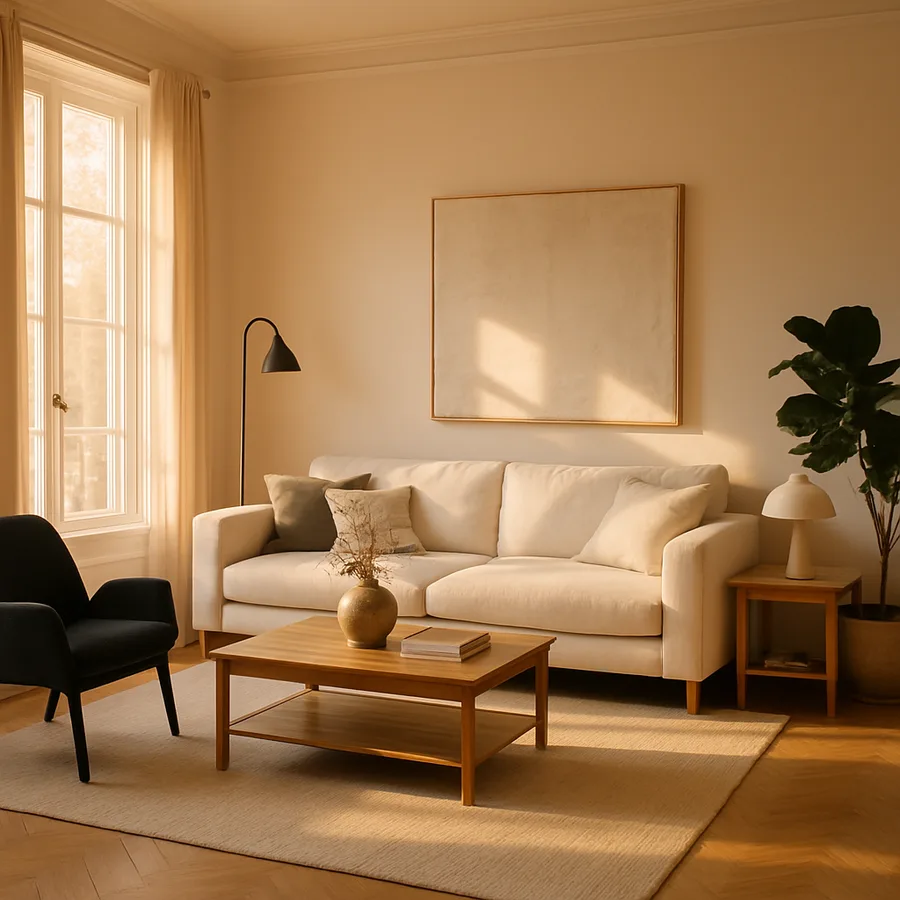
Behind every beautifully designed room lies a set of fundamental principles that guide its composition. These principles, balance, proportion, rhythm, emphasis, harmony, and contrast, function as the invisible grammar of interior design, providing the structural logic that makes a space feel right even when the viewer cannot articulate exactly why. Understanding these principles does not require formal training or professional credentials, but knowing them transforms the way you perceive and interact with designed environments, empowering you to create spaces that are not merely decorated but genuinely composed.
Professional interior designers certified through the National Council for Interior Design Qualification (NCIDQ) spend years mastering these principles through academic study and supervised practice. Yet the principles themselves are accessible to anyone with curiosity and attentiveness. The American Society of Interior Designers (ASID) actively promotes public education about design fundamentals, recognizing that informed clients make better collaborators and that design literacy enriches the built environment for everyone, not just those who can afford professional services.
Balance and the Distribution of Visual Weight
Balance is perhaps the most intuitive of all design principles. It refers to the distribution of visual weight within a space, creating a sense of equilibrium that the human eye finds naturally satisfying. Visual weight is determined not by physical mass alone but by a combination of factors including color intensity, texture density, pattern complexity, and the relative size of objects. A small, vividly colored cushion can carry as much visual weight as a large, neutrally toned armchair, and understanding this relationship is key to achieving balanced compositions.
Symmetrical balance, the mirror-image arrangement of elements on either side of a central axis, is the most immediately recognizable form of balance in interior design. A fireplace flanked by identical bookcases, a bed centered between matching nightstands, or a dining table with evenly spaced chairs on each side all exemplify symmetrical balance. This approach conveys order, formality, and calm, making it particularly effective in spaces where dignity and composure are desired. According to a comprehensive analysis published by the IIDA, symmetrical arrangements are perceived as more restful and stable by a significant majority of survey respondents.
Asymmetrical balance achieves equilibrium through the careful arrangement of unlike elements that nonetheless balance visually. A large painting on one side of a room might be counterweighted by a grouping of smaller objects on the opposite side. A tall, narrow bookcase could be balanced by a low, wide console table across the room. Asymmetrical balance feels more dynamic and casual than its symmetrical counterpart, introducing movement and energy into a space while maintaining the underlying sense of equilibrium that prevents visual discomfort.
Radial balance, the third form, arranges elements around a central point, like spokes radiating from a hub. A circular dining table with chairs arranged around its circumference or a chandelier positioned at the center of a ceiling rose demonstrates radial balance. While less commonly discussed than symmetrical and asymmetrical approaches, radial balance creates powerful focal points and a sense of convergence that draws attention and organizes movement within a room.
Proportion and Scale in Residential Spaces
Proportion refers to the relationship between the dimensions of individual elements, while scale addresses the relationship between those elements and the space they inhabit. Together, these principles ensure that furniture, accessories, and architectural features feel appropriately sized relative to one another and to the room as a whole. Getting proportion and scale right is essential for creating spaces that feel comfortable and coherent; getting them wrong produces rooms that feel awkward, cramped, or oddly empty regardless of how attractive the individual pieces may be.
The golden ratio, approximately 1:1.618, has served as a proportional guide in art and architecture for centuries, and its influence extends into interior design. Rooms whose length-to-width ratios approximate the golden ratio tend to feel more pleasing than those with extreme proportions. Similarly, the division of wall space, the placement of artwork, and the proportioning of furniture groupings often achieve their most satisfying results when they echo this mathematical relationship, even when the designer applies it intuitively rather than calculating exact measurements.
Scale mistakes are among the most common errors in amateur interior design. An oversized sectional sofa that dominates a small living room, tiny accent tables lost beside a massive bed, or artwork so small it appears swallowed by the wall behind it all represent scale mismatches that undermine the overall composition. Houzz design professionals frequently advise clients to measure their spaces carefully and create floor plans before purchasing furniture, a simple precaution that prevents the frustration and expense of scale-inappropriate choices.
Have you ever walked into a room and felt that something was off without being able to identify the specific problem? In many cases, the issue is one of proportion or scale. Our perceptual systems are remarkably sensitive to dimensional relationships, detecting imbalances that our conscious minds may not immediately articulate. Developing awareness of proportion and scale, even at a basic level, sharpens your ability to diagnose and resolve the subtle discomfort that proportional mismatches create.
Rhythm and Movement Through Interior Spaces
Rhythm in interior design functions much as it does in music, creating patterns of repetition, alternation, and progression that guide the eye through a space and establish a sense of visual tempo. A room without rhythm feels static and disconnected, each element existing in isolation. A room with well-developed rhythm feels coherent and dynamic, its elements linked by patterns that create a continuous visual experience as the observer gaze moves through the space.
Repetition is the simplest form of rhythm. Repeating a specific color, shape, texture, or pattern at regular intervals throughout a room creates unity and predictability. A series of identical pendant lights above a kitchen island, matching throw pillows distributed across seating areas, or the regular spacing of framed photographs along a hallway wall all generate rhythmic repetition. The ASID educational resources emphasize that repetition should be used with restraint, since excessive repetition becomes monotonous rather than rhythmic.
Alternation introduces variety within the rhythmic structure by cycling between two or more elements. Black and white floor tiles, dining chairs that alternate between two complementary colors, or wall sconces that alternate between two heights exemplify this approach. Alternation maintains the predictability of repetition while introducing enough variation to sustain visual interest. The effect is more playful and energetic than simple repetition, making alternation well-suited to social spaces where dynamism is desirable.
Progression creates rhythm through the gradual change of an element across a sequence. A grouping of vases that increases in height from left to right, a color palette that transitions from dark to light across a room, or a series of artwork frames that progressively enlarge along a stairway wall all demonstrate rhythmic progression. This form of rhythm creates a sense of direction and momentum, guiding the eye along a deliberate path and adding a narrative quality to the spatial experience. The NCIDQ competency framework identifies rhythm as a core compositional skill, tested through design problems that require candidates to create coherent visual narratives within interior spaces.
Emphasis and Creating Compelling Focal Points
Every well-designed room needs at least one focal point, an element that immediately captures attention and anchors the overall composition. Without a focal point, the eye wanders aimlessly, unable to find a resting place, and the room feels unresolved regardless of how beautiful its individual components may be. The principle of emphasis guides the creation and management of these focal points, ensuring that attention is directed intentionally rather than scattered randomly.
Architectural features often serve as natural focal points. A fireplace, a large window with a compelling view, an exposed brick wall, or a dramatic ceiling detail all possess inherent visual magnetism that can be enhanced through design decisions. Arranging furniture to face the fireplace, framing the window with curtains that draw the eye, or lighting the brick wall with directional fixtures amplifies the natural emphasis these features carry. Working with existing architectural strengths is both efficient and effective, leveraging the bones of the building rather than competing with them.
When architectural focal points are absent, designers create them through the strategic use of color, scale, pattern, and lighting. A large-scale piece of artwork on an otherwise neutral wall, a boldly colored accent chair in a monochromatic room, or a statement light fixture descending from a plain ceiling all function as manufactured focal points that give the room the visual anchor it needs. The key is commitment: a focal point must be sufficiently distinct from its surroundings to command attention. A tentative gesture, a slightly different shade of the same color or a marginally larger piece of furniture, fails to achieve the emphasis required.
Secondary focal points and supporting elements create visual hierarchy within a room, guiding the eye on a journey from the primary focal point through a sequence of decreasing visual importance. This hierarchy prevents visual competition, where multiple elements of equal prominence vie for attention, creating confusion rather than clarity. According to research shared through IIDA publications, rooms with clearly established visual hierarchies are perceived as more organized, more comfortable, and more aesthetically satisfying than those with ambiguous or competing focal points.
Harmony and the Unifying Thread
Harmony is the principle that ties all others together, ensuring that the various elements within a space work as a unified whole rather than a collection of isolated decisions. A harmonious room feels complete and coherent, every piece connected to every other by shared qualities whether of color, material, style, or mood. Achieving harmony does not require uniformity. In fact, the most harmonious interiors often contain considerable variety, but that variety is governed by a unifying concept or thread that prevents the composition from fragmenting into visual chaos.
Color schemes are perhaps the most powerful tool for establishing harmony. A room unified by a consistent color palette, whether monochromatic, analogous, or complementary, achieves a cohesion that transcends differences in form, texture, and style. The ASID recommends developing a color story for each project that defines primary, secondary, and accent colors along with their proportional relationships, typically following the 60-30-10 rule: 60 percent dominant color, 30 percent secondary, and 10 percent accent. This structured approach prevents the color fragmentation that occurs when selections are made piece by piece without an overarching plan.
Material consistency provides another avenue to harmony. A room that features natural wood across its flooring, furniture, and accessories establishes a material thread that unifies diverse forms. Similarly, a consistent metal finish, whether brushed nickel, matte black, or polished brass, used across hardware, light fixtures, and decorative objects creates cohesion at the detail level. These material and finish decisions, though individually small, collectively exert enormous influence on the perceived harmony of a space.
What would your room look like if every element in it were connected by a single unifying idea? Whether that idea is a color, a material, a historical period, or a mood, defining it before making individual selections dramatically increases the likelihood of achieving a harmonious result. This top-down approach, establishing the governing concept first and then selecting elements that serve it, is the professional method used by designers worldwide and the single most effective strategy for creating rooms that feel intentional and complete.
Putting the Principles into Practice
Understanding interior design principles intellectually is the essential first step, but their real value emerges through application. Begin by analyzing the rooms you currently inhabit through the lens of the principles discussed above. Is your living room balanced? Does your bedroom have a clear focal point? Is there a rhythmic pattern connecting elements in your dining area? Are the proportions of your furniture appropriate to the scale of your rooms? Does a unifying thread of harmony tie everything together? This diagnostic process reveals opportunities for improvement that might otherwise remain invisible.
Practice one principle at a time rather than attempting to address all of them simultaneously. If your living room lacks a clear focal point, focus your energy on creating one before worrying about rhythm or proportion. If the scale of your furniture feels wrong, address that relationship before fine-tuning color harmony. Tackling principles sequentially allows you to observe the specific impact of each change, building your understanding through direct experience rather than abstract theory alone.
Seek out professional inspiration through the extensive project galleries maintained by organizations such as Houzz, ASID, and IIDA. These resources showcase thousands of completed residential projects with commentary from the designers who created them, providing insight into the decision-making processes behind compelling interiors. Study rooms that appeal to you and identify which principles are at work. Equally instructive is studying spaces that fail to engage you and diagnosing what feels missing or misaligned.
Ready to transform your understanding of design principles into tangible improvements in your own home? Choose one room, one principle, and one concrete change. Rearrange furniture to improve balance. Add or remove an element to sharpen a focal point. Introduce a repeating color or material to strengthen rhythm and harmony. Each deliberate application of these principles brings you closer to spaces that look and feel professionally designed, not because they follow arbitrary rules but because they work with the fundamental perceptual patterns that all humans share. The principles of interior design are not constraints on creativity. They are the foundation upon which all great creativity is built.
More Articles You May Like



Comments
Post a Comment