Closet Rod Lighting Strips for Illuminating Hanging Clothes
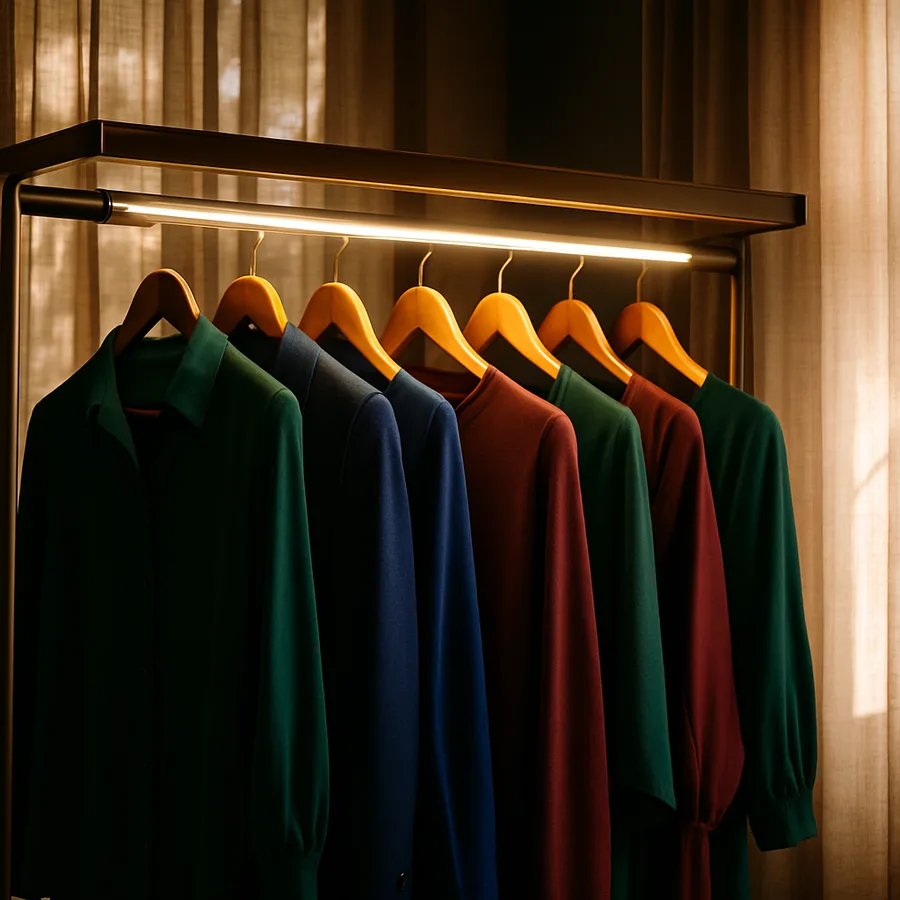
The space directly above a closet hanging rod is one of the most persistently underlit areas in residential design, creating a shadow zone where garments blend into an indistinguishable mass of dark fabric that makes selecting specific pieces an exercise in tactile guesswork rather than visual choice. Closet rod lighting strips solve this problem by positioning LED illumination exactly where it is needed most: along the length of the rod itself, casting light downward across the shoulders, collars, and upper bodies of hanging garments where identifying details like pattern, texture, and color are concentrated. This targeted approach to closet lighting has gained significant traction among professional closet designers and homeowners who recognize that general overhead illumination, while better than no light at all, fails to address the specific visual challenges of a densely packed hanging rod. According to the National Kitchen and Bath Association, closet and wardrobe lighting was the fastest-growing subcategory of residential task lighting in their most recent design trends survey, with rod-mounted and rod-adjacent solutions leading that growth.
How Rod Lighting Strips Differ from Overhead Closet Lights
The fundamental limitation of overhead closet lighting, whether from a ceiling-mounted fixture, a surface-mounted puck light, or a light bar on the closet header, is that it illuminates from a single point or plane above the closet contents, creating shadows wherever one object blocks the light path to another. In a closet with a full hanging rod, the garments themselves become shadow-casting obstacles: the shoulders of a jacket block light from reaching the shirts behind it, the wide spread of a winter coat darkens an entire section of the rod, and garments pushed toward the back of the closet receive dramatically less light than those at the front. The result is an illumination gradient that makes the front of the closet reasonably visible while leaving the rear third in comparative darkness.
Rod-mounted lighting strips eliminate this shadow hierarchy by positioning the light source below the shelf and immediately above the hanging garments, distributing illumination evenly along the full length of the rod. Because the light travels straight down from a line source rather than from a distant point, each garment receives approximately the same light intensity regardless of its position along the rod. The rod lighting strip functions as a continuous linear source that bathes the shoulder area of every garment in even, shadow-free light, making it possible to scan the full rod visually and identify specific pieces without pushing hangers aside or pulling garments forward for inspection. This is the same lighting principle used in high-end retail clothing displays, where merchandise visibility directly influences sales, scaled down to residential closet dimensions.
The color rendering advantage of rod-positioned lighting is equally significant. Light that falls directly onto a garment from a short distance produces more accurate color perception than light that bounces off walls and ceiling surfaces before reaching the fabric. This is because each surface reflection subtly shifts the light's color spectrum, and in a closet with walls painted in any color other than neutral white, reflected light picks up the wall color and imposes it on the garments below. A rod lighting strip with a high Color Rendering Index (CRI of 90 or above) positioned two to four inches above the garment shoulders delivers light that is minimally affected by environmental reflections, producing the most accurate possible representation of each garment's true color. This accuracy matters most with dark neutrals, the navy-versus-black distinction and the charcoal-versus-dark-brown distinction that cause the most frequent wardrobe coordination errors.
The psychological effect of a well-lit hanging rod should not be underestimated. Retail psychology research from the Journal of Retailing has consistently demonstrated that consumers perceive merchandise displayed under bright, even lighting as higher quality and more desirable than identical items displayed under dim or uneven lighting. While a residential closet is not a retail environment, the same perceptual dynamics apply to how homeowners value and engage with their own wardrobes. A closet where every garment is clearly visible and attractively illuminated encourages fuller use of the wardrobe, reduces the tendency to wear the same few easily-found favorites repeatedly, and transforms the morning dressing routine from a hurried search into a more deliberate and satisfying selection process.
Types of Closet Rod Lighting Strip Systems
Closet rod lighting strips are available in several configurations, each designed to integrate with the rod in a different way and each presenting distinct advantages in terms of installation complexity, aesthetic appearance, and maintenance access. The most straightforward type is the adhesive-backed LED strip that attaches directly to the top surface of an existing closet rod. These strips are typically 8 to 10 millimeters wide, flexible enough to follow the curvature of a standard 1-3/8-inch round rod, and available in lengths that can be cut at marked intervals to match any rod length precisely. The adhesive backing bonds to the metal or wood rod surface, and the power lead runs to a battery pack, USB adapter, or transformer mounted on the closet wall or shelf. This type is the least expensive option, typically costing $10 to $25 for a six-foot length, and installs in under ten minutes.
Integrated lighted closet rods represent the premium end of the category, combining the structural function of the hanging rod with built-in LED illumination in a single manufactured product. These rods are typically extruded from aluminum with a diffuser channel along the bottom or front face that houses an LED strip and spreads the light into a wide, glare-free wash. The aluminum extrusion serves triple duty as a structural hanging rod, a heat sink for the LEDs, and a housing for the electrical components. Integrated lighted rods replace the existing closet rod entirely and connect to either a hardwired power source or a plug-in transformer. They are available from specialty closet system manufacturers in standard lengths and can be cut to fit custom installations. Prices range from $40 to $120 per rod depending on length, features, and brand.
A third option bridges the gap between adhesive strips and integrated rods: the clip-on LED channel that snaps over an existing round closet rod and contains a pre-installed LED strip behind a diffuser lens. This channel is typically a C-shaped or U-shaped aluminum profile that friction-fits onto a standard 1-3/8-inch rod, adding minimal diameter while providing the heat management and light diffusion benefits of the integrated rod design. Clip-on channels offer easier installation than integrated rods (no rod replacement necessary) and better aesthetics and durability than bare adhesive strips (the diffuser hides the individual LED points and protects the strip from contact with hangers). Pricing falls between the other two options, typically $20 to $60 for a six-foot length.
How densely is your closet rod packed with garments, and does the spacing between hangers allow light from above to reach the rod level at all? In a moderately packed closet where garments are spaced approximately one to two inches apart on the rod, overhead light penetrates to the rod level only in the gaps between garments, creating alternating bright and dark bands. A rod-mounted lighting strip eliminates this striping effect entirely by placing the light source below the shelf and above the garment shoulders, where the spacing between garments is at its widest and the light path is unobstructed along the full length of the rod.
Power Options: Battery, USB, and Hardwired Solutions
The power source for a closet rod lighting strip determines not only the installation complexity but also the long-term maintenance burden and the maximum brightness the system can sustain. Battery-powered rod lighting strips use rechargeable lithium-ion battery packs, typically mounted on the shelf above the rod or on the closet wall adjacent to the rod bracket. These battery packs range in capacity from 2,000 to 10,000 mAh and connect to the LED strip via a thin wire that runs along the rod or descends from the shelf. A 5,000 mAh battery pack powering a six-foot LED strip at medium brightness provides approximately 15 to 25 hours of cumulative illumination, which translates to roughly three to six weeks of typical use when paired with a motion sensor or door-activated switch. The battery pack recharges via USB in two to four hours and can be removed for charging without disturbing the LED strip itself.
USB-powered rod lighting strips connect directly to a USB power adapter plugged into a nearby outlet, eliminating batteries entirely and providing continuous power without any recharging maintenance. This option requires that an electrical outlet exists within reach of the USB cable, which is uncommon inside most closets but often available on a wall just outside the closet door. A slim USB cable routed along the door frame and into the closet provides a clean, unobtrusive power connection that most observers would not notice. USB power delivery is limited to 2.5 watts on standard USB-A ports, which is sufficient for a six-foot LED strip at moderate brightness but may limit the maximum output of longer runs or high-output strips. USB-C ports supporting higher power delivery (up to 15 watts without Power Delivery negotiation) can drive brighter and longer strip configurations.
Hardwired installations connect the rod lighting strip to the home's electrical system through a low-voltage transformer, providing unlimited power and eliminating all battery and cable considerations. The transformer converts household 120-volt AC power to the 12-volt or 24-volt DC required by the LED strip, and is typically installed inside the closet wall cavity or on the shelf above the rod. A licensed electrician can complete the installation in approximately two hours, including running the wire from the nearest circuit, installing the transformer, and connecting the LED strip. The Architectural Digest lighting design guides recommend hardwired solutions for any closet lighting installation where the homeowner plans to remain in the home for more than five years, because the absence of battery maintenance and the reliability of continuous power justify the higher initial installation cost over the extended ownership period.
Regardless of the power source, the switching mechanism that controls when the rod light operates is a critical component that directly affects both convenience and energy consumption. Door-activated magnetic switches, motion sensors with adjustable timeout periods, manual toggle switches, and smart-home-integrated controls are all viable options. For rod lighting strips, a door-activated switch is often the most practical choice because it guarantees illumination the instant the closet is opened and automatic shutoff when the door closes, with no lag, no timeout adjustment, and no false-trigger concerns. Motion sensors work well in walk-in closets where the door may remain open during extended wardrobe sessions, but they require careful placement to avoid false activation from air currents moving hanging garments.
Installation Techniques for Professional-Looking Results
Achieving a clean, professional installation of a closet rod lighting strip requires attention to details that are simple individually but collectively determine whether the finished result looks intentional or improvised. The first consideration is surface preparation of the rod itself. Metal closet rods accumulate a thin film of dust, body oils transferred from garments, and oxidation that compromises adhesive bond strength. Cleaning the rod surface with isopropyl alcohol (91 percent concentration or higher) and allowing it to dry completely before applying any adhesive-backed strip is essential. For chrome-plated rods, a light scuffing with fine-grit sandpaper (320 grit) creates micro-texture that improves adhesive grip without visibly altering the rod's finish.
Wire management is the factor that most visibly separates amateur installations from professional-quality results. The power wire connecting the LED strip to its battery pack, USB cable, or transformer should follow a route that keeps it invisible or nearly invisible during normal use. The optimal routing path runs along the top of the rod from the strip to the nearest rod bracket, then vertically up the wall or shelf support behind the bracket to the power source mounted on or behind the shelf above. Clear adhesive cable clips spaced every six to eight inches along this route keep the wire flush against the rod and wall surfaces, and transparent wire eliminates the visual contrast of a colored cable against a white or light-painted surface. For integrated lighted rods and clip-on channels, the power connection exits at one end of the rod and routes directly upward behind the rod bracket, a clean single-point connection that requires minimal cable management.
The positioning of the LED strip relative to the rod's cross-section affects both the direction and the quality of the light it produces. Mounting the strip on the top surface of the rod directs light upward toward the shelf above, which creates indirect ambient illumination but fails to light the garments hanging below. Mounting on the front face of the rod directs light outward toward the user, creating glare when scanning the rod at eye level. The optimal position is on the front-bottom quadrant of the rod, where the strip directs light diagonally downward and forward, illuminating the shoulder and collar area of hanging garments while the rod itself shields the user's eyes from direct view of the LED elements. This angled position also keeps the strip clear of hanger hooks as they slide along the rod, preventing the repeated contact that can dislodge adhesive-mounted strips over time.
For installations that involve cutting LED strips to length, understanding the cut points marked on the strip is essential to avoid damaging the circuit. LED strips contain groups of LEDs connected in series, and cutting between groups at the marked lines preserves the circuit integrity of the remaining sections. Cutting within a group disconnects the LEDs in that group from power, creating a dark spot at the cut end. Most quality strips mark cut points every two to four inches, providing sufficient granularity to match the strip length to the rod length within an inch or two. After cutting, sealing the exposed end with clear silicone or a heat-shrink cap prevents moisture intrusion and protects the exposed copper contacts from oxidation.
Matching Rod Lighting to Closet Design and Personal Style
The aesthetic integration of rod lighting into the closet's overall design is an increasingly important consideration as closet systems evolve from utilitarian storage spaces into curated personal environments that reflect the homeowner's taste and organizational philosophy. The Houzz Closet Trends Survey found that 64 percent of homeowners undertaking closet renovations now consider lighting a design element rather than a purely functional addition, and this shift in perception has driven manufacturers to offer rod lighting products in a range of finishes, color temperatures, and form factors that complement different closet aesthetics.
For contemporary and minimalist closet systems characterized by clean lines, matte finishes, and monochromatic color palettes, integrated lighted rods in brushed aluminum or matte black provide lighting that is architecturally coherent with the system's design language. The lighting element disappears into the rod's form factor, producing illumination that appears to emanate from the closet structure itself rather than from an added fixture. Cool white light in the 4500K to 5000K range reinforces the modern aesthetic while providing the color accuracy needed for wardrobe selection. Diffused light through a frosted channel lens eliminates the individual LED point-source appearance that can look utilitarian in a refined design context.
Traditional and transitional closet systems with wood shelving, decorative molding, and warmer finish tones pair more naturally with warm white rod lighting in the 3000K to 3500K range. This color temperature complements the amber tones of natural wood and creates a warmer, more inviting atmosphere that aligns with the classic aesthetic. However, the color rendering trade-off must be acknowledged: warm white light shifts perceived fabric colors toward the yellow-orange end of the spectrum, which can make wardrobe coordination less accurate than neutral or cool white alternatives. A compromise approach uses tunable white LED strips that allow the user to adjust color temperature between warm and cool settings, switching to cool white for garment selection and returning to warm white for the ambient glow that complements the closet's design when the door is open to the bedroom.
The brightness level of rod lighting also functions as a design parameter. A fully bright rod light in a small reach-in closet can feel harsh and clinical, overwhelming the intimate scale of the space. Dimming the output to 60 or 70 percent of maximum softens the effect and creates a more flattering light quality while still providing more than sufficient illumination for garment identification and color assessment. LED strips with built-in dimming, controlled through a small inline dial or a press-sequence on the power module, allow the homeowner to calibrate the brightness to the specific closet's size and reflectivity. Closets with white walls and light-colored shelving reflect more ambient light and require less direct output than closets with dark wood or painted surfaces that absorb a significant portion of the emitted light. Does your closet's interior finish lean toward light reflective surfaces or darker wood tones, and have you considered how that surface color affects the amount of artificial light needed for accurate garment visibility?
Maintaining Rod Lighting Strips for Reliable Long-Term Performance
The maintenance requirements of closet rod lighting strips are minimal but not zero, and establishing a simple routine ensures that the system continues to perform at its rated specifications throughout its expected lifespan. Dust accumulation on the LED elements and diffuser lens is the most common cause of gradual brightness reduction, and closet environments generate a steady supply of fine textile fibers that settle on horizontal surfaces including the top of the lighting strip. Wiping the strip or diffuser with a soft, dry microfiber cloth once a month removes this fiber layer and restores full light output. Avoid using liquid cleaners or damp cloths on the LED strip itself, as moisture can penetrate the electrical connections at cut points, solder joints, or the junction between the strip and the power lead, potentially causing flickering or complete failure of affected LED segments.
Adhesive bond integrity should be checked quarterly by gently pressing on each section of the strip or channel to verify that it remains firmly attached to the rod surface. In closets that experience significant temperature variation, such as those on exterior walls or in unconditioned spaces, thermal cycling causes the rod and the adhesive to expand and contract at different rates, gradually weakening the bond. If any section begins to lift away from the rod, cleaning both the rod surface and the adhesive backing with isopropyl alcohol and reapplying pressure usually restores the bond. If the original adhesive has failed beyond recovery, replacement adhesive tape rated for metal-to-plastic bonding is available in matching widths and provides a fresh, full-strength bond. The Closet and Storage Association recommends inspecting all closet hardware and accessories, including lighting, during seasonal wardrobe rotations, integrating maintenance into an activity that already involves closet access.
Battery health monitoring for rechargeable systems involves paying attention to two indicators: charge duration and brightness at full charge. A noticeable reduction in the interval between charges, such as a drop from four weeks to two weeks under the same usage pattern, indicates that the lithium-ion battery is approaching the end of its useful capacity cycle. Similarly, if the light appears dimmer at full charge than it did when the system was new, the battery is no longer holding its rated voltage under load. Most quality battery packs are designed for 500 or more charge cycles before capacity drops below 80 percent of original, which translates to approximately eight to twelve years of typical closet use. Replacement battery packs are available from most manufacturers at a fraction of the cost of a complete new system.
Treat your closet rod lighting strip as part of your regular closet maintenance routine, giving it the same brief monthly attention you give to checking hangers and reorganizing seasonal items, because sixty seconds of care keeps the system delivering clear visibility and accurate color rendering for every garment on the rod.
Conclusion
Closet rod lighting strips address the single most persistent lighting deficiency in residential closet design: the shadow zone directly above and among hanging garments where overhead fixtures cannot reach effectively. By positioning LED illumination along the rod itself, these strips deliver even, shadow-free light exactly where garment identification happens, across the shoulders, collars, and upper bodies of hanging clothes where color, pattern, and texture are most visible. The technology is available in configurations that range from a simple adhesive strip costing under $15 to integrated lighted rods that replace existing hardware with a premium, architecturally refined solution.
The practical impact of rod-level lighting extends beyond mere visibility into the quality of daily wardrobe decisions. Accurate color rendering at the point of garment selection reduces coordination errors, promotes fuller use of the entire wardrobe rather than the same few easily-found favorites, and saves the time that would otherwise be spent checking colors under better light elsewhere in the home. These incremental daily benefits are the true return on what is, by any measure, a modest investment of money and installation effort.
Whether you choose an adhesive strip, a clip-on channel, or an integrated lighted rod, the common outcome is a closet that functions as a well-lit display rather than a dark storage cavity. The garments you have invested in become fully visible and accessible, and the daily interaction with your closet shifts from a rushed search in inadequate light to a deliberate selection from a clearly presented collection. That shift, subtle as it may seem, is the difference between a closet that merely stores clothing and one that actively supports the rhythms of daily life.
More Articles You May Like



Comments
Post a Comment