Attic Conversion Bedroom Ideas With Sloped Ceiling Storage
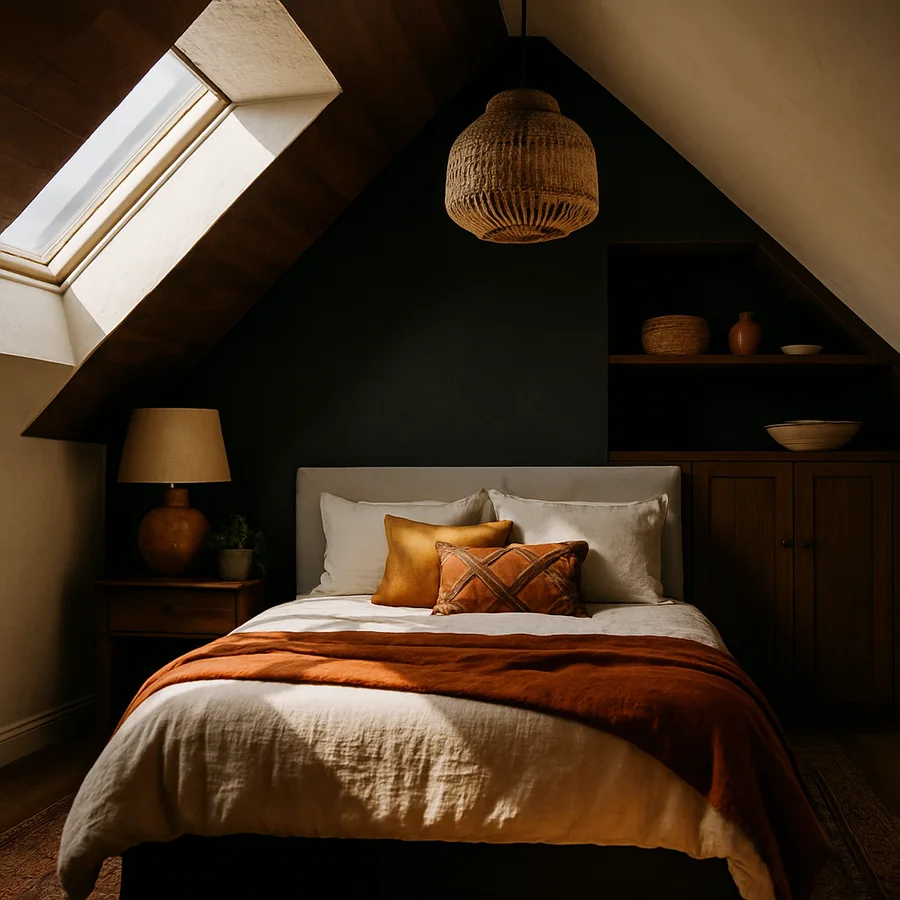
There is something quietly magical about sleeping beneath a sloped ceiling. The geometry forces a kind of calm, folding the room inward and framing the bed like a sculpted nook. But anyone who has lived under those angles knows the trade-off: every diagonal eats into headroom, every kneewall threatens to swallow a dresser, and every rafter seems determined to complicate your storage plan. The good news is that a well-designed attic bedroom conversion can turn those awkward geometries into the most characterful room in your home, with storage that feels invisible and light that pours in from unexpected places.
According to the National Association of Home Builders (NAHB), attic conversions consistently rank among the top five interior remodels for resale appeal, with a 2024 NAHB Remodeling Market Index report noting that more than 61% of member remodelers had completed at least one attic-to-bedroom project in the prior year. The U.S. Department of Energy (DOE) also highlights that properly finished attics can reduce whole-house heating and cooling loads by up to 15% when insulation and air sealing are upgraded during the conversion. That combination, higher comfort and higher value, is why so many homeowners now treat the attic as the crown of the house rather than forgotten overflow storage.
Understanding the Geometry Before You Design
Before you pick a paint color or order a bed frame, spend time with the space itself. Every attic has a personality defined by its pitch, its ridge height, and the position of its rafters and collar ties. A 9/12 roof pitch produces dramatic, cathedral-like volume, while a shallower 5/12 pitch yields cozier, cave-like corners that beg for reading nooks. The International Code Council (ICC) specifies that habitable rooms must have a ceiling height of at least 7 feet over 50% of the required floor area, so the first job of any design is confirming where that 7-foot plane lands.
Stand in the raw attic with a tape measure and a notebook, and sketch a simple cross-section. Mark the ridge, the kneewall line, and the point where the ceiling drops below 5 feet. Everything under 5 feet is effectively storage territory, everything between 5 and 7 is transitional zone for seating, dressing, and low furniture, and everything above 7 is prime living space. Designers at the American Society of Interior Designers (ASID) often call this the rule of thirds for attics, and it is the single most useful mental model for the entire project.
Ask yourself a practical question here: where do you actually want your head when you sit up in bed? Many first-time attic designers push the bed against the lowest wall because it seems tidy, only to spend years ducking every morning. A far better strategy is to position the headboard along the tallest available wall, or directly under the ridge, so that your sitting line stays in the roomy zone. Have you considered how your morning routine will feel under a 4-foot ceiling on day 300 of living there?
Kneewall Storage: The Attic's Secret Weapon
The kneewall, that short vertical wall where the sloped ceiling meets the floor, is the single greatest storage opportunity in any attic bedroom. Most conversions set kneewalls between 36 and 48 inches high, which happens to be the ideal range for drawers, cabinet doors, and hanging rods. The dead space behind that wall, the triangular cavity between the kneewall and the exterior roof, can swallow an astonishing amount of seasonal clothing, linens, and luggage if you plan it correctly.
There are three dominant approaches. First, custom built-in drawer banks running continuously along the kneewall give you the cleanest look and the most usable volume, and they read as true cabinetry rather than storage afterthought. Second, hinged cabinet doors provide access to deep bulk storage, which is perfect for holiday decor, suitcases, and extra bedding. Third, pull-out rolling carts on casters let you wheel items forward instead of crawling inward, which is a lifesaver for anyone with knees that remember past favors.
Whatever approach you pick, insist on fully finished interiors behind the kneewall doors. The American Institute of Architects (AIA) continuing-education materials on residential retrofit emphasize that unfinished knee-wall cavities are a common source of air leakage and moisture problems, both of which quickly degrade the bedroom above. Line the cavity with rigid foam board, tape the seams, and install a vapor-smart membrane before you even think about choosing drawer pulls.
Bed Placement and Headboard Design Under Slopes
The bed is the emotional center of any bedroom, and under a sloped ceiling its placement becomes a design decision rather than a default. The most photographed attic bedrooms almost always use one of three configurations. The first is the ridge-aligned bed, where the headboard runs parallel to the ridge and both sleepers enjoy equal headroom. The second is the dormer-framed bed, tucked inside a dormer so the ceiling feels taller at the headboard and lower at the foot. The third is the gable-wall bed, centered on the tall end wall, which is often the most versatile option for rooms where the dormers live elsewhere.
Once you choose placement, design the headboard to complement the geometry. A low, upholstered headboard disappears politely under a steep slope, while a tall panel headboard can echo the vertical line of a dormer. Some designers frame the bed with a shallow canopy of beadboard or tongue-and-groove pine that follows the ceiling angle, turning the sleeping nook into an architectural event. If you go that route, keep the paneling matte and the color soft, since glossy finishes on sloped surfaces can bounce light oddly and flatten the three-dimensional effect.
Lighting the Slopes Without Ruining Them
Lighting an attic bedroom is a puzzle because you cannot rely on a single central ceiling fixture to cover the whole volume. The slope throws shadows, the dormers create bright zones, and the low areas tend to feel cavernous. A layered plan is essential. Start with low-profile recessed LED downlights spaced along the highest part of the ceiling, ideally with airtight, insulation-contact-rated housings certified to ENERGY STAR standards so they do not undermine the insulation above.
Add wall-mounted swing-arm sconces on either side of the bed, which provide reading light without eating nightstand real estate, and place a warm-glow floor lamp in any reading nook that sits under the deepest slope. For ambient magic, tuck linear LED strips behind the top edge of the kneewall cabinetry, aiming the light up the slope. This indirect wash flattens shadows and makes the ceiling feel taller by five or six visual inches, which is a trick borrowed from gallery lighting design.
Would you be willing to install a dimmer on every circuit? It sounds excessive, but in an attic bedroom where the ceiling changes angle every few feet, dimmable circuits let you sculpt the mood rather than simply switching it on and off. A 2023 report from the Lighting Research Center noted that households with layered, dimmable bedroom lighting reported 22% higher sleep-quality scores than those with single overhead fixtures.
Color, Texture, and the Illusion of Height
Color strategy in an attic bedroom is less about taste and more about optics. A unified color running from the kneewall up the slope and across the ceiling visually dissolves the break between wall and roof, which makes the room feel larger and calmer. Warm whites, soft clay tones, and pale mossy greens all perform beautifully in this role because they read as neutral in daylight and glow gently under lamplight. Stark cool whites, on the other hand, can make the slopes feel clinical and emphasize every imperfection in the drywall.
Texture matters even more than color. A matte finish on the ceiling reduces glare and hides the small undulations that inevitably show up when drywall is hung on rafters that were never meant to be perfectly flat. Tongue-and-groove paneling, limewash paint, and Venetian plaster all add tactile richness that flat latex simply cannot match. For the floor, consider a wide-plank engineered hardwood or a low-pile wool carpet, both of which absorb sound and warm the space. Attics tend to transmit sound to the floor below, so soft flooring is a kindness to everyone in the house.
Ventilation, Insulation, and Comfort Year-Round
The most beautiful attic bedroom in the world will be unlivable if it bakes in July and freezes in January. The DOE recommends an insulation value of R-49 to R-60 in attic assemblies across most of the United States, which is a significant jump from the R-30 that many older homes carry. During a conversion, the insulation approach typically shifts from a vented attic with insulation on the floor to an unvented, conditioned attic with insulation at the roof deck. This transition has major implications for moisture control.
Closed-cell spray foam at the roof deck creates a tight thermal envelope and doubles as an air barrier, while a hybrid assembly of rigid foam above the deck plus batt or mineral wool below can meet code at a lower cost. Whichever path you choose, include dedicated conditioning: a ductless mini-split heat pump is the overwhelming favorite for attic bedrooms because it delivers quiet, zoned comfort without the losses of long duct runs. Look for models certified by ENERGY STAR for the best efficiency and lowest operating cost.
Conclusion
An attic bedroom rewards patience and planning more than almost any other room in the house. The sloped ceilings that seem like obstacles at first glance become the defining feature of a space that no rectangular bedroom can replicate, and the storage hidden behind the kneewalls can quietly solve organizational problems you have been carrying around for years. When you treat the geometry as a collaborator rather than a constraint, the results feel inevitable, as though the room was always meant to look this way.
The practical path forward is almost always the same. Start with a careful measured survey, decide where your 7-foot ceiling plane lands, plan your kneewall storage as serious cabinetry rather than cheap afterthought, and layer your lighting so that every corner has a reason to glow. Choose warm, matte surfaces that flatter the angles, invest in insulation that meets DOE guidelines, and zone your heating and cooling with an ENERGY STAR mini-split that respects the volume. Each of these decisions compounds, and together they produce a bedroom that feels like a retreat rather than a renovation.
If you are ready to begin, start this week with one small, concrete step. Measure your attic, sketch the cross-section on a single sheet of paper, and note where the ceiling crosses 5 feet and 7 feet. That sketch is the foundation of every design decision that follows, and it costs nothing but an hour of your time. The best attic bedrooms are not the ones with the biggest budgets but the ones with the clearest diagrams.
Ready to take the next step? Download a basic attic cross-section template, walk your space tonight with a tape measure, and book a consultation with a licensed local remodeler who has at least three attic conversions in their portfolio. Reputable referrals can be found through the NAHB remodeler directory and the AIA member finder, and both organizations maintain searchable public databases. Your dream bedroom is already there in the rafters, waiting for a plan.
For additional technical guidance, see the U.S. Department of Energy Insulation guide, the NAHB resources for homeowners, and the ENERGY STAR lighting and fixtures directory.
More Articles You May Like



Comments
Post a Comment