Adding a Sunroom Addition: Costs, Permits, and Layout Options
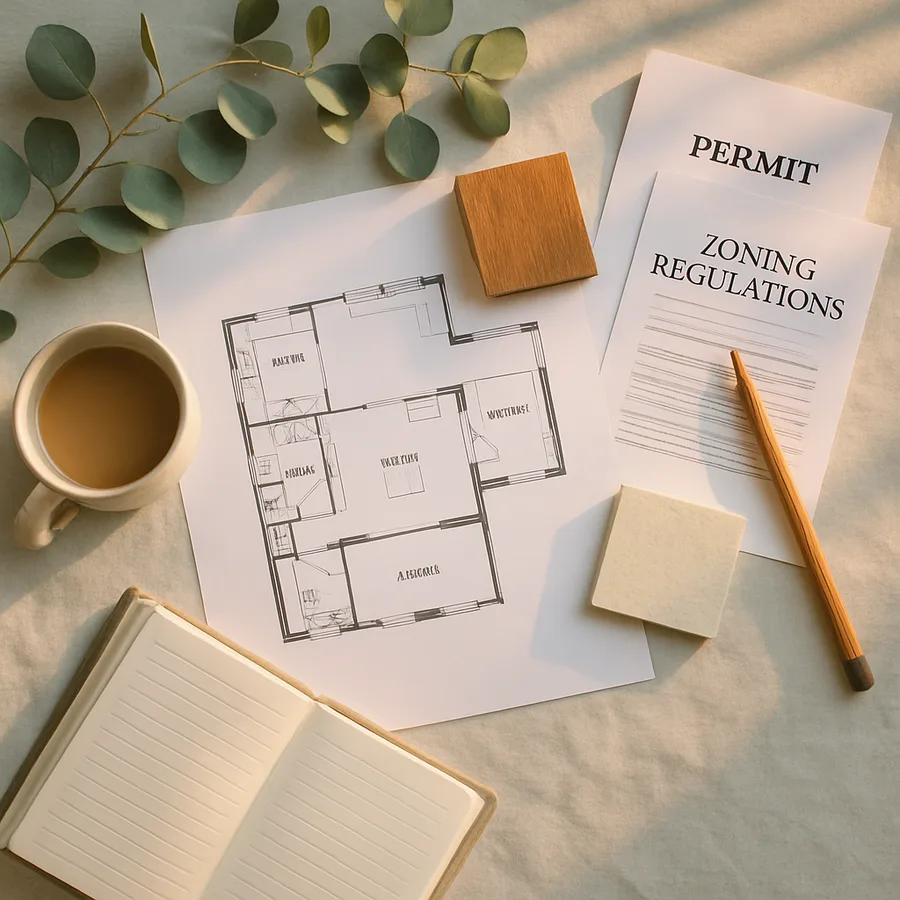
Adding a sunroom is one of the most popular residential projects in the country, and it is also one of the most frequently botched. The project sits at the intersection of structural engineering, window specification, HVAC design, finish carpentry, and local zoning, and homeowners who treat it as just another room usually pay for that assumption in budget overruns, permit delays, or a finished space they rarely use. The projects that go well share a handful of characteristics: clear decisions made early about three-season versus four-season construction, a foundation system matched to the site and the climate, realistic budget planning, and careful attention to how the sunroom connects to the rest of the house.
This guide walks through each of those decisions with the kind of specific numbers and citations that a homeowner actually needs to plan a project. We will cover cost ranges by addition type, the permit process, layout and orientation options, foundation and structural choices, HVAC and electrical planning, and finally the return-on-investment question that every spouse eventually raises. According to Remodeling Magazine's most recent Cost vs. Value report, a midrange sunroom addition recoups about 47 percent of its cost at resale, which is below a kitchen remodel but better than most people assume.
Three-Season, Four-Season, and Screen Room: Which Are You Building?
The single most consequential decision in the project happens in the first conversation with your contractor. Are you building a screen room (no glass, no heat, bug protection only), a three-season sunroom (glass walls, unheated, usable April through October in most climates), or a four-season sunroom (fully conditioned, insulated, usable year-round)? Each has dramatically different cost, permit, and construction implications.
A screen room is the cheapest option, typically 15,000 to 35,000 dollars for a 12-by-14 footprint. It uses post-and-beam framing, screens instead of glass, and usually no foundation beyond concrete piers. It works best in moderate climates and provides almost zero protection from cold. A three-season sunroom runs 25,000 to 60,000 dollars for the same footprint, depending on glazing quality and finish. It feels like an interior room in spring and fall but is usually closed up in winter. A four-season sunroom runs 45,000 to 120,000 dollars for the same footprint and is built to the same insulation and HVAC standard as the rest of the house.
The temptation to build three-season and upgrade later is strong and almost always wrong. Retrofitting a three-season room to four-season status usually means tearing out and rebuilding the foundation, the walls, the roof, and the mechanical systems, often at 150 percent of the cost of building four-season from the start. The National Association of Home Builders has data on remodeling cost escalation, and retrofits routinely run 1.5 to 2 times the greenfield equivalent. Make the three-versus-four-season decision once and commit.
The Permit and Zoning Process
Every municipality handles sunroom permits differently, but the broad pattern is consistent. You will need at minimum a building permit, probably an electrical permit, possibly a mechanical permit (for HVAC), and if your lot is constrained, a zoning variance or setback review. Plan on 4 to 12 weeks from permit submission to approval, and plan on multiple rounds of inspection during construction.
Zoning is the step that derails the most projects. Residential zoning codes define minimum setbacks from side and rear property lines; a typical single-family zone requires 5 to 10 feet on side yards and 20 to 30 feet at the rear. If your planned sunroom projects into those setbacks, you need a variance, and variances are not granted automatically. They typically require a public hearing, notification of neighbors, and a finding that the variance does not harm adjacent properties. The American Planning Association publishes guidance on residential variances that municipal boards often follow.
- Building permit: required in all jurisdictions; typical fee 300 to 1,500 dollars depending on project value.
- Electrical permit: usually separate; 100 to 400 dollars typical.
- Mechanical permit: required if adding heating or cooling; 150 to 500 dollars.
- Zoning review: free or low-cost if within setbacks; 500 to 2,500 dollars if variance required.
- Impervious coverage limits: many zones cap total lot coverage at 30 to 50 percent; verify before design.
Foundation Systems: Piers, Slab, and Crawl Space
Three foundation systems dominate sunroom construction, and the right choice depends on climate, site, and how the room connects to the house. Concrete pier foundations are fastest and cheapest, suitable for three-season rooms and screen rooms with decked floor systems. Monolithic concrete slabs are common for four-season additions in warm climates and for any sunroom with radiant floor heat. Full perimeter foundations with crawl space are most common in cold climates where the foundation must extend below the frost line.
Frost depth is a number you cannot negotiate with. The International Residential Code, adopted by most states, requires foundations below the local frost depth, which ranges from 0 inches in southern Florida to 60 inches or more in the upper Midwest and Northeast. A pier foundation at 48 inches down in Minnesota costs real money; that is why slab-on-grade is rare in cold climates for additions. For a 12-by-14 four-season sunroom in climate zone 5 or 6, expect foundation costs in the 8,000 to 15,000 dollar range alone.
Ground conditions add variability. Expansive clay soils require deeper or engineered foundations; bedrock close to grade makes excavation expensive but supports any foundation beautifully; sandy or fill soils may require pilings. Before serious design work begins, a geotechnical report is worth considering for any sunroom larger than about 200 square feet. Reports cost 1,500 to 3,500 dollars and routinely save 10,000 dollars or more in foundation over-engineering or under-engineering corrections.
Layout Options: Shape, Orientation, and Connection to the House
Sunroom layouts fall into a small number of archetypes. The rear bump-out extends from the back wall of the house, typically replacing a deck or patio. The side addition wraps along a side wall, often at the kitchen or family room. The freestanding conservatory connects by a short breezeway rather than sharing a wall with the house. And the second-story sunroom (much rarer) sits above a garage or existing first-floor room.
Orientation matters enormously. A south-facing sunroom gets strong winter sun but needs shading and ventilation in summer. A north-facing sunroom gets the softest, most consistent light but little solar heat gain in winter. An east-facing sunroom gets morning sun, cools by afternoon. A west-facing sunroom gets aggressive afternoon sun and can be uncomfortably hot in summer without serious shading. Ideally, the sunroom orientation is chosen for the climate, but in practice it is usually forced by the house layout; the sunroom goes where the yard allows.
Connection to the house is another high-consequence decision. An open connection (double doors or no doors, plus structural opening) integrates the sunroom into daily use but means that the room must be heated and cooled to the same standard as the house. A closed connection (exterior-grade door, separate HVAC zone) lets you manage the sunroom's climate independently, which can cut operating costs dramatically if you use the room seasonally. How do you actually want to live with this room, day to day? That question, more than any other, should drive the connection decision.
HVAC, Electrical, and Systems Planning
Conditioning a glass-walled room is not the same problem as conditioning an interior room, and the mechanical design choices deserve attention. For a four-season sunroom, the options are to extend the existing HVAC system, add a dedicated ductless mini-split, or install in-floor radiant heat with a separate cooling strategy. Extending the existing system is cheapest if the existing equipment has capacity, which it often does not; most whole-house HVAC systems are sized exactly for the existing house.
Ductless mini-splits have become the most popular sunroom solution because they are efficient, have precise zone control, and do not require ductwork through finished walls. A properly sized mini-split for a 12-by-14 four-season sunroom typically runs 9,000 to 12,000 BTU, costs 4,000 to 6,500 dollars installed, and achieves ENERGY STAR rated efficiency in most current models. The U.S. Department of Energy reports that mini-splits can be 30 percent more efficient than equivalent ducted systems in retrofit applications.
Radiant floor heat pairs beautifully with tile or concrete flooring and, as noted in other guides, does an exceptional job of making a high-glass room comfortable. Installation during slab pour adds roughly 8 to 15 dollars per square foot. Pair it with a mini-split head for cooling and you have the best-performing sunroom HVAC combination available today.
Electrical planning should not be treated as an afterthought. Plan receptacles every 8 to 10 feet per the National Electrical Code, at least one dedicated circuit for the mini-split, cable or conduit for a ceiling fan, and switched lighting at each entry. Oversize the electrical service feed; it costs almost nothing extra during rough-in and prevents painful retrofits later.
Finishes, Glazing, and the UV Question
Glass is the defining material of a sunroom, and glass choices drive both cost and performance more than any other single item. Specifying low-E coated double-pane glazing with argon fill is the minimum standard for a four-season room; triple-pane becomes justified in climate zones 6 and 7 or in north-facing rooms where heat loss dominates. The glass should carry NFRC certification and an ENERGY STAR label rated for your climate zone.
Solar heat gain coefficient (SHGC) is the other number to watch. South-facing rooms in cold climates can use a moderately high SHGC of 0.40 to 0.50 to capture winter sun. South- and west-facing rooms in hot climates want SHGC below 0.30. North-facing rooms benefit from low U-factor because there is no winter sun to capture. These tradeoffs are well-documented in the Efficient Windows Collaborative literature and deserve genuine consideration.
UV exposure is real. Even with low-E coatings, furniture fabrics, flooring, and artwork will fade faster in a sunroom than elsewhere in the house. Specify UV-resistant finishes. Consider interior solar shades on the most exposed walls; automated motorized shades add 800 to 2,500 dollars per opening but transform occupant comfort on hot afternoons. Is the sunroom going to host furniture you truly care about, or pieces you are happy to replace every five to seven years? The answer changes the glazing spec.
Conclusion
A sunroom addition is a meaningful project with meaningful upside. Done well, it adds living space, natural light, and a genuine connection to the outdoors; it raises the quality of daily life for the family that uses it; and it recoups a respectable portion of its cost at resale. Done poorly, it drains budget, delivers an uncomfortable space that no one uses, and can actually reduce resale value by signaling amateur construction to savvy buyers. The difference between those outcomes is almost entirely in planning.
Start with the three-versus-four-season decision and commit. Work out the permit and zoning questions before you fall in love with a design that cannot be built. Specify the foundation, glazing, and HVAC as interconnected decisions rather than shopping each piece separately. Budget generously; most sunroom projects run 10 to 20 percent over their initial estimate, and having contingency is less painful than compromising finishes at the end.
Expect the full project to take 3 to 6 months from first design meeting to final inspection, with 6 to 12 weeks of active construction in the middle. Plan the timing around weather: excavating foundations in frozen ground costs more, as does framing in heavy summer heat. The best sunroom projects in the Midwest and Northeast break ground in April or May and finish before winter; in the Sunbelt, fall construction avoids the worst summer heat for the crew.
One final thought that does not appear on any cost sheet: the rooms that get used most are the ones that are easiest to enter and sit in. Plan an unambiguous primary circulation path from the kitchen or main living area into the sunroom. Furnish it with comfortable, view-facing seating. Add one feature that draws daily use, such as a reading chair by the best window, a morning coffee table, or a small dining setup. Rooms that sit unused for a year get closed off mentally, and that outcome is the most expensive form of sunroom failure.
Your next concrete step: visit three sunroom additions in your neighborhood, whether friends, neighbors, or real estate open houses, before committing to a design. Ask each homeowner what they would do differently, what they use the room for, and what it cost. That one afternoon of local research routinely saves 10,000 dollars and avoids the three or four most common planning mistakes. A contractor's sample book is useful, but nothing beats standing in a finished room that someone has actually lived with for a few years.
More Articles You May Like


Comments
Post a Comment