5 Innovative Interior Wall Design Ideas to Transform Your Home
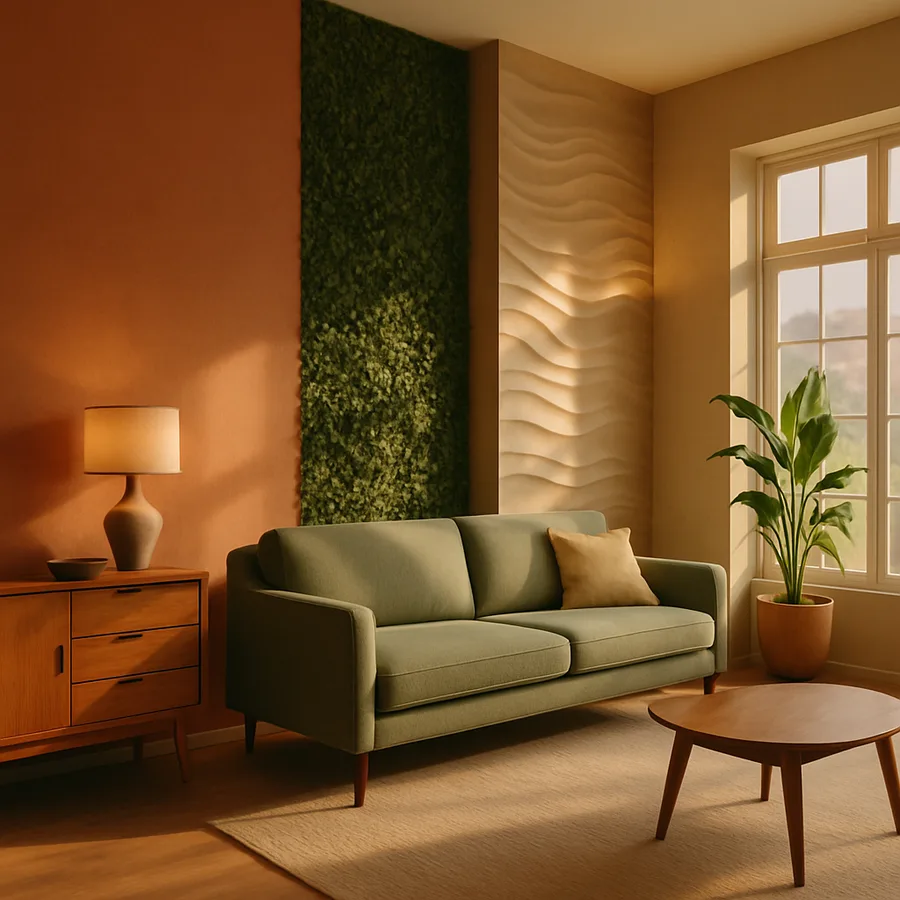
Walls are the largest continuous surfaces in any room, yet they are frequently the most neglected element in home design. While homeowners invest considerable thought and budget in furniture, flooring, and lighting, walls often receive nothing more than a coat of flat white paint and a framed print or two. This represents a massive missed opportunity. According to a Houzz survey of over 2,700 homeowners who completed renovation projects, wall treatments and accent walls ranked among the top five changes that delivered the highest satisfaction scores. The American Society of Interior Designers (ASID) has identified wall design innovation as a key driver of residential design transformation, noting that creative wall treatments can fundamentally alter the perception of space, light, and atmosphere within a room. The five ideas explored in this article go well beyond conventional approaches, drawing on current trends in materials science, biophilic design, and architectural lighting to help you reimagine your walls as dynamic design elements rather than passive boundaries. Whether your taste runs toward organic textures, bold geometry, or subtle sophistication, these approaches offer practical, achievable ways to elevate your interior spaces.
Three-Dimensional Textured Wall Panels
Three-dimensional wall panels have evolved dramatically from the cheap plastic imitations of decades past into sophisticated design elements that add genuine architectural interest to any room. Modern 3D panels are manufactured from a wide range of materials including gypsum, bamboo fiber, recycled plant pulp, and medium-density fiberboard (MDF), each offering distinct aesthetic qualities and practical characteristics. Gypsum panels deliver crisp, precise geometric patterns with excellent fire resistance, while bamboo fiber panels provide organic, flowing forms with strong environmental credentials. The International Interior Design Association (IIDA) has highlighted 3D textured surfaces as a leading trend in both residential and commercial applications, citing their ability to create visual drama without overwhelming a space.
Installation of 3D panels is surprisingly accessible for confident DIY enthusiasts, though professional installation ensures the best results, particularly for large walls and complex patterns. Panels are typically adhesive-mounted directly to existing drywall, with seams filled and sanded before the entire surface receives a uniform coat of paint. The magic of 3D panels lies in their interaction with light. As natural daylight shifts throughout the day or as artificial light strikes the textured surface from different angles, the wall transforms continuously, creating ever-changing patterns of shadow and highlight. Positioning recessed or wall-washing light fixtures to rake across a textured panel at a sharp angle maximizes this dynamic effect, turning a static wall into a living sculptural element.
Budget considerations for 3D panel installations vary widely depending on material choice and wall area. Recycled plant fiber panels start at approximately $8 per square foot for materials alone, while premium gypsum panels from manufacturers like Inhabit and WallArt can reach $25 per square foot before installation labor. A typical accent wall of 80 to 120 square feet represents a total investment of $800 to $3,500 including materials, adhesive, finishing compound, paint, and professional installation. This positions 3D paneling as a mid-range wall treatment that delivers design impact comparable to far more expensive options like natural stone or custom millwork. Have you considered how a single textured accent wall might transform the character of your living room or bedroom?
Living Green Walls and Biophilic Integration
Living walls, also known as vertical gardens or green walls, represent the intersection of interior design and biophilic principles, bringing the restorative power of nature directly into your living spaces. Research published by the International WELL Building Institute demonstrates that exposure to natural elements within interior environments reduces stress hormones by up to 15 percent and improves self-reported well-being scores among occupants. ASID has formally recognized biophilic design as a core competency for modern interior designers, reflecting the growing demand from homeowners and commercial clients alike for spaces that foster a meaningful connection with the natural world.
Modern living wall systems have become remarkably user-friendly, with modular panel systems from companies like Sagegreenlife, Florafelt, and LiveWall making residential installation practical and maintainable. These systems typically consist of a waterproof backing, a growing medium or hydroponic substrate, an integrated irrigation system, and a framework that holds individual plant pockets in a grid arrangement. Suitable plant species for indoor living walls include pothos, philodendrons, ferns, bromeliads, and various species of moss, all selected for their tolerance of indoor light conditions and their air-purifying properties. Adequate light is the most critical success factor; supplemental LED grow lights positioned above the wall ensure healthy plant growth in rooms without abundant natural light.
The cost of a residential living wall ranges from approximately $50 per square foot for a simple modular system with basic plants to over $200 per square foot for custom-designed installations with integrated irrigation and lighting. A modest living wall covering 20 to 30 square feet, suitable for a dining room or entryway focal point, typically costs between $1,500 and $5,000 fully installed. Maintenance requirements include weekly watering (simplified by automated drip systems), monthly fertilization, occasional pruning, and replacement of individual plants that fail to thrive. The sensory richness that a living wall brings to an interior space, including texture, color variation, gentle fragrance, and the subtle psychological comfort of living organisms, is difficult to replicate with any artificial material, making it one of the most distinctive and rewarding wall treatments available to homeowners.
Architectural Accent Lighting as Wall Design
Light itself can serve as a wall design element when deployed with architectural intention, transforming blank surfaces into luminous features that define the mood and spatial character of a room. LED strip lighting, cove lighting, wall grazing, and wall washing techniques allow designers to sculpt walls with light, creating effects that range from subtle ambient warmth to dramatic theatrical statements. The lighting industry has undergone a revolution in recent years, with LED technology offering unprecedented flexibility in color temperature, intensity, and programmability at a fraction of the energy cost of traditional lighting sources. Tunable white LED systems can shift from warm candlelight tones in the evening to cool, energizing daylight temperatures in the morning, fundamentally altering the character of a wall and the room it encloses.
Recessed linear LED channels, installed in horizontal or vertical reveals cut into the drywall, create glowing lines of light that appear to emerge from within the wall itself. This technique, popular in the quiet luxury design movement, adds sophistication without visible hardware or fixtures. Wall grazing, achieved by placing narrow-beam spotlights or linear fixtures close to a textured surface, dramatically accentuates texture and materiality, making it an ideal companion to stone, brick, wood, or 3D panel treatments discussed earlier. Wall washing, by contrast, uses wide-beam fixtures positioned further from the wall to create an even, diffused glow that makes surfaces appear to radiate light, expanding the perceived size of a room and creating a calm, gallery-like atmosphere.
Smart lighting systems from manufacturers like Lutron, Philips Hue, and LIFX enable homeowners to program lighting scenes that automatically adjust throughout the day, responding to natural light conditions and personal schedules. The cost of architectural wall lighting varies enormously based on complexity, with a simple LED strip installation starting at $200 to $500 per wall and fully integrated systems with recessed channels, smart controls, and tunable color temperature ranging from $2,000 to $8,000 per room. The NCIDQ examination includes questions on lighting design principles, reflecting the profession's recognition that lighting is not merely a functional necessity but a fundamental design tool that shapes the experience of every interior space. What mood would you create if your walls could change character at the touch of a button?
Reclaimed and Natural Material Feature Walls
Feature walls crafted from reclaimed wood, natural stone, cork, or handmade tile bring an authenticity and tactile richness to interiors that manufactured materials simply cannot replicate. The imperfections inherent in reclaimed materials, including nail holes, weathering patterns, natural grain variations, and the patina of age, tell stories that resonate with homeowners seeking spaces with genuine character and emotional depth. The Japandi design movement, which blends Japanese wabi-sabi philosophy with Scandinavian simplicity, has elevated the appreciation for natural imperfection as a design virtue, driving demand for materials that celebrate rather than conceal their history and organic origins.
Reclaimed barn wood remains one of the most popular feature wall materials, available from salvage companies and specialty retailers in a range of species, finishes, and dimensions. Installation typically involves creating a framework of horizontal furring strips attached to the existing wall, then nailing or gluing individual planks to the framework. The result is a wall surface with remarkable depth, texture, and visual warmth that pairs beautifully with both rustic and contemporary furnishings. Natural stone veneer, available in thin-cut panels that are significantly lighter and easier to install than full-thickness stone, offers another compelling option for feature walls in living rooms, fireplaces, and entryways. Cork wall tiles, harvested sustainably from the bark of cork oak trees without harming the tree itself, provide a warm, acoustically absorbent surface with a distinctive organic texture.
Material costs for natural feature walls range from $5 to $15 per square foot for cork tiles and reclaimed wood to $15 to $40 per square foot for natural stone veneer, with installation labor adding approximately $5 to $15 per square foot depending on the material and complexity. A key consideration when working with reclaimed wood is ensuring the material has been properly treated for insects and moisture, particularly if the wood is sourced from old barns or structures. Reputable salvage companies kiln-dry their reclaimed lumber to eliminate pests and stabilize moisture content. The environmental benefits of using reclaimed materials are significant, diverting waste from landfills while reducing the demand for newly harvested resources, making this approach both aesthetically compelling and ecologically responsible.
Geometric and Abstract Mural Installations
Custom murals and large-scale geometric patterns applied directly to walls create focal points of extraordinary visual power, transforming ordinary rooms into curated environments that reflect the homeowner's personality and aesthetic vision. Unlike wallpaper, which offers predetermined patterns and limited customization, hand-painted murals and digitally printed wall coverings can be designed to exact specifications, incorporating specific color palettes, motifs, and compositional strategies that respond to the unique proportions and lighting conditions of each room. The International Interior Design Association (IIDA) has noted a significant increase in demand for bespoke wall art and murals in residential projects, driven by homeowners seeking to distinguish their spaces from the uniformity of mass-produced decor.
Geometric murals, featuring bold arrangements of triangles, hexagons, arcs, and asymmetric color blocks, are particularly effective in modern and contemporary interiors where clean lines and graphic impact are valued. These can be executed using high-quality painter's tape and premium wall paint, making them accessible as a DIY project for patient, detail-oriented homeowners. Abstract murals inspired by natural landscapes, watercolor effects, or organic forms bring a softer, more artistic quality and typically require the skills of a professional muralist or the use of custom-printed removable wallpaper panels. Companies like Feathr, Photowall, and Murals Wallpaper offer made-to-measure digital prints based on the exact dimensions of your wall, providing a cost-effective alternative to commissioned hand-painted work.
The investment in a mural installation ranges from virtually nothing for a DIY geometric design using existing paint supplies to $2,000 to $10,000 for a professionally painted custom mural, depending on wall size, complexity, and the reputation of the artist. Custom-printed removable panels typically cost $300 to $1,500 for a standard wall, offering a middle ground that combines custom design with professional-quality output at a moderate price point. The removable nature of printed panels is particularly appealing for renters or homeowners who enjoy changing their decor periodically, allowing dramatic wall transformations without permanent commitment. A well-designed mural installation can become the defining feature of a room, anchoring the entire design scheme and creating an unforgettable first impression.
Combining Multiple Techniques for Layered Impact
The most sophisticated interior wall designs often combine two or more of the techniques described above, creating layered compositions that engage multiple senses and evolve with changing light conditions throughout the day. A textured 3D panel wall with integrated LED cove lighting, for example, combines the sculptural presence of dimensional surfaces with the dynamic quality of architectural light, producing a feature wall that transforms from subtle daytime elegance to dramatic evening spectacle. Similarly, a reclaimed wood accent wall with strategically placed wall-grazing spotlights reveals the depth and character of the material's natural texture in ways that flat ambient lighting cannot achieve.
When combining techniques, restraint is essential to avoid visual chaos. The principle of hierarchy, a fundamental concept taught in NCIDQ-accredited design programs, dictates that every composition needs a primary focal point supported by secondary and tertiary elements. In the context of wall design, this means selecting one technique as the dominant visual statement and using additional techniques in supporting roles. A living green wall, for instance, might serve as the primary feature in a dining room, supported by warm-toned paint on adjacent walls and subtle cove lighting above. The green wall commands attention while the surrounding elements create a cohesive environment that enhances rather than competes with the focal point.
Budget planning for combined wall treatments requires careful prioritization. Rather than spreading your investment thinly across multiple walls, concentrate resources on a single wall that has the greatest visual impact, typically the wall you face when entering a room or the wall behind primary seating. Houzz data confirms that homeowners report the highest satisfaction when investments are concentrated on focal point walls rather than distributed evenly throughout a space. Consult with a professional interior designer, particularly one holding ASID or IIDA membership, to develop a cohesive wall design strategy that balances ambition with practicality and ensures that every element contributes to a unified vision for the space.
Conclusion
The walls of your home are far more than structural necessities; they are opportunities for creative expression, sensory engagement, and spatial transformation. From the sculptural drama of three-dimensional panels to the living vitality of vertical gardens, from the luminous elegance of architectural lighting to the authentic character of reclaimed materials and the bold artistry of custom murals, each approach offers a distinct pathway to elevating your interior environment. The key is to approach wall design with the same intentionality that you bring to furnishings, flooring, and layout.
Begin by assessing your space, your budget, and your aesthetic aspirations. Consider how natural light moves through your rooms, which walls serve as natural focal points, and what mood you want each space to convey. Study current trends like biophilic integration, quiet luxury, and the Japandi aesthetic to find approaches that resonate with your personal style. Then take action, whether that means commissioning a professional designer through ASID, researching 3D panel manufacturers, or simply picking up a roll of painter's tape and a can of bold paint to create your own geometric accent wall.
Start with one wall in one room. The transformation will inspire you to reimagine every surface in your home, turning passive boundaries into active design elements that bring beauty, character, and joy to your daily life.
More Articles You May Like



Comments
Post a Comment