10 Best Interior Design Trends to Transform Your Home
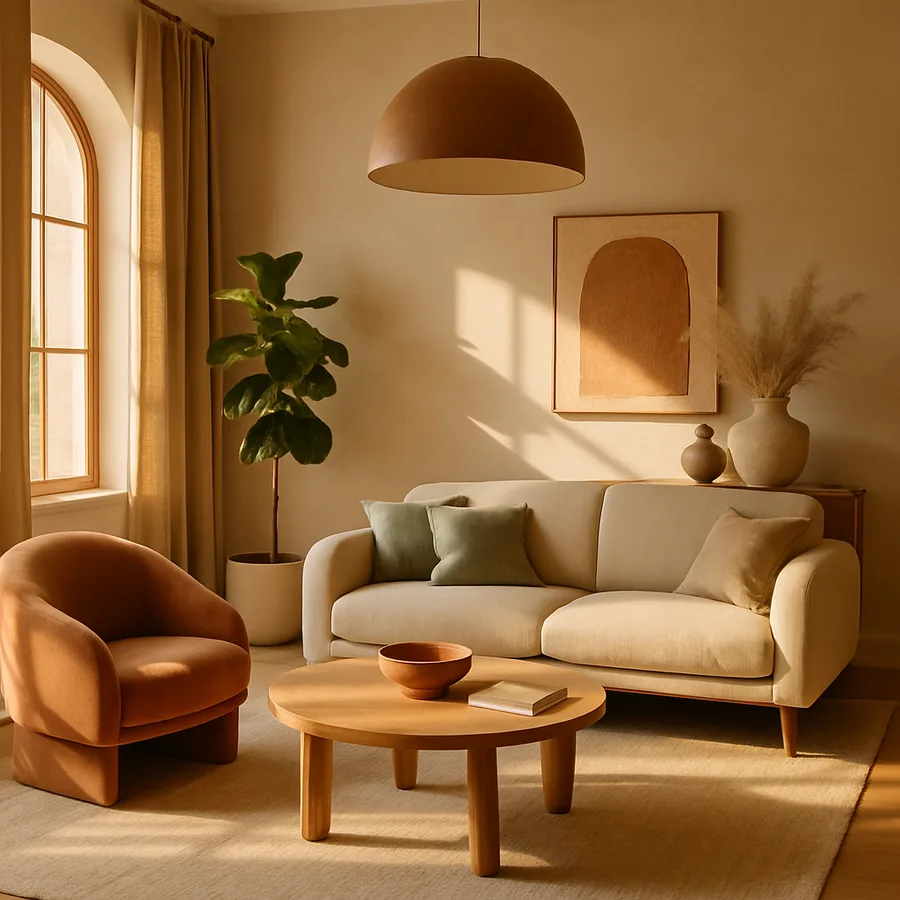
Interior design is a living discipline that evolves continuously, shaped by shifting cultural values, technological advances, and our deepening understanding of how physical environments affect human wellbeing. The trends that gain real traction are those that address genuine needs rather than superficial novelty, and the current landscape of residential design reflects a particularly thoughtful moment in the field's evolution. The American Society of Interior Designers (ASID) reports that homeowner investment in professional interior design services has grown by 35% over the past several years, driven by a collective realization that our homes are not just shelters but active participants in our quality of life. Understanding which trends offer lasting value, and which are merely fleeting fashions, is essential for anyone considering changes to their living environment.
The best design trends solve problems, enhance daily experiences, and reflect the values of the people who embrace them. This is why trends rooted in sustainability, wellness, comfort, and personal expression have demonstrated remarkable staying power, while purely aesthetic fads come and go with predictable regularity. Professionals certified through the National Council for Interior Design Qualification (NCIDQ) are trained to distinguish between the two, helping clients invest in changes that will continue to deliver satisfaction for years rather than feeling dated within months. The trends explored in this article fall firmly in the former category: each represents a meaningful shift in how we think about residential spaces.
Have you noticed how certain homes feel effortlessly current and inviting regardless of when they were last updated, while others feel dated despite recent renovations? The difference often lies in whether the design choices were guided by enduring principles or passing trends. This guide will help you identify the ten most impactful design movements transforming homes right now and understand how to incorporate them into your own space with confidence and lasting effect.
Warm Minimalism and Intentional Simplicity
The stark, cold minimalism that dominated design conversation for much of the previous decade has given way to a warmer, more humanistic interpretation of simplicity. Warm minimalism retains the clean lines, uncluttered surfaces, and spatial openness of its predecessor but replaces the clinical austerity with natural materials, earthy colors, and tactile softness. The International Interior Design Association (IIDA) has identified warm minimalism as one of the most influential design movements in contemporary residential practice, noting its appeal across demographics, cultures, and home sizes. This approach recognizes that simplicity and warmth are not opposing forces but complementary ones: a room can be both calm and inviting, both edited and comfortable.
Implementing warm minimalism begins with a commitment to intentionality. Every object, surface, and piece of furniture in the room must earn its place through beauty, function, or ideally both. This does not mean stripping rooms bare but rather curating them thoughtfully, keeping what adds value and removing what merely occupies space. Materials play a crucial role: warm-toned woods like oak, walnut, and ash replace the cool whites and metals of stark minimalism, while natural stone, linen, wool, and ceramic introduce textural variation that prevents simplicity from becoming sterility. The color palette favors warm neutrals, ivory, sandstone, mushroom, and soft terracotta, creating environments that feel grounded and nurturing.
The appeal of warm minimalism lies in its sustainability, both environmental and psychological. A home furnished with fewer but better-quality pieces generates less waste, requires less maintenance, and provides more enduring satisfaction than one filled with disposable, trend-driven purchases. Psychologically, spaces with less visual noise promote clearer thinking, deeper relaxation, and reduced stress. According to Houzz survey data, 61% of homeowners who adopted a more minimalist design approach reported feeling significantly less stressed in their home environments. Warm minimalism offers the clarity and peace of simplicity without the cold, austere feeling that made traditional minimalism feel inhospitable to many.
Curved Furniture and Organic Shapes
After years of angular, geometric furniture dominating showrooms and catalogs, curved and organically shaped pieces are reshaping the residential furniture landscape. Rounded sofas, arched doorways, circular mirrors, kidney-shaped coffee tables, and sculptural accent chairs introduce a softness and fluidity that angular furniture simply cannot provide. The ASID has documented significant growth in consumer demand for curved furniture forms, attributing the trend to a collective desire for interiors that feel more relaxed, approachable, and comforting. Curves echo the natural world, where straight lines are rare and organic forms dominate, and their presence in a room creates an unconscious sense of harmony and ease.
Curved furniture also offers practical advantages in terms of spatial flow and social dynamics. A rounded sofa creates a more intimate, inclusive conversational grouping than a straight-backed sectional, naturally encouraging face-to-face interaction. Circular and oval dining tables facilitate conversation among all seated guests equally, without the hierarchical head-of-table dynamic of rectangular designs. In tight spaces, rounded corners eliminate sharp edges that impede traffic flow and reduce the risk of painful collisions, a consideration especially relevant for families with young children. The absence of harsh angles softens the visual impact of furniture in a room, making pieces feel less imposing and spaces feel more open.
Incorporating curves does not require replacing all your existing furniture. A single curved piece, an arched mirror above a mantel, a rounded accent chair in a reading corner, or a circular side table between two straight-lined armchairs, can introduce enough organic softness to shift the entire feel of a room. Look for architectural opportunities as well: arched doorways, curved wall niches, and rounded plaster details can be added during renovation to bring permanent organic character to your home's bones. The interplay between curved and straight elements creates visual tension and interest that makes a room feel dynamic and considered.
Statement Ceilings and the Fifth Wall
Designers have long referred to the ceiling as the "fifth wall," yet it remains the most neglected surface in most homes, typically painted a standard white and forgotten entirely. The statement ceiling trend challenges this convention, treating the overhead plane as a canvas for color, pattern, texture, and architectural detail. A painted ceiling in a bold or unexpected color, a wallpapered ceiling with a dramatic pattern, exposed wooden beams, decorative molding, or a ceiling finished in a contrasting material all draw the eye upward and add a dimension of interest that transforms the entire room. The NCIDQ curriculum increasingly addresses ceiling design as a core element of comprehensive interior planning.
The psychological impact of a statement ceiling is significant. Rooms with visually interesting ceilings feel larger, taller, and more enveloping, creating a sense of intimacy and enclosure that contributes to the overall coziness and character of a space. A dark-painted ceiling, counterintuitively, can make a room feel taller by blurring the boundary between wall and ceiling, while a ceiling painted a few shades lighter than the walls creates gentle contrast that lifts the eye without overwhelming. Wallpapered ceilings, particularly in bedrooms where the overhead surface is the first thing you see each morning and the last thing you see each night, add pattern and personality to the most intimate room in the house.
Consider your ceiling an opportunity rather than an afterthought. In rooms with low ceilings, vertical stripes or a lighter-than-walls color can create the illusion of added height. In rooms with high ceilings, a darker tone or richly patterned wallpaper creates warmth and intimacy that vast, white overhead planes often lack. Exposed wooden beams, whether original or added, introduce architectural character and warmth that connect modern interiors to traditional building craft. Even a simple upgrade from flat white to a warm, slightly tinted white can make a noticeable difference. The fifth wall is free real estate in most homes, waiting to be claimed as a design asset.
Rich Textures and Material Depth
The trend toward rich textural layering reflects a growing sophistication in how homeowners and designers approach the sensory experience of interior spaces. Texture adds depth, warmth, and visual complexity that color alone cannot achieve, and it engages our sense of touch in ways that transform how a room feels, not just how it looks. Research highlighted by the IIDA indicates that rooms with diverse textural composition are consistently rated as more comfortable, more interesting, and more inviting than rooms featuring uniform textures, regardless of the quality or cost of the individual materials. This finding reinforces the idea that textural variety is not a luxury but a fundamental component of successful interior design.
Effective textural layering involves combining materials that contrast with one another in deliberate, harmonious ways. Rough against smooth, matte against glossy, soft against hard, and natural against refined, these pairings create visual tension that holds the eye's interest and makes a room feel three-dimensional. A bouclé upholstered chair beside a polished marble side table, a hand-woven jute rug beneath a sleek leather sofa, or a raw linen curtain framing a view through a glossy glass window all demonstrate this principle. The textures should relate to each other in tone or color to maintain cohesion, while their surface qualities provide the contrast that creates depth and interest.
How can you assess whether your home has sufficient textural variety? Look at any room and try to identify the distinct textures present. If you can count fewer than four, the room likely feels flat and one-dimensional. Add a chunky knit throw to a smooth sofa, swap a flat-weave rug for a deep-pile one, replace smooth ceramic accessories with rough stoneware or hand-blown glass, or introduce a natural wood element to a room dominated by painted or laminated surfaces. Each new texture you introduce adds another layer of visual and tactile richness, building toward the kind of depth that makes a room feel thoughtfully composed and genuinely welcoming.
Technology-Integrated Living Spaces
Smart home technology has matured from a novelty for early adopters into a practical, increasingly essential component of modern residential design. The integration of technology into living spaces now goes far beyond voice-controlled speakers and smart thermostats, encompassing automated lighting systems, motorized window treatments, integrated sound systems, smart appliances, and sophisticated home security networks. According to the ASID, 48% of homeowners now consider smart home features a priority when planning renovations, with lighting control, climate management, and security systems topping the list of desired integrations. The key design challenge is incorporating this technology seamlessly, ensuring it enhances daily life without cluttering surfaces with devices or disrupting the aesthetic integrity of the space.
The most successful technology integrations are those that disappear into the architecture and furnishings of the home. Speakers built into ceilings or walls, motorized shades controlled by sensors or schedules, outlets and charging stations concealed within furniture, and smart switches that match the design language of existing hardware all represent invisible technology that improves functionality without visual compromise. Lighting automation, in particular, has become a transformative tool for designers, enabling homeowners to program scenes that adjust color temperature, brightness, and zone activation throughout the day, from energizing morning light to relaxing evening ambiance, all without touching a switch.
If you are new to smart home technology, begin with the systems that offer the most immediate and tangible benefits. Smart lighting is often the best starting point, as it is relatively affordable, easy to install, and delivers a dramatic impact on both convenience and ambiance. A smart thermostat is another high-impact, low-effort upgrade that improves comfort while reducing energy costs. From there, consider motorized window treatments, a smart doorbell or security camera, and a whole-home audio system. The goal is not to automate everything for the sake of technology but to identify the specific friction points in your daily routine that technology can smooth, creating a home that anticipates and responds to your needs with minimal effort on your part.
Personalized Spaces and Self-Expression
Perhaps the most significant trend in contemporary interior design is the move away from prescribed, catalog-driven aesthetics toward deeply personal, individually expressive spaces. Homeowners are increasingly rejecting the notion that their interiors should conform to any single style label, whether mid-century modern, farmhouse, Scandinavian, or industrial, and instead embracing eclectic, highly personal approaches that blend influences, eras, and traditions according to individual taste and lived experience. The Houzz platform has documented a steady decline in searches for specific style labels and a corresponding increase in searches for terms like "unique," "personal," and "one-of-a-kind," reflecting this cultural shift away from conformity and toward authentic self-expression in home design.
Personalized spaces are built from meaningful objects, inherited pieces, travel finds, commissioned artworks, and handmade items that tell the story of the people who live there. They incorporate colors, patterns, and materials that resonate personally rather than those dictated by trend forecasters. A home designed around personal expression might pair a grandmother's antique sideboard with a contemporary abstract painting, set vintage kilim cushions on a modern linen sofa, or display a collection of handmade ceramics gathered over years of travel alongside sleek, minimalist shelving. The NCIDQ recognizes personalization as a core competency in residential design, training designers to listen deeply to clients and translate their values, memories, and aspirations into physical environments.
Creating a personalized interior requires self-knowledge and courage. It means trusting your own preferences over external authorities, being willing to break conventional design rules when your instinct tells you something works, and understanding that the most meaningful spaces are those that could not belong to anyone else. Start by identifying the objects, colors, and experiences that bring you the most joy and build outward from there. Collect images that resonate with you regardless of whether they fit a coherent style label, and look for the common threads that connect them: perhaps a love of warm tones, a preference for handmade textures, or an attraction to bold pattern mixing. These threads are the DNA of your personal style, and they will guide every design decision with more authenticity and satisfaction than any trend report ever could.
Conclusion
The ten trends explored in this guide share a common philosophy: design should serve people, not the other way around. From the warmth of organic minimalism to the self-expression of personalized spaces, from the practical benefits of smart technology to the sensory richness of textural layering, these movements collectively represent a maturing of residential design toward greater intentionality, authenticity, and human-centeredness. The insights from ASID, IIDA, NCIDQ, and Houzz confirm that the most impactful design investments are those that enhance daily experience rather than merely impressing visitors.
Transforming your home does not require adopting all ten trends simultaneously. Identify the two or three that resonate most strongly with your lifestyle and values, and focus your energy and resources there. A warm minimalist foundation paired with rich textural layering and personalized details, for example, creates a cohesive, deeply satisfying interior without the overwhelm of trying to incorporate every current movement. The best design evolves gradually, responding to your changing needs and growing understanding of what makes a space truly work for you.
Choose one trend from this list and commit to exploring it this month. Visit a furniture showroom to sit in a curved sofa, paint a sample of a bold ceiling color on poster board and hold it overhead, or audit your home for textural variety. Each small step of exploration brings you closer to a home that reflects not just current design thinking but your own unique vision of how you want to live. The transformation begins with a single intentional choice.
More Articles You May Like


Comments
Post a Comment