Maximize Your Style: Top AI Tools for Effortless Interior Design Solutions
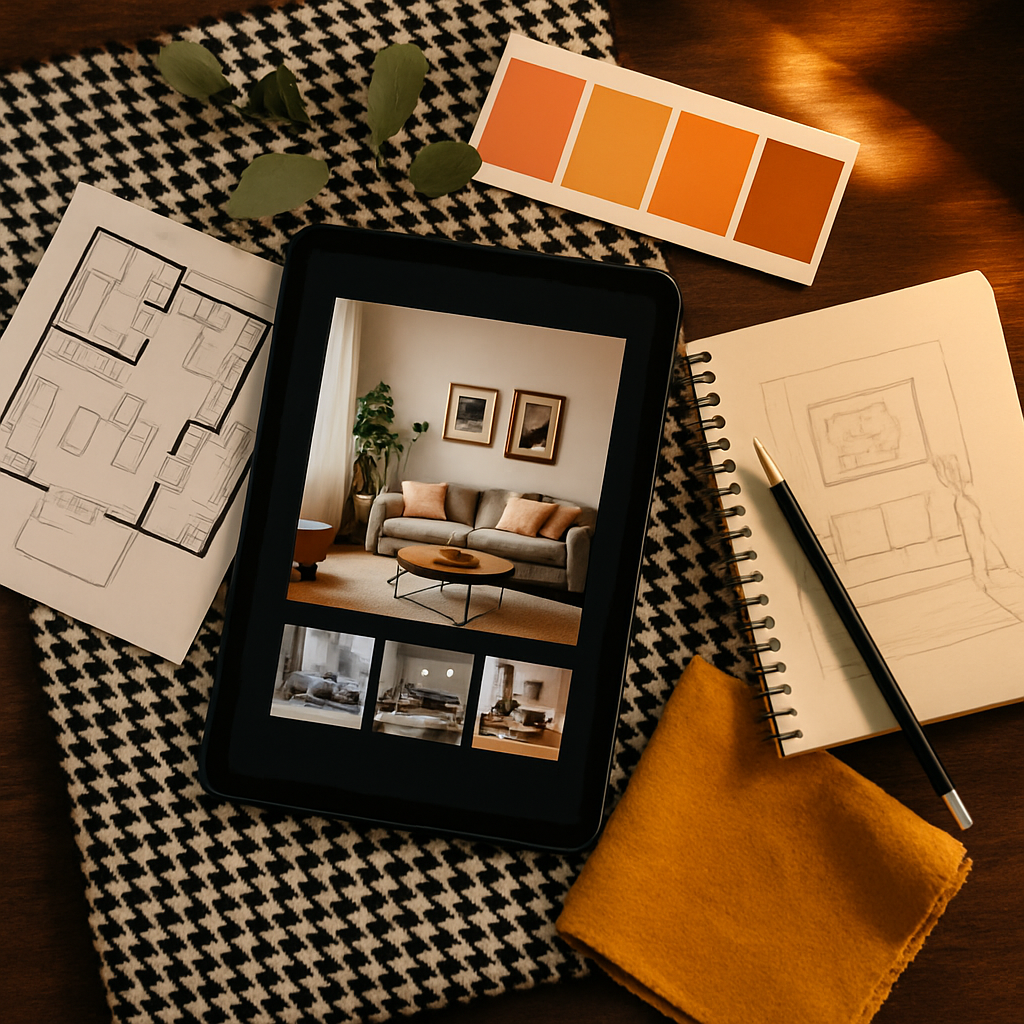
The interior design industry is experiencing a technological renaissance that is putting professional-grade design capabilities into the hands of homeowners and streamlining the workflows of established practitioners alike. Artificial intelligence tools designed specifically for interior design have proliferated rapidly, each offering distinct capabilities that address different aspects of the design process, from initial inspiration and space planning to material selection and photorealistic rendering. Navigating this expanding landscape of options can feel overwhelming, particularly for those who are encountering AI design technology for the first time. Understanding what each category of tool offers and how different platforms compare in terms of capability, usability, and value is essential for making informed choices about which technologies deserve a place in your design toolkit.
Professional organizations including the American Society of Interior Designers (ASID) and the National Council for Interior Design Qualification (NCIDQ) have begun providing guidance on the evaluation and integration of AI tools within professional practice, recognizing that technology fluency is becoming a core competency alongside traditional design skills. For homeowners, the appeal of these tools lies in their ability to bridge the gap between professional design quality and accessible self-directed projects, offering sophisticated analysis and recommendations that were previously available only through engagements with designers charging $150 to $500 per hour. As we examine the most impactful categories of AI design tools and the leading platforms within each, the goal is to equip you with the knowledge needed to select and deploy these technologies in ways that genuinely enhance your design outcomes.
AI Room Scanning and Spatial Analysis Platforms
The foundation of any successful interior design project is an accurate understanding of the space being designed, and AI room scanning tools have transformed this foundational step from a tedious manual process into an effortless digital experience. Modern AI scanning platforms use smartphone cameras and LiDAR sensors to create precise three-dimensional models of rooms in minutes, capturing not only dimensions but also architectural details such as molding profiles, window proportions, ceiling heights, and structural elements. These digital twins serve as the canvas upon which all subsequent design work is built, ensuring that every furniture recommendation, spatial arrangement, and material specification is grounded in the physical reality of the actual space. The accuracy of these scans has reached a level where professional designers routinely use them as substitutes for traditional manual measurement, saving hours of on-site documentation time per project.
Beyond basic dimensional capture, advanced AI spatial analysis tools evaluate the qualitative characteristics of a room that influence design decisions. Natural light analysis algorithms track sunlight patterns throughout the day, mapping zones of direct sun, ambient illumination, and shadow to inform furniture placement, material selection, and artificial lighting design. Acoustic analysis features evaluate how sound behaves within the space, identifying potential issues with echo, transmission, and ambient noise that can be addressed through strategic material choices and spatial arrangement. Thermal mapping capabilities detect areas of heat gain or loss that may influence furniture positioning and occupant comfort. This multidimensional understanding of space goes far beyond what traditional measurement can capture, providing designers and homeowners with insights that lead to more responsive and site-specific design solutions.
The integration of spatial analysis with design recommendation engines creates a seamless workflow from documentation to concept development. Once a room has been scanned and analyzed, AI platforms can immediately generate furniture layout options that are calibrated to the specific proportions, light conditions, and architectural character of the space. A narrow living room with a single window wall will receive fundamentally different layout recommendations than a square room with symmetrical fenestration, reflecting the AI's understanding of how spatial geometry influences functional and aesthetic possibilities. This contextual responsiveness distinguishes AI spatial analysis from generic design templates that apply standardized solutions regardless of the unique characteristics of each individual space. Have you ever struggled to arrange furniture in a room with an awkward layout or challenging proportions?
Style Matching and Preference Learning Engines
Among the most impressive capabilities of contemporary AI design tools is their ability to develop a nuanced understanding of individual style preferences through interaction and observation rather than relying on crude categorical labels. Style matching engines present users with curated sequences of design images and track not only explicit selections but also subtle behavioral signals such as viewing duration, zoom interactions, and return visits to particular images. From these data points, machine learning algorithms construct multidimensional taste profiles that capture the complex and often contradictory nature of personal aesthetic preferences, recognizing, for example, that a user might favor clean geometric lines in furniture while preferring organic, irregular forms in decorative objects. This sophistication in preference modeling produces recommendations that feel genuinely personalized rather than algorithmically obvious.
The practical value of style matching technology becomes apparent when homeowners confront the vast inventory of furnishing and decor options available through online and physical retail channels. Without guidance, the selection process can induce decision fatigue and often results in choices that satisfy in isolation but fail to cohere as a unified design statement. AI style matching engines curate product recommendations from across multiple retailers and price points that align with the user's identified preference profile while maintaining visual and material consistency within the overall design direction. A homeowner whose profile indicates a strong affinity for the quiet luxury aesthetic, for instance, will receive recommendations that consistently reflect principles of understated quality and refined restraint across categories from lighting to textiles to hardware, producing a cohesive result without requiring the user to articulate or even consciously understand the design principles guiding their selections.
Professional designers are finding that style matching engines enhance rather than threaten their client relationships by accelerating the critical early phase of preference discovery. The IIDA has noted that one of the most time-intensive and subjectively challenging aspects of professional design practice is accurately identifying and interpreting client preferences, a process that traditionally unfolds over multiple consultations and often involves significant miscommunication. AI style matching tools provide designers with a rich, data-supported understanding of client taste before the first substantive design conversation, allowing consultations to begin at a higher level of specificity and mutual understanding. This efficiency gain benefits both designer and client, reducing the number of iterative revision cycles and increasing the likelihood that initial design concepts will resonate. The technology serves as a translator between the often inarticulate realm of personal taste and the precise vocabulary of design specification.
Generative Design and Concept Visualization Tools
Generative AI has emerged as one of the most visually dramatic applications of artificial intelligence in interior design, offering the ability to produce fully realized design concepts from text descriptions, reference images, or even rough sketches. These tools use diffusion models and generative adversarial networks trained on extensive datasets of professional interior photography to create photorealistic visualizations of spaces that do not yet exist. A homeowner can describe their vision for a living room featuring biophilic elements with a Japandi sensibility and natural material palette, and the generative AI will produce multiple distinct interpretations of this brief, each exploring different approaches to spatial arrangement, material selection, and decorative detailing. The speed and visual quality of these outputs represent a transformative advance in how design concepts are communicated and evaluated.
The value of generative design tools extends beyond mere visualization to genuine creative exploration. By producing multiple interpretations of a design brief, these platforms expose users to possibilities they might not have independently conceived, expanding the creative horizon of the design process. A homeowner who assumed their bathroom renovation would follow a conventional contemporary aesthetic might discover through generative exploration that a Mediterranean-influenced approach with handcrafted tiles and warm metallic accents resonates more deeply with their sensibility. This serendipitous discovery of unrealized preferences is one of the most valuable contributions of generative AI to the design experience, challenging assumptions and broadening aesthetic horizons in ways that traditional design processes rarely achieve. According to a study referenced by AD PRO, designers using generative AI tools reported a 53 percent increase in the number of concept directions presented to clients during initial design phases.
It is important to understand both the capabilities and limitations of current generative design tools in order to use them effectively. While these platforms excel at producing inspiring and broadly accurate visualizations, they may not always respect precise dimensional constraints, building code requirements, or product availability. Generative outputs should be understood as conceptual starting points rather than construction-ready specifications, valuable for establishing design direction and aesthetic intent but requiring professional refinement before implementation. The most effective use of generative AI involves an iterative dialogue between the user and the tool, with each generated concept informing more specific prompts that progressively refine the output toward a viable design solution. This collaborative process mirrors the relationship between a designer and a client in traditional practice, with the AI serving as a creative partner rather than an autonomous executor.
Intelligent Furniture and Product Recommendation Systems
AI-powered product recommendation systems represent the commercial engine of the AI interior design ecosystem, connecting design intent with purchasable products through sophisticated matching algorithms that consider aesthetic compatibility, dimensional fit, material coordination, budget constraints, and availability. Unlike the basic recommendation engines used by general e-commerce platforms, design-specific AI recommendation systems understand the relational nature of interior furnishing, recognizing that a dining table recommendation must account not only for the table's individual qualities but also for its compatibility with existing or concurrently recommended chairs, lighting, tableware, and the room's broader material palette. This contextual awareness produces recommendations that function as coherent design ensembles rather than isolated product suggestions.
The sophistication of these systems extends to understanding proportional relationships and spatial dynamics. An AI recommendation engine analyzing a compact apartment living room will not suggest an oversized sectional sofa regardless of how closely it matches the user's style preferences, instead identifying appropriately scaled seating options that provide comparable comfort and visual impact within the dimensional constraints of the actual space. Similarly, the technology accounts for visual weight, an often-overlooked design concept referring to how heavy or light a piece of furniture appears relative to its surroundings, ensuring that recommendations maintain the appropriate visual balance within the room composition. These nuanced considerations reflect the kind of spatial intelligence that has traditionally distinguished experienced interior designers from less seasoned amateurs, and their codification in AI algorithms makes this expertise widely accessible.
For the design industry, intelligent recommendation systems are creating new models of collaboration between designers, retailers, and technology platforms. Design professionals are increasingly partnering with AI recommendation platforms to curate product libraries that reflect their design philosophy and quality standards, creating branded recommendation experiences that combine the efficiency of algorithmic matching with the curatorial authority of an established design voice. Houzz has been particularly active in developing AI recommendation capabilities that bridge the gap between inspiration and acquisition, using machine learning to connect the visual preferences expressed in user-saved images with purchasable products that align with those preferences. This integration of inspiration, recommendation, and commerce within a single AI-mediated experience is reshaping the economics and logistics of interior design at every scale, from individual room refreshes to comprehensive whole-home renovations.
AI Color and Lighting Design Assistants
Color and lighting are the two elements of interior design that most powerfully influence the emotional character of a space, and they are also among the most technically complex to optimize. AI color and lighting design assistants address this complexity by integrating color theory, photometric analysis, and environmental psychology into tools that are accessible to both professionals and homeowners. These platforms can analyze a room's existing color environment, including fixed elements such as flooring, countertops, and architectural materials, and generate wall color, furniture upholstery, and accessory palette recommendations that harmonize with these permanent features while supporting the desired mood and atmosphere. The analysis accounts for metamerism, the phenomenon by which colors appear to change under different light sources, ensuring that palette recommendations remain consistent across the various lighting conditions the room will experience throughout the day.
Lighting design capabilities within AI platforms have advanced to the point where they can generate comprehensive lighting plans that specify fixture types, placement coordinates, beam angles, color temperatures, and dimming profiles for every zone within a room. These plans are based on analysis of the room's geometry, surface reflectance characteristics, and the functional activities associated with different areas, producing layered lighting schemes that combine ambient, task, and accent illumination in proportions appropriate to the space's use. The technology can simulate the appearance of a room under the proposed lighting plan at different times of day, revealing how the interplay of natural and artificial light will evolve and allowing for adjustments that maintain visual comfort and aesthetic quality throughout all hours of occupancy. This simulation capability, which previously required specialized lighting design software and significant technical expertise, is now accessible through intuitive AI interfaces that require no technical training.
The integration of color and lighting analysis within a single AI platform reflects the fundamental interdependence of these two design elements. A color that appears warm and inviting under the soft yellow light of an incandescent fixture may read as flat and lifeless under the cooler spectrum of standard LED illumination, and vice versa. AI tools that analyze color and lighting simultaneously can identify and prevent these discrepancies, ensuring that material and color selections are evaluated in the context of the actual lighting conditions they will inhabit. The ASID has emphasized the importance of integrated color and lighting design in achieving successful interior environments, and AI tools are making this integrated approach the default rather than the exception, raising the baseline quality of design outcomes for projects at every scale and budget level. Do you know how the lighting in your home affects the way you perceive the colors around you?
Project Management and Collaboration AI Platforms
The logistical complexity of interior design projects, particularly those involving multiple rooms, trades, and extended timelines, has historically been one of the most challenging aspects of the design process for both professionals and homeowners. AI project management platforms designed specifically for interior design are addressing this challenge by providing intelligent scheduling, procurement tracking, budget monitoring, and communication tools that anticipate and prevent the delays, cost overruns, and miscommunications that commonly plague design projects. These platforms use machine learning to analyze historical project data and identify patterns that predict potential problems, alerting project stakeholders to emerging issues before they escalate into costly disruptions.
Procurement management is an area where AI project tools deliver particularly significant value. The technology tracks product availability, lead times, shipping logistics, and price fluctuations across multiple vendors, automatically identifying when a specified product becomes unavailable and suggesting aesthetically and functionally compatible alternatives that maintain the design intent while avoiding project delays. Budget monitoring features provide real-time visibility into project expenditures against allocated budgets, with predictive analytics that forecast final project costs based on current spending patterns and remaining procurement requirements. This financial intelligence enables proactive budget management, allowing homeowners and designers to make informed trade-off decisions before overruns occur rather than discovering them after commitments have been made.
Collaboration features within AI project management platforms facilitate communication between homeowners, designers, contractors, and vendors through shared digital workspaces that maintain a comprehensive record of decisions, approvals, changes, and communications. AI analysis of this communication history can identify potential conflicts or misunderstandings, flagging instances where different stakeholders may have divergent interpretations of design intent or project specifications. The NCIDQ has recognized project management competency as an essential dimension of professional design practice, and AI tools are raising the standard of what effective project management looks like by providing capabilities that would previously have required dedicated project management staffing. For homeowners managing their own design projects, these tools provide a structured framework that reduces the cognitive burden of tracking multiple simultaneous workstreams while maintaining the creative flexibility that makes design projects personally rewarding.
Conclusion
The landscape of AI tools for interior design has matured rapidly from novelty to necessity, offering capabilities that address every phase of the design process from spatial analysis and style discovery through concept development, product selection, lighting design, and project management. These technologies are not replacing the human creativity, emotional intelligence, and cultural sensitivity that give interior design its power to shape human experience. Rather, they are amplifying these distinctly human capabilities by removing the analytical burden, information overload, and logistical complexity that have traditionally constrained what designers and homeowners can achieve within the practical limits of time, budget, and expertise.
The path forward is one of thoughtful engagement with these tools, selecting the platforms that address your specific needs and integrating them into a design process that remains fundamentally guided by your personal vision and values. Whether you are a design professional seeking to enhance your service offerings, a dedicated homeowner planning a comprehensive renovation, or someone simply looking to refresh a single room with greater confidence and creativity, AI design tools offer capabilities that can meaningfully improve your outcomes. Take the time to explore the platforms described in this guide, experiment with their features, and discover which tools resonate with your workflow and aesthetic sensibility. The most stylish spaces of the future will be those where human imagination and artificial intelligence collaborate most effectively.
More Articles You May Like



Comments
Post a Comment