
Sun Versus Shade Window Box Plant Combinations
Sun Versus Shade Window Box Plant Combinations
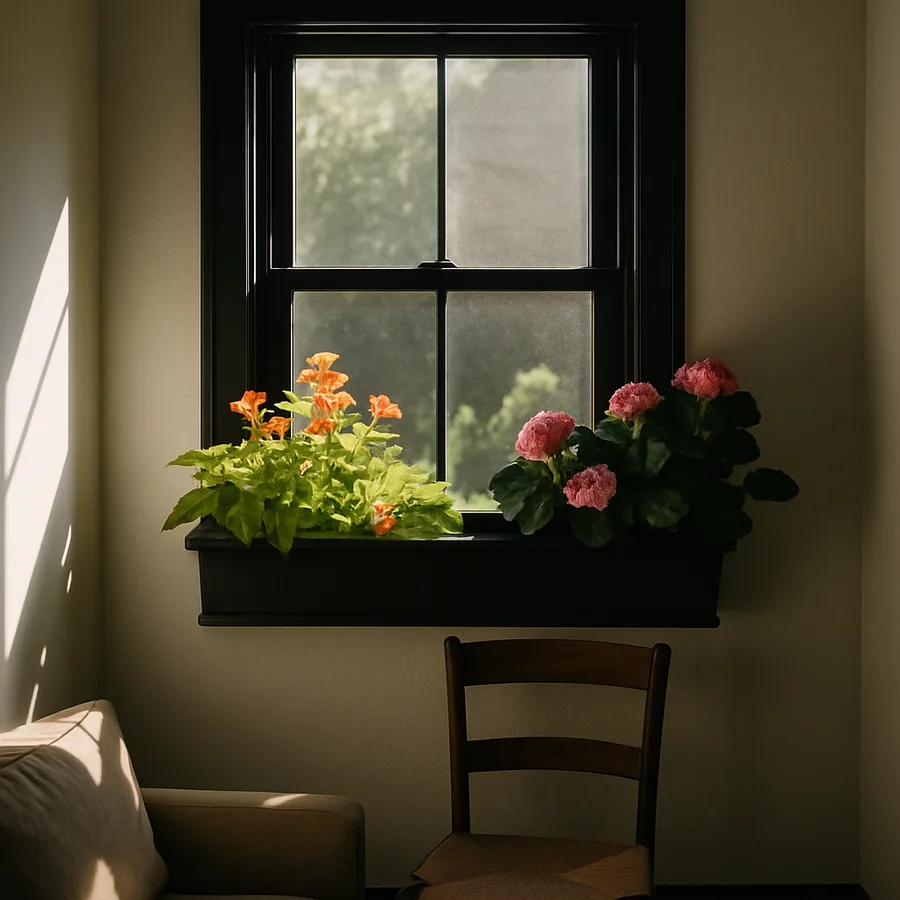
Most window box failures trace back to one decision made in five minutes at the garden center: the wrong plants for the light the box actually receives. A south-facing box in July gets a workout that would kill a shade-loving impatiens before the Fourth of July. A north-facing box in the same week is a dim, cool environment where a sun-hungry verbena will sulk all season and never flower properly. The plants want what they want, and a window box is too small a volume to forgive a mismatch.
The right plant combinations are not secret, but the reasoning behind them is rarely explained. Here is how to think through it as a sequence of practical questions.
How Do I Actually Measure The Light My Window Box Gets?
"Full sun" and "shade" mean specific things in horticulture, and most homeowners overestimate the sun their windows get. The standard definitions from the Royal Horticultural Society and most cooperative extension services: full sun means at least 6 hours of direct, unfiltered sunlight per day during the growing season. Part sun (or part shade) means 3 to 6 hours. Full shade means less than 3 hours of direct sun, though bright indirect light counts toward plant health even if it does not meet the direct-sun threshold.
The way to measure honestly is to set a timer and check the window in question every hour from 8 a.m. to 6 p.m. on a clear day in late June. Note which hours show direct sun hitting the wall and which show shadow. A box that gets direct sun from 10 a.m. to 2 p.m. is technically part sun (4 hours) even if it feels bright the rest of the day. That distinction matters when you are choosing between calibrachoa (full sun preferred) and torenia (part shade preferred).
One question that comes up constantly: does morning sun count the same as afternoon sun? No. Afternoon sun (1 p.m. to 5 p.m.) carries roughly 30 percent more heat load than morning sun of the same duration, because the wall and the soil have been warming all day. A west-facing box that gets four hours of afternoon sun is functionally a full-sun environment for purposes of plant stress, even though it technically reads as part sun. Reflected light off a light-colored wall or a nearby window can add another effective hour of sun exposure to the plants closest to the wall, which matters in tight urban settings where buildings face each other across a narrow gap.
Which Plants Genuinely Thrive In A South Facing Box?
A south-facing window box in July is a furnace. The wall reflects heat, the soil column is thin enough that root temperatures can hit 100 degrees by mid-afternoon, and the water demand is at the upper end of what container plants can sustain. The plants that actually thrive here are the ones evolved for Mediterranean or arid-climate conditions, not woodland natives.
The reliable performers: lantana, verbena (the trailing varieties), portulaca (moss rose), trailing rosemary, dwarf zinnia, Profusion-series zinnias, and ornamental peppers. These plants either store water in succulent tissues, have leaf coatings that reduce transpiration, or have root systems aggressive enough to keep up with peak demand. Petunias and calibrachoa work in full sun but need more attentive watering than the truly heat-adapted choices.
For a classic spiller-filler-thriller combination in full sun, the Iowa State University Extension (working from USDA hardiness zone data) has documented strong performance from a thriller of dwarf ornamental grass (such as Pennisetum 'Fireworks'), a filler of lantana, and a spiller of trailing verbena. This combination handles temperature swings well and maintains color saturation through August when most softer plants have given up.
What does not work in genuine full sun: impatiens (any variety), coleus (most varieties, though sun-tolerant lines exist), begonias, fuchsia, and most ferns. These will burn within two weeks of installation, regardless of how much water you provide.
What Are The Best Shade Box Combinations?
A north-facing box or one shaded by a porch overhang has the opposite problem: not too much light, but rarely too little. The plants that thrive here have evolved for forest-floor or understory conditions, which means they extract maximum value from low light and are sensitive to root heat from reflected sun.
The reliable shade performers: impatiens (especially New Guinea types), tuberous begonias, fuchsia, coleus, torenia, lobelia, and trailing ivy. These plants flower or maintain foliage interest in 3 hours of direct sun or less. The classic combination is a tuberous begonia thriller, a coleus filler with contrasting foliage, and a trailing lobelia spiller. The University of Vermont Extension has noted this combination as one of the most reliable for north-facing exposures in Zones 4 through 7.
One subtlety worth flagging: deep shade (less than 2 hours of direct sun, or only filtered light through tree canopy) is harder to plant than people expect. At that light level, most flowering plants will produce foliage but few flowers. The trick is to plant for foliage interest rather than bloom: caladium for color, fern for texture, English ivy for trailing. The flowers, if any, become a bonus rather than the focus.
Begonias deserve a specific note. Wax begonias tolerate part sun reasonably well; tuberous begonias want genuine shade and will burn at the first hot afternoon. The tags often do not distinguish, so ask at the nursery.
How Do I Handle A Part Sun Box That Changes Through The Day?
Part sun boxes are the most common and the trickiest. The box might get four hours of morning sun and then drop into deep shade by 1 p.m., or it might be dappled all day through a tree canopy. These conditions sit in the middle of most plant tags' tolerances, which sounds easy but actually means most plants will be slightly unhappy without ever clearly failing.
The strategy that works: pick plants rated for the more stressful of your two conditions. If the box gets four hours of hot afternoon sun followed by shade, treat it as full sun for plant selection. If it gets four hours of mild morning sun followed by shade, treat it as part shade and lean toward shade-tolerant choices.
The genuinely versatile plants for part sun: coleus (modern sun-tolerant varieties), torenia, browallia, dragon-wing begonia, and dwarf snapdragon. These maintain reasonable flowering or foliage performance across the 3 to 6 hour range without obvious stress at either end.
The American Horticultural Society's heat zone map adds useful nuance here. A part sun box in AHS Heat Zone 4 (cool summers) behaves very differently than the same exposure in Heat Zone 9. In cool-summer climates, even four hours of afternoon sun is manageable for shade plants. In hot-summer climates, the same exposure pushes them past their tolerance.
Can I Mix Sun And Shade Plants In The Same Box?
Generally, no, but with one practical exception worth knowing about. The exception: a box on the east side of the house where the back rim is shaded by the soffit or eave while the front rim catches morning sun. In that specific case, you can plant the back with shade-tolerant uprights (impatiens, begonia) and the front rim with part-sun spillers (torenia, trailing lobelia) and get a reasonable result.
The reason this works is that the light gradient across the depth of the box is real, and plants placed toward the front receive measurably more light per day than plants two inches back. Penn State Extension research on container microclimates has shown that the light differential across an 8-inch deep box can exceed 1.5 hours of direct sun equivalent when the box is positioned under an overhang.
One reader question that comes up reliably: what about mixing a sun-loving thriller with shade-loving spillers because the spillers will be shaded by the thriller's foliage? The reasoning sounds elegant and the result is usually disappointing. The shade-loving spillers cascade outward into full sun anyway and burn, while the sun-loving thriller does fine. Stick with same-light combinations within a single box, with the east-side eave exception noted above.
Where To Start
Before you visit the nursery, do the timer test on the actual window where the box will hang. Write down which hours had direct sun and which had shade. Carry that note into the nursery and use it to filter every plant choice. A tag that says "full sun" with 6+ hours required is non-negotiable. The plant will not adapt to your three-hour exposure no matter how cheerfully you treat it.
From there, the work is mostly about combining plants with matching light needs into a thriller-filler-spiller composition. Pick a thriller for vertical interest (upright, taller than the rim), a filler for mass (mounding habit, mid-height), and a spiller for cascade (trailing over the rim). Match all three to your measured light, and water at the rate the most demanding plant in the combination wants. By the second season you will have a sense of which combinations hold their look through August in your specific microclimate, and the planting becomes mostly a matter of refinement rather than guesswork.

Comments
Post a Comment