California Casual Style: Layered Neutrals and Natural Textures
California Casual Style: Layered Neutrals and Natural Textures
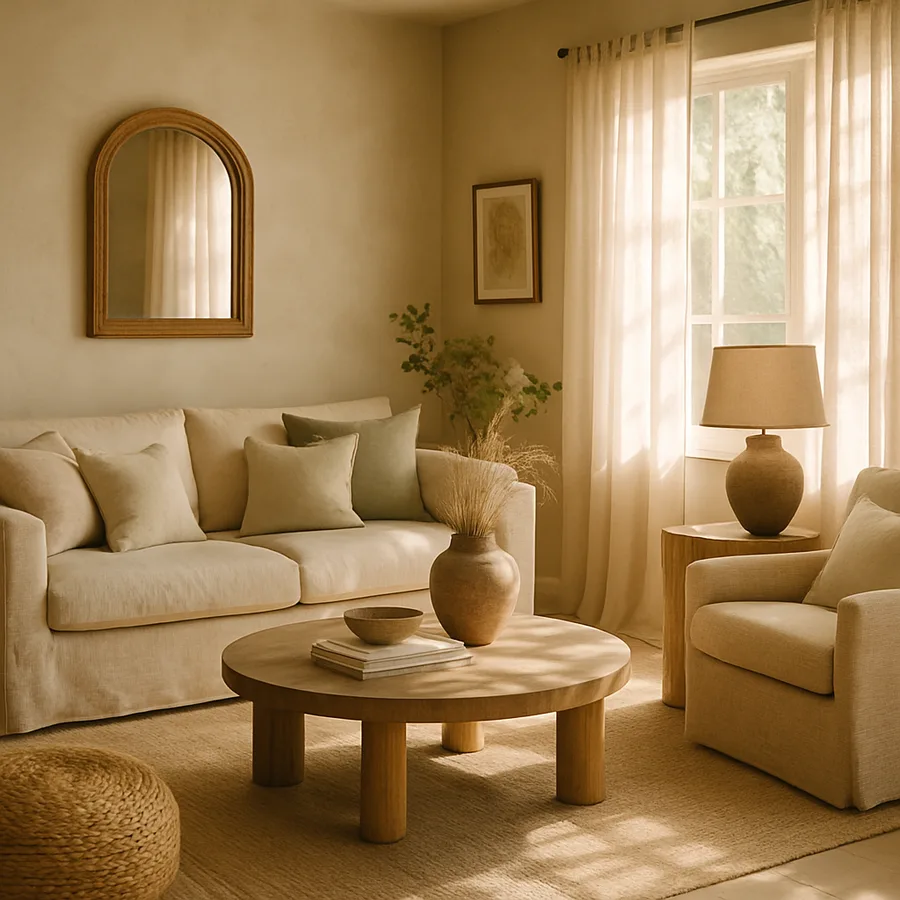
What Defines California Casual as a Design Language
California casual is more than a regional preference or a passing aesthetic moment. It is a fully developed design language built on the idea that a home should feel as relaxed as a Saturday morning while still looking intentionally composed. The style emerged from the intersection of midcentury modernism, coastal living, and the indoor-outdoor lifestyle that the state's climate makes possible year-round. Unlike more prescriptive design movements, California casual is defined more by feeling than by formula, which is both its appeal and its challenge.
At its core, this approach prioritizes comfort without sacrificing visual sophistication. A California casual room invites you to sit down, put your feet up, and stay awhile. The furniture is generously proportioned and deeply cushioned. The fabrics are soft, often slubby or nubby in texture, and chosen for how they feel against skin as much as how they look. The palette stays within the warm neutral spectrum, drawing from sand, stone, driftwood, and sun-bleached linen. The overall impression is one of effortless abundance, as if the room simply grew into this state rather than being decorated.
The American Society of Interior Designers (ASID) has tracked a sustained national interest in this style, with their trend reports showing that "relaxed sophistication" has ranked among the top three client-requested aesthetics for five consecutive years. This is not surprising. In a culture that increasingly values authenticity and wellbeing, a design approach that makes no apology for prioritizing physical comfort and emotional ease resonates broadly. You do not need to live in Malibu or Montecito to adopt this style; you need only commit to the principles that drive it.
What distinguishes California casual from other neutral-leaning styles, such as Scandinavian minimalism or Belgian linen-and-limestone interiors, is its warmth and abundance. Where those approaches tend toward sparseness and visual restraint, California casual is generous. Pillows are piled high. Throws are draped over every surface. Books, ceramics, and collected objects fill shelves and tabletops. The room looks abundant but not cluttered, comfortable but not sloppy. Achieving this balance is the central skill of the style.
Building a Layered Neutral Palette
The neutral palette in California casual design is not a single color repeated throughout a room. It is a carefully orchestrated layering of tones that creates depth, warmth, and visual movement without introducing strong chromatic contrast. Think of it as a landscape painting composed entirely of earth tones: the pale sand of a beach, the warm gray of weathered wood, the cream of raw cotton, the deep brown of sunbaked clay. Each tone is distinct, yet they all belong to the same family.
Start with the largest surfaces. Walls in this style typically wear soft whites with warm undertones, think Benjamin Moore's White Dove or Farrow and Ball's Pointing, rather than the cool, blue-white tones that dominated the previous decade. Floors are ideally wide-plank hardwood in a whitewashed or natural oak finish, though light-toned engineered wood or even polished concrete with a warm sealer work equally well. These base surfaces establish the lightest values in the room and create the open, airy feeling that is fundamental to the style.
The middle layer introduces warmth and dimension through upholstery, rugs, and curtains. This is where oatmeal linens, warm taupes, soft camels, and sandy beiges come into play. A large sectional sofa in a natural linen slipcover, a handwoven jute rug with a slight variation in fiber color, and unlined linen curtains that filter sunlight into a golden glow all contribute tones that are slightly deeper than the walls and floors. According to the National Kitchen and Bath Association (NKBA), natural fiber textiles in neutral tones have seen a 28 percent increase in specification rates across residential projects since 2023, reflecting this broader shift toward organic palettes.
The deepest tones arrive through accent pieces and grounding elements. A dark walnut coffee table, charcoal-toned throw pillows, matte black iron light fixtures, or a vintage leather armchair in a rich cognac shade provide the visual weight that prevents an all-neutral room from feeling washed out. These darker elements should comprise no more than fifteen to twenty percent of the room's visual area, just enough to anchor the composition without disrupting the overall lightness. Have you noticed how a single dark object in a pale room immediately draws your eye and gives the space a sense of depth? That is the grounding effect at work.
Natural Textures That Create Tactile Richness
In a room where color does minimal heavy lifting, texture becomes the primary source of visual interest and sensory engagement. California casual interiors are rich in tactile variety, combining rough and smooth, matte and slightly lustrous, coarse and fine in ways that keep the eye moving and the hands curious. This textural layering is what separates a successfully executed neutral room from one that simply looks beige and bland.
Woven natural fibers form the textural backbone of the style. Jute and sisal rugs introduce a coarse, earthy quality underfoot. Rattan and wicker furniture, whether vintage finds or new production, bring open weave patterns and organic curves. Linen upholstery and curtains contribute a distinctive slubby texture that catches light differently across its surface. Chunky hand-knit or hand-woven throws in raw wool or cotton add a sculptural, three-dimensional quality to sofas and beds. Each of these materials is visually quiet on its own, but together they create a symphony of surfaces that rewards close attention.
Wood is the other essential texture in this palette. California casual interiors typically feature wood in multiple forms and finishes within a single room. A live-edge walnut dining table, a pair of turned oak candlesticks, a stack of vintage cutting boards leaned against a backsplash, and a driftwood sculpture on a console table all introduce the grain, knot, and color variations that make wood endlessly interesting. The Better Homes and Gardens design team recommends mixing wood tones rather than matching them, noting that slight variations in wood color create a collected, lived-in quality that matching suites cannot achieve.
Ceramic and stone surfaces provide a counterpoint to all this organic softness. A handmade ceramic vase with a matte glaze, a marble tray on the coffee table, or a concrete planter on the windowsill introduces a cool, solid quality that balances the warmth of textiles and wood. The contrast between a rough linen cushion and a smooth stone object, or between a woven basket and a glazed ceramic bowl, creates the kind of sensory tension that makes a room feel alive. Without these harder elements, an all-textile room can feel too soft and shapeless.
Furniture Selection and Arrangement Principles
Furniture in a California casual interior should look like it was chosen over time rather than ordered from a single catalogue on a single afternoon. This collected quality comes from mixing eras, materials, and design lineages within a coherent tonal framework. A midcentury lounge chair in camel leather sits alongside a contemporary linen sofa. A rustic farmhouse dining table pairs with sleek, modern chairs. An antique wooden chest serves as a side table next to a brand-new floor lamp. The thread connecting these pieces is not period or style but rather color, proportion, and quality of materials.
Proportionally, California casual furniture tends toward the generous. Sofas are deep-seated and low-backed, inviting lounging rather than perching. Dining chairs have wide seats and often include upholstered cushions. Coffee tables are substantial, with enough surface area to hold books, candles, a tray of drinks, and a vase of greenery simultaneously. The overall scale communicates abundance and hospitality. This is furniture designed for gathering, for long evenings with friends, for Sunday afternoons spent reading on the sofa with nowhere to be.
Arrangement follows the principle of relaxed symmetry. Rather than formal, mirror-image layouts, California casual rooms use approximate balance. Two armchairs might flank a fireplace, but one is leather and one is linen, and they sit at slightly different angles. A pair of table lamps might occupy both ends of a console, but they are different heights and shapes. This almost-but-not-quite symmetry creates visual order without rigidity, which is the spatial equivalent of the style's dressed-down sophistication.
Traffic flow matters too. California casual rooms feel open and unobstructed, with clear paths between seating areas and generous space around furniture groupings. This openness supports the indoor-outdoor connection that is central to the lifestyle. When possible, seating areas orient toward windows, doors, or outdoor views. The American Society of Interior Designers recommends a minimum of 36 inches for primary traffic paths and 18 inches of clearance between coffee tables and sofa fronts, dimensions that California casual rooms often exceed for that extra sense of breathing room.
Bringing the Outdoors In Through Plant Life and Natural Light
No California casual interior is complete without a strong connection to the natural world, and the most immediate way to establish that connection is through abundant plant life. Large-scale greenery, a fiddle-leaf fig in a woven basket, an olive tree in a terracotta pot, a trailing pothos cascading from a high shelf, introduces a living, growing element that no amount of careful decorating can simulate. Plants bring color, movement, and the subtle freshness of oxygenated air to a room, and they reinforce the indoor-outdoor philosophy that underpins the entire style.
The containers matter as much as the plants themselves. Woven seagrass baskets, unglazed terracotta pots, hand-thrown ceramic planters in matte earth tones, and even simple galvanized metal buckets all contribute to the natural material vocabulary of the room. Glossy white plastic pots or overly decorative containers would introduce a note of artificiality that disrupts the organic feel. Grouping plants in odd numbers, typically three or five, at varying heights creates the most natural-looking arrangements. A tall tree, a medium tabletop plant, and a small trailing specimen on a nearby shelf form a composition that echoes how plants actually grow in nature, at mixed heights and densities.
Natural light is the other essential ingredient. California casual rooms are designed to capture and celebrate daylight, and window treatments are chosen to filter rather than block it. Unlined linen or sheer cotton curtains soften bright sun without eliminating it, casting the room in a warm, diffused glow that enhances every neutral tone in the palette. Where possible, windows remain uncovered entirely. According to research published by the American Institute of Architects, natural daylight exposure in residential spaces correlates with measurable improvements in occupant mood and sleep quality, which aligns perfectly with the wellness orientation of this design style.
Do you have rooms in your home that receive limited natural light? Even in darker spaces, the California casual approach can work beautifully. Warm-toned artificial lighting with color temperatures between 2700 and 3000 Kelvin simulates the quality of late-afternoon sunlight. Table lamps with linen shades, rattan pendant fixtures, and candles grouped on trays all provide the soft, warm illumination that this style requires. The key is to avoid overhead recessed lighting as the primary light source, which tends to flatten textures and create the kind of even, commercial illumination that feels at odds with the relaxed, residential atmosphere you are building.
Accessorizing With Restraint and Personal Character
The accessories in a California casual home are what transform a well-designed room into a personal one. Books, ceramics, collected objects, artwork, and small decorative items all contribute to the layered, lived-in quality that defines the style. But accessorizing in this context is not about filling every surface. It is about curating a collection of objects that each tell a story, whether that story is about a trip, a relationship, a creative interest, or simply an appreciation for a beautiful form.
Coffee table styling is a useful microcosm of the broader approach. A large-format art book or two, a small ceramic bowl holding a collection of sea glass or smooth stones, a candle in a natural vessel, and a low vase of cut branches or dried grasses form a classic California casual vignette. Each object is different in material, height, and shape, but they share a warm, organic quality that ties them together. The arrangement looks casual but has been considered. Objects are grouped rather than evenly spaced, and there is enough empty surface visible to prevent the table from looking crowded.
Wall art in this style leans toward the organic and abstract. Black-and-white landscape photography, botanical prints, abstract paintings in neutral and earth tones, and handmade textile art such as woven wall hangings or framed vintage textiles all work well. Gallery walls, when used, tend to be loosely arranged with generous spacing between frames rather than tightly packed in a grid. Frame materials are typically natural wood, thin black metal, or whitewashed finishes. The Houzz community regularly features California casual gallery wall arrangements as among the most saved and shared design images on the platform, indicating just how broadly this approach to wall decoration resonates.
The final layer is the purely functional object made beautiful. A hand-thrown mug holding wooden cooking spoons, a stack of linen napkins on an open kitchen shelf, a woven basket corralling blankets beside the sofa, or a wooden tray organizing bottles on a bathroom counter each serve a practical purpose while contributing to the room's visual story. In California casual design, the line between decoration and daily life blurs intentionally. The home is not a stage set to be admired but a working, breathing space that happens to look wonderful because everything in it was chosen with care.
Making California Casual Your Own
The beauty of California casual style lies in its adaptability. Whether you live in a beachfront cottage, a suburban ranch house, or a city apartment, the core principles of layered neutrals, natural textures, generous proportions, and relaxed arrangements translate across settings and scales. You do not need to gut-renovate your home to adopt this approach. Often, the most impactful changes are the simplest: swapping synthetic textiles for natural ones, replacing heavy window treatments with light-filtering linen, introducing a few substantial plants, and editing your accessories down to the pieces that genuinely bring you pleasure.
Start with one room and let the style evolve organically. Rather than purchasing everything at once, add pieces gradually as you find them. Visit flea markets, estate sales, and independent makers' studios to source items with the handmade or vintage character that gives this style its soul. The most compelling California casual interiors are those that have been built over months and years, not assembled in a single design-store shopping spree. Each piece carries a memory or a story, and those accumulated narratives give the room an authenticity that no catalogue can deliver.
Consider your own habits and daily rituals as design inputs. If you read every morning, make sure there is a deeply comfortable chair near a window with a side table for your coffee. If you cook for groups, invest in a dining table large enough to seat everyone generously. If you spend evenings on the sofa, pile it with the softest throws and the most supportive cushions you can find. California casual design is, at its heart, a practice of paying attention to how you actually live and then shaping your space to support that life with warmth, beauty, and ease.
Sign up for our weekly design digest to receive room-by-room California casual styling guides, curated product picks, and exclusive interviews with the designers shaping this movement. Your most relaxed, most beautiful home is not a destination to arrive at but a process to enjoy, one layered neutral and one natural texture at a time.


Comments
Post a Comment