Smart Doorbell Hardwired Versus Battery Operated Pros And Cons
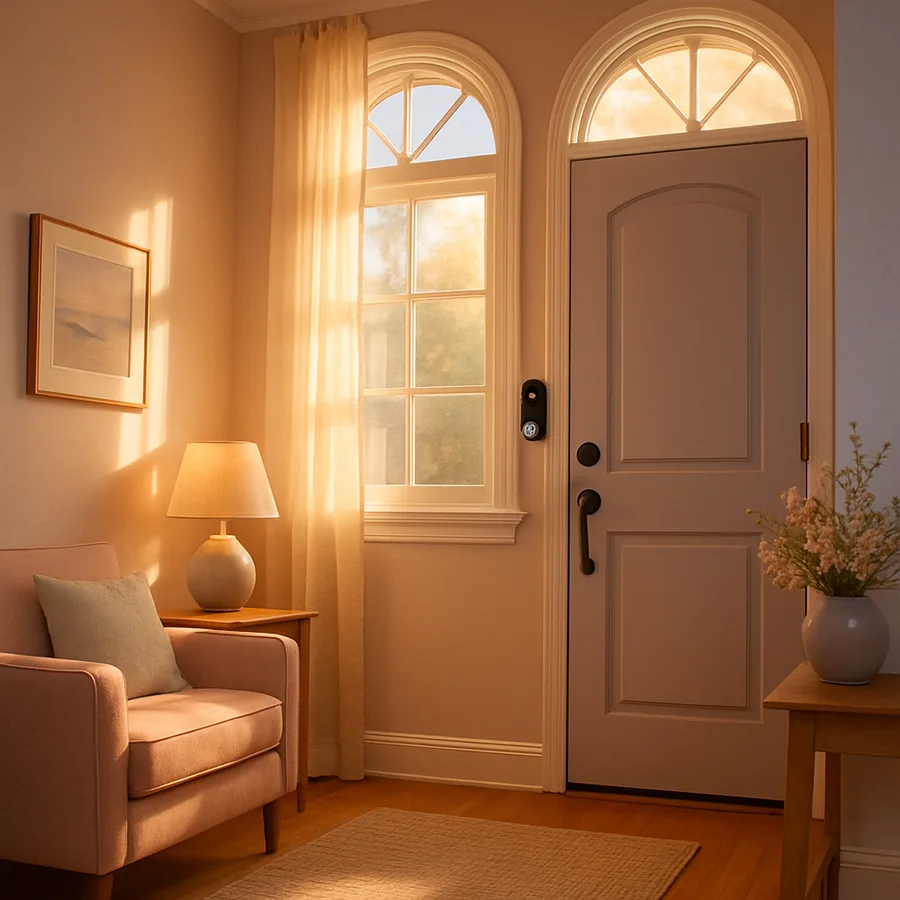
Smart doorbells transformed from a niche tech gadget to a default homeowner expectation in roughly a decade. According to NPD Group consumer electronics data, more than 28% of US single-family homes had installed a smart doorbell by the end of 2024, up from less than 5% in 2018. The category leaders, Ring, Nest, Arlo, and Eufy, all sell competing models in two distinct configurations: hardwired units that draw power from the existing low-voltage doorbell wiring, and battery-operated units that run entirely on rechargeable lithium packs. The hardware looks similar, the apps function nearly identically, and the marketing materials emphasize the same features, but the practical experience of living with each is significantly different.
Choosing the wrong configuration for your home leads to dropped notifications, dead batteries during critical moments, or an expensive installation that does not match the wiring conditions in the wall. Choosing the right one means a doorbell that quietly works for years, alerts you when packages arrive, and integrates cleanly with the rest of the smart home ecosystem. The decision hinges on the wiring, the climate, the use pattern, and a handful of factors that the marketing copy never quite spells out.
How Hardwired Doorbells Actually Work
A hardwired smart doorbell connects to the same 16 to 24 volt AC transformer that powered the original mechanical chime in your house. The transformer is typically mounted in the basement, attic, or near the electrical panel and steps down the 120V house voltage to the low-voltage signal that drives the chime. Doorbell wiring is governed by Article 725 of the National Electrical Code, which classifies low-voltage doorbell circuits as Class 2, meaning the wiring is generally exempt from the conduit and outlet box requirements that apply to standard 120V circuits. The National Fire Protection Association publishes NEC Article 725 with full details on the classification.
The smart doorbell intercepts this low-voltage circuit, draws continuous power for its camera, WiFi radio, motion sensor, and onboard processor, and uses the existing chime as the audible alert. Some models include a small in-line power module or "Pro Power Kit" that supplements the transformer output if the existing wiring cannot reliably deliver enough current. Most modern smart doorbells require at least 8 VA of transformer capacity, while older homes built before 1990 often have only 5 VA transformers that need an upgrade for reliable operation.
The advantages are continuous power, no batteries to swap, and seamless integration with the existing house chime. The trade-off is the installation complexity, which requires shutting off power at the breaker, splicing into the existing wires, and verifying compatibility with the transformer and the indoor chime unit. Mechanical chimes generally work with hardwired smart doorbells; digital chimes often require a separate jumper kit to bypass the chime electronics, which can be a sticking point in older homes with proprietary chime hardware.
How Battery-Operated Doorbells Actually Work
A battery-operated smart doorbell uses a rechargeable lithium-ion battery pack, typically 6000 to 8000 mAh, that powers all the electronics independently of any house wiring. The doorbell mounts to the wall or door frame with screws or adhesive, and a companion WiFi-enabled chime unit plugs into any wall outlet inside the house to provide the audible alert. When someone presses the button, the doorbell wirelessly signals the chime over WiFi or a proprietary 900 MHz radio link.
Battery life varies enormously based on use patterns, weather, and detection sensitivity settings. Manufacturers advertise three to six months between charges, but real-world data from product review aggregators like Wirecutter and Consumer Reports suggests that heavily-used doorbells in busy households need recharging every 6 to 10 weeks. Cold weather is especially hard on lithium chemistry: a battery that lasts four months in San Diego may need recharging every six weeks in Minneapolis between December and February.
The advantage is installation simplicity. No electrician, no breaker access, no transformer compatibility check. Mount the unit, charge the battery, connect to WiFi, done. The trade-offs are the recharging routine (which means physically removing the doorbell from the wall every six to twelve weeks), the WiFi-dependent chime architecture, and the risk of the battery dying overnight during a critical moment like an expected package delivery or a security incident.
Power Reliability And Weather Considerations
Power reliability is where hardwired and battery configurations diverge most significantly. A hardwired doorbell stays online 24/7 as long as the house has power. The transformer keeps the unit charged, the camera continuously monitors motion, and notifications arrive within one to three seconds of a button press or detected motion. The only failure mode is a tripped breaker or a transformer failure, both of which are rare in modern residential wiring.
Battery-operated doorbells go offline when the battery depletes, and the depletion is not always predictable. Cold snaps can drop battery capacity by 30 to 50% temporarily, and high-traffic days with dozens of motion alerts can drain a battery from 80% to 20% in 48 hours. Have you ever had a delivery driver press the doorbell while you were out, only to find the notification never arrived because the battery died that morning? This is the most common complaint reported in product reviews and forum discussions.
Weather sealing is similar between the two configurations. Most modern smart doorbells carry IP54 or IP65 ratings, meaning they resist dust and water spray well enough for outdoor mounting in any climate. The difference is operating temperature range. Battery-operated units typically specify operating temperatures from -5 F to 120 F, while hardwired units extend this to -20 F to 120 F because they do not depend on lithium chemistry that loses capacity in extreme cold. For homeowners in International Falls, Minnesota or Caribou, Maine, hardwired is the practical choice if reliable winter operation matters.
Direct sunlight exposure on south-facing or west-facing entries also affects long-term reliability. Heat accelerates lithium degradation, and a battery-operated doorbell in full afternoon sun on a 95-degree day can reach internal temperatures of 130 F or more. Over multiple summers, this thermal stress reduces battery capacity faster than calendar aging would suggest. Hardwired units are similarly affected by heat for the camera sensor and processor, but they do not lose runtime because the transformer continuously supplies power. Mounting the doorbell under a porch overhang or with a small awning extends the service life of either configuration, with battery models benefiting more from the protection.
WiFi Quality And Network Architecture
Both configurations depend on WiFi for the cloud features (motion alerts, video storage, app notifications, two-way audio), but the failure modes differ. A hardwired doorbell with poor WiFi will reboot more aggressively when it loses connection because it has continuous power to do so. A battery-operated doorbell with poor WiFi will burn through battery life rapidly because the radio is the largest power draw, and reconnection attempts compound the drain.
Smart doorbells typically need WiFi signal strength of -65 dBm or better at the install location for reliable operation. Homes with the router on the opposite side of the house from the front door often fail this threshold without a mesh extender or a WiFi access point closer to the entry. Eero, Google Nest WiFi, and TP-Link Deco all sell mesh systems that resolve this signal coverage gap for $200 to $400 depending on the home size.
The bandwidth load is modest, typically 1 to 4 Mbps during active recording and minimal when idle, so any modern home internet connection can support the doorbell along with normal browsing and streaming. The bottleneck is almost always the WiFi signal at the install location rather than the broadband speed at the gateway. Network engineers from the FCC have noted in residential broadband studies that approximately 18% of US homes have at least one outdoor smart device with substandard signal coverage.
Integration With Indoor Chimes And Other Devices
Hardwired smart doorbells preserve the original mechanical or digital chime inside the house, so the audible "ding-dong" continues to work as it did before the upgrade. This matters for households with members who do not carry smartphones, or rooms of the house where phone notifications would not be heard. The mechanical chime is a reliable, familiar signal that does not depend on WiFi, batteries, or notification settings.
Battery-operated systems rely on a plug-in WiFi chime unit, which works as long as the chime is plugged in, connected to WiFi, and within range of both the router and the doorbell. The chime can be placed anywhere in the house with an available outlet, which is more flexible than a hardwired chime location, but it adds another point of failure to the system. Forum reports suggest that intermittent chime disconnections account for an estimated 12% of customer support contacts on battery-operated smart doorbell models.
Smart home integration is similar between both configurations. Ring works with Amazon Alexa, Nest with Google Home, Arlo with both, and Apple HomeKit compatibility varies by model and firmware version. Have you been planning to integrate the doorbell with smart locks, indoor cameras, and lighting routines? Both configurations support these integrations equally, with the integration quality depending on the brand's app and platform support rather than the power source.
Installation Considerations And Code Compliance
Hardwired installations involve splicing into low-voltage circuits, which most jurisdictions allow as a DIY task because the voltage is below the 50V threshold for electrical permits in residential construction. However, accessing the wires often requires removing the existing doorbell button, checking the transformer voltage with a multimeter, and verifying chime compatibility. Total DIY time runs 45 to 90 minutes for a competent homeowner with basic tools.
For homes built before 1985, the doorbell transformer may not meet the current draw requirements of a modern smart doorbell. Upgrading the transformer to 24V/30VA is straightforward for a licensed electrician (typically $150 to $250 including parts) and is the most common professional service call associated with smart doorbell installation. Some manufacturers will void warranty coverage if the transformer is undersized, so verify the spec before mounting.
Battery-operated installations are simpler and require no electrical knowledge. A drill, two wall anchors, and a screwdriver are usually sufficient. Mounting on brick or stucco requires a masonry bit and longer anchors but is still within most homeowners' skill range. Total DIY time runs 15 to 30 minutes including app setup. Rental tenants can install battery-operated doorbells without landlord permission in most cases, while hardwired installation typically requires written approval because it modifies the existing wiring.
Choosing The Right Smart Doorbell For Your Home
For homes with functional existing doorbell wiring, a working transformer, and a permanent occupancy plan, hardwired is the more reliable long-term choice. The continuous power eliminates the recharging routine and produces faster, more consistent notifications. Models like the Ring Pro 2, Nest Doorbell Wired, and Arlo Essential Wired all offer hardwired-only configurations that simplify the buying decision when you know your home can support them.
For renters, condo owners with restrictions on wiring modifications, or homeowners whose existing doorbell wiring is unreliable or absent, battery-operated is the practical choice. Models like the Ring Battery Doorbell Plus, Nest Doorbell Battery, and Eufy Video Doorbell Dual all run independently of house wiring and can be installed in under thirty minutes. Stock a spare battery pack ($25 to $40) so that you can swap and recharge rather than waiting hours offline during a recharge cycle.
For homes in extreme climates, particularly the upper Midwest, northern New England, and high-altitude western states, hardwired is the more dependable option through winter. The cold-weather battery drain on battery-operated units can require monthly recharging at -10 F, and the unit may simply shut down at sustained temperatures below the rated operating range. Industry data from the Consumer Technology Association suggests that warranty claims for cold-weather battery failure on smart doorbells are three times higher in northern states than in southern states. Privacy-conscious buyers should also weigh where video data is stored, who can access it under what circumstances, and whether the brand has a clear policy on warrant compliance and audit logging. The Electronic Frontier Foundation maintains a regularly updated comparison of smart doorbell privacy policies that is worth reviewing before committing to an ecosystem.
Consider the subscription cost as a long-term factor in the total cost of ownership. Most major brands include basic motion detection and live video for free but charge $4 to $15 per month for cloud video recording, smart alerts that distinguish people from packages, and extended event history. Across a five-year ownership window, the subscription cost can exceed the initial hardware cost by a factor of two or three. Brands like Eufy and Aqara offer local-storage models that avoid recurring fees entirely, trading some convenience features for ownership simplicity.
If you go battery-operated, set a calendar reminder for the first recharge cycle based on the manufacturer's estimate. Most users find their actual recharge interval within the first six weeks of ownership, and recording that interval in a household maintenance log keeps surprises off the calendar. Pair the recharge routine with another regular task, like changing HVAC filters, to make it a habit rather than a chore.
Ready to add a smart doorbell to your front entry? Verify your existing doorbell wiring with a multimeter, check the transformer voltage and capacity, and pick the configuration that matches the realities of your home and your tolerance for routine maintenance. The right doorbell quietly works for years; the wrong one becomes a recurring source of frustration and missed deliveries. A thirty-minute decision now saves the weekly battery anxiety of an unsuitable choice later.
More Articles You May Like



Comments
Post a Comment