
Solar Roof Tiles Versus Traditional Panels Compared
Solar Roof Tiles Versus Traditional Panels Compared
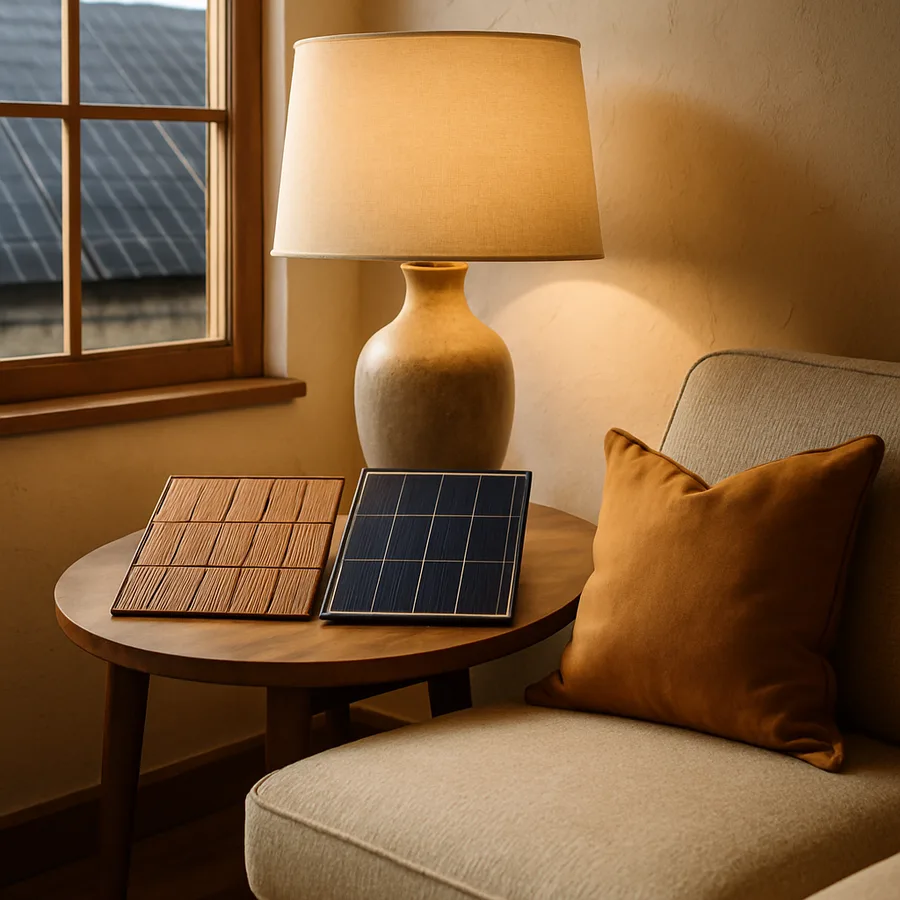
Residential solar has matured to the point where homeowners no longer face a binary choice between going solar or staying on the grid. The newer question is which solar product makes sense for a particular home, and the divide that matters most is between integrated solar roof tiles and traditional rack-mounted photovoltaic panels. The two technologies share fundamental science but diverge sharply in cost, installation complexity, aesthetic integration, and long-term economics.
Solar roof tiles, sometimes called solar shingles or building-integrated photovoltaics, replace conventional roofing materials with photovoltaic units that double as weather protection. Traditional panels mount on racking systems above an existing roof, typically asphalt shingles or metal panels. The choice between them is not purely technical, it touches roof condition, architectural style, local incentives, and how long the homeowner expects to remain in the property. This comparison walks through the dimensions that matter most so you can match the technology to your particular situation.
How The Two Technologies Actually Differ
Traditional solar panels are rigid modules typically measuring around 3.25 by 5.4 feet, containing 60 to 72 silicon photovoltaic cells laminated under tempered glass with an aluminum frame. They mount on stainless steel racking that attaches to the roof through flashed penetrations. The panel itself never touches the underlying roofing material directly, and the entire array can be removed and reinstalled if the roof needs replacement.
Solar roof tiles integrate the photovoltaic cells directly into roofing-sized units that interlock with each other and with non-photovoltaic tiles to form a complete weather barrier. Different manufacturers use different cell technologies, including monocrystalline silicon, thin-film, and hybrid configurations. Tesla, GAF Energy, CertainTeed, and several international manufacturers all sell distinct product lines, and the performance characteristics vary meaningfully between them.
The functional difference that matters most is that traditional panels are roof-mounted, while tiles are roof-integrated. That single distinction cascades into every other comparison point: cost, installation timeline, warranty structure, aesthetic impact, and replacement strategy when the underlying roof needs work. Are you adding solar to an existing roof in good condition, or are you reroofing anyway? That question alone often determines which technology makes economic sense.
Efficiency And Energy Production Realities
Traditional panels currently lead on raw efficiency. Premium residential panels from manufacturers like SunPower and REC routinely deliver 22 to 23 percent module efficiency, with mainstream products in the 19 to 21 percent range. Solar tiles, constrained by the need to function as roofing as well as generation, typically deliver 14 to 19 percent module efficiency, with the gap narrowing as tile technology matures.
Per square foot of roof area, traditional panels produce roughly 15 to 25 percent more electricity than current solar tiles. On a home where roof area is plentiful and aesthetics are not a critical concern, this efficiency advantage can be decisive. On smaller roofs or those with complex geometry that limits usable panel area, the efficiency gap may not actually matter because total system output is constrained by available racking space, not by per-square-foot performance.
The National Renewable Energy Laboratory publishes detailed performance comparisons and notes that real-world output depends heavily on orientation, tilt, shading, and inverter quality. A south-facing roof in Arizona will outperform a southeast-facing roof in Vermont with either technology, but the relative gap between tiles and panels remains roughly consistent across geographies. Production estimates from any installer should be backed by site-specific modeling, not generic regional averages.
Installation Cost And Timeline Comparison
Traditional solar panel systems for an average home currently install for $2.80 to $3.80 per watt before incentives, according to U.S. Department of Energy tracking data, putting a typical 8 kilowatt system at $22,400 to $30,400 installed. Installation timelines run two to four days for the rooftop work itself, plus several weeks for permitting and utility interconnection.
Solar tile systems run substantially higher, typically $5.00 to $8.00 per watt for the photovoltaic generation alone, with total project costs that include reroofing the entire surface in either active or non-active matching tiles. A complete solar tile installation on a 2,500 square foot roof can range from $50,000 to $100,000 or more, with installation timelines extending one to three weeks. The numbers look intimidating compared to traditional panels, but the comparison is misleading if the homeowner needed a new roof anyway.
For homeowners with a roof at end of life, the relevant comparison is solar tiles versus the combined cost of new asphalt plus traditional panels. In that scenario, solar tiles can be cost-competitive, especially with current federal tax credits that cover 30 percent of the photovoltaic portion under the Residential Clean Energy Credit. For homeowners with a roof that has 15 plus years of remaining life, traditional panels almost always win the cost comparison decisively.
Aesthetic And Architectural Integration
Aesthetics is where solar tiles have their strongest case. Integrated tiles look like roofing because they are roofing, with most modern systems offering profiles that mimic slate, shake, or composition shingles at normal viewing distances. Homeowners in historic districts, planned communities with strict design covenants, or simply those who object to the appearance of mounted panels often find tiles to be the only acceptable option.
Traditional panels have improved aesthetically over the past decade. All-black panels with black frames and concealed wiring present a much more cohesive appearance than the silver-framed, blue-cell panels of a generation ago. Low-profile racking systems sit closer to the roof, and microinverters under each panel eliminate the bulky string inverters that used to dominate garage walls. Still, even a well-installed traditional array remains visibly something added to the roof rather than part of it.
The architectural integration question matters more on some homes than others. A modernist home with clean rooflines and large unbroken expanses can accept traditional panels gracefully. A complex Victorian, a Tudor revival, or a Mediterranean home with strong roofing character often loses visual coherence under traditional panels in ways that integrated tiles avoid. Have you walked your block and noticed how mounted arrays read against your home's particular roofing style? That observation often clarifies preferences faster than any specification sheet.
Warranty Structure And Long Term Risk
Traditional panels typically carry 25 year production warranties guaranteeing 80 to 87 percent of original output at year 25, plus 10 to 25 year product warranties covering manufacturing defects. Inverter warranties run 10 to 25 years depending on technology, and racking systems carry their own structural warranties. These warranties are largely independent of the underlying roofing material, which carries its own separate warranty.
Solar tile warranties are more complex because the product serves two functions simultaneously. Most manufacturers offer 25 year power production warranties matching traditional panels, plus weather protection warranties of 25 to 50 years for the roofing function. The complexity arises when a single failed component needs replacement, which may require pulling adjacent tiles and may not be covered consistently across both warranty domains. Reading the fine print before signing is essential.
The long-term risk profile differs in another important way. Traditional panels can be removed and reinstalled if the underlying roof needs replacement, typically at a cost of $1,500 to $3,500 for removal and reinstallation. Solar tiles cannot be repurposed if the underlying deck needs work, and individual tile failures may not be repairable years later if the manufacturer has discontinued the product. The National Association of Home Builders has published industry guidance recommending careful warranty review before committing to integrated systems.
Maintenance Patterns And Service Life
Both technologies require minimal day-to-day maintenance. Annual visual inspections, periodic cleaning if local dust or pollen accumulates heavily, and monitoring system output through manufacturer apps comprise the typical homeowner workflow. The differences emerge in repair scenarios and end-of-life planning.
Traditional panels can be individually replaced by any qualified solar contractor, and replacement panels are widely available from multiple manufacturers in standard sizes. Microinverter or optimizer failures are isolated to single panels and do not affect the rest of the array. When panels reach end of life after 25 to 30 years, the racking and electrical infrastructure often remain serviceable and can host replacement modules with minor adjustments.
Solar tiles are typically proprietary to their manufacturer, and replacement components depend on continued product availability. A homeowner installing tiles today is betting that the manufacturer will still support the product line in 15 or 20 years, which is a meaningful risk given the consolidation activity in the solar industry. Service technicians for tile systems are also less common than for traditional panels, particularly outside major metro areas. These considerations do not disqualify tiles, but they should factor into the decision alongside upfront cost and aesthetics.
Incentives Permitting And The Decision Timeline
Federal incentives currently favor both technologies equally through the Residential Clean Energy Credit, which covers 30 percent of qualifying solar installation costs through 2032 before stepping down in subsequent years. State and utility incentives vary widely, and some jurisdictions offer additional rebates for roof-integrated systems that count toward both solar and re-roofing categories. Researching local incentive stacking before committing to either technology can shift the net cost calculation by thousands of dollars in either direction.
Permitting timelines differ as well. Traditional panel installations typically clear permitting in two to six weeks in most jurisdictions, while integrated tile systems sometimes encounter longer review cycles because building officials are less familiar with their dual-function approval pathway. Working with installers experienced in your specific jurisdiction shortens these timelines substantially, and asking for references from completed projects in your municipality is the simplest way to verify that experience.
Decision timing matters too. Solar technology continues to improve, with newer cell chemistries and inverter designs reaching residential markets every few years. Homeowners who can wait without losing meaningful incentives often see better products at lower costs by deferring a year or two, but those nearing the end of expiring incentive windows or facing imminent roof replacement should not let perfect become the enemy of good. Are you in a position to wait for next-generation technology, or does your roof condition or incentive window require action this season? That timing question often clarifies the decision more than any technical comparison can.
Conclusion
The decision between solar roof tiles and traditional panels depends on a combination of roof condition, architectural style, budget, aesthetic priorities, and tolerance for long-term proprietary product risk. Traditional panels remain the clear economic winner for most homeowners with serviceable existing roofs, offering higher efficiency, lower cost, easier maintenance, and broader installer support. They are the right choice for homeowners optimizing for energy production per dollar invested.
Solar tiles make the strongest case in three specific scenarios: when the roof needs replacement anyway, when local aesthetic requirements rule out mounted arrays, and when the architectural value of the home depends heavily on roofing character that traditional panels would disrupt. In these cases, the premium pays for integrated weather protection plus generation in a visually cohesive package that traditional panels cannot match.
Before committing to either technology, gather at least three quotes specifying production estimates based on site-specific shading analysis, complete warranty documentation, financing terms including any solar lease or power purchase agreement details, and references from installations completed at least five years ago. The five-year reference matters because it reveals how each installer and product line ages in real conditions rather than how it performs on the brochure. Whichever path you choose, the right time to commit is when the numbers, aesthetics, and long-term plans for the home all align rather than when a salesperson presents a limited-time discount.
Solar adoption is no longer the leap into uncertainty it was a decade ago, but the choice between integrated tiles and traditional panels is more nuanced than the marketing for either technology suggests. Spending a few additional weeks gathering quotes, talking to recent installations in your area, and modeling your specific case with rigorous numbers consistently pays off in better outcomes than rushing to a decision. The technology will continue improving, the incentives will continue evolving, and the right system for your home is the one that fits your roof, your budget, your aesthetic priorities, and your long-term ownership plans rather than the one that happens to dominate the marketing in any given season.


Comments
Post a Comment