Metal Roof Standing Seam Versus Corrugated Comparison
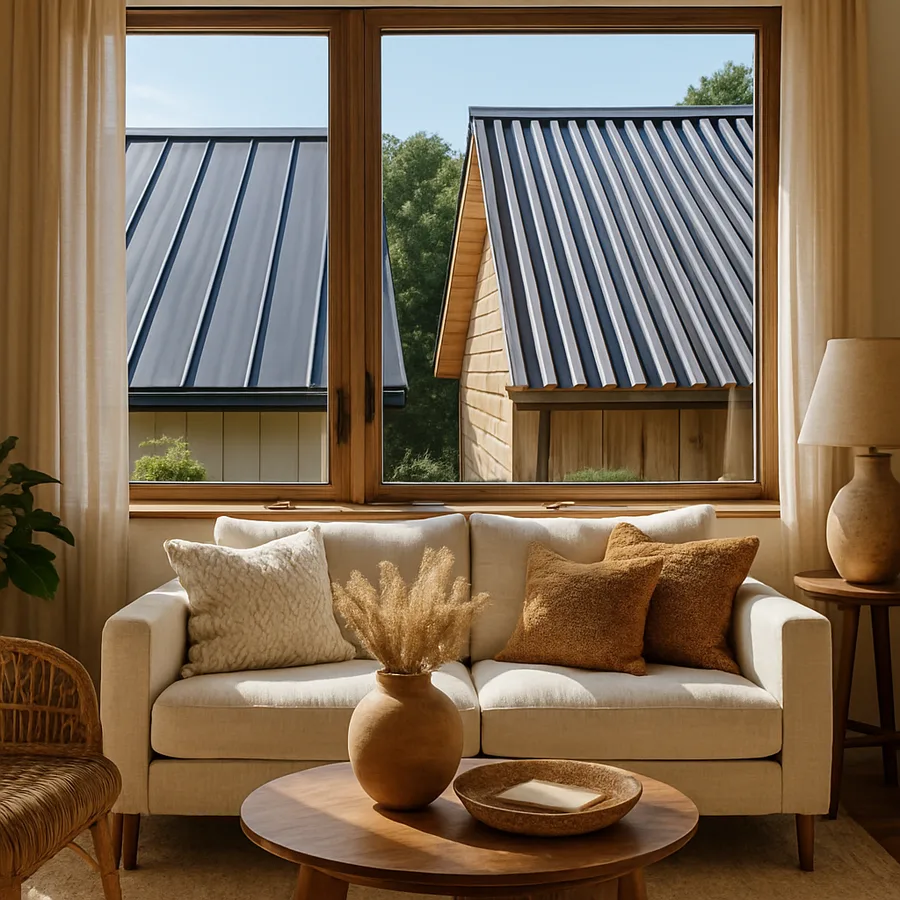
Metal roofing has shed its old reputation as something only seen on barns, industrial sheds, and rural farmhouses. Walk through any architect-designed neighborhood built in the last decade and you will see metal panels in every imaginable color, from bone-white to deep matte black, finished with paint systems that hold their color for forty years and engineered to handle hurricane-force winds without missing a panel. Within the metal roofing category, two profiles dominate residential conversations: standing seam, with its raised vertical ribs and concealed fasteners, and corrugated, with its rolling sinusoidal or trapezoidal waves and exposed fasteners. Both are made of steel, aluminum, or occasionally copper, and both can last fifty years or more, but they differ enormously in cost, installation difficulty, leak risk, and visual character. Picking between them is one of the most consequential decisions in a metal-roof project.
How The Two Metal Roof Systems Are Built
Standing seam metal roofs consist of long, narrow panels, typically 12 to 18 inches wide, that run from ridge to eave in a single uninterrupted piece. The edges of each long narrow panel are folded upward and mechanically joined to the next panel through a continuous raised vertical seam that conceals the fasteners completely from view. The most common attachment method uses concealed clips that snap or mechanically lock under the seam, allowing the panels to expand and contract with temperature changes without putting stress on the fasteners. The result is a sleek, modern profile with no visible screws and no penetrations through the weather plane.
Corrugated metal roofs, by contrast, use shorter, wider panels (often 26 to 36 inches wide) with formed waves or ribs that provide stiffness. The panels are fastened directly through the face into the roof structure using exposed gasketed screws, typically spaced every 12 to 24 inches across the panel. The corrugations themselves provide channels that direct water down the slope, and the gasketed screws are designed to seal around their own penetrations. This is fundamentally a simpler system that has been used for over a century, with roots in 19th-century industrial buildings and rural agricultural construction.
Lifespan And Long-Term Durability
Both metal roof types significantly outlast asphalt shingles, but they age differently. A properly installed standing seam roof typically delivers 50 to 70 years of service life, with the limiting factor usually being the paint system rather than the metal itself. Premium Kynar 500 paint finishes, also marketed as PVDF coatings, carry 30 to 40-year fade and chalk warranties and routinely outlast that rating in real-world conditions. The metal substrate, whether Galvalume steel or aluminum, typically lasts longer than the paint, and a faded standing seam roof can sometimes be repainted in place rather than replaced.
Corrugated metal roofs typically deliver 30 to 50 years of service life, with the limiting factor being the gasketed screws rather than the metal. The neoprene or EPDM gaskets that seal the screw penetrations degrade under UV exposure and thermal cycling, typically requiring replacement every 15 to 25 years. Skipping that maintenance is one of the most common causes of premature corrugated roof failure, leading to slow leaks at hundreds of fastener points that eventually rot the underlying sheathing. The National Roofing Contractors Association publishes detailed guidance on metal roof maintenance schedules that homeowners often overlook until problems emerge.
Wind, Hail, And Storm Performance
Standing seam metal roofs are widely regarded as the gold standard for severe weather performance. Quality systems carry wind uplift ratings of 140 to 180 mph and many qualify for UL 580 Class 90 ratings, the highest category. The concealed clip attachment system distributes wind loads across the entire panel rather than concentrating them at individual fastener points, which dramatically reduces the risk of panel loss in extreme wind events. The Insurance Institute for Business and Home Safety has documented strong performance for standing seam systems in hurricane testing and includes them in the FORTIFIED Roof program.
Corrugated metal performs well in moderate wind conditions but is more vulnerable to fastener failure in extreme events. When wind uplift forces exceed the gasket strength or pull screws out of compromised sheathing, panels can lift and peel back, sometimes taking adjacent panels with them. Hail performance is broadly similar between the two systems: both can dent under large hail but rarely fail catastrophically, and most metal roofs carry UL 2218 Class 4 impact ratings that qualify for significant insurance discounts in hail-prone states. Have you checked whether your insurance carrier offers premium reductions for metal roofs in your zip code? Discounts of 20 to 35 percent are common in Colorado, Texas, Oklahoma, and other hail-belt states.
Cost Comparison And Installation Complexity
The cost gap between the two systems is substantial. Corrugated metal roofs typically run $4 to $8 per square foot installed, depending on metal type, gauge, and panel coating. Standing seam roofs typically run $9 to $16 per square foot installed, with premium copper or zinc systems pushing well above $20 per square foot. On a typical 2,200-square-foot roof, the choice between corrugated and standing seam might represent a $10,000 to $20,000 difference, which is enough to make many homeowners pause before committing.
The cost gap reflects real differences in material and labor. Standing seam panels are typically roll-formed on site from coil stock using a specialized machine, allowing seamless full-length panels with no horizontal laps. The installation requires precision in clip placement, seam crimping, and flashing detail at every penetration. Corrugated panels arrive pre-cut from the supplier, install with standard tools, and forgive minor errors that would be visible on a standing seam roof. A skilled three-person crew can often install a corrugated roof in two to three days, while a comparable standing seam installation might take five to seven days. The National Association of Home Builders tracks labor costs across regions and consistently shows the metal-roofing labor premium for standing seam in every major market.
Aesthetics And Architectural Fit
Visual character is one of the strongest drivers of the standing seam versus corrugated decision, and the right choice depends heavily on architectural style. Standing seam roofs read as contemporary, refined, and intentional. The clean vertical lines, lack of visible fasteners, and crisp ridge details suit modern farmhouse designs, mid-century revival projects, urban infill homes, and any architecture where minimalism is part of the design language. The flat panel surfaces between seams create generous canvases that emphasize the building's geometry rather than competing with it.
Corrugated roofs read as rustic, industrial, or agricultural depending on the context. On a true farmhouse, a workshop, a barn, or a cabin in the woods, corrugated metal looks right at home and contributes to the character of the building. On a contemporary suburban home, the same panels can feel jarring or out of place. The R-panel profile, a slightly more refined trapezoidal version of corrugated, has gained popularity as a middle ground that offers exposed-fastener economy with a less rustic appearance. Have you considered driving through your target neighborhood to see which metal roof styles are already established? Matching the prevailing aesthetic often delivers stronger curb appeal than introducing a style that doesn't fit the context.
Leak Risk And Maintenance Reality
Standing seam roofs have a major structural advantage in leak risk because they have no penetrations through the waterproof plane. Every fastener is concealed under the raised seam, protected from UV exposure, thermal cycling, and water exposure. Properly installed, a standing seam roof has essentially no failure points other than penetrations for vents, chimneys, and skylights, all of which require carefully detailed flashing regardless of roof type. The maintenance burden is typically limited to annual debris clearing from valleys and gutters.
Corrugated roofs accept hundreds or even thousands of fastener penetrations through the weather plane, each one sealed by a gasket that is degrading from the moment it is installed. A 2,200-square-foot corrugated roof might have 2,500 to 4,000 individual screws, and any one of them eventually becoming compromised can leak. Maintenance involves regular inspection of fastener seals, replacement of degraded gaskets, and tightening of screws that have backed out due to thermal cycling. The International Code Council through the IRC requires manufacturer installation instructions to be followed in all metal roof installations, and most corrugated manufacturers specify maintenance schedules that homeowners often discover only after problems emerge.
Energy performance is another quiet differentiator. Metal roofs reflect a significantly higher percentage of solar radiation than asphalt shingles, and many products meet ENERGY STAR cool roof standards with reflectance values above 25 percent for low-slope applications and steeper-sloped variants tuned to regional climates. Standing seam panels with factory-applied reflective pigments typically reduce attic temperatures by 25 to 40 degrees Fahrenheit on hot afternoons compared to a dark asphalt shingle roof, which directly translates to reduced cooling load and longer life for any ductwork or HVAC equipment housed in the attic. Corrugated panels offer similar reflectance when ordered in light colors with comparable coatings, but the larger number of seams and fasteners creates more thermal-bridging points that slightly reduce overall thermal efficiency.
Noise during rainstorms is one of the most common concerns prospective metal-roof homeowners raise, and the answer depends almost entirely on what is beneath the panels. Over solid sheathing with synthetic underlayment and standard attic insulation, both standing seam and corrugated roofs are roughly as quiet inside the home as an asphalt shingle roof during heavy rain. Over open purlins on a barn or workshop, metal roofs do drum noticeably, which is part of their charm in those settings but rarely an issue in residential construction. Many homeowners actually report the soft, even sound of rain on an insulated metal roof as a meaningful comfort improvement compared to the dull thud of asphalt shingles in the same storm.
Conclusion
For most residential applications in 2026, standing seam is the better long-term investment if the budget allows it. The combination of 50-plus-year lifespan, superior wind performance, zero exposed fasteners, low maintenance burden, and clean contemporary aesthetic makes it the obvious choice for a forever-home renovation, a custom build, or a high-end re-roof. The cost premium over corrugated is real but pays back over a typical ownership horizon through reduced maintenance, longer service life, and stronger insurance treatment.
Corrugated metal still has a strong case in several specific situations: rural and agricultural properties where the aesthetic is right, detached secondary buildings where lifecycle math matters less, and budget-constrained projects where the choice is between corrugated metal and asphalt shingles rather than between corrugated and standing seam. In that last comparison, corrugated metal still outperforms three-tab asphalt on lifespan and wind resistance, often at comparable installed cost, and represents a meaningful upgrade.
Whichever profile you choose, the installation contractor is at least as important as the product. Metal roofing is unforgiving of bad workmanship in ways that asphalt shingles are not: a poorly cut panel, a missed flashing detail, or an over-driven fastener can cause leaks that are difficult to track and expensive to repair. Ask any prospective contractor for references on metal roof installations specifically, request photos of completed projects, and verify their training credentials with the metal manufacturer they plan to use. Schedule a consultation with at least two metal roofing specialists before signing any contract, and ask each one to walk you through their approach to ridge venting, valley flashing, and penetration sealing in detail.
Metal roofing is a long-term commitment that can outlast the next two owners of your home, and the decision between standing seam and corrugated will shape the character and maintenance demands of the building for decades. Take the time to see real installations in person, compare written quotes line by line, and verify warranty terms with the manufacturer rather than relying on contractor summaries. Authoritative resources from the National Roofing Contractors Association, the ENERGY STAR program, and the Insurance Institute for Business and Home Safety will help you separate marketing claims from documented performance and make a decision you will still be happy with in 2050.
More Articles You May Like



Comments
Post a Comment