
Wood Stove Indoor Installation Cost And Code Requirements
Wood Stove Indoor Installation Cost And Code Requirements
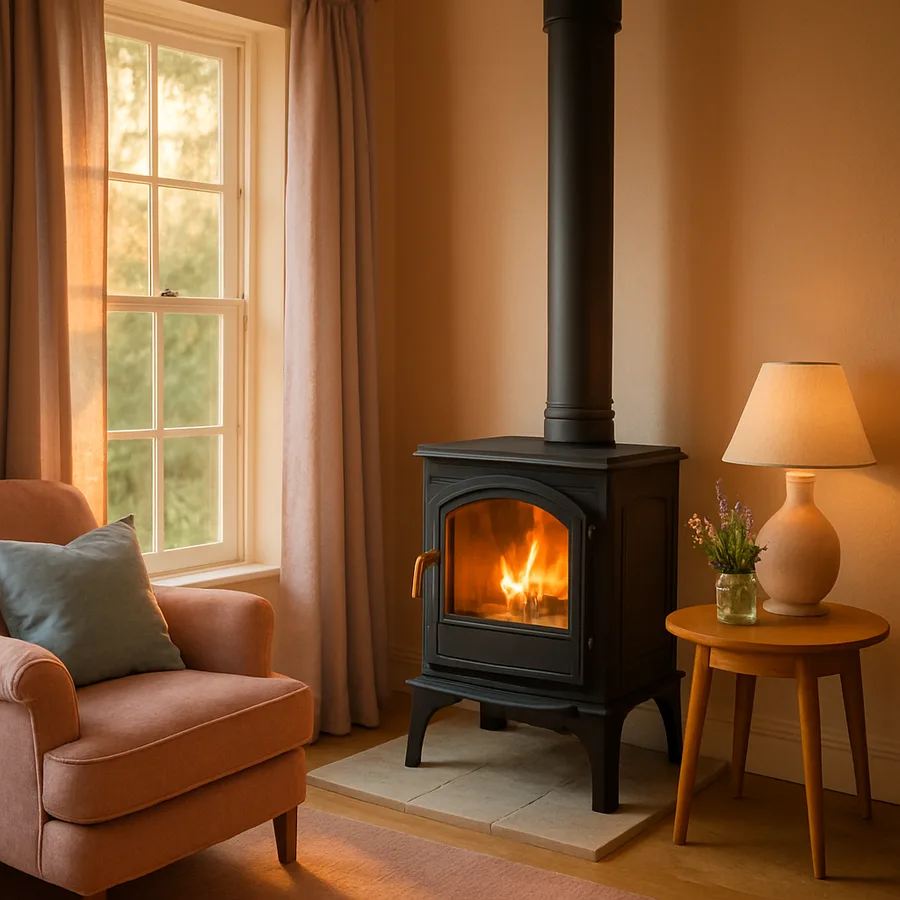
A wood stove is one of the most satisfying home upgrades a person can make, but it is also one of the easiest to underestimate in cost and complexity. The stove itself is only one line item on what turns out to be a fairly long invoice, and the code requirements that surround installation exist because, historically, badly installed wood stoves have been a leading cause of residential structure fires. According to the U.S. Fire Administration, heating equipment is consistently among the top three causes of home fire deaths in the United States, with solid-fuel appliances representing an outsized share when measured per installed unit.
The good news is that modern wood stoves are dramatically safer, cleaner, and more efficient than the units sold even 20 years ago. The Environmental Protection Agency (EPA) certifies wood stoves under tightening emissions standards, and current-generation units routinely achieve real-world efficiencies in the 70 to 80 percent range, with particulate emissions a small fraction of older models. You can review the EPA's certified wood heater list and program details at epa.gov/burnwise. The catch is that achieving those numbers, and meeting the code requirements that make installation legal, requires investment well beyond the price tag on the stove.
The Full Cost Stack Of A Wood Stove Installation
Homeowners researching wood stoves often anchor on the cost of the appliance itself and are surprised when the installer's bid arrives at two or three times that number. The reason is that an indoor wood stove installation involves multiple distinct cost categories, each of which contributes meaningfully to the total.
- The stove itself: ranges from modest entry-level units to premium soapstone or cast-iron stoves several times more expensive
- Chimney or flue system: often the single largest expense after the stove, particularly for new chimney installations rather than relines
- Hearth pad or floor protection: code-rated, sized to the stove and clearance requirements
- Wall shielding: noncombustible wall protection where clearances cannot be otherwise met
- Roof or wall penetration: proper flashing, storm collar, and structural framing modifications
- Permits and inspection: building permit, sometimes a separate mechanical permit, and a final inspection
- Professional installation labor: by a certified hearth installer rather than a general handyman
The largest single variable is the chimney. Installing a new Class A insulated chimney through a multi-story house, including ceiling and roof penetrations, flashing, storm collar, rain cap, and adequate structural support, can cost several thousand dollars on its own. Relining an existing masonry chimney with an insulated stainless steel liner is typically less expensive but still meaningful. Both options are legitimate, and the right choice depends on whether you have a usable existing chimney, what condition it is in, and where in the house the stove will sit.
A reasonable all-in budget for an indoor wood stove installation in most U.S. markets, including the stove itself, a complete chimney system, hearth pad, permits, and professional installation, lands somewhere in the range of five to ten thousand dollars for a straightforward project. Complex installations involving long chimney runs, structural modifications, or premium appliances easily exceed that range.
Clearances To Combustibles And Why They Are Sacred
The most important number on the back of any wood stove is its clearance-to-combustibles specification. This is the minimum distance the stove can sit from any combustible material, in every direction. Walls, ceilings, mantels, furniture, and trim all count. The clearance is established through laboratory testing and is published on the stove's UL listing label.
Typical clearance requirements for modern stoves include:
- Rear clearance: from the back of the stove to the nearest combustible wall
- Side clearance: from each side of the stove to combustible walls or furniture
- Top clearance: from the top of the stove to the ceiling or any combustible material above
- Front clearance: sufficient working space in front of the loading door, plus floor protection
- Connector pipe clearance: from the single-wall stovepipe to combustibles, distinct from the stove body clearance
These numbers are not advisory. The National Fire Protection Association publishes NFPA 211, the standard for chimneys, fireplaces, vents, and solid-fuel-burning appliances, which is adopted by reference in most local fire and building codes. NFPA 211 sets the framework that local inspectors use, and the manufacturer's clearance label is the document that controls the specific installation. Combining the two governs every wood stove installation in the country. You can find general information about NFPA standards at nfpa.org.
Clearances can sometimes be reduced through the use of approved wall shielding, such as a ventilated metal panel held off the wall by a defined air gap, or a properly constructed brick or masonry wall protector. These reductions follow specific formulas in NFPA 211, and they must be installed exactly as specified. A handsome stone veneer applied directly to a combustible wall, without the required air gap or ventilation, does not count as code-compliant shielding even though it looks the part.
Hearth Pads And Floor Protection
The hearth pad is not a decorative accessory. It is a code-required structural element designed to protect the floor from radiant heat, falling embers, and spilled coals during reloading. Two specifications govern the hearth pad: the required size, which depends on the stove's footprint and clearance requirements, and the required thermal resistance, expressed as an R-value or as a UL-tested ember protection rating.
Stoves designated as ember-protection-only require a pad that simply blocks falling embers from reaching the combustible floor. Typical materials include a layer of brick, tile, or stone over a thin noncombustible substrate. These pads are relatively easy to install but only acceptable for stoves with low bottom heat output.
Most modern stoves require a thermal protection pad with a specified minimum R-value, often in the range of 1.0 to 2.0 depending on the model. Achieving these R-values requires a multi-layer pad construction, typically combining a thick base of mineral board or specialty hearth board with a finished tile or stone surface. Pre-fabricated UL-listed hearth pads handle this complexity in a single product, and their published R-value can be matched directly to the stove's requirement.
Pad size is the other half of the equation. The pad must extend a code-specified distance in front of the loading door, beyond each side of the stove, and behind the stove if any clearance was reduced. Skimping on pad size is a common installation error, and it is one that an inspector will catch immediately.
Chimney Selection And Installation Details
Chimney systems come in two broad families: factory-built Class A insulated metal chimneys, and traditional masonry chimneys lined with either clay tile or stainless steel. Both can be code-compliant when designed and installed correctly, but they differ in cost, performance, and visual presence.
Class A chimneys are the standard for new installations in homes that do not have a usable existing chimney. They consist of double- or triple-wall insulated pipe rated for high temperatures, and they pass through floors, ceilings, and roofs using specific support and firestop components. The complete system includes:
- Ceiling support box or wall thimble at the transition point
- Insulated chimney sections assembled to the required height
- Roof or wall flashing with proper storm collar and high-temperature sealant
- Rain cap and spark arrestor at the chimney termination
Chimney height matters as much as the materials. Most codes require the chimney to extend at least 3 feet above the point where it penetrates the roof, and at least 2 feet higher than any structure within a 10-foot radius. This is the so-called 3-2-10 rule, and it exists to ensure adequate draft and to keep smoke clear of nearby windows and vents. Inadequate chimney height is one of the most common causes of poor draft, smoky operation, and creosote buildup.
Masonry chimneys, when present and in good condition, can be relined with an insulated stainless steel liner to serve a wood stove. The liner provides a smooth, code-compliant flue surface and dramatically improves draft and creosote performance compared to an unlined or clay-tile-only chimney serving a small stove. Inspection of the existing masonry by a certified chimney sweep before reuse is essential. Cracked tiles, missing mortar joints, or a flue that is dramatically oversized for the new stove are all problems that need to be addressed before installation.
Permits, Inspections, And Insurance Implications
Wood stove installations are almost universally subject to building permit requirements, and skipping the permit is a serious mistake. Most jurisdictions require:
- A building or mechanical permit obtained before installation begins
- Submission of manufacturer documentation including the UL listing and clearance specifications
- A final inspection by the local building department, typically after installation but before first use
- Documentation retained by the homeowner for insurance and resale purposes
The insurance side is where unpermitted installations come back to bite homeowners hardest. Most homeowners insurance policies either require disclosure of any solid-fuel heating appliance or charge a modest premium adjustment when one is present. If a fire occurs and the investigation reveals an unpermitted, unin spected wood stove, the carrier may deny the claim or pursue subrogation against the homeowner. The savings from skipping a permit are tiny relative to the potential exposure.
Have you contacted your insurance carrier about the planned installation? Have you confirmed that they accept wood stoves on the policy at all? A small number of carriers exclude solid-fuel appliances entirely, and discovering that exclusion after installation is an unpleasant surprise. The call takes 10 minutes and saves significant grief.
Ongoing Operation, Maintenance, And Safety
An installation that passes inspection is the starting point, not the finish line. Wood stoves require ongoing maintenance to remain safe and efficient, and the schedule is not negotiable. The two most important annual tasks are chimney inspection and sweeping, ideally performed by a certified chimney sweep before each heating season, and inspection of the door gasket, baffle, and firebrick lining for wear.
Creosote is the central villain in wood stove operation. It forms as condensation of unburned combustion products on the cool inner surfaces of the chimney, and it is highly flammable. The Chimney Safety Institute of America reports that creosote buildup is the leading cause of chimney fires, and that regular cleaning combined with proper burning practices essentially eliminates the risk. Burning properly seasoned wood with a moisture content below roughly 20 percent, maintaining adequate combustion air, and avoiding slow, smoldering fires are the three practices that make the biggest difference.
Carbon monoxide is the other safety variable. Even a perfectly installed and maintained wood stove can produce dangerous indoor CO levels if draft conditions reverse, if the door is opened too aggressively, or if the chimney is partially blocked. A pair of CO alarms, one near the stove and one near sleeping areas, is inexpensive insurance against a problem that has no warning symptoms until it is too late. Are your CO detectors less than seven years old, with fresh batteries? Most units expire on a fixed schedule regardless of test results, and a beep-free old detector may not actually be functional.
Conclusion
An indoor wood stove installation, done correctly, delivers decades of efficient, atmospheric, low-cost heat and adds genuine character to a home. Done incorrectly, it represents a real fire and life-safety hazard. The difference between the two outcomes is not luck or craftsmanship mystique. It is a straightforward matter of selecting a code-compliant stove, sizing and installing the chimney correctly, respecting clearances and floor protection requirements, pulling permits, passing inspection, and committing to annual maintenance.
The financial commitment is also worth taking seriously. A full installation typically costs several thousand dollars beyond the price of the stove itself, and that number should be planned and budgeted before the appliance is purchased. The hearth pad, the chimney system, the wall shielding, the permits, and the professional labor all add up, and homeowners who learn these costs only after the stove arrives often end up with compromised installations that never quite work right.
The single best move you can make early in the project is to engage a certified hearth installer, ideally one credentialed by the National Fireplace Institute, who can walk the proposed installation site with you, identify any clearance challenges, propose the right stove for the space, and produce a complete bid that covers every element of the job. Pull the permits, document the installation, schedule the inspection, and notify your insurance carrier before the first fire is lit. A wood stove installed with that level of discipline becomes a feature of the home that will warm it, and add value to it, for as long as the building stands.
Comments
Post a Comment