Chimney Liner Stainless Steel Versus Clay Tile Comparison
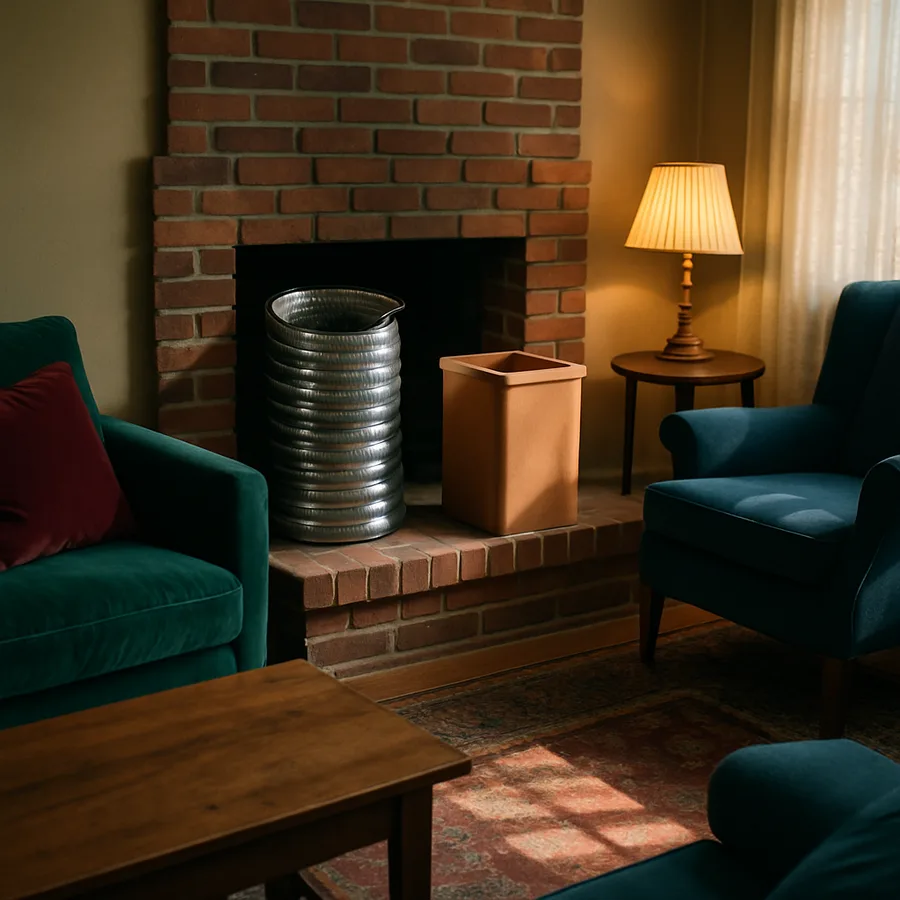
Few decisions about a fireplace carry as much weight as the choice of chimney liner. The liner is the inner pipe or shaft that channels combustion gases up and out, and it stands between your living room and a flue temperature that can exceed 2,000 degrees Fahrenheit during a creosote-fed chimney fire. Choose well and the system will quietly outlast the roof above it. Choose poorly and you may face cracked masonry, carbon monoxide leakage, or an insurance claim that hinges on a single missing inspection report. Homeowners who are renovating an older masonry stack, converting from wood to gas, or simply preparing a house for sale frequently arrive at the same crossroads: stainless steel or clay tile.
This guide walks through every angle that matters when comparing the two systems. We will look at how each material handles heat, moisture, acidic flue gases, and the long arc of weather cycles. We will also examine cost, installation friction, code requirements, and the practical realities of inspection and maintenance. The goal is not to crown a universal winner, because there is not one. The goal is to give you a clear framework so that when a sweep or mason quotes the job, you understand exactly what you are buying and why.
How a Chimney Liner Actually Works
A liner does three jobs at once. First, it contains the flue gases and prevents them from migrating into wall cavities or adjacent rooms. Second, it protects the surrounding masonry from heat transfer, which over time degrades mortar joints and can crack the chimney itself. Third, it provides a smooth, correctly sized passage that draws combustion products upward at the velocity the appliance was designed for. When any of those three jobs fails, the appliance below it begins to misbehave, often in ways that are subtle long before they become dangerous.
The Chimney Safety Institute of America notes that an unlined or compromised chimney can allow heat to reach combustible framing in as little as 3.5 hours of normal use, depending on the masonry and clearances involved. That figure surprises most homeowners, who tend to assume a brick chimney is essentially fireproof. Brick is durable, but it is not airtight, and the cumulative action of moisture, acidic condensate, and thermal expansion slowly opens microscopic pathways that a liner is designed to seal off. This is why the CSIA and the NFPA 211 standard both treat the liner as the central safety component of any wood, gas, or oil-burning chimney.
Have you ever wondered why a chimney that draws beautifully in winter sometimes back-puffs in shoulder season? Liner geometry is often the answer. An oversized flue cools the gas column too quickly, weakening draft, while an undersized one chokes the appliance. Both stainless steel and clay tile can deliver correct sizing, but they get there through very different installation paths.
Clay Tile Liners: The Traditional Workhorse
Clay tile, sometimes called terracotta flue tile, has lined American chimneys for more than a century. Tiles are typically 24 inches long with square or rectangular cross sections, stacked vertically and mortared at each joint as the chimney is built. The material is dense, fireproof in the literal sense, and remarkably stable when it is left undisturbed inside a well-built masonry stack. A clay tile liner installed during original construction and used with a properly matched appliance can easily run fifty years or more before any significant intervention is needed.
The strengths of clay are tied to its mass. It absorbs and releases heat slowly, which helps moderate flue temperatures and reduce condensation on the upper sections of the chimney during long burns. It is also chemically inert against most combustion byproducts from seasoned cordwood, and it is genuinely inexpensive as a raw material. For new masonry construction, dropping tiles into place as the bricks rise is the path of least resistance and lowest unit cost.
The weaknesses show up in two situations. The first is retrofitting an old chimney that was never lined, or relining one whose original tiles have cracked. Installing new clay tiles into an existing stack often means breaking through the chimney from the outside at multiple points, which is invasive, expensive, and not always feasible without compromising the wall. The second is exposure to modern condensing gas appliances, whose cooler, more acidic exhaust eats clay over time. The Hearth, Patio and Barbecue Association reports that flue gas condensate from a high-efficiency gas furnace can be acidic enough to dissolve mortar joints within a decade, which is why most code authorities now require a sealed metal or aluminum liner for those installations.
Stainless Steel Liners: The Modern Standard
Stainless steel liners come in two main forms: rigid sections that are joined together, and flexible corrugated tubing that can be lowered down a chimney from above and routed around minor offsets. The most common alloys are 304-grade for wood and most gas applications, and 316Ti-grade for oil, coal, and aggressive condensing gas appliances where titanium-stabilized stainless resists pitting from sulfur compounds and chlorides. Both grades are listed to UL 1777, which is the safety standard the International Code Council references for chimney liners across the International Residential Code.
The appeal of stainless steel begins with installation. A flexible liner can be dropped down a 30-foot chimney in under an hour, connected at the appliance, capped at the top, and insulated along its length with a ceramic blanket wrap that boosts both safety clearance and draft performance. No bricks come off the chimney, no scaffolding goes up the side of the house, and the entire system can usually be installed in a single day. For a homeowner relining an older chimney for a wood insert, a high-efficiency gas furnace, or a pellet stove, this is often the only practical option.
The trade-off is unit cost and metallurgy literacy. A quality stainless liner kit with insulation, top plate, and termination cap typically runs 1,500 to 3,500 dollars in materials, with professional installation pushing total project cost into the 3,000 to 6,000 dollar range for most single-story to two-story homes. Buyers also need to confirm the alloy matches the fuel. Installing a 304-grade liner on a coal appliance, or a thin-wall liner intended only for gas on a wood stove, voids the warranty and the listing. The lifespan of a correctly specified stainless liner is typically 15 to 25 years for wood and longer for gas, with many premium manufacturers offering lifetime warranties to the original owner.
Cost, Lifespan, and the Real Math
On paper, clay looks cheaper. A tile costs a few dollars, and even a full new-construction clay liner for an average chimney rarely exceeds 800 to 1,200 dollars in materials. But that price assumes the chimney is being built around the tiles. Once the masonry is in place, the calculus inverts dramatically. Tearing into an existing chimney to install or replace clay tiles can run 5,000 to 12,000 dollars, depending on access, height, and how much of the surrounding brickwork has to be rebuilt afterward.
Stainless steel, by contrast, has a predictable retrofit cost regardless of whether the chimney was lined to begin with. The variables are liner diameter, total length, alloy, and insulation. For most relining jobs, homeowners should budget 3,000 to 6,000 dollars all-in, which compares favorably with even a partial clay tile rebuild. Over a 30-year ownership horizon, the two systems often land close to parity in total cost, but the stainless path tends to spread that cost over fewer, smaller events, which is easier to plan around than a single five-figure masonry project.
Lifespan is where the comparison gets nuanced. A clay tile liner that never sees a chimney fire, never gets soaked by a missing crown, and never burns anything but well-seasoned hardwood will routinely outlive a stainless steel liner. But that combination of conditions is rare. A single chimney fire can crack every tile in the stack, and water intrusion from a deteriorated crown can spall tile faces within a few winters. Stainless steel handles both insults better, which is why insurance adjusters increasingly favor it on claim repairs.
Safety, Code Compliance, and Inspection
Both materials can be code-compliant, but the path to compliance differs. NFPA 211 organizes chimney inspections into three levels, and the inspection level largely dictates whether the liner needs to be examined at all. A Level 1 inspection covers readily accessible portions and is appropriate when nothing about the system has changed. A Level 2 inspection, required after any sale, appliance change, or chimney fire, involves a camera scan of the entire flue. This is where liner condition becomes a pass-fail item.
For clay tile, the camera looks for cracked tiles, displaced sections, missing mortar at joints, and any place where the tile has spalled into the flue. Even a single failed joint is generally enough to fail the inspection, because flue gases can escape through that gap into the surrounding masonry. For stainless steel, the inspector looks for corrosion pitting, buckling from overheating, separated joints in rigid sections, and damage to the insulation wrap. A properly installed and maintained stainless liner usually presents far fewer failure points to a camera scan, which can simplify the resale process considerably.
One often-overlooked detail is the required UL listing. Any new liner installed today, whether metal or otherwise, must be listed and labeled for the specific fuel and appliance. The U.S. EPA Burn Wise program emphasizes that mismatched liner and appliance combinations are a leading cause of preventable house fires involving solid-fuel heaters. Asking your installer for the liner's UL listing document and keeping it with the home file is one of the simplest insurance protections available.
Choosing the Right Liner for Your Situation
Start with the appliance. If you are building a new masonry fireplace from scratch and plan to burn only seasoned wood, clay tile installed during construction is hard to beat on cost and longevity. If you are relining an existing chimney for any reason, stainless steel is almost always the more practical choice, both because of installation access and because modern appliances tend to favor the cleaner draft profile of an insulated metal liner.
Next, consider the climate and exposure. Chimneys in coastal regions face salt-laden air that can pit lower alloys of stainless steel. In those zones, 316Ti is worth the modest upcharge. Chimneys in cold-winter regions with heavy snow loads should pair any liner with a stout cap and a well-flashed crown, because water intrusion shortens the life of either material faster than fire ever will. Are you in a region where freeze-thaw cycles routinely crack masonry? That alone tips the scale toward an insulated stainless liner that can flex with seasonal movement rather than relying on a rigid tile column to hold tolerance.
Finally, weigh resale and insurance. Many home inspectors and insurers now treat a documented stainless steel relining as a positive signal during transactions, particularly for homes built before 1980 when many chimneys were minimally lined or unlined entirely. If you are planning to sell within five to ten years, a stainless retrofit may pay for itself in negotiating leverage even before its safety benefits are counted.
Conclusion
The honest answer to stainless steel versus clay tile is that both materials deserve a place in the chimney world, and the right choice depends on context more than on any blanket recommendation. Clay tile remains the natural fit for new masonry construction with a traditional wood-burning fireplace, where its mass, longevity, and low material cost are unmatched. Stainless steel is the modern default for almost every retrofit, fuel conversion, or high-efficiency appliance installation, because it solves access, sizing, and chemical resistance problems that clay simply was not designed for.
The biggest mistake homeowners make is treating the liner as an afterthought once the appliance is selected. The appliance and the liner are a system, and they need to be specified together. A premium wood insert paired with a marginal liner will underperform and shorten the liner's life. A correctly matched system, by contrast, will burn cleaner, draft more reliably, and deliver more usable heat per cord of wood or therm of gas. That efficiency dividend often goes unnoticed because there is no dramatic moment when it shows up, but it accumulates every burning season for the life of the installation.
Before you commit to either path, schedule a Level 2 inspection with a CSIA-certified sweep and ask for a written report that includes camera images. That single document will tell you more about your existing chimney than any contractor estimate. From there, you can have an informed conversation about whether to repair, reline, or rebuild, and you can make the call with the confidence that comes from knowing exactly what is inside your walls.
Ready to make a decision? Get a Level 2 inspection from a CSIA-certified professional this season, request the camera report in writing, and use the framework in this guide to evaluate the bids you receive. Your chimney will be safer, your home will be warmer, and your future self will thank you the first time a winter storm rolls through and the fire draws exactly as it should.
More Articles You May Like



Comments
Post a Comment