
Fire Table Coffee Style Versus Dining Height Comparison
Fire Table Coffee Style Versus Dining Height Comparison
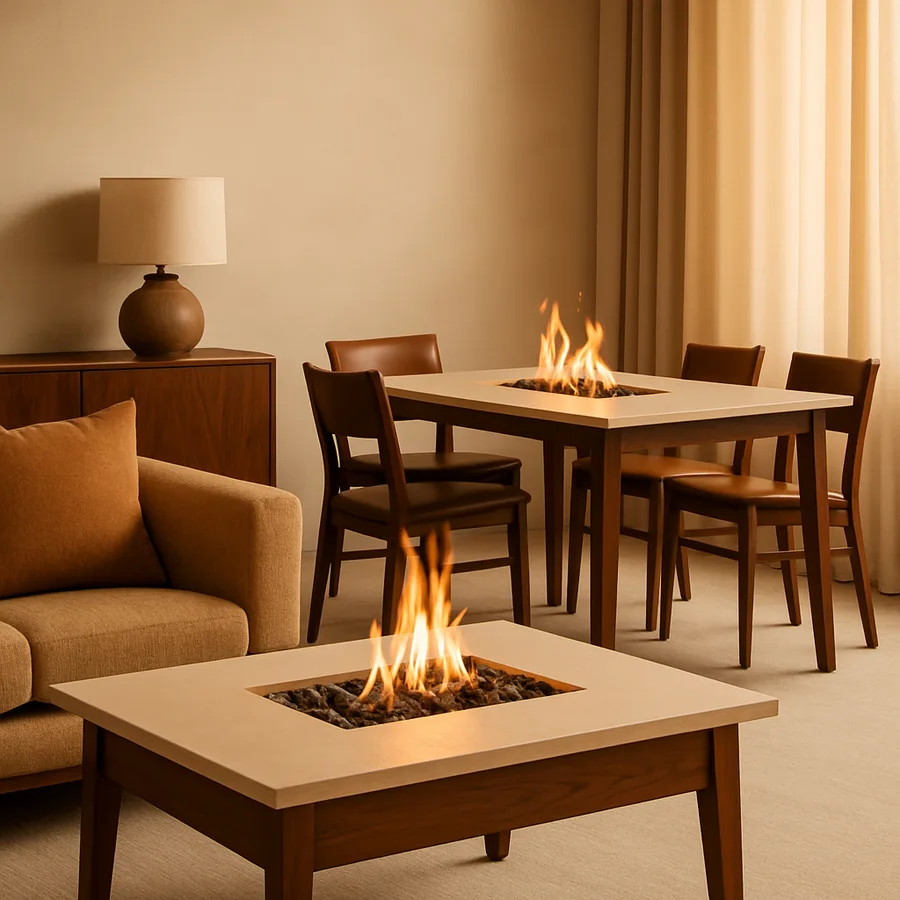
The fire table category looked simple a decade ago: pick a finish, pick a propane or natural-gas burner, done. Then manufacturers split the form factor into coffee-table height and dining-table height, and suddenly every patio shopper had a new decision to make. The two heights are not just stylistic preferences. They change how people sit, how food gets served, how children interact with the flame, and how much heat actually reaches the people gathered around it.
The Hearth, Patio & Barbecue Association reported that fire tables surpassed traditional fire pits in unit sales among premium outdoor furniture lines in 2023, with coffee-style models capturing roughly 65 percent of that volume. Dining-height models, while a smaller slice, grow faster year over year because they solve problems coffee tables cannot. Here is how to think through the tradeoffs without getting steamrolled by a salesperson's commission structure.
Ergonomics And Seating Compatibility
Coffee-style fire tables typically stand 18 to 22 inches tall, matching standard outdoor lounge seating. The user reclines back into a deep cushion, extends their legs, and reaches forward for a drink. Dining-height fire tables stand 28 to 32 inches tall, matching standard outdoor dining chairs where the user sits upright, feet flat on the patio.
This geometry difference matters more than buyers realize. A coffee table fire surface sits below eye level, so the flame fills your peripheral vision and you stare slightly down into the burner. Dining height puts the flame near eye level, which can feel either dramatic or aggressive depending on burner output. People wearing reading glasses or progressive lenses often report visual fatigue from prolonged exposure to a dining-height flame because their lens correction does not align with the focal distance.
The American National Standards Institute publishes residential furniture height standards, and outdoor furniture manufacturers generally follow ANSI/BIFMA guidance. If your existing patio set is dining height, a coffee fire table will look stranded; if your lounge set is low, a dining fire table will tower awkwardly. Match the table to the seating you already own or plan to buy together.
Body posture over an extended evening also factors in. Coffee-height tables encourage reclined posture, which most adults sustain comfortably for two to three hours before lower-back fatigue sets in. Dining-height tables encourage upright posture, which suits longer meals but less comfortable for casual cocktail hours. People with chronic lower-back pain often prefer dining-height fire tables because the chair-and-table geometry mirrors a kitchen dining set rather than asking the spine to flex into a deep lounge.
Bar-height fire tables exist as a third category and deserve brief mention. These units stand 38 to 42 inches and pair with bar stools. They suit standing crowds at cocktail parties and rooftop terraces where space is tight, but they fail spectacularly when used for any gathering longer than ninety minutes because bar stools punish hips and lower back. Skip bar height unless you are confident the use pattern truly matches the format.
Heat Delivery And Effective Comfort Radius
Heat rises. That single physics fact governs everything about fire-table warmth. A coffee-style table releases its heat plume well below seated torsos, meaning much of the radiant warmth wraps around legs and feet but escapes upward past the upper body. Dining-height tables release heat closer to torso level, which most people perceive as a stronger overall warming effect even at identical BTU ratings.
Typical burner outputs range 40,000 to 65,000 BTU per hour for both formats. The Hearth, Patio & Barbecue Association notes that effective comfort radius for an outdoor gas burner at 50,000 BTU runs roughly 4 to 6 feet in still air at 50 degrees Fahrenheit. Below 40 degrees, even high-output burners struggle to keep guests comfortable without supplemental heaters. Neither format genuinely replaces a patio heater in cold weather, despite marketing claims.
One question buyers rarely consider: do you plan to use the fire table for warmth or for ambiance? If the answer is warmth, dining height delivers measurably better perceived comfort. If the answer is ambiance, the coffee style's lower flame line produces a more cinematic glow across faces and conversation.
Wind handling differs between the two formats more than specifications suggest. A coffee-height burner sits closer to the patio surface and benefits from natural windbreaks like cushions, planter boxes, and the table itself. A dining-height burner sits exposed to cross-breeze, which can extinguish the flame or trigger the safety shutoff during gusts above 12 to 15 miles per hour. If your patio sits on a hilltop, near open water, or on an upper-floor terrace, factor wind exposure into the decision. Glass wind guards mitigate the problem but add 150 to 400 dollars to the purchase price and require seasonal storage.
Burn media also influences flame appearance. Lava rock, glass beads, fire stones, and ceramic logs each produce different visual effects and heat distribution patterns. Glass beads reflect flame color and create the dramatic look favored in modern designs. Lava rock absorbs heat and continues radiating after the burner shuts off, producing a softer effect favored in traditional designs. Some manufacturers void warranty coverage if non-approved media is substituted, so check the manual before swapping aesthetics.
Dining Function And Surface Usability
Dining-height fire tables include a perimeter ledge wide enough to hold plates, glasses, and serving dishes around the central burner. A typical dining model offers 8 to 14 inches of usable ledge depth, enough for a full place setting if guests don't mind eating around a centerpiece flame. Some models include a removable burner cover that converts the surface to a fully usable dining top during meals.
Coffee-style tables offer narrower ledges, usually 4 to 8 inches, designed for drinks and small appetizer plates. Trying to serve dinner around a coffee-height fire table forces guests to lean forward awkwardly, balance plates on their knees, or set everything on the ground.
Heat-resistant ledge materials matter regardless of height. The ledge surrounds the burner and absorbs significant radiated heat during operation. Cheap polymer composite ledges warp, discolor, or off-gas under sustained exposure. Concrete, natural stone, porcelain tile, and powder-coated steel all handle the heat without complaint. Insist on a thermal-shock rating from the manufacturer or, at minimum, evidence that the ledge material has been tested for outdoor heating appliance use under ANSI Z21.97.
If you actually entertain with shared meals outdoors, dining height earns its keep through pure utility. If your gatherings revolve around drinks, conversation, and the occasional cheese board, coffee height fits the social pattern better. Be honest about which you do more often.
Convertible models attempt to bridge both use cases. Some dining-height tables ship with a steel burner cover and matching tabletop insert that converts the unit to a full dining surface during meals. The conversion takes thirty seconds, the cover stores under the table, and the result is a single piece of furniture that pulls double duty. Convertible designs cost 200 to 600 dollars more than fixed equivalents and add roughly 15 pounds of stored hardware, but for homeowners who genuinely use the patio for both purposes, the investment usually pays off within a year.
Table materials affect long-term satisfaction more than buyers expect. Powder-coated aluminum resists rust and weighs little but dents easily. Cast aluminum holds its shape better but costs more. Concrete-composite tops look striking and resist heat well but weigh 200 to 400 pounds, which makes seasonal storage impractical. Steel frames with stone tops split the difference and represent the most common premium build. Match the material to your climate and how often you plan to move the table.
Safety, Clearance, And Code Considerations
Both formats fall under National Fire Protection Association NFPA 54 (the National Fuel Gas Code) and ANSI Z21.97 for outdoor decorative gas appliances. Manufacturers must include flame failure shutoff, overheat protection, and clear minimum clearance markings. Typical published clearances require 24 inches from any combustible structure overhead and 12 inches from combustible furniture or cushions on the sides.
Height affects child safety significantly. A coffee-height burner sits at toddler eye level. Manufacturers recommend a glass wind guard or burner screen for households with small children regardless of style, but the urgency increases dramatically with coffee-height units. Dining-height burners sit above most toddlers' reach, though they remain accessible to climbing preschoolers. The U.S. Consumer Product Safety Commission has tracked fire-table injuries since 2018, with most reported burns involving children under five.
For propane models, both heights typically conceal a 20-pound tank inside the table base. Dining-height enclosures generally offer better ventilation by virtue of taller cabinet space, which extends tank regulator life and reduces nuisance shutoffs during heavy use.
Glass wind guards add another safety dimension worth considering. A clear borosilicate or tempered-glass surround prevents accidental contact with the flame, blocks wind that could blow flames sideways toward seated guests, and contains burning embers in the rare case of a flare-up from contaminated fuel. The American Society for Testing and Materials specifies impact resistance and thermal shock standards for glass used in outdoor heating applications, and reputable manufacturers test their wind guards against ASTM C1048 for heat-strengthened and tempered architectural glass. Expect to pay 200 to 500 dollars for a quality wind guard sized to your specific table model. Skip the universal-fit aftermarket guards because their dimensional tolerances rarely match factory specifications.
Local ordinances increasingly govern outdoor flame appliances in dense neighborhoods. Some homeowners associations prohibit propane tanks above a certain size on apartment balconies or shared terraces, citing fire-code limits typically set at one or two pounds of propane in stored or in-use containers. Check association rules and local building codes before ordering any propane fire table for an upper-floor balcony installation. Electric infrared models sidestep these restrictions entirely.
Warranty coverage diverges between the two formats too. Most coffee-style fire tables ship with a one to three year limited warranty on the burner assembly and a shorter warranty on cosmetic surfaces. Dining-height tables, often positioned as premium furniture rather than accessory items, frequently carry five-year burner warranties and ten-year frame warranties from the better manufacturers. Read the fine print before purchase because warranties typically exclude damage from non-approved burn media, fuel-line modifications, and outdoor exposure beyond a specified rainfall threshold. A unit left uncovered through a winter rainstorm can void coverage entirely even if the failure occurs months later.
Bottom Line
Coffee-style fire tables suit homeowners who lounge, sip, and host evenings centered on conversation. Dining-height tables suit homeowners who serve meals outside, want stronger perceived warmth, and prefer a flame that meets them at eye level rather than below it. Both can be beautiful; only one will fit how you actually use your patio.
Before ordering, sit in your current outdoor seating and measure the distance from cushion to your sternum. That number tells you which height delivers heat to your body rather than past it. Then count how many times in the past year you served a full meal outside. If the answer is more than five, lean dining. If it is less than three, lean coffee. Then schedule a showroom visit this week to sit at both heights with the burners actually lit; specs on a website cannot substitute for ten minutes in the chair.

Comments
Post a Comment