Fireplace Screen Mesh Versus Glass Door Panel Choice
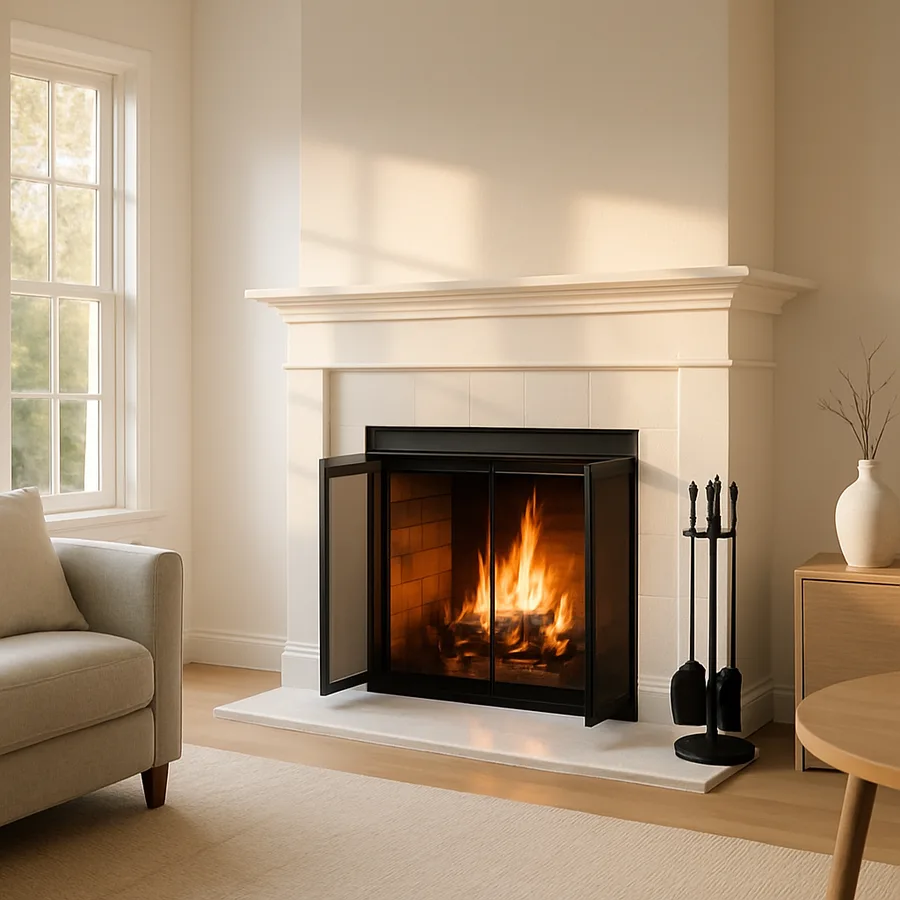
Stand in front of any modern fireplace showroom and you will see the same fork in the road appear again and again: a delicate mesh curtain rippling in front of an open firebox, or a tightly framed glass door panel sealing the firebox like a window into a controlled burn. Both products solve a real problem, but they solve different problems, and choosing between them shapes everything from your monthly heating bill to the way the room smells the morning after a fire.
The U.S. Energy Information Administration has reported that wood and pellet appliances account for roughly 2.5% of U.S. residential space-heating energy, and most of that consumption flows through fireplaces and stoves that are imperfectly sealed against the surrounding room. The difference between a mesh screen and a glass door is, in large part, the difference between a fireplace that is decorative and one that is also functional. Before choosing, it pays to understand the engineering and the experience of each.
How Mesh Screens Work And What They Protect Against
A fireplace mesh screen is, at its core, a spark arrestor. The wire curtain, usually woven steel or brass, intercepts embers that pop out of burning logs and prevents them from reaching the carpet, the upholstery, or the wood flooring beyond the hearth. A good mesh weave is fine enough to catch most embers but open enough to let radiant heat pass into the room almost unimpeded.
What a mesh screen does not do is seal the firebox. Air moves freely through the weave in both directions, which means the fire draws combustion air from the room and the chimney pulls warm interior air up the flue along with the smoke. The visual reward is significant: an open firebox feels primal in a way a glass-fronted firebox never quite matches. The crackle is louder, the radiant warmth more direct, and the orange glow more present in the room.
Mesh screens are also relatively forgiving products. They install without modification, sit in front of almost any masonry opening, and can be replaced or upgraded without a contractor. Pull-cord curtain styles, hinged folding panels, and single-panel standalone screens each suit different aesthetics, but all share the same essential function. For a fireplace used a handful of times each season, primarily for ambiance, the mesh screen is often the more appropriate choice.
How Glass Door Panels Work And What They Add
A glass door panel, sometimes called a fireplace enclosure, is engineered to a different standard. The framed glass, typically tempered or ceramic, sits in a metal frame that mounts to the masonry or to the firebox surround. When closed, the door restricts airflow into the firebox and dramatically reduces the volume of warm room air that escapes up the chimney when no fire is burning. That last function is where the energy savings live.
An unsealed fireplace flue, even with the damper closed, can leak conditioned air at a rate that meaningfully increases heating costs in cold climates. The U.S. Department of Energy has long advised that fireplace dampers and enclosures are among the more impactful low-cost weatherization upgrades available to homeowners with masonry chimneys. A well-fitted glass door turns the fireplace from a year-round energy liability into a closed system that only opens when you choose to open it.
During active burning, glass doors change the experience. Radiant heat still passes through tempered glass, but the convective component is dampened, so the room feels less directly warmed by the fire. Modern ceramic glass, which can withstand higher continuous temperatures than tempered, allows for more aggressive burning with the doors closed, but most manufacturers still recommend burning with the doors partially open and the mesh curtain drawn behind them for optimal heat transfer.
Safety Comparison Between The Two Options
Both products improve safety, but they address different failure modes. A mesh screen addresses the most common fireplace incident: an ejected ember landing on a flammable surface. A glass door addresses a less common but more serious incident: a log rolling out of the firebox onto the hearth. The National Fire Protection Association reports that heating equipment accounts for roughly 14% of reported home fires in the United States, with fireplaces and chimneys featuring prominently in the unattended-fire subset.
Glass doors, when latched, also prevent small children and pets from reaching directly into the firebox during a burn. This is a significant safety upgrade for households with toddlers, although it is not absolute: the glass itself becomes dangerously hot during a burn and can cause severe contact burns. The U.S. Consumer Product Safety Commission has issued repeated guidance reminding parents that glass fireplace doors stay hot for many minutes after a fire dies down, and that a protective gate should be considered for homes with crawling children.
Mesh screens do not get as hot as glass doors because air flows freely past them, but the wire weave will still burn skin on contact during an active fire. Either product reduces risk substantially compared to a fully open firebox, but neither replaces the basic rule that a burning fireplace should never be left unattended. Have you established a household routine for confirming the screen or door is fully closed before leaving the room?
Aesthetics And Room Style Considerations
Aesthetics are where this decision becomes deeply personal. Mesh screens, especially traditional pull-curtain styles in antique brass or blackened steel, read as historic, cottage, or country. They are the natural choice for a room with a stone fireplace, exposed beams, and a layered, collected style. Modernized mesh screens with clean rectangular frames and matte black finishes can work in contemporary rooms, but they always retain a slightly handcrafted quality.
Glass doors, by contrast, read as engineered. The visible frame, the hardware, and the panel of glass all signal precision. In a modern or transitional room, a well-detailed glass door enclosure looks intentional and finished. In a rustic room, a glass door can feel like a contradiction, an industrial product imposed on an artisanal hearth. The conflict is not insurmountable, but it requires careful frame selection: oil-rubbed bronze, hammered iron, or aged copper can soften the engineered look.
There is a third option worth naming, since many homeowners ultimately choose it: glass doors with an interior mesh curtain. This hybrid gives you the energy seal of a glass enclosure when the fireplace is dormant, the spark protection of a mesh curtain during a burn, and the option to open the doors for full radiant heat when you want it. The aesthetic compromise is that you see both layers, which some find busy and others find functionally honest.
Cleaning Reality And Maintenance Cadence
Glass doors require a specific cleaning ritual that mesh screens do not. Every burn deposits a thin film of combustion byproducts on the inside surface of the glass, and that film hardens with each subsequent fire until it becomes a stubborn brown haze. The Chimney Safety Institute of America recommends cleaning glass with a manufacturer-approved ceramic glass cleaner or, for lighter deposits, a damp cloth dipped in cool wood ash, which acts as a mild abrasive without scratching.
Mesh screens accumulate soot too, but the visual penalty is much smaller because the dark wire hides the dark deposit. A periodic vacuuming with a brush attachment, combined with an occasional wipe-down using a dry cloth, keeps the screen looking acceptable for years. The wire itself is essentially permanent, and most mesh screens outlast their owners with no functional degradation.
Frames and hardware are another consideration. Glass door hinges accumulate creosote dust and can become stiff or squeaky over a few seasons; a light application of a high-temperature lubricant once a year restores smooth operation. Mesh screen pull cords, especially on rod-mounted curtain styles, can fray or break, but replacement cords are inexpensive and homeowner-installable.
Cost, Installation, And Long-Term Value
Mesh screens range broadly in price but most quality freestanding options sit between $80 and $400, with custom hand-forged screens running considerably higher. Installation is essentially placement: lift, position, done. There is no anchoring, no measuring beyond confirming the screen is wider and taller than the firebox opening, and no contractor fee.
Glass door enclosures span a much wider range, typically $300 to $1,500 for off-the-shelf units and substantially more for custom-fitted enclosures. Installation usually requires a professional fitting, especially for masonry fireboxes where the surround is irregular and the door frame must seal against an uneven surface. Plan on a fitting visit and an installation visit, and budget for the contractor's time accordingly.
Long-term value depends entirely on how the fireplace is used. A glass door pays for itself surprisingly quickly in a cold climate where the fireplace is rarely lit but the flue would otherwise leak conditioned air all winter. In a warm climate where the fireplace is ornamental and used for ambiance, the energy argument largely disappears, and a beautiful mesh screen offers more aesthetic return per dollar. Have you calculated roughly how many heating-degree days your climate accumulates each year? That number is the single best predictor of which option will pay back.
Regional Codes And Insurance Considerations
Building codes regulating fireplace enclosures vary significantly by jurisdiction, and assuming the code in your area matches the code where you grew up is a common and expensive mistake. Many jurisdictions in fire-prone regions, particularly across California, parts of Colorado, and most of the wildfire-affected West, now require spark arrestors at the chimney top and increasingly recommend mesh screens or tight-fitting doors on the firebox itself. The International Code Council publishes the International Residential Code that most U.S. jurisdictions adopt with local amendments, and the chapter governing chimneys and fireplaces is required reading before any major hearth upgrade.
Insurance carriers also weigh in, sometimes through underwriting policy and sometimes through premium adjustments. A homeowner who upgrades from an unguarded firebox to either a quality mesh screen or a tested glass door enclosure may qualify for a small discount on the fire portion of their premium, and any documented hearth upgrade should be reported to the carrier in writing. Have you asked your agent whether a fireplace enclosure upgrade affects your premium? Most homeowners have not, and the savings, while modest, accumulate year over year.
Resale value is the third dimension worth naming. A well-fitted glass door enclosure on a previously unguarded firebox is one of the small hearth upgrades that consistently appears in home inspection reports as a positive, especially in markets where buyers include young families. A beautiful custom mesh screen, by contrast, is often considered part of the home's contents rather than its fixtures and may not transfer at sale. If you are investing in the hearth zone with future resale in mind, the glass door tends to deliver more lasting value.
Conclusion
The choice between a mesh screen and a glass door panel is rarely about which product is better in the abstract, because both excel at what they were designed to do. The choice is about which problem you most need to solve. If the fireplace is primarily decorative and used for ambiance, the open feel and lower cost of a mesh screen will usually win. If the fireplace is part of your real heating strategy, or if it sits in a leaky chimney that drains conditioned air year-round, a glass door enclosure will quietly earn its place every billing cycle.
Climate, household composition, room style, and personal ritual all push the decision one way or the other, and the right choice for one homeowner can be the wrong choice for a neighbor with an identical fireplace. The hybrid approach of a glass enclosure with an interior mesh curtain remains the most universally satisfying option for homeowners who genuinely use their fireplaces and want the best of both worlds, even though it requires the largest upfront investment.
Whatever direction you lean, plan to test the choice before committing fully. Borrow a friend's experience by visiting a home with the style you are considering, watch a full burn, then check the hearth and surrounding floor the morning after for soot patterns and dust deposits. Schedule a consultation with a certified hearth specialist in your area before finalizing the order, especially if your firebox is original masonry or sized outside standard manufacturer dimensions. The fireplace is one of the few features in a home that you both use and look at every day during the cold months, and the screen-or-door decision deserves the time it takes to get right.
More Articles You May Like



Comments
Post a Comment