Chimney Cap Selection To Prevent Animal Entry
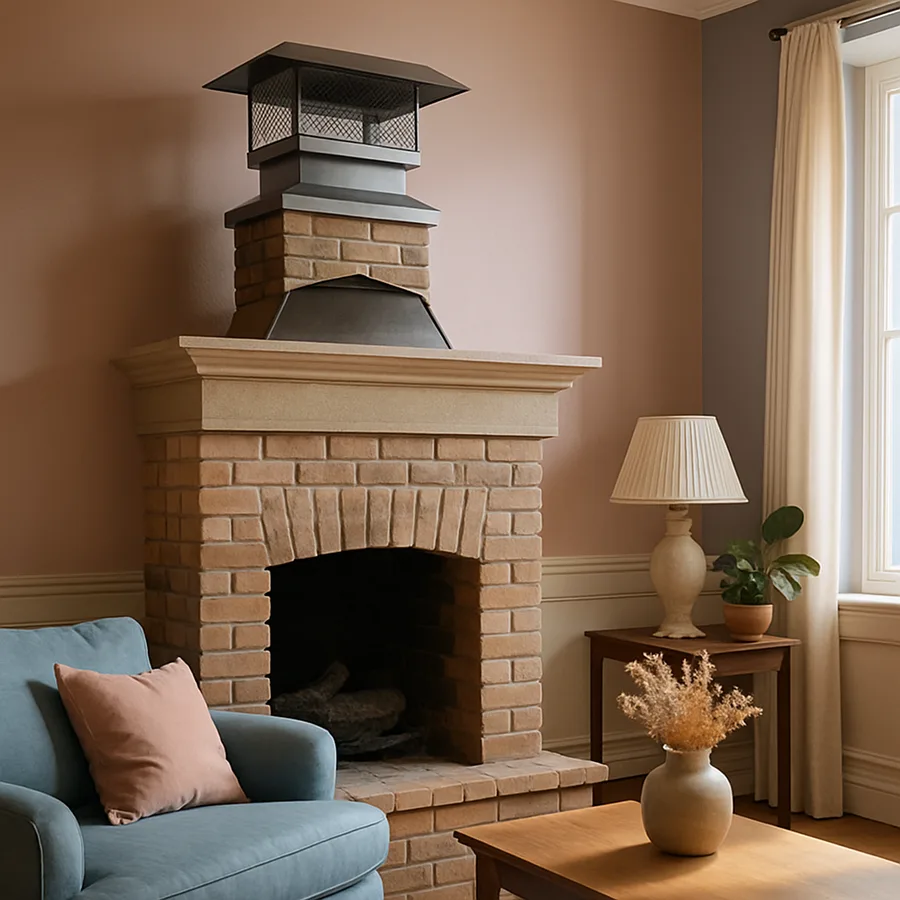
An uncapped chimney is, from the perspective of a raccoon scouting a new den, almost too good to be true: a vertical hollow shaft, sheltered from rain, warm at the bottom, and entirely unguarded. Across North America, wildlife rehabilitators report that chimneys are one of the most common entry points for nuisance wildlife inside human dwellings, and that the problem is almost entirely preventable with one piece of properly chosen hardware. The chimney cap is among the smallest and most overlooked components of a working fireplace system, and also among the most consequential.
The Chimney Safety Institute of America estimates that more than 60% of chimney-related service calls in spring and early summer involve some form of animal intrusion, ranging from chimney swifts nesting on the smoke shelf to raccoon mothers raising kits inside the flue. Beyond the obvious unpleasantness, animal intrusion creates real fire risk: nests block the flue, droppings contribute to creosote-like deposits, and a panicked animal trapped inside the firebox can damage flue tile, screens, and dampers as it tries to escape. Choosing the right cap is the single most effective preventive step a homeowner can take.
The Animals A Chimney Cap Must Actually Keep Out
Different animals exploit chimneys in different ways, and a cap chosen with only one species in mind may fail against another. Raccoons are the largest and most damaging intruder in most regions, capable of climbing brick, prying loose poorly secured caps, and producing kits that cannot leave for weeks after birth. Squirrels are smaller but more numerous, and the same chimney that supports one raccoon family per decade may host two or three squirrel litters per year if left unprotected.
Birds, especially chimney swifts, starlings, and house sparrows, treat masonry flues as ideal nesting sites because they mimic the hollow trees and cliff faces these species evolved to use. Bats, particularly little brown bats and big brown bats, can squeeze through openings as small as a half inch and will roost in the warm space behind the chimney crown if any gap allows entry. Even snakes occasionally enter chimneys in pursuit of rodents, especially in rural areas with stone or brick exterior chimneys that offer climbable texture.
A properly chosen cap addresses all of these threats at once. The challenge is that the mesh opening that defeats a bat is finer than the mesh opening required for adequate flue draft, and the structural integrity that defeats a raccoon costs more than the basic models that defeat only squirrels. The right cap for your home depends on which species are present in your region and how aggressive the local raccoon population has become at exploiting human structures.
Mesh Size And The Tradeoff With Draft Performance
Mesh size is the single most important specification on any chimney cap, and it involves a real engineering tradeoff. The International Code Council, in its International Residential Code, specifies that chimney spark arrestors should have mesh openings of not less than 3/8 inch and not more than 1/2 inch, a range chosen to balance spark containment with adequate draft. Within that range, the smaller the opening, the better the animal exclusion and the more frequent the cleaning required to prevent clogging from soot and creosote.
A 3/4 inch mesh, common on budget caps, will reliably exclude raccoons, squirrels, and most birds, but bats and small songbirds can sometimes pass through. A 1/2 inch mesh excludes nearly all mammals and birds, and is the most common recommendation from chimney professionals. A 3/8 inch mesh excludes essentially everything down to large insects but requires more frequent cleaning to prevent creosote-related airflow restriction. A 1/4 inch mesh is sometimes specified in fire-prone regions for spark arrest but can clog within a single heavy burning season.
The right choice for your home depends on local wildlife pressure and how often you burn. A vacation home in a wooded area where the fireplace is used infrequently can run a tighter mesh without clogging problems. A primary residence in a cold climate where the fireplace burns nightly all winter benefits from a slightly looser mesh and more frequent inspection. The National Fire Protection Association recommends annual inspection of all chimney caps as part of routine heating system maintenance.
Materials And How They Age In Real Weather
Chimney caps are exposed to the harshest conditions on the entire house: continuous sun, freeze-thaw cycles, acidic combustion byproducts from below, and bird droppings from above. Material choice determines whether the cap lasts five years or fifty. Galvanized steel is the cheapest option and the shortest-lived, typically corroding through within five to ten years in coastal or freeze-thaw climates. Stainless steel, especially type 304 or the more corrosion-resistant 316, lasts thirty years or more in most climates and is the dominant choice in quality caps.
Copper caps are the premium option, both for longevity and aesthetics. Copper develops a green patina over time that many homeowners find beautiful, and the metal itself can last a century or more on a chimney. The cost premium is substantial, often two to four times a stainless steel equivalent, but on a historic or architecturally significant home the visual reward justifies the expense. Cast aluminum caps occupy a middle tier: lighter than steel, resistant to corrosion, but less robust against impact damage from falling branches.
Whatever the cap material, the mesh itself is often the first part to fail. Stainless steel mesh outlasts galvanized mesh by decades, and most quality caps now use stainless mesh regardless of frame material. If you are inspecting an older cap and the frame still looks solid but the mesh shows rust or sag, a mesh-only replacement is sometimes possible and far cheaper than replacing the entire cap. Have you ever looked closely at the mesh on your existing cap from a safe vantage point? Most homeowners have not, and the deterioration tends to be invisible from the ground.
Single-Flue Versus Multi-Flue Cap Designs
Chimneys come in two basic configurations from the cap's perspective: single-flue, where one flue tile rises above the crown, and multi-flue, where two or more flue tiles share a single chimney structure. Each requires a different cap design, and choosing the wrong type leads either to inadequate coverage or to expensive custom fabrication.
Single-flue caps clamp directly to the protruding flue tile and are straightforward to specify: measure the outside dimensions of the flue tile, choose a cap sized to fit, and install. They are the most common residential configuration and the easiest replacement project. Multi-flue caps, sometimes called full-coverage caps or chase covers, sit on top of the entire crown and cover all flues at once with a single mesh-walled enclosure. These are necessarily custom-sized to the chimney and significantly more expensive.
Multi-flue caps have a significant advantage beyond convenience: they also protect the chimney crown itself from water infiltration. A failing crown is one of the most common chimney problems, and a full-coverage cap that sheds water away from the masonry can extend crown life by decades. For chimneys with cracked or deteriorating crowns, a full-coverage cap can be both an animal-exclusion measure and a waterproofing measure in one investment.
Installation Quality And Why It Determines Everything
A perfectly chosen cap installed poorly fails as completely as a cheap cap installed correctly. The most common installation failure is inadequate attachment to the flue tile: a cap that wobbles in the wind will eventually loosen, and once loose, it becomes a lever that a raccoon can pry off with surprising ease. Stainless steel set screws torqued against the flue tile, combined with a high-temperature silicone bead at the contact points, give the most reliable single-flue installation.
For multi-flue caps, attachment to the crown is the critical point. The cap should rest fully on a clean, level crown surface and be anchored with stainless screws into either the masonry or a properly prepared concrete crown. Any gap between the cap base and the crown becomes an entry point for bats and small birds, so a closed-cell foam or high-temperature gasket along the base is standard practice.
Working on a roof is genuinely dangerous, and chimney work is one of the higher-risk DIY tasks a homeowner can attempt. The Occupational Safety and Health Administration tracks falls from height as a leading cause of construction fatalities each year. Unless you have proper roof safety equipment and comfortable experience working at height, this is a job where the labor cost of a qualified chimney professional is well-spent. Most professional installations of a quality cap on an accessible chimney run between $300 and $800 all-in, including the cap itself.
Inspection And Replacement Schedule
A chimney cap is not a permanent installation, and treating it as one is a common mistake. The Chimney Safety Institute of America recommends visual inspection of the cap at least annually, ideally during the same appointment as the annual chimney sweep. The inspector should check for mesh deterioration, frame corrosion, attachment hardware integrity, and any signs of recent animal activity such as scratch marks, fur, or droppings on or around the cap.
Caps in regions with heavy salt air, frequent freeze-thaw cycles, or high acid rain levels deteriorate faster than caps in temperate climates and may need replacement every 15 to 20 years even with quality stainless construction. Caps in mild, dry climates can last 30 years or more with no intervention beyond occasional cleaning. The lifespan is highly variable, which is exactly why annual inspection matters more than calendar-based replacement.
If you find evidence of animal activity inside the chimney itself during an inspection, do not simply replace the cap and assume the problem is solved. An animal trapped inside by a new cap is a worse problem than an open chimney. The proper sequence is to confirm the chimney is empty, often by a professional with appropriate inspection tools, and only then install the new cap. Spring and early fall, outside the primary nesting and denning seasons, are the safest times for this work.
Common Mistakes Homeowners Make During Cap Selection
Choosing a chimney cap looks straightforward enough that many homeowners attempt it without research, and a small set of recurring mistakes shows up over and over in service-call records from chimney professionals. The most common error is buying a cap sized for the flue interior rather than the flue exterior, which results in a cap that simply will not seat properly and either wobbles dangerously or refuses to clamp at all. Measure the outside dimensions of the protruding flue tile, in both width and depth, before shopping for any single-flue cap.
The second most common mistake is choosing a cap based on price alone, particularly the gleaming galvanized steel caps sold at big-box home centers for under $40. These caps are not inherently bad products, but their service life in any climate with freeze-thaw cycles or salt air is short enough that the total cost over twenty years exceeds the cost of a quality stainless steel cap purchased once. The National Association of Home Builders publishes residential maintenance guidance that consistently recommends investing in chimney hardware that matches the expected service life of the chimney itself rather than the lower-tier products that need replacement every decade.
A third mistake is overlooking the importance of mesh-to-frame attachment. Many budget caps spot-weld the mesh to the frame at widely spaced points, leaving long unsupported runs of mesh that flex in high winds and eventually pull free at the welds. A quality cap secures the mesh continuously along the frame perimeter, either through a clamped bezel or through closely spaced spot welds. Have you ever looked closely at how the mesh attaches to the frame on the cap you are considering? That single detail predicts service life more reliably than the metal grade alone.
Conclusion
A chimney cap is one of the lowest-cost, highest-leverage upgrades available for any home with a working fireplace. For a few hundred dollars and one afternoon of professional installation, you eliminate the most common pathway for wildlife intrusion, extend the life of your chimney crown, improve spark containment, and protect the flue itself from rain and snow infiltration. The return on investment is unusually high for any single home improvement, and the maintenance burden is essentially zero between annual inspections.
The right cap for your home depends on your local wildlife pressure, your climate, the configuration of your chimney, and your willingness to balance fine mesh against draft performance. Stainless steel construction with stainless mesh in the 3/8 to 1/2 inch range covers most residential applications, with copper as the premium upgrade for visible chimneys on architecturally significant homes. Full-coverage multi-flue designs add waterproofing benefits that often justify their higher cost, especially on older chimneys with deteriorating crowns.
If your chimney is currently uncapped, or if the existing cap has not been inspected in more than five years, treat this as one of the higher-priority items on your home maintenance list. Contact a certified chimney professional this season for an inspection and quote, and schedule any needed replacement before the spring nesting season begins in your region. An afternoon of attention now will prevent a small army of summer service calls and protect both the chimney and the animals from a series of avoidable conflicts.
More Articles You May Like



Comments
Post a Comment