HVAC Filter MERV Rating Selection For Allergies and Cost
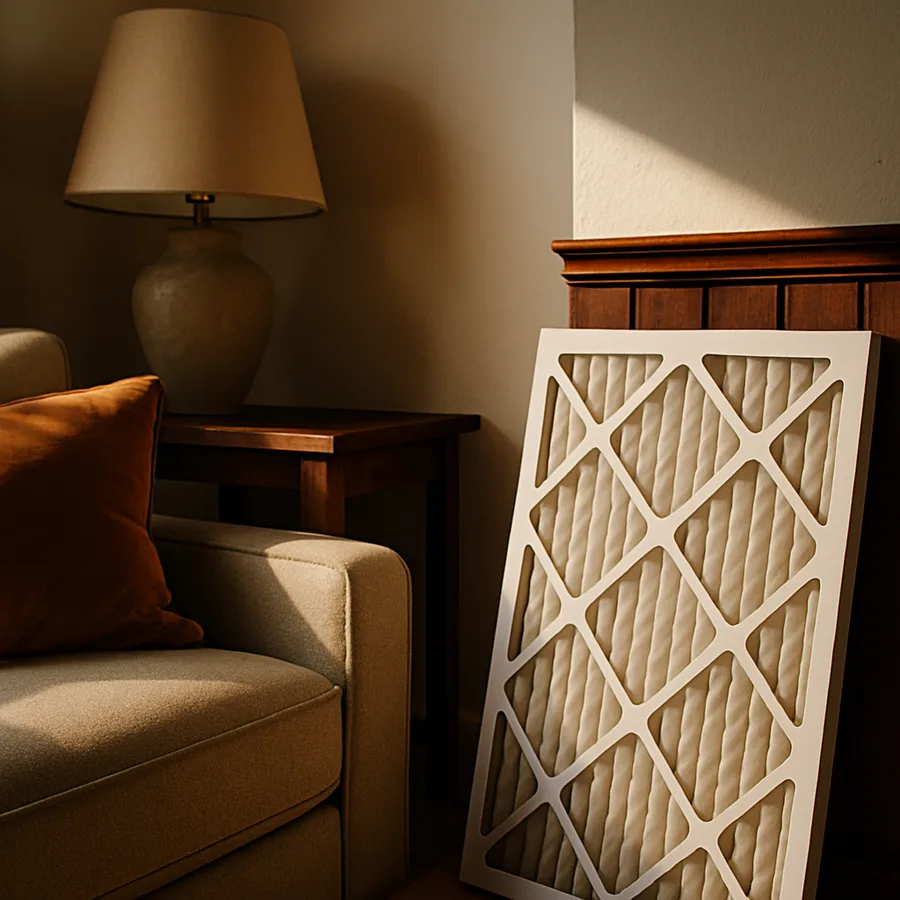
Stand in the filter aisle of any home improvement store and you face a wall of overlapping promises. Boxes shout about microns, particles, allergens, dust mites, viruses, and a mysterious acronym called MERV. The label suggests bigger numbers are better, the way bigger horsepower is better in a sports car. That intuition is wrong often enough to cost homeowners real money in energy waste, premature blower failure, and, ironically, worse indoor air quality. Choosing the right MERV rating is less about chasing the highest number and more about matching filtration to the equipment, ductwork, and respiratory needs of the people who actually live in your house.
The Minimum Efficiency Reporting Value is a standardized scale created by ASHRAE, the American Society of Heating, Refrigerating and Air-Conditioning Engineers. It runs from 1 to 16 for residential and light commercial filters, with the rating reflecting how well a filter captures particles across a range of sizes. ASHRAE Standard 52.2 measures performance using three particle size bands, and the MERV number reflects the worst-performing band, not the average. That detail alone changes how you should read a filter label, and it explains why two MERV 11 products from different manufacturers can perform quite differently against, say, pet dander.
What MERV Actually Measures
A filter rated MERV 8 captures roughly 20 percent of particles in the 1 to 3 micron range, which includes mold spores, larger pet dander particles, and standard household dust. MERV 11 jumps that capture rate to about 65 to 80 percent and adds meaningful capture of fine dust and lead particles. MERV 13, the residential gold standard, captures 90 percent of those mid-range particles plus a healthy share of bacteria, smoke, and some viral aerosols. Above MERV 13, you enter near-HEPA territory that most home blowers were never engineered to push air through.
The numbers above describe initial efficiency on a brand-new filter. Real-world capture rates actually climb as the filter loads with particulate matter, because trapped debris narrows the effective pore size. The trade-off is that pressure drop across the media also climbs, sometimes dramatically, and your blower motor must work harder to maintain the same airflow. The right MERV rating is therefore a moving target across the life of the filter, not a single static specification.
It helps to compare MERV against the older FPR and MPR scales you may see on retailer-specific labels. Home Depot uses FPR, a 1 to 10 scale that roughly approximates MERV plus or minus one point. 3M uses MPR, which scales from 300 to 2800 and measures only particles smaller than one micron, biasing the rating toward fine particulate capture. Neither scale is wrong, but neither is directly interchangeable with MERV, and stores often display all three on adjacent boxes to maximize confusion. When in doubt, ignore the proprietary scales and look for the printed MERV rating, which by federal regulation must appear on the filter itself if the manufacturer chose to test against ASHRAE 52.2. If no MERV rating appears anywhere on the product, treat that absence as a red flag.
Why Higher Is Not Always Better
If MERV 13 captures more particles than MERV 8, why not simply install MERV 16 and call it done? The answer lives in a specification called static pressure, which describes the resistance the blower fights against to push air through the duct system. Most residential furnaces and air handlers are designed for a total external static pressure of about 0.5 inches of water column. A clogged or excessively dense filter can consume that entire budget on its own, starving the system of airflow.
The consequences of strangled airflow are not theoretical. The U.S. Department of Energy warns that reduced airflow across a heat exchanger can crack the metal, while reduced airflow across an evaporator coil can freeze the refrigerant lines and burn out the compressor. Homeowners who jam a one-inch MERV 13 into a slot designed for MERV 8 often discover the consequences during the first heat wave or cold snap of the season, when the equipment fails under thermal stress.
Matching MERV to Allergy Severity
For households with mild seasonal allergies, where symptoms are limited to a few weeks of pollen exposure each year, MERV 8 with diligent monthly replacement often delivers acceptable comfort. MERV 8 catches the larger pollen grains that drive ragweed and tree allergies, and the lower pressure drop is forgiving of older blower motors. Pair the filter with closed windows during peak pollen counts and you will manage symptoms reasonably well without specialty equipment.
Moderate allergy sufferers, including people sensitive to pet dander or dust mite debris, generally benefit from MERV 11. The capture rate against smaller airborne particles is meaningfully better, and most modern HVAC systems with at least a four-inch filter cabinet handle MERV 11 without distress. Severe allergy households, including anyone with documented asthma triggered by indoor particulates, should target MERV 13, ideally in a deep-pleated four-inch or five-inch media cabinet rather than a one-inch slot. EPA guidance on indoor air specifically calls out MERV 13 as the residential sweet spot for capturing fine particulate matter when blower capacity allows.
Filter Depth Changes Everything
Beyond depth, the geometry of the pleats themselves matters more than most buyers realize. Two MERV 11 filters from different manufacturers can have wildly different pleat counts, with values ranging from 14 pleats per foot up to 28 pleats per foot. Higher pleat density means more total media area, lower face velocity, and longer service life, but it also means tighter pleat valleys that can pack with debris faster in dusty environments. Look for filters with pleated end caps that maintain spacing under static pressure, ideally with embedded wire scrim that prevents the pleats from collapsing as the filter loads. A collapsed pleat reduces effective area by 30 to 50 percent and forces nearly all the airflow through a narrow strip down the middle, accelerating loading and dramatically shortening usable life.
The single most overlooked variable in MERV selection is the physical depth of the filter slot. A one-inch filter has roughly 30 to 40 square feet of pleated media, while a four-inch filter exposes 75 to 100 square feet in the same airflow path. More media area means lower face velocity, lower pressure drop, and longer service life at the same MERV rating. A four-inch MERV 13 filter often presents less restriction than a one-inch MERV 11, which is exactly the kind of counterintuitive result that surprises homeowners who upgrade their filter cabinet for the first time.
If your existing slot is the standard one-inch variety, the highest-MERV product you can run safely is usually MERV 11, and even then only with monthly inspection. Upgrading to a deeper cabinet typically costs $200 to $600 in parts and labor and pays for itself in reduced filter replacement frequency, reduced blower energy use, and improved comfort. Have you ever changed a one-inch filter and noticed your supply registers immediately blow noticeably harder? That moment of relief is your system telling you it was suffocating.
One often-overlooked benefit of higher MERV ratings is the protection they provide to the HVAC equipment itself. The evaporator coil, blower wheel, and heat exchanger surfaces all accumulate dust over time, and that fouling reduces heat transfer efficiency by 5 to 20 percent in older systems. A properly sized MERV 11 or MERV 13 filter keeps those internal surfaces measurably cleaner across the equipment lifecycle, extending compressor and blower life by years in many cases. Homeowners who view filtration purely as an air quality intervention miss this equipment-preservation angle, which often justifies the upgrade cost on its own even before considering respiratory benefits to the occupants.
Cost Per Year of Each MERV Tier
Filter cost scales with both MERV and depth. A standard MERV 8 one-inch filter runs about $5 to $10 and lasts roughly two to three months. A MERV 11 one-inch averages $15 to $25 with similar replacement cadence. A MERV 13 four-inch deep-pleated cartridge ranges from $40 to $80 but typically lasts six to twelve months. Calculated as annualized cost, MERV 13 in a proper cabinet often beats MERV 8 in a one-inch slot, because you are replacing the deeper filter half as often.
The energy story is similarly nuanced. The Department of Energy estimates that reduced airflow from a dirty or oversized-restriction filter can cut HVAC efficiency by 5 to 15 percent, which on a typical home translates to $80 to $200 per year in wasted electricity and gas. Choosing the correct MERV with the correct depth is therefore not just an air quality decision. It is a meaningful line item on your utility bill.
Replacement Schedule and Inspection Habits
Even the perfect MERV rating fails if the filter is never changed. The most common cause of premature HVAC repair calls is a filter that has been left in place for eight months while the homeowner cycled through a busy season at work. A reasonable inspection schedule looks like this: check every thirty days for the first three months after installation, establish a personal baseline for how dirty the filter looks at the recommended replacement interval, then settle into a calendar reminder that matches your home conditions.
Pet households, smokers, and homes with ongoing renovation work should expect to change filters at least 50 percent more often than the manufacturer baseline. Vacation homes that sit unoccupied for months can stretch replacement intervals. Homes with operable windows in coastal or wildfire zones should keep a spare filter on hand for the days after smoke events, when even a moderate exposure can load a MERV 13 cartridge in a single week.
A reliable visual test for filter end of life is to hold the used filter up to a bright window or shop light. A fresh filter shows clear backlight through the pleats. A loaded filter that still has useful life shows muted but visible light. A spent filter shows essentially no light, often with visible dust cake on the upstream face and discoloration that has migrated deep into the media. If you can no longer see daylight through the pleats from three feet away, the filter is past its productive life regardless of what the calendar says. Pair this visual check with a simple log inside the filter cabinet door, recording installation date and observed condition at each inspection, and you will quickly develop an intuition for how your specific home loads its filters.
Conclusion
MERV selection is one of those home maintenance decisions where the right answer depends on three or four variables interacting at once: the respiratory needs of the people in the home, the depth of the existing filter slot, the capacity of the blower motor, and the typical environmental load from pets, cooking, and outdoor air. Skip any of those variables and you can end up with either an underperforming filter or a damaged HVAC system, sometimes both. The good news is that none of the variables require professional consulting to evaluate. A flashlight, a tape measure, and an honest conversation about who in the house actually struggles with breathing will get you most of the way.
For most homeowners, the practical sweet spot lands in one of two configurations. If your filter slot is the standard one-inch design, run a quality MERV 11 product changed every sixty days. If you have or can install a four-inch or five-inch media cabinet, run a deep-pleated MERV 13 product changed every six months. Either configuration delivers measurable improvements in indoor air without provoking the airflow problems that turn HVAC equipment into expensive paperweights.
Avoid the temptation to chase MERV 14 through 16 unless you have explicitly designed the system for that load, including a high-static-pressure-rated blower and verified static pressure measurements taken with the new filter in place. The marginal capture improvement over MERV 13 is small for residential applications, while the risk of equipment damage or comfort complaints rises sharply. A thoughtful MERV 13 installation outperforms a stressed MERV 16 installation in every metric a homeowner actually cares about.
Take ten minutes this week to pop your filter cover, measure the slot, and write the dimensions plus the current MERV rating on a sticky note inside the cabinet door. That tiny act of documentation is the foundation for every future filter purchase, every contractor conversation, and every honest assessment of how well your home really treats the air your family breathes.
More Articles You May Like



Comments
Post a Comment