Greywater System Installation For Garden Reuse At Home
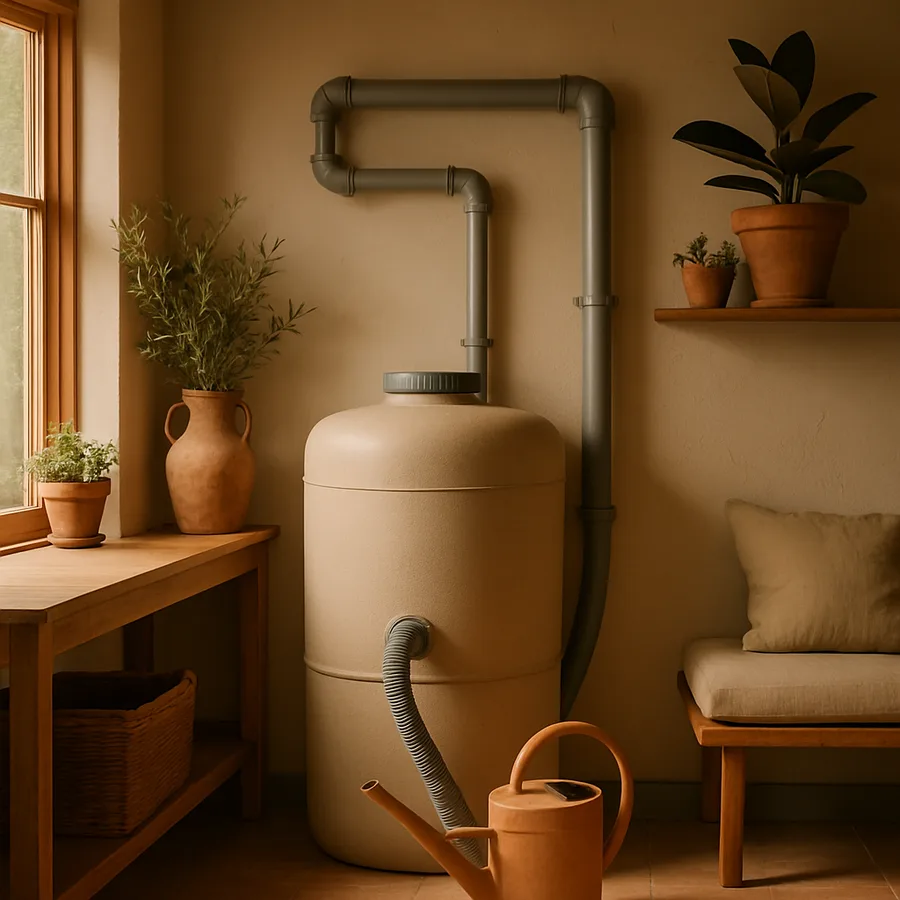
Most homes treat every drop of wastewater identically, flushing relatively clean laundry rinse and shower water down the same pipe as toilet effluent. That all-or-nothing plumbing pattern is a historical accident, not a hygienic necessity, and reversing it through greywater system installation is among the most rewarding sustainability projects a homeowner can take on. The yard gets a reliable irrigation source, the municipal sewer system gets a lighter load, and the water bill quietly shrinks each month without any change in daily habits.
The U.S. Geological Survey estimates that the average American household uses roughly 300 gallons of water per day, and conservatively 50 to 80 gallons of that volume qualifies as greywater suitable for landscape reuse. Capturing even half of that flow turns into thousands of gallons of free irrigation per year - enough to keep a substantial fruit orchard or vegetable bed thriving in regions where outdoor watering is otherwise restricted. This guide walks through what counts as greywater, how the systems are built, what local codes typically require, and how to keep everything running cleanly season after season.
Understanding What Counts as Greywater
Not every drop of household wastewater qualifies for garden reuse. The accepted definition, codified in the International Plumbing Code Appendix C and adopted by most state plumbing boards, includes water from bathroom sinks, showers, bathtubs, and clothes washers. Kitchen sink water is excluded in nearly every jurisdiction because of the heavy grease, food particle, and detergent load it carries. Dishwasher discharge is similarly excluded, and water from toilets is "blackwater" with its own waste-handling requirements.
Within the greywater category, sources are not all equal. Laundry water is by far the easiest to capture because the washing machine pump already provides the pressure needed to move it through a diverter and into a landscape header. Shower and bath water requires either a basement-level diversion that takes advantage of gravity, or a small surge tank and pump if the bathroom sits below the irrigation field. Bathroom sink water produces the smallest volume and is often combined with shower drains to simplify the plumbing.
Have you ever wondered why some homes successfully reuse all their greywater while others give up after a single season? The answer almost always traces back to source selection. Trying to reclaim every gallon from every drain creates complexity that overwhelms the typical DIY installer, while focusing on a single high-volume source - usually the laundry - delivers 60 to 75 percent of the benefit with a fraction of the work.
Three System Designs From Simple to Sophisticated
Greywater systems span a range from a garden hose taped to a washing machine to a fully filtered subsurface drip network with sensors and overflow control. The three designs that dominate residential installation are laundry-to-landscape, branched drain, and pumped subsurface drip. Each has a defined cost band, code footprint, and ideal use case, and choosing the right one prevents both under-building and over-engineering.
The laundry-to-landscape system uses the washing machine's internal pump to push water through a three-way diverter valve, into a one-inch HDPE line, and out to a series of mulch basins ringing landscape plants. No additional pump, tank, or filter is required, and most jurisdictions exempt the design from any permit at all. Installation typically takes a weekend and costs $150 to $400 in parts. This is the system to start with for the great majority of single-family homes.
Branched drain systems gravity-feed bathroom and shower water through a series of flow splitters that divide the stream into smaller and smaller portions until each branch terminates in a mulch basin. They require a sloped yard or a basement bathroom and considerable carpentry skill to retrofit cleanly. Pumped subsurface drip systems are the most sophisticated, including a surge tank, filter, and pump that pressurize a buried emitter network. They serve homes with flat lots, large irrigation demands, or stringent local codes that prohibit surface discharge.
Permits, Codes, and Local Health Department Rules
Greywater law varies dramatically by state and even by county, and skipping a permit check is the most common way these projects go sideways. Arizona, New Mexico, Texas, and California have the most homeowner-friendly rules, allowing simple laundry-to-landscape systems with no permit and treating larger systems through a streamlined registration process. Other states adopt the International Plumbing Code wholesale, which permits greywater reuse but imposes setbacks and design standards that may require a licensed plumber to sign off.
The EPA WaterSense program has published guidance encouraging states to harmonize their codes, but adoption is uneven. Before you cut a single pipe, call your local building department and ask three questions: Is a permit required for my specific system size? What setbacks apply to property lines, wells, and septic fields? Are there source restrictions, such as bans on diapered-load laundry water? The answers determine whether your project is a Saturday afternoon or a two-month permit cycle.
Common setback requirements include a minimum of five feet from property lines, fifty feet from any drinking well, and one hundred feet from any surface water body. Mulch basins must typically be at least eighteen inches deep and capped with several inches of coarse mulch to prevent surface ponding. Once you have these numbers in hand, sketch your yard with the setbacks visible - it usually narrows your irrigation zones to a smaller area than you expected.
Sizing the System to Real Household Output
Oversized greywater systems waste money on plumbing that never sees flow, while undersized ones overflow and create the kind of pooling that draws code complaints. Right-sizing starts with a one-week household audit: count laundry loads, time shower lengths, and measure the typical drain volume of each source. A standard front-loading washer uses 12 to 25 gallons per load, while a top-loader can use 35 to 45 gallons. Showers run roughly two gallons per minute under EPA WaterSense showerheads.
Multiply each source by typical weekly use to get a weekly greywater budget. A family of four running five laundry loads and twenty showers per week generates somewhere between 350 and 700 gallons of reusable water. That total drives both the irrigation field size and the surge capacity, if any, that your design needs. As a rule of thumb, plan for one mature fruit tree per 30 to 50 gallons of weekly greywater, or two square feet of vegetable bed per gallon.
Seasonality matters too. Outdoor irrigation demand spikes in summer and falls to near zero in winter, while greywater production is roughly constant. Build in a winter bypass valve that routes water back to the sewer or septic during the cold months when plants are dormant and the soil is saturated. The American Society of Plumbing Engineers recommends this dual-mode operation as a standard feature, and skipping it is the leading cause of soggy lawns and unhappy neighbors.
Soaps, Detergents, and Plant Compatibility
The chemistry of the water you reuse matters as much as the volume. Sodium-based detergents accumulate in soil and damage plant roots over a few seasons, while boron-rich products inhibit germination and stunt fruiting plants. Switch your household to a plant-friendly detergent labeled either "biodegradable" or "for greywater reuse" before you commission the system, and audit any cleaning products that drain into the sources you have selected.
Plants vary in their tolerance. Fruit trees, ornamental shrubs, and most lawns handle moderate greywater loads without complaint. Acid-loving plants like blueberries, azaleas, and rhododendrons are sensitive because residential greywater tends to run slightly alkaline. Vegetables that touch the soil - root crops, lettuces, strawberries - should not be irrigated with surface greywater under any circumstances; if you want to use it on edibles, route it through a subsurface drip line that delivers below the root crown and never contacts the harvested portion.
One question new system owners ask repeatedly: can you use bleach or harsh cleaners and still reuse the water? Short answer: no. Bleach, hydrogen peroxide laundry boosters, and quaternary ammonium fabric softeners all stress soil biology and should bypass the system entirely. Install the diverter valve in a position you will actually remember to flip when running a heavy-cleaning load. A printed reminder above the washer saves the garden more than any filter ever will.
Maintenance, Troubleshooting, and System Longevity
A well-built greywater system is remarkably low maintenance, but "low" is not "none." The single biggest maintenance task is keeping the lint screen on the laundry diverter clean. Inspect it monthly during heavy-use periods and clean it whenever flow seems sluggish. A clogged screen forces the washer pump to work harder and shortens its life, which is a much more expensive problem than a five-minute lint cleanout.
Mulch basins need refreshing every twelve to eighteen months. The wood chips break down, settle, and lose their ability to disperse incoming water across the soil surface. Adding three to four inches of fresh coarse mulch each fall keeps basins functioning and prevents the surface pooling that signals an unhappy system to both your nose and your code inspector. If you smell sourness or see standing water, the system is telling you something - usually that the basin is undersized or the soil percolation rate has dropped.
Pumped systems require more attention. Filters need flushing on a quarterly schedule, pumps benefit from an annual seal inspection, and any pressure-sensitive controllers should be retested each spring. The U.S. Department of Energy notes that pumps account for the bulk of operational energy in residential water reuse systems, and a poorly maintained pump can erase the environmental benefit of reusing water in the first place. Keep a maintenance log - paper or digital - and your system will outlast the warranty by a wide margin.
Climate, Soil Type, and Regional Suitability
Greywater systems perform very differently depending on regional climate and soil characteristics. In the arid Southwest, where rainfall is sparse and irrigation costs dominate the water bill, greywater reuse delivers some of the highest economic return in the country and often qualifies for utility rebates. In the humid Southeast, the irrigation savings are smaller because rainfall handles most landscape watering, but the system still provides resilience during the increasingly common late-summer dry spells. Northern climates need winter bypass routines and freeze-protected outdoor lines, but the systems run successfully as far north as southern Canada.
Soil percolation rate is the second key variable. Sandy and loamy soils accept greywater quickly and disperse it through the root zone with no surface ponding. Heavy clay soils require larger mulch basins, longer infiltration paths, or extra storage to absorb the daily slug of laundry water without becoming saturated. A simple percolation test - digging a hole, filling it with water, and measuring how long it takes to drain - should be the first step of any site assessment, ahead of even the source audit.
Topography matters too. A sloped yard gives the designer free pressure for gravity-fed branched drain systems, while a flat lot may force a pumped configuration with its added complexity and energy cost. Mapping contour lines on your sketch before you finalize the design choice eliminates a class of late-stage redesigns that frustrate even experienced installers.
Conclusion
Greywater system installation is one of the most direct ways a homeowner can reduce environmental footprint while gaining a tangible benefit in the garden. The plumbing is straightforward, the codes have matured, and the payback in water savings is fast enough that even purely cost-driven homeowners come out ahead within two to four years on a basic laundry-to-landscape system. Add the resilience benefit during drought restrictions and the soil-health improvements that come from consistent moisture, and the case becomes overwhelming for anyone with a yard.
The pitfalls that derail projects almost always trace to the same handful of mistakes: ignoring local codes, oversizing the system before measuring real household output, picking the wrong detergents, and treating maintenance as optional. Each of those is preventable with a single afternoon of planning. Start with the laundry, prove the concept on a small irrigation zone, and expand only after the first system has run cleanly through a full year of seasons.
If the idea of reusing your own water still feels unfamiliar, remember that the practice predates municipal sewers by several thousand years and never really left agricultural regions outside the United States. What is new is the design quality, the inexpensive parts, and the clarity of the codes - all three converging to make this the easiest moment in modern history to install a system that pays for itself. Pick a Saturday, sketch your yard with the setbacks in mind, and order the parts list for a starter laundry-to-landscape build - your soil, your wallet, and your local watershed will all be measurably better off twelve months from now.
More Articles You May Like



Comments
Post a Comment