Video Doorbell Selection From Ring to Nest Compared
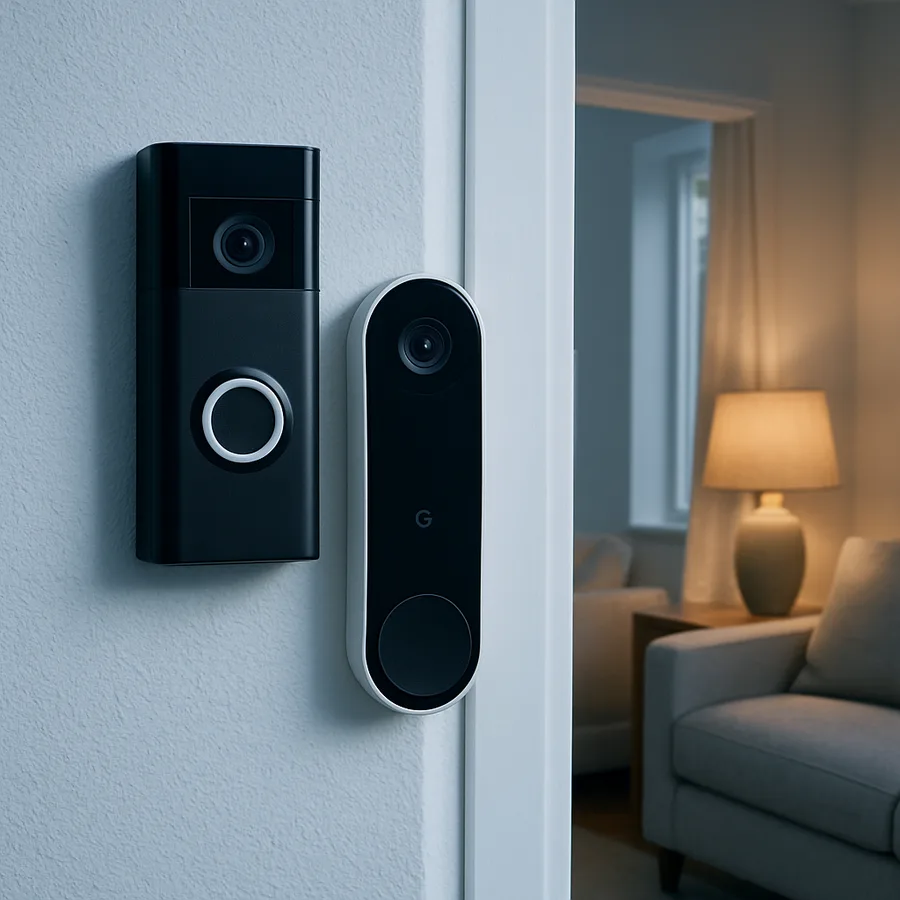
The video doorbell has moved from novelty to mainstream fixture in less than a decade, and it now occupies the same place in the household imagination that the porch light occupied in the previous generation. A homeowner shopping today faces a market dominated by two giant ecosystems, Ring from Amazon and Nest from Google, alongside a growing field of capable competitors. The choice among them shapes more than just the front porch view, because each ecosystem extends into broader home automation, voice assistant integration, subscription pricing, and privacy considerations that ripple through the rest of a connected home.
This article compares the leading video doorbell options across the criteria that matter most to homeowners, from image quality and motion intelligence to integration with the rest of the smart home. The comparison considers wired and battery-powered configurations, free and subscription-based feature tiers, and the practical realities of weather, lighting, and family routine. The guidance touches on consumer technology research and on home builder recommendations published by the National Association of Home Builders. By the end you should have a clearer sense of which option fits your home, your habits, and your tolerance for ongoing subscription costs.
Image Quality and Field of View
The single most important specification on a video doorbell is the image sensor, because the value of the device depends almost entirely on whether you can clearly see who is at the door and what they are doing. Current generation devices from Ring and Nest both offer high-definition resolution with high dynamic range processing, which means that a face standing in shadow against a bright midday porch will still render with enough detail to be recognizable. Older budget devices struggled mightily with this lighting condition, and the improvement over the past few generations has been dramatic.
Field of view differs noticeably across products. Ring devices typically offer a wider horizontal angle, often around one hundred fifty to one hundred sixty degrees, with a roughly square aspect ratio that captures from the doormat up through the visitor's face. Nest devices typically offer a tall portrait aspect ratio that captures from the ground at the door up through a tall visitor's head, sacrificing some horizontal coverage for a clearer view of packages on the porch. Neither approach is universally better, but the portrait orientation has won many converts for households that receive frequent deliveries.
Low-light performance varies more than daytime performance. The best devices now use color night vision under low ambient light from a porch fixture and switch to infrared illumination in true darkness. The transition between modes is fast and largely invisible. Compare clips from any candidate doorbell at the worst hour for your particular porch, which is usually the late evening before any motion-triggered lighting activates.
Motion Detection and Activity Zones
A doorbell that triggers on every passing car or every shadow becomes useless within a week, because the homeowner stops paying attention to the notifications. The intelligence of the motion detection system separates a genuinely useful device from a frustrating one. Both Ring and Nest offer customizable activity zones that limit motion alerts to specific regions of the field of view, and both offer some level of object recognition that distinguishes between people, vehicles, packages, and animals.
Nest devices have historically led in on-device object recognition, drawing on Google's broader machine learning infrastructure. They can typically identify a familiar face, a delivery in progress, or a package left on the porch with a useful degree of accuracy. Ring devices have closed much of the gap in recent generations and offer competitive object recognition, though some of the most sophisticated features require a subscription tier.
Have you been frustrated by motion alerts that fire when a tree branch sways in the wind or when a neighbor's car passes the driveway? Both manufacturers have invested heavily in reducing false positives, and recent firmware updates have meaningfully improved the signal-to-noise ratio. Set aside time during the first week of ownership to tune activity zones and sensitivity, because the default settings are calibrated for an average porch that may not resemble yours.
Audio Quality and Two-Way Conversation
Two-way audio is one of the most useful features of a video doorbell, because it lets the homeowner answer the door from anywhere via the companion app. The clarity of the conversation depends on the quality of the microphone and the speaker, and on the latency of the connection between the doorbell and the homeowner's phone. Ring and Nest both deliver competent two-way audio, but the latency and clarity differ in subtle ways.
Ring devices tend to favor a louder speaker output, which is helpful for porches near busy streets or in homes where the visitor may be reluctant to lean close to the microphone. Nest devices tend to favor a more natural audio profile with less compression artifact. Neither is decisively better in absolute terms, and the difference is rarely the deciding factor in a purchase, but the quality is worth confirming in a demonstration before committing to either ecosystem.
Some doorbells offer pre-recorded responses that the homeowner can trigger with a tap when they cannot speak in real time, such as during a meeting or when the children are asleep. The pre-recorded messages range from a simple acknowledgment that the homeowner will be there in a moment to instructions for delivery drivers about where to leave a package. This feature has grown popular as remote work has reshaped daily routines.
Ecosystem Integration and Voice Assistants
The largest difference between Ring and Nest is the broader ecosystem each one extends into. Ring is owned by Amazon and integrates natively with the Alexa voice assistant and the broader family of Amazon Echo devices. A homeowner with multiple Echo speakers can ask Alexa to show the front door view on a display device, or hear the doorbell ring through any Echo in the home. The Ring ecosystem also includes complementary cameras, alarm systems, and smart lighting that share a single application.
Nest is owned by Google and integrates natively with Google Assistant and the Google Home platform. Homeowners with Google Nest displays or other compatible smart displays can see the front door view on demand, and Google Assistant can announce visitors through any compatible speaker. The Nest ecosystem also includes thermostats, smoke alarms, and cameras that share the Google Home application.
Cross-ecosystem operation is possible but limited. Some Ring devices work with Google Assistant for basic operations, and some Nest devices work with Alexa for basic operations, but the richest integration is always within the same ecosystem. The choice of doorbell therefore frequently shapes the choice of broader smart home infrastructure, or vice versa. Recent industry surveys suggest that more than seventy percent of smart home owners stay within a single ecosystem for the majority of their devices, which underscores how consequential this choice is.
Subscription Costs and Cloud Storage
Both Ring and Nest now require a subscription for the most useful features, including video recording history, smart object recognition, and notification features. Ring Protect plans start at a modest monthly fee for a single device and rise to higher tiers for whole-home coverage. Nest Aware plans follow a similar structure with comparable pricing.
The choice of subscription tier affects ongoing cost more than the upfront device price. A homeowner who installs three Ring cameras and a Ring doorbell will pay roughly the same monthly cost regardless of which devices they chose, because the Ring Protect Plus tier covers all devices in the home. The same is true within the Nest ecosystem. The first-year total cost of ownership therefore depends more on the subscription tier than on the device pricing, and homeowners should plan their device strategy accordingly.
Some homeowners object to the subscription model and prefer doorbells from manufacturers that offer local storage on a microSD card or a dedicated base station. These alternatives are credible and have a passionate following, though they typically lack the polish of the Ring and Nest applications and the depth of their object recognition. The trade-off between subscription cost and feature richness is worth weighing carefully before purchase.
Privacy, Data Handling, and Long-Term Considerations
A camera pointing at the front door inevitably captures a public sidewalk, a neighbor's driveway, and any visitors who walk past. The way that footage is handled, who has access to it, and how long it is retained are serious questions for any homeowner installing a video doorbell. Both Ring and Nest publish detailed privacy policies and offer end-to-end encryption options for video storage and transmission, though the depth and clarity of these options differ.
Local laws may require homeowners to inform visitors that recording is taking place, and several jurisdictions have specific requirements for audio recording that may be stricter than the requirements for video. The U.S. Consumer Product Safety Commission publishes general guidance on residential safety equipment, and local building authorities can advise on signage or notification requirements specific to your area. A small plaque near the doorbell announcing that recording is in progress satisfies many jurisdictions and reduces the awkwardness of an uninformed visitor discovering the camera after the fact.
Long-term reliability has improved dramatically across both ecosystems, but firmware support for older devices eventually ends. A doorbell purchased today should receive updates for at least five years, and the manufacturer's published support lifetime is worth verifying before purchase. After the support window ends, devices may still operate but will not receive new features or security patches.
Conclusion
Choosing between Ring, Nest, and the broader field of video doorbells comes down to ecosystem alignment, subscription tolerance, and the specific features that matter most for your porch and your household. The hardware in this category has matured to the point where most reputable products will perform credibly out of the box, and the differences that matter most over a five-year ownership horizon are usually about software, integration, and ongoing service rather than about the camera or speaker themselves.
For homeowners already invested in the Amazon Echo ecosystem, Ring is the natural choice because the integration is seamless and the family of complementary devices is large. For homeowners already invested in the Google Home ecosystem, Nest is the equivalent natural choice. For homeowners who are starting from scratch, the decision is closer, and a careful evaluation of voice assistant preferences and broader smart home plans is worth the effort.
Before you order any doorbell, walk to your front door and ask yourself a few practical questions. Where does the existing chime live, and is there a transformer available to power a wired doorbell? Is your home network strong enough at the front door to support reliable streaming video? Do you receive frequent deliveries that would benefit from package detection? These small questions tend to drive the practical fit of the device far more than the marketing claims a manufacturer will emphasize on its packaging.
If your wireless signal is weak at the front door, consider installing a small mesh node near the entry before you install any doorbell, because no amount of doorbell sophistication will compensate for unreliable connectivity. If your front door area is heavily shaded or routinely backlit by morning sun, prioritize a model with strong high dynamic range processing over one with the highest pixel count, because dynamic range matters more than resolution for the typical porch lighting scenario. Spend an evening this week mapping your needs, and you will arrive at the right doorbell with confidence rather than choosing in haste and replacing the device a year later.
More Articles You May Like



Comments
Post a Comment