Ragging Paint Technique With Cheesecloth for Subtle Pattern
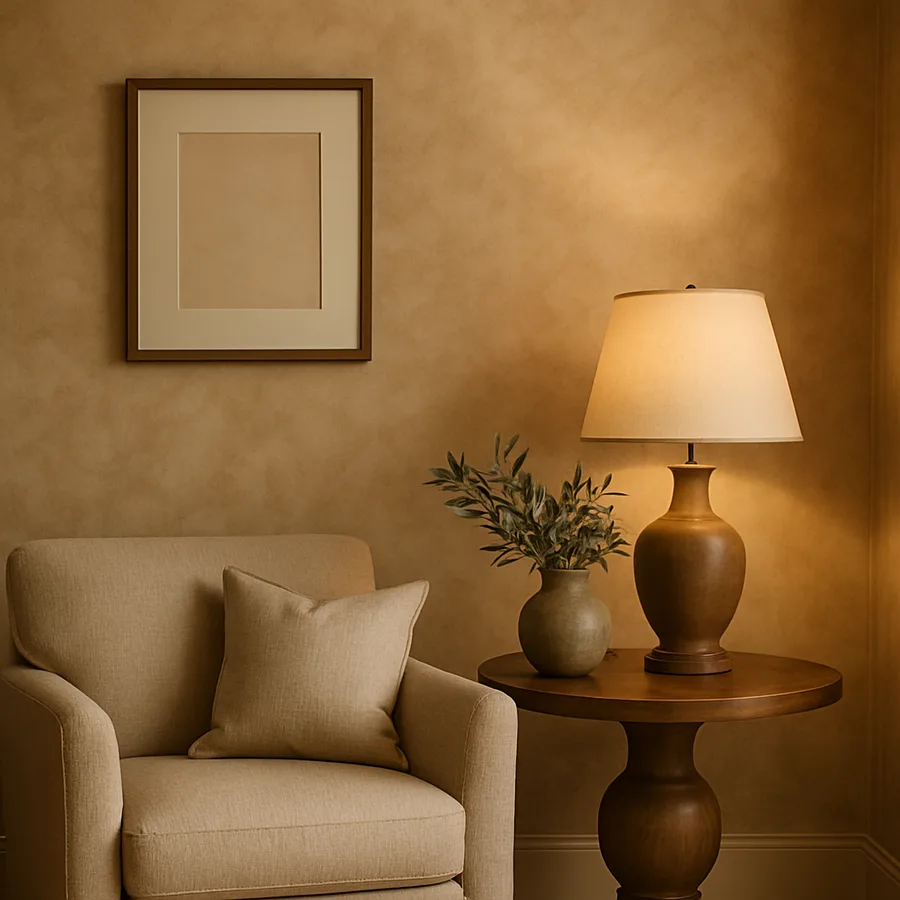
The ragging paint technique falls in the family of decorative finishes that includes sponging and color washing, but it produces a wall texture that neither relative can match. Ragging with cheesecloth in particular yields a soft organic pattern that mimics aged limestone or weathered fabric, depending on color choice. Where sponging tends toward dotted texture and color washing toward smooth atmospheric depth, cheesecloth ragging produces a delicately wrinkled, almost veined surface that reads as quietly luxurious in person and barely visible in photographs, which is exactly the effect skilled designers chase. The materials cost less than thirty dollars per wall, and the technique forgives more mistakes than its reputation suggests.
What Cheesecloth Ragging Looks Like and Where It Belongs
Cheesecloth is a loosely woven cotton fabric, originally used for straining curds in cheesemaking, and its open uneven weave is what makes it ideal for ragging. When dipped or wrapped and pressed against a wet glazed wall, cheesecloth leaves an irregular pattern of small wrinkles, soft creases, and feathery edges that no synthetic material reproduces. The pattern is organic but not random; the underlying weave grid imposes a faint rhythm that the eye reads as fabric, paper, or stone rather than chaos.
The finish suits rooms where the wall should support the room, not lead it. Dining rooms, bedrooms, libraries, and home offices benefit most because the texture adds the third dimension that flat paint lacks without competing with art, furniture, or light fixtures. The American Society of Interior Designers has noted that subtle textured walls increase perceived room quality without affecting perceived room size, which is the rare upgrade that adds without subtracting.
Cheesecloth ragging is not the right choice for a kid's room (the soft pattern reads as adult), a kitchen with greasy cooking (the texture catches grime), or a bathroom with high steam exposure (the cotton can mildew if not sealed properly). Its sweet spot is the room where you sit still: the chair by the window, the desk in the office, the headboard wall in the bedroom. Have you ever wanted a wall to feel like it was wearing linen rather than paint? That instinct is exactly what cheesecloth ragging delivers.
Materials, Cheesecloth Grade, and Sourcing
Not all cheesecloth is interchangeable. Grocery-store cheesecloth in the canning aisle is too tight and too small for ragging, and it tears under the load. The right product is "grade 50" or "grade 60" cotton cheesecloth sold in long bolts at fabric stores, hardware stores, or paint specialty retailers. A 4-yard bolt is enough for a typical room, allowing you to refresh the cloth as it loads up with glaze. Wash the cheesecloth once before use, hot water and no detergent, to remove sizing that interferes with paint absorption.
Beyond the cheesecloth, you will need flat latex base-coat paint, clear waterborne glaze medium, the chosen glaze color (or two coordinated colors for layering), painter's tape, drop cloths, a wide flat brush for laying on the glaze, and disposable nitrile gloves. Some painters prefer a paint tray with a roller for laying on the glaze; others prefer a brush. The roller covers area faster, but the brush leaves directional marks that the cheesecloth then breaks up into the desired texture.
For paint, both Benjamin Moore and Sherwin-Williams sell decorative-paint lines specifically formulated for glazing, and the Master Painters Institute publishes a glaze-medium specification (MPI #200) that helps when comparing products across brands. The cheesecloth and the paint chemistry have to play nicely; some heavily polymerized paints flash too quickly to allow the cloth to register, and a sample test on cardboard always saves trouble on the wall.
Two Ragging Methods: Rag On vs. Rag Off
There are two fundamentally different ragging approaches and the choice changes both the technique and the look. Rag-on ragging means dipping a wadded cheesecloth ball into glaze and pressing it directly onto the dry base-coated wall, depositing pattern in localized impressions. Rag-off ragging means rolling or brushing a layer of wet glaze across the entire wall first, then immediately pressing a clean dry cheesecloth into the wet glaze to lift pattern out of the surface.
Rag-on produces a more visible pattern with higher contrast because each cheesecloth impression deposits fresh pigment. The finish reads as more "decorated" and is harder to keep subtle. Rag-off produces a softer, more atmospheric finish because the pattern is the absence of pigment rather than the addition of it; each cheesecloth touch lifts a tiny amount of glaze, creating ghostly negative wrinkles in an otherwise full glaze field. For most modern interiors, rag-off is the more sophisticated choice because the resulting pattern is gentler.
The two methods can also be combined. A first pass of rag-off across the entire wall lays down the soft atmospheric base, and a selective second pass of rag-on with a slightly different glaze color adds incidental highlights in deliberate places. The combined approach is more time-consuming but produces a wall with significantly more visual depth than either method alone. Decide before starting which approach matches the room's mood; switching mid-wall almost always shows.
Step-by-Step Rag-Off Technique
Begin with a fully cured base-coated wall in the chosen background color, with all adjacent surfaces taped and protected. Mix the glaze using the standard one-part-paint to four-parts-glaze-medium ratio, with adjustments for desired translucency. Tear the cheesecloth into manageable pieces, approximately 18 by 18 inches, and crumple each piece into a loose ball about the size of a softball. The wrinkles in the ball are what create the wrinkled wall pattern, so make the ball loosely rather than tightly.
Working in three- to four-foot wall sections, brush or roll the glaze on the wall in even coverage, using crossed strokes to avoid directional bias. Immediately press the cheesecloth ball into the wet glaze with light, repeated, rotating touches, lifting glaze in irregular patterns. Rotate the ball between every few touches so no area gets the same orientation twice in a row. Move the cheesecloth ball at angles relative to the previous touch and avoid pressing too hard, which crushes the wrinkles flat and produces a uniform stamp instead of an organic pattern.
When the cheesecloth ball saturates with glaze and stops registering pattern, swap to a fresh piece. A typical 4x8 wall section uses 3 to 5 cheesecloth pieces, depending on how loaded each one becomes. Maintain a wet edge with the previous section by overlapping the new glaze application about 6 inches into the previous section, then ragging through the overlap to blend. As with all glazing techniques, work fast enough to keep edges wet but not so fast that you sacrifice rhythm and consistency in the ragging touches.
Color Strategies for Different Moods
The finish's mood is set almost entirely by the relationship between base and glaze. A pale putty base with a soft taupe glaze produces a quietly elegant finish suited to formal dining rooms and primary bedrooms. A warm cream base with a soft ochre glaze produces a Mediterranean read that pairs well with terracotta tile and oiled wood. A cool gray base with a slightly cooler gray glaze produces a contemporary monochrome that sits well with modern art and walnut furniture. The pattern is always softer than the color choice suggests, so err toward more contrast than feels safe; subtle on a sample card reads even more subtle on a full wall.
Avoid the obvious traps. White glaze over a colored base looks chalky and washed out. Pure black or near-black glazes over light bases look like dirt no matter how skillfully applied. Glazes more than two color steps darker than the base read as patches rather than texture. The strongest results almost always come from glazes that are one to two value steps deeper than the base on a single color strip, with the same hue family.
For couples or design pairs who cannot agree on which color belongs in a room, ragging with closely related glazes is a quiet compromise that gives both partners a hand in the result without creating a wall that fights itself. Better Homes and Gardens regularly publishes decorating-couple compromise pieces that recommend exactly this kind of layered finish for that reason. Two related grays, a putty and a slightly warmer putty, or a sage and a slightly cooler sage will satisfy most disagreements better than picking one.
Recovery, Sealing, and Long-Term Wear
The most common ragging failure is over-uniform pattern, where the cheesecloth lifts glaze in too regular a rhythm and the wall starts to read as repeating texture. The recovery is to reload the wall locally with a small amount of fresh glaze using a soft chip brush, then re-rag with a fresh cheesecloth ball oriented at a different angle. This breaks up the regularity without requiring a full do-over. Wait until the wall is fully dry before judging because wet ragging always looks more uniform than the cured finish.
The second most common failure is the visible lap mark between sections. Cheesecloth ragging is more lap-prone than color washing because the pattern is high-frequency and the eye notices any change in rhythm. Recovery is the same as for color washing: wait for full cure, then re-glaze and re-rag the entire wall at a slightly higher transparency, allowing the second pass to homogenize the rhythm without obliterating the first pass.
For sealing, ragged finishes in low-traffic rooms typically need none. Dining rooms and bedrooms hold up beautifully without a topcoat for a decade or more. In hallways, foyers, or any wall within reach of small children, a clear waterborne polyurethane in matte sheen adds wash-ability without flattening the texture. Spot test any top coat on a hidden area first because some products amber the underlying glaze. Better Homes and Gardens reports that 65 percent of homeowners with decorative-paint finishes never seal them and cite no durability problems within a 10-year horizon, which is data worth weighing against the visual cost of an unnecessary topcoat.
Conclusion: A Wall That Whispers
Cheesecloth ragging produces one of the most quietly luxurious wall finishes available to a non-professional, and the technique sits at a sweet spot in the difficulty curve. It is harder than rolling flat paint but easier than Venetian plaster; it forgives more than stripe painting but rewards more practice than sponging. The materials are cheap, the cleanup is quick, and the result lasts for decades when paired with quality paint. Most importantly, the finish ages gracefully because its irregularity is part of its design rather than a flaw waiting to develop.
The principles to keep in mind are simple. Choose closely related colors. Mix glaze with adequate transparency. Work in disciplined sections with a wet edge. Rotate the cheesecloth ball and switch to fresh pieces when they saturate. Stop one pass earlier than your instincts suggest. And step back from the wall regularly to read it as a whole rather than as individual touches, because the finish only makes sense at viewing distance, not at arm's length.
Have you been staring at the same flat-painted dining room for years, sensing it needs something but resistant to wallpaper or accent colors? Cheesecloth ragging is the answer that adds presence without demanding attention. The technique pairs especially well with antique wood furniture, oil-rubbed bronze hardware, and the kind of unbleached linen drapery that has been quietly trending across high-end residential interiors for the past several seasons. The wall does not compete with these elements; it amplifies them by giving the eye a soft mineral surface to read against the harder edges of furniture, art, and millwork.
One last consideration is what the technique teaches the painter. Anyone who finishes a successful ragged wall comes away with a more sensitive eye for surface, light, and color than they had before. The discipline of working in sections, judging glaze ratios, and reading a wall at viewing distance carries over to every subsequent painting decision in the home. The first ragged wall is a project; the second is a pleasure; by the third, the technique is a tool that comes out whenever a room needs depth without noise. Buy the cheesecloth, mix the glaze, prep the room, and commit a Saturday to your dining room or bedroom this month. The wall will become the surface that everything else in the room is implicitly arranged around, and the technique will earn its place in your decorating toolbox for the rest of your life.
More Articles You May Like



Comments
Post a Comment