Stair Carpet Runner Installation With Brass Stair Rods
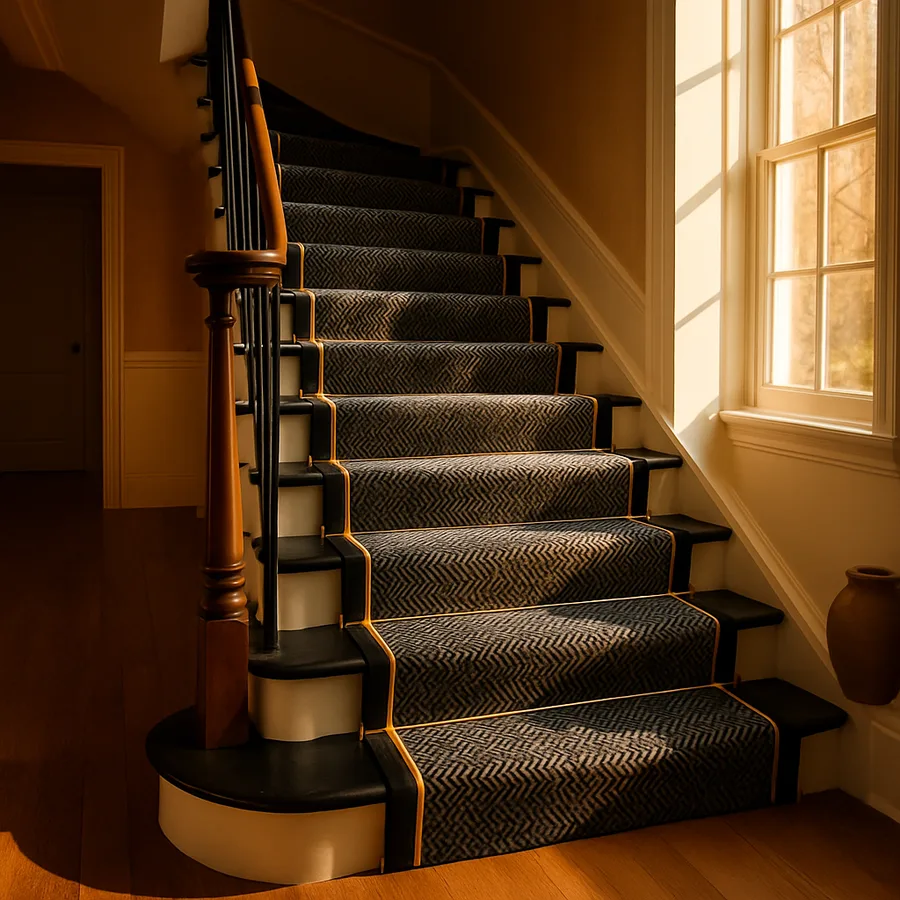
A staircase is often the first architectural feature visitors notice when they step into a home, and installing a stair carpet runner secured with brass stair rods remains one of the most enduring ways to add warmth, traction, and tailored character to wooden treads. This installation method, refined by craftsmen throughout the nineteenth and twentieth centuries, blends traditional joinery with modern fastening hardware to produce a surface that protects timber, dampens footstep noise, and signals careful attention to detail. Whether you are working with a refurbished Victorian townhouse, a mid-century split-level, or a newly built colonial, the principles of measurement, padding, alignment, and finishing remain essentially the same.
This guide walks through the full process from initial assessment to the final tightening of the rods, and it draws on the safety guidance maintained by national building organizations. The National Association of Home Builders reports that staircases are responsible for a disproportionate share of residential falls each year, making the friction and visual cueing supplied by a properly installed runner a meaningful safety upgrade as well as a decorative one. By the time you finish reading, you should feel confident enough to plan an installation, gather materials in correct quantities, and execute the work over a long weekend.
Why a Carpet Runner Belongs on a Hardwood Staircase
Hardwood stairs are beautiful, but unprotected treads inevitably show wear at the nosing where every footstep concentrates pressure. A runner intercepts that abrasion and spreads it across a sacrificial textile that can be replaced far more cheaply than refinishing the wood. Beyond protection, the runner introduces texture and color into what is often an underused vertical canvas, allowing homeowners to extend a hallway palette upward without committing to wall-to-wall carpeting. Designers frequently treat the runner as a visual spine that ties two floors of the home into a single coherent narrative.
Acoustic comfort is another reason runners persist in modern interiors. Bare wooden stairs amplify footfall, especially in homes with high ceilings and minimal soft furnishings, and a runner with a quality pad beneath it can reduce that reverberation noticeably. Households with elderly residents, young children, or pets that scramble up and down repeatedly often find the noise reduction transformative. The cushioning also reduces joint impact, which matters in homes where someone climbs the stairs dozens of times each day.
The third reason is grip. Polished hardwood becomes slippery when dust accumulates, socks are worn, or humidity changes the surface coefficient of friction. The U.S. Consumer Product Safety Commission notes that more than a million Americans seek emergency care for stair-related injuries annually, and the right runner provides a meaningful traction improvement on each tread. Have you ever caught yourself sliding on the third step from the top while carrying laundry? A runner addresses precisely that risk.
Measuring and Specifying the Runner
Accurate measurement is the foundation of a clean installation. Begin by counting the total number of steps from the bottom riser to the upper landing, then measure the tread depth from the back of the step to the front of the nosing, and the riser height from the top of one tread to the next. Add these two figures together, multiply by the number of steps, and add roughly ten to fifteen percent for waste, pattern matching, and the wraparound at the top landing. For a typical fourteen-step staircase with eleven-inch treads and seven-and-a-half-inch risers, you will need approximately eight linear yards of runner at standard widths.
Runner width is a stylistic decision but also a practical one. A common convention leaves three to four inches of exposed wood on either side, which means a thirty-six-inch-wide staircase typically receives a twenty-seven- or thirty-inch runner. Wider exposure looks more formal and shows off the timber, while narrower exposure feels enveloping and reads as more residential. Pattern repeat matters too, because a tight geometric repeat can fight with the visible step joints, while a soft tonal stripe or organic motif tends to forgive minor alignment imperfections.
Material choice influences durability. Wool blends remain the gold standard for high-traffic runners because the natural fiber resists crushing and recovers from compression, while synthetic blends offer better stain resistance and lower cost. Many installers favor a wool-nylon blend in a hand-loomed or flat-weave construction for staircases because the lower pile registers less dirt and ages with a pleasant softening rather than a matted look.
Selecting and Preparing the Brass Stair Rods
Brass stair rods serve two purposes simultaneously. Functionally, they help anchor the runner at the joint between the riser and the tread, pressing the textile into the rear angle and reducing migration over time. Decoratively, they add a horizontal rhythm of warm metal that catches light and emphasizes the geometry of the staircase. Solid brass rods will develop a soft patina over the years, while lacquered brass holds its mirror finish but cannot be re-polished without stripping the coating.
Rod length should match the runner width exactly. A rod that overhangs the runner looks careless and can snag clothing, while one that falls short fails to apply even pressure across the textile. Most suppliers offer rods in standard lengths between twenty-four and thirty-six inches, often with the ability to cut to size in their workshop. Choose end finials that suit the home's vocabulary. Acorn finials read traditional, ball finials read transitional, and pyramid or pineapple finials read formal.
Brackets come in two main configurations. Surface-mounted brackets attach directly to the riser-tread joint and are simpler to install, while recessed brackets sit in a mortised pocket and present a flusher appearance. For a do-it-yourself installation, surface-mounted brackets save considerable time and require only a drill, a level, and patience. Confirm bracket spacing before purchasing, because most installers center one bracket six to nine inches inboard from each end of the rod.
Installing the Pad Layer
The pad beneath the runner extends its life and quiets the staircase, and skipping this step is a common false economy. Choose a dense waffle-rubber or felt-rubber pad rated for stair use, and avoid the thin foam pads that come bundled with budget runners. A heavier pad of around forty ounces per square yard offers the best combination of cushion and stability, and it will not bottom out under repeated foot pressure.
Cut the pad slightly narrower than the runner, by about an inch on each side, so that no pad peeks out when the runner is centered on the step. Each step receives a pad piece that wraps from just below the nosing back to the riser-tread joint, attached with a heavy-duty staple gun. Place staples every two to three inches along the back edge and across the front, taking care to drive them flush so they do not telegraph through the runner pile.
Make sure each pad piece sits within the area that the runner will cover, with no overhang on the sides. The International Code Council publishes residential stair geometry requirements that some installers reference to confirm that the addition of pad and runner does not reduce effective tread depth below code minimums, particularly on older staircases where treads were built shallower than current standards.
Laying and Securing the Runner
Begin at the bottom of the staircase and work upward, because gravity will help you keep the runner taut as you progress. Center the runner using your measured offset and align the leading edge with the front of the bottom riser. Fold the lower edge under by about an inch to create a clean hem, then staple along the back of that hem so the staples are concealed when the runner drapes down. From this anchor, draw the runner up over the first nosing and onto the tread.
Pull the runner snugly across each tread and into the back angle where the tread meets the next riser. A bolster tool or a wooden block tapped gently with a mallet can drive the runner deep into that joint, where the brass rod will hold it. Add staples along the back of each tread inside the area the rod will cover, two or three per tread, to keep the runner from creeping during the months before everything settles into place.
Repeat the process step by step, checking alignment every three or four risers. If the runner drifts left or right, gently lift the most recent staples and reposition. Once you reach the top landing, fold the runner under and staple the hem along the back of the top riser. Now you can install the brass rods.
Mounting the Brass Rods and Final Finishing
Install the brackets first by positioning them at the back of each tread, flush against the riser, with the centerline matching the rod centerline you marked during planning. Drill pilot holes sized for the supplied screws to prevent the trim wood from splitting, then drive the screws home until each bracket sits snug against the timber. A small bubble level held across the bracket pair confirms that the rod will sit horizontally rather than at a tilt.
Slide the rod into its brackets, attach the finials by threading them onto the rod ends, and tighten until the finials seat firmly. Some rod systems include set screws on the brackets that lock the rod against rotation, which is worth using if your finials are not perfectly balanced. Step back every few rods to inspect the line of finials from below. They should march in a precisely parallel formation up the staircase.
Once all rods are installed, walk the runner from top to bottom, brushing the pile with a stiff vacuum attachment or a horsehair brush to lift any compression marks. Tap each rod gently with the back of a wooden mallet to ensure it has settled fully into its brackets. Inspect every tread for stray staples or loose threads and trim them flush.
Conclusion
Installing a stair carpet runner with brass stair rods is a project that rewards patience and careful measurement. The investment in time and materials yields a staircase that is quieter, safer, and more visually settled than bare wood alone can provide, and the rods themselves become a discreet jewelry of the home that catches the eye in every season. Homeowners who take this work seriously often find that the finished staircase becomes a point of pride during gatherings and a daily reminder that craftsmanship still has a place in residential interiors.
The hardware described here is widely available through specialist suppliers and traditional ironmongers, and many local upholsterers will gladly assist with custom runner fabrication if a commercially available roll does not suit your interior. If you prefer to leave the work to professionals, look for installers who can show photographs of completed staircases and who carry references from interior designers in your area, because their experience will save you both money and frustration on a complex installation.
Are you ready to commit to the project this season, or would a slightly simpler upgrade such as nosing repair come first? Whatever path you choose, document your measurements before you order anything and order ten to fifteen percent more material than the bare calculation suggests. Keep a small toolkit dedicated to the staircase for the months and years that follow, including a soft brush, a vacuum attachment for upholstery, a few spare staples for the back of each tread, and a polishing cloth for the rods themselves. The simple habit of running that toolkit over the staircase once each season will keep the installation looking fresh for far longer than the textile itself might suggest.
Walk your staircase with a notebook tonight, count the treads, measure the depths and rises, and you will be one decision closer to the staircase you have been picturing. The combination of measured planning and patient execution is what separates a satisfying installation from a project the homeowner regrets, and either path is well within the reach of a careful do-it-yourself effort.
More Articles You May Like


Comments
Post a Comment