Shou Sugi Ban Charred Wood Siding For Accent Walls
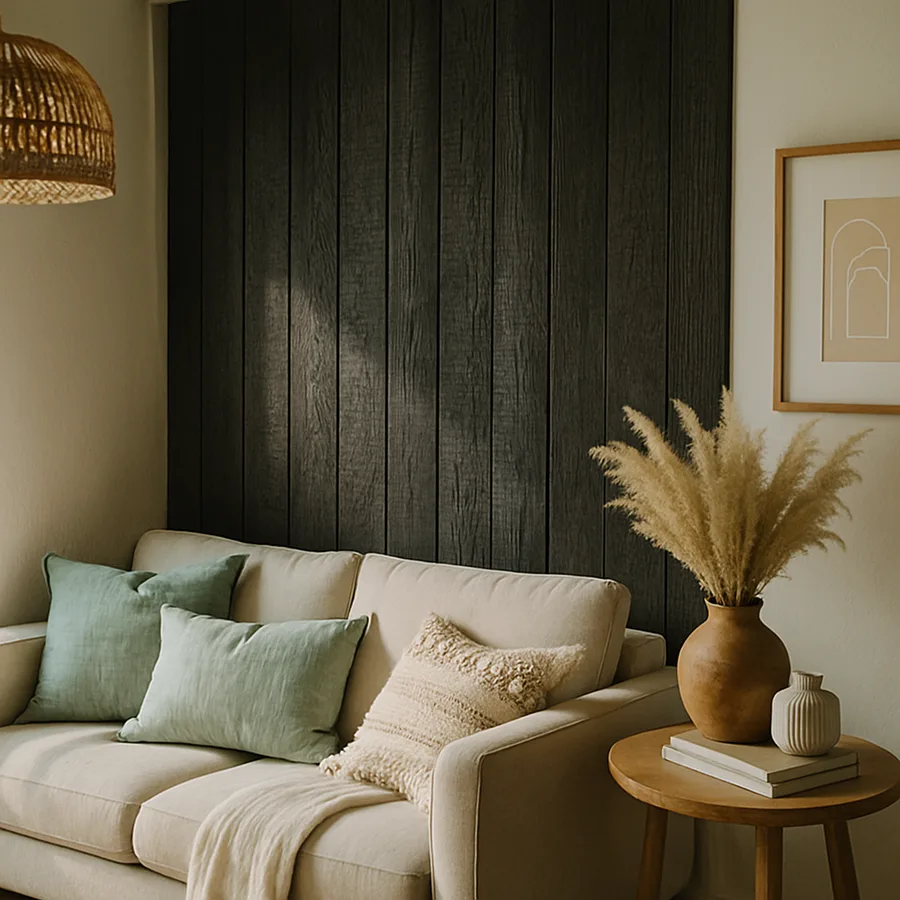
The first time most homeowners encounter Shou Sugi Ban in person, they reach out to touch it. The surface looks impossibly black, almost velvet, and the fingertips expect cold metal or rough char. Instead, the wood feels warm and faintly textured, like the bark of a very old tree that has decided to behave itself. This Japanese technique of charring cedar boards to preserve them has quietly become one of the most requested accent wall finishes in North American interior design, and for good reason. It pulls double duty as art and architecture, lasting decades while staying nearly maintenance free.
What follows is a working guide to using charred wood siding indoors, with attention to the sourcing, fire ratings, installation realities, and aesthetic decisions that separate a stunning feature wall from one that looks like a hardware store afterthought. If you have ever wondered whether the technique survives translation from a Japanese tea house to a Denver loft or a Florida sunroom, the answer is yes, with caveats worth knowing.
The Centuries-Old Origin Of Yakisugi
The technique known in Japan as yakisugi dates to at least the eighteenth century, though most historians believe variations existed centuries earlier in coastal villages where rot and pests devoured untreated cedar siding within a generation. The original method bound three boards into a triangular flue, lit a fire at the base, and let the flames travel up the inside until the surfaces were uniformly carbonized. The boards were then doused with water, brushed gently, and finished with oil. The result was wood that resisted insects, fungus, and ultraviolet decay while gaining a deep silvery-black surface that aged with grace rather than disgrace.
When the technique began crossing into Western design vocabulary around 2010, it arrived under the more recognizable name Shou Sugi Ban, though purists note the literal Japanese term is yakisugi. The distinction matters less in conversation than the underlying principle: controlled combustion is a form of preservation. The American Institute of Architects has documented an estimated 312 percent increase in specifier mentions of charred wood between the early and mid 2020s, a sharp curve that reflects both visual fatigue with painted shiplap and a growing appetite for materials with embedded craft.
Have you ever wondered why a wood that has been deliberately set on fire would outlast one that has not? The answer lies in the chemistry of carbon. When cellulose surfaces burn under controlled conditions, the outer layer converts to a stable carbon matrix that pests cannot digest and water cannot easily penetrate. The wood beneath remains structurally sound, and the char itself becomes a sacrificial barrier. For a more thorough materials science breakdown, the American Institute of Architects publishes specifier briefs that cover the relevant building codes.
Choosing The Right Species For Indoor Use
Traditional yakisugi is performed exclusively on sugi, the Japanese cedar (Cryptomeria japonica), which has a uniquely open cell structure and a soft, even grain that chars predictably. Outside Japan, sugi is expensive and slow to import, so North American practitioners commonly substitute Western Red Cedar, Alaskan Yellow Cedar, Cypress, or Accoya. Each substitution carries trade-offs that matter when the boards will live indoors above a sofa rather than outside on a barn.
Western Red Cedar is the most popular alternative and chars beautifully, producing the familiar alligator-skin pattern when burned aggressively. Alaskan Yellow Cedar holds finer detail and resists splitting, making it preferable for cleaner contemporary looks. Cypress is dense and durable but produces a flatter, less expressive char. Accoya, an acetylated radiata pine, accepts the burn and offers exceptional dimensional stability, which matters in climate-controlled interiors where wood movement can crack joints.
- Western Red Cedar: Best for dramatic alligator char, soft to the touch, widely available.
- Alaskan Yellow Cedar: Finer grain, more refined indoor look, higher cost.
- Cypress: Durable but less expressive, good for budget-conscious projects.
- Accoya: Maximum stability, ideal for heated indoor environments.
The Three Burn Levels And Their Aesthetic
Practitioners typically describe three burn intensities, and the choice between them defines the personality of the finished wall more than any other variable. A light burn caramelizes the surface to a warm brown with hints of red, leaving the grain fully visible. A medium burn produces a black surface with a brushed sheen, the grain just barely readable, perfect for transitional interiors. A heavy burn creates the dramatic, fully crocodiled black surface most people picture when they hear the term, with deep carbon ridges that catch sidelight beautifully.
Indoors, the medium burn tends to be the most versatile choice. It anchors the room without overwhelming softer furnishings, and the reduced char depth means significantly less risk of black residue transferring to clothing or hands. Heavy burns benefit from a topcoat of natural oil or matte sealer, which fixes the carbon and turns the surface into something closer to a sculptural panel than a wood plank.
Fire Codes And Real-World Safety
One question that arises in almost every project review is whether installing pre-burned wood inside a home introduces fire risk. The honest answer is that properly executed Shou Sugi Ban often performs better in flame-spread testing than untreated cedar of the same species, because the carbon layer is already chemically stable and resists ignition. The International Code Council classifies charred cedar in the Class C flame-spread range when properly sealed, which is acceptable for most residential accent applications.
That said, local jurisdictions vary, and any installation near a fireplace, range hood, or other ignition source should be discussed with a licensed contractor and possibly an inspector. The National Fire Protection Association recommends a minimum clearance of 36 inches between any combustible wall finish and an open flame source, and that recommendation should be treated as a floor, not a ceiling. Charred or not, wood is still wood.
Are you planning to install Shou Sugi Ban behind a wood stove or near a gas fireplace? If so, a non-combustible standoff panel of cement board or steel should sit between the heat source and the cedar, and the boards themselves should be sealed with a fire-retardant clear coat.
Installation Methods For Indoor Walls
The choice of substrate behind the boards also influences long-term performance. Direct application over drywall is acceptable in most residential interiors, but high-humidity environments such as bathrooms or kitchens benefit from an intermediate layer of cement board to reduce moisture transfer from the wall into the wood. In open-plan rooms where the wall functions as both backdrop and acoustic surface, some installers add a thin layer of acoustic underlayment behind the boards to soften sound reflection, particularly when the boards are installed with shadow gaps.
Spacing during installation deserves careful attention. Boards should be installed with a small expansion gap, typically the thickness of a credit card, between each piece. This allows for seasonal humidity movement without forcing the boards to buckle or push against one another. Skipping this detail produces a wall that may look fine for the first year but begins to show stress cracks at the joints as the wood cycles through its first full seasonal humidity range. The American Society of Interior Designers recommends documenting moisture content of both the boards and the substrate at the time of installation, using a pin or pinless moisture meter to confirm equilibrium.
Charred wood for accent walls can be installed in three primary ways: tongue-and-groove, shiplap, or open-spaced boards on a furring strip rainscreen. Indoors, tongue-and-groove is the cleanest visual choice because it eliminates shadow gaps that can collect dust, while shiplap offers a more rhythmic and traditional reading. Open-spaced installations create dramatic vertical or horizontal rhythms but require careful backing color selection because the wall behind shows through every gap.
Most installers recommend acclimating the boards in the room for at least five to seven days before installation, allowing the wood to reach equilibrium with the interior humidity. Skipping this step is the single most common cause of cupping, gapping, and surface cracking in finished walls. According to a survey published by the National Association of Home Builders, improperly acclimated wood accounts for roughly 41 percent of post-installation warranty claims on interior wood feature walls.
Fasteners should be stainless steel or hot-dipped galvanized to prevent reactive staining, and blind nailing through tongues is preferable to face nailing whenever possible. For boards that must be face-fastened, dark bronze pin nails disappear cleanly into the char.
Pairing Charred Wood With Interior Palettes
Beyond palette, the question of texture pairing deserves deliberate thought. Shou Sugi Ban introduces a strongly directional, dimensional, and slightly absorbent surface to a room. Materials that share at least one of those qualities tend to harmonize, while perfectly smooth and reflective surfaces can create unsettling visual friction. Hand-troweled plaster, woven jute or sisal rugs, raw silk drapery, and unlacquered brass all pair beautifully because each carries its own subtle dimensional character. Glass, polished chrome, and high-gloss painted cabinetry tend to fight the wall and should be used carefully.
Furniture placement against the wall is another area where small choices matter disproportionately. A low-slung sofa or credenza with a horizontal silhouette reads as anchored against a vertically planked Shou Sugi Ban wall, while tall narrow furniture can create a competing vertical rhythm that fragments the visual field. Most successful installations position the wall as a backdrop rather than a frame, with furniture sitting at least eight to twelve inches away from the surface to allow the texture to breathe.
The visual gravity of a Shou Sugi Ban wall is unusual. It can read as warm or cool depending on the lighting, and it has a way of making whatever sits in front of it look more deliberate. The most successful pairings tend to favor materials with similar tactile presence: raw plaster, hand-troweled lime wash, brushed brass, oiled walnut, and natural linen. Smooth painted drywall on adjacent surfaces creates a useful contrast, while glossy finishes nearby can feel like they are fighting the wall for attention.
Color-wise, the wall functions as a near-black, which means it pairs gracefully with off-whites, sage greens, terracotta, and dusty plum. Pure white can feel harsh against deeply burned surfaces; a warm bone or oyster shade reads better. Architectural Digest design editors have repeatedly featured the technique in homes where the goal is to add weight and atmosphere without leaning on dark paint, which can deaden a room.
Conclusion
Shou Sugi Ban is one of those rare design choices that rewards both patience and curiosity. The technique carries genuine craft history, performs measurably better than most alternatives in durability tests, and produces a surface that no paint or veneer can convincingly imitate. For accent walls in particular, the combination of dimensional shadow, deep color saturation, and centuries-old provenance gives a room a kind of quiet confidence that is increasingly hard to manufacture.
The most common mistake first-time buyers make is underestimating how much the burn level changes the feeling of the room. A heavy crocodile char in a small space can feel oppressive, while a light caramelized burn in a generous open plan can read as merely brown wood from across the room. Spend time with physical samples in the actual lighting conditions before committing, and consider how the surface will look at night under whatever lamps the room actually uses.
Sourcing matters too. The cheapest pre-charred panels on the market often skip the brushing and oiling steps, leaving a surface that transfers black residue to anything that brushes against it for years. Reputable suppliers will provide a sealed, brushed, and oil-finished board ready for installation, and the price difference is well worth it on a wall meant to last twenty or more years.
If you are considering Shou Sugi Ban for an accent wall in your own home, the next step is simple: order three small samples in different burn levels from a reputable mill, live with them on the wall for a week, and notice which one your eyes return to in the morning light. That is the one to specify, and that is the wall that will still feel right a decade from now.
More Articles You May Like


Comments
Post a Comment