Peel-and-Stick Wallpaper Accent Walls That Renters Can Remove
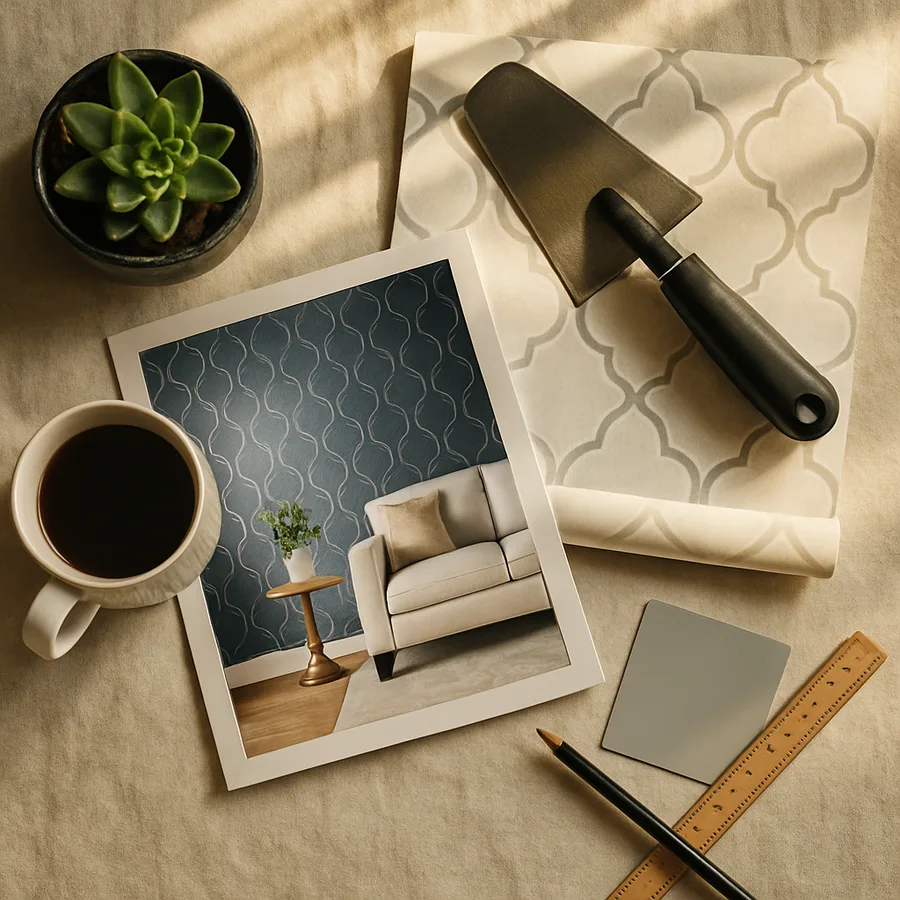
The day I signed my first lease, I asked the landlord whether I could paint the bedroom a moody navy. The answer, predictably, was a polite but firm no. That single conversation pushed me into the rabbit hole of peel-and-stick wallpaper, and what I found was a category that has matured dramatically over the last decade. Today, a renter can transform a single wall in a weekend, then peel the design off cleanly when the lease ends. According to a 2024 consumer report from Apartment Therapy, more than 62 percent of urban renters in the United States now consider removable decor essential to feeling at home. That number is striking, and it tells you everything about how the rental market is reshaping interior design.
What makes accent walls especially appealing is the leverage they offer. One wall, often the one behind a bed or a sofa, becomes the visual anchor for the entire room. You spend a fraction of the cost of full-room wallpaper, you commit to a fraction of the labor, and you create a focal point that photographs beautifully. Have you ever noticed how a single bold wall can make a small studio feel intentional rather than makeshift? That is the quiet magic of an accent wall, and peel-and-stick technology has finally made it accessible to people who do not own their walls.
Why Peel-and-Stick Beats Traditional Wallpaper for Renters
Traditional pasted wallpaper requires water trays, booking time, smoothing brushes, and a steady wrist. It also requires the kind of permission most landlords will not give. Peel-and-stick wallpaper, by contrast, uses a low-tack pressure-sensitive adhesive that bonds to clean drywall, finished primer, or satin paint without solvents. The American Society of Interior Designers, better known as ASID, has noted in its industry trend reports that pressure-sensitive wall coverings represent the fastest-growing segment of the residential wallcovering market, with double-digit annual growth since 2021.
The renter math is simple. A standard 24-inch by 16-foot peel-and-stick roll costs between thirty and seventy dollars depending on the brand. To cover an accent wall measuring eight feet wide by nine feet tall, you typically need two to three rolls, putting the project in the range of one hundred to two hundred dollars. Compare that to the four hundred to eight hundred dollars an accent wall might cost if you hired a professional installer for traditional paper, and the savings become obvious. The removability is the second pillar. Reputable brands engineer their adhesives to release without taking paint or drywall facing with them, provided the wall was prepared correctly. We will return to that preparation step in detail, because it is the single biggest predictor of a clean removal.
There is also a reversibility factor that matters psychologically. When you know you can peel the design off in twenty minutes, you are willing to take a stylistic risk you might otherwise avoid. Better Homes and Gardens covered this exact phenomenon in a 2023 feature, observing that renters who use removable wallpaper report higher satisfaction with their living spaces than those who only paint or use art. The freedom to experiment turns out to be more valuable than the design itself.
Choosing the Right Wall for an Accent Treatment
Not every wall in your apartment is a good candidate. The ideal accent wall is the one your eye lands on first when you enter the room. In a bedroom, that is almost always the wall behind the headboard. In a living room, it is usually the wall opposite the main entry, often the one holding the sofa or a fireplace. In a dining nook, the long wall framing the table works beautifully. The wrong choice is any wall heavily interrupted by windows, doorways, vents, or built-in features, because peel-and-stick is forgiving but it does not love complex cuts around obstacles.
Wall texture matters more than most people realize. Smooth drywall finished with a satin or eggshell paint is the gold standard. Heavily textured walls, especially the orange-peel and knockdown finishes common in newer construction, reduce adhesion and create tiny air pockets under the paper. If your wall has noticeable texture, you can still proceed, but you should expect a slightly less crisp result and you should choose patterns with movement, like florals or watercolor washes, rather than tight geometric grids that highlight every imperfection.
Lighting is the third consideration, and it is the one most renters overlook. A wall that receives strong natural light through south-facing windows will reveal subtle puckers and seams that a dimly lit hallway forgives. If your accent wall is bathed in afternoon sun, plan to install on an overcast day or in the evening, when lower light helps you see the paper without harsh raking glare. House Beautiful has run multiple installer interviews emphasizing this point, and it aligns with what professional installers from firms like Graham and Brown have told their customer service teams.
Brands That Renters Trust for Clean Removal
The peel-and-stick category now includes dozens of brands, and they are not interchangeable. The big differentiator is the substrate, which is what the printed pattern sits on. Woven polyester substrates from brands like Tempaper, Chasing Paper, and Spoonflower tend to remove most cleanly because the substrate has just enough give to release evenly. Vinyl substrates are sometimes glossier and more washable, which is excellent for kitchens and bathrooms, but they can grab paint more aggressively if your wall surface is poorly bonded.
For renters specifically, a few brand strategies have earned reputations worth knowing. Tempaper, founded in 2008, was among the first to popularize the category and partners with designers like Genevieve Gorder to release seasonal collections. Chasing Paper, based in Milwaukee, prints on a textured substrate that mimics traditional wallpaper more closely than its competitors. Spoonflower, headquartered in Durham, North Carolina, lets you upload custom artwork or buy from independent designers, which is invaluable when you want a pattern nobody else in the building owns.
Customer reviews on Architectural Digest roundups and on retailer sites converge on a single piece of advice. Always order one extra roll. Patterns are batched, and dye lots can shift slightly between print runs, so if you run short and reorder later, the new roll may not match. A leftover roll is also useful for patching if you ever damage a panel during the lease.
How to Prep a Wall So the Paper Removes Cleanly Later
This is the section that determines whether you get your security deposit back. Wall preparation takes about an hour, costs less than fifteen dollars in supplies, and is non-negotiable. Start by washing the wall with a solution of warm water and a few drops of dish soap, applied with a microfiber cloth. The goal is to remove dust, oils, and any residue that would prevent the adhesive from bonding evenly. Rinse with clean water, then let the wall dry for at least two hours.
If the wall is freshly painted, wait at least four weeks before applying peel-and-stick. Latex paint cures slowly, and applying adhesive to undercured paint is the single most common cause of paint pulling off during removal. The Paint Quality Institute, a research arm associated with major coatings manufacturers, has documented that latex paint reaches roughly 90 percent of full cure at three to four weeks under normal indoor conditions. Patience here is genuinely the difference between a clean peel and a small drywall repair bill.
Mark a plumb line with a level and a pencil before you place the first panel. Walls and ceilings are rarely perfectly square, and if you align your first panel to the corner instead of to true vertical, the pattern will visibly lean by the time you reach the other side. A four-foot level and a soft graphite pencil are enough. Why does this small step matter so much? Because human eyes detect even a one-degree tilt over a nine-foot wall, and that tilt is the difference between a wall that looks professional and one that looks like a weekend project.
Installation Walkthrough Without the Drama
Cut your first panel about four inches longer than the wall height, which gives you trim allowance at the top and bottom. Peel the backing down by roughly twelve inches, align the top edge with your ceiling line and your plumb mark, and press the exposed adhesive to the wall. Work downward in increments, peeling the backing as you go and smoothing with a felt squeegee or a clean kitchen sponge wrapped in a soft cloth. Always smooth from the center outward to push air toward the edges.
For the second panel, match the pattern at the top first, then work down. Most modern peel-and-stick wallpapers are designed for a butt seam, meaning panels meet edge to edge without overlap. If you find yourself with a tiny gap, do not panic. A small artist's brush loaded with acrylic paint that matches the dominant color of your wallpaper can hide a hairline gap invisibly. This is a trick professional installers use that almost no one talks about publicly.
Trim the top and bottom with a sharp utility knife guided by a wide putty knife held flush to the ceiling and baseboard. A fresh blade matters enormously here. A dull blade drags the paper and creates ragged edges, while a fresh blade slices cleanly. Change blades after every two panels at minimum. Apartment Therapy and Better Homes and Gardens both publish step-by-step photo guides that align with this approach, and following the sequence above will give you a wall that reads as intentional rather than improvised.
Removing the Wallpaper Without Damaging the Wall
When the lease ends or when you simply want a change, removal is straightforward if the prep was done correctly. Start at a top corner and lift the panel slowly, pulling at roughly a forty-five-degree angle. Pulling straight out from the wall stresses the paper face, while pulling at a low angle stresses the drywall. The forty-five-degree pull keeps both intact. If you encounter a sticky spot, do not yank. Instead, warm the area with a hair dryer on low for about thirty seconds, which softens the adhesive and lets the panel release.
Any residual adhesive comes off with a damp microfiber cloth and a small amount of dish soap. Do not use solvents like Goo Gone or rubbing alcohol on painted walls, because they can dull the paint sheen in patches that will be visible after the wallpaper is gone. If a small piece of paint does come off, which occasionally happens on older walls, a touch-up with leftover wall paint resolves the issue in minutes. The American Society of Interior Designers notes in its renter resources that documenting the wall before installation with a few clear photographs gives you and your landlord a shared baseline for any post-removal conversation.
Have you been holding back on a bold design choice because you worry about commitment? That is exactly the anxiety peel-and-stick was invented to solve. The worst-case scenario, a small touch-up, is genuinely small.
Conclusion
An accent wall is the highest-leverage design move available to a renter, and peel-and-stick wallpaper has made that move accessible without risking your deposit. The category has matured to the point where renters can choose from museum-quality botanicals, hand-painted abstracts, geometric grids, and custom prints from independent designers. The cost is modest, the installation is achievable in a single afternoon, and the removal is genuinely clean when you prepare the wall correctly and use a quality brand.
The only step most people skip is the one that matters most. Wash the wall, wait for paint to cure, mark a plumb line, and use a fresh blade. Those four small disciplines are what separate a wall that earns compliments from one that earns a repair invoice. If you take nothing else from this guide, take the prep checklist seriously, because it is the difference between a deposit returned in full and a contractor visit you did not budget for.
Ready to start your first accent wall? Pick the wall your eye lands on first when you walk into the room, order a single sample from Tempaper, Chasing Paper, or Spoonflower, and tape it up for forty-eight hours before you commit. The sample will tell you everything you need to know about how the pattern reads in your light, at your scale, and with your existing furniture. Sign up for our newsletter for a printable installation checklist and a curated list of renter-tested patterns we update each season.
More Articles You May Like



Comments
Post a Comment