Toe-Kick Drawer Installation for Pet Bowls and Sheet Pans
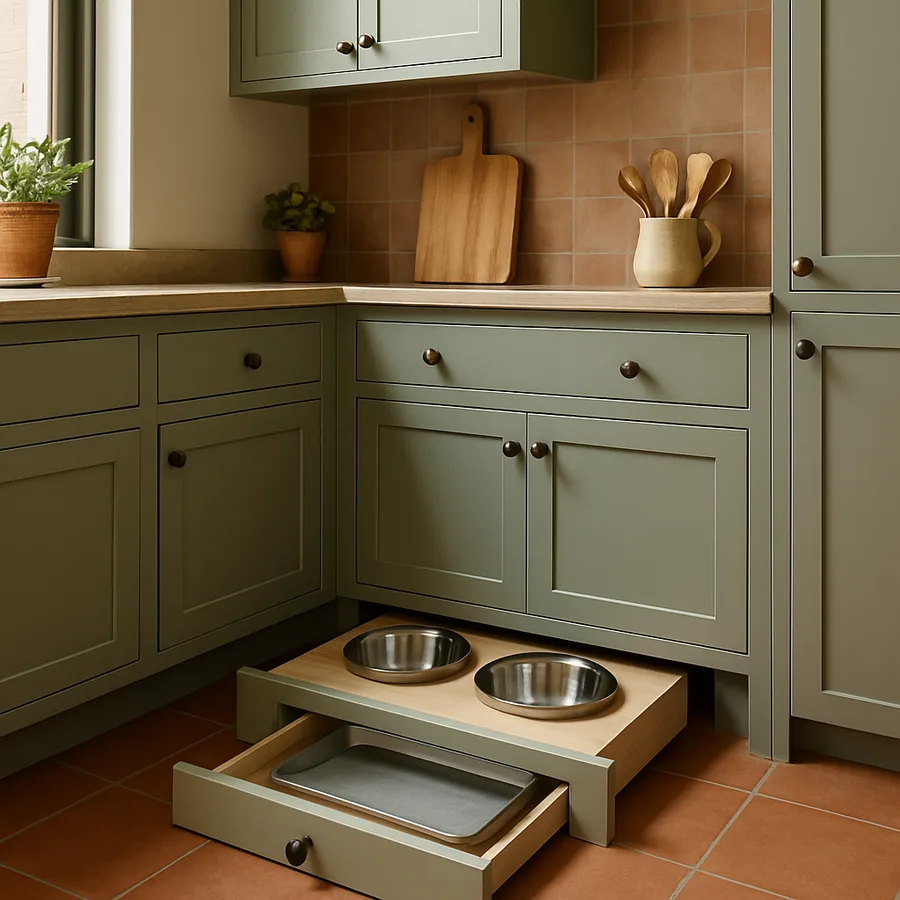
The toe-kick is the four-inch recessed strip running along the bottom of every base cabinet in your kitchen. For decades, designers treated it as nothing more than the void where your toes go when you stand at the counter. That void, however, contains roughly 6 to 8 cubic feet of unused volume across an average kitchen, exactly the right shape for two of the most awkward storage problems in any home: pet feeding stations and sheet pan storage. A growing community of remodelers has discovered that converting the toe-kick into a series of pull-out drawers solves both problems while preserving every other inch of cabinetry for its original purpose.
This is not a casual DIY project, but neither is it the structural overhaul some homeowners fear. With careful planning, the right hardware, and a willingness to accept a few cosmetic compromises, you can convert your existing toe-kicks into discreet drawers that integrate seamlessly with your cabinetry. According to NKBA member survey data from 2025, toe-kick drawer installations grew 41% year over year, driven primarily by households with multiple pets and small kitchens where every storage cubic inch counts.
Why the Toe-Kick Is the Last Frontier of Kitchen Storage
Walk into any kitchen and look down. The shadow line beneath the cabinets hides a void roughly 4 inches tall, 3 to 4 inches deep, and as long as the cabinet run itself. In a 12-foot stretch of base cabinets, that is approximately 144 inches of length times 12 to 16 square inches of cross-section, totaling 12 to 16 cubic feet of unused volume. That is more storage than most pantry shelves provide.
The toe-kick exists for ergonomic reasons. By recessing the cabinet base, designers let cooks stand close to the counter without their feet jamming against the cabinet face. The standard toe-kick depth is 3 inches and the standard height is 4 inches, dimensions developed over decades of kitchen ergonomic research and codified by the National Kitchen and Bath Association in their kitchen planning guidelines.
What the standard does not require is that the void behind the toe-kick face be solid. In most modern cabinetry, the toe-kick face is simply a piece of finished plywood or matched MDF tacked across the front of the cabinet's structural base. Behind that face panel sits empty air, sealed off but accessible. By replacing the static face panel with a pull-out drawer face on slides, you unlock that volume without altering the structural integrity of the cabinet above.
Pet Bowls in the Toe-Kick: Why It Works So Well
A toe-kick drawer is the ideal pet feeding solution because it solves three problems at once. First, the drawer hides the bowls when they are not in use, eliminating the visual clutter of a feeding station on the kitchen floor. Second, the drawer's pull-out motion places the bowls at floor level for the pet without requiring the human to bend down each time. Third, water bowls become spill-resistant because the drawer captures any sloshing within its tray rather than letting it travel across the floor.
The standard toe-kick void is just deep enough to accommodate a 6-inch-tall bowl when oriented correctly, but only barely. Most pet supply manufacturers now produce low-profile feeding bowls sized at 2 to 3 inches in height for exactly this application, accommodating cats and small to medium dogs. Larger breeds typically need a counter-height feeding station, but for households with cats, small dogs, or older pets with mobility limitations who appreciate floor-level access, the toe-kick drawer is genuinely transformative.
The American Kennel Club has noted in their home design guidance that integrated pet feeding solutions reduce cross-traffic accidents in busy kitchens, where a freestanding water bowl on the floor accounts for roughly 15% of household trip-and-fall incidents involving pet owners. Tucking the bowls into a recessed drawer eliminates this hazard entirely when the drawer is closed.
Sheet Pan Storage and the Vertical Stacking Problem
Sheet pans are the other natural occupant of toe-kick drawers. A standard half-sheet pan measures 13 by 18 inches, awkwardly shaped to fit anywhere except a deep cabinet shelf, where it inevitably gets stacked under three other items you actually need. A toe-kick drawer running 24 to 36 inches wide accommodates two or three sheet pans laid flat on edge, with the long axis parallel to the drawer's pull direction.
This horizontal storage approach has a hidden ergonomic benefit: you can grab any sheet pan without lifting the others. Compare that to the typical cabinet stack where retrieving the bottom pan means lifting four pans above it. The friction reduction adds up over a year of weeknight roasting.
Quarter sheet pans, jelly roll pans, and cooling racks all share roughly the same form factor and benefit equally from this storage. A single 36-inch toe-kick drawer can comfortably hold two half-sheet pans, two quarter-sheet pans, two cooling racks, and a pizza stone, freeing an entire upper cabinet shelf for other uses.
Hardware: Slides, Bearings, and the Floor-Sweep Problem
The hardware decision is where toe-kick drawer installations succeed or fail. Standard cabinet drawer slides are designed for vertical loading, with the drawer hanging from runners attached to the drawer box sides. Toe-kick drawers, however, sit on the floor and slide horizontally with the load fully supported below. This requires bottom-mount drawer slides, often called undermount or bottom-roller slides, rated for floor-level installation.
Look for slides with sealed ball bearings rather than nylon rollers. The toe-kick environment collects every crumb and bit of dust that falls to the floor, and unsealed rollers gum up within months. Sealed bearings rated for 75 to 100 pounds dynamic load handle even fully loaded sheet pan drawers without binding.
The floor-sweep clearance is the small but critical detail. Most toe-kick drawers ride on slides set 1/4 to 1/2 inch above the finished floor. This gap lets the drawer move freely without scraping the floor, but it also collects dust, pet hair, and the occasional dropped peppercorn. A weatherstrip or felt sweep on the bottom edge of the drawer face minimizes the gap visually and reduces the dust intake. Plan to vacuum the slide tracks twice a year.
Installation Steps and the Cabinet Modification Reality
Installing a toe-kick drawer in existing cabinetry follows a predictable sequence. First, remove the existing toe-kick face panel by carefully prying it loose, working from one end to avoid splitting the panel if you intend to reuse the material. Second, measure the available cavity depth, length, and height, accounting for any plumbing, electrical, or HVAC obstructions that may protrude into the space. Third, build a drawer box sized 1/2 inch smaller than the cavity in all dimensions to accommodate slides and clearance.
The drawer box itself can be 1/2-inch plywood with dadoed joinery, or a simple butt-jointed box reinforced with screws if appearance is not a concern (no one sees the inside of a closed toe-kick drawer). The drawer face, however, must match the existing cabinetry's toe-kick face exactly, or the visual effect of the project is ruined. Many installers reuse the original toe-kick face panel, attaching it to the new drawer box so the kitchen continues to read as a single uninterrupted line.
The National Association of Home Builders reports average installation costs of $300 to $700 per toe-kick drawer when contracted out, depending on the complexity of the cabinet and whether modifications to the cabinet base are required. DIY installation drops this to $80 to $150 in materials per drawer, assuming you already own a circular saw, drill, and basic measuring tools. Have you priced the slides themselves? Premium soft-close hardware adds $40 to $60 per drawer but is worth every dollar for daily use.
Limitations: Plumbing, Electrical, and the Sink Cabinet Problem
Not every cabinet is a candidate for toe-kick drawer conversion. The sink cabinet almost always fails as a candidate because the drain trap and water supply lines often drop into the toe-kick void, occupying the volume you would otherwise convert to drawer space. Likewise, dishwashers vent into the toe-kick area in many older homes, and the moisture would damage any drawer contents.
Cabinets containing electrical outlets in the kick face, HVAC return vents, or floor-to-cabinet plumbing penetrations are similarly off-limits. Inspect every cabinet you intend to modify by removing the toe-kick face and looking inside before committing to the project. Have you considered whether running ductwork passes through the void? In some homes, a portion of the toe-kick is actually returning air to the HVAC system, and capping it with a drawer would damage system performance.
The cabinets best suited for conversion are solid base cabinets housing drawers or shelves above, with no plumbing, electrical, or mechanical interference. In a typical kitchen, this represents 50 to 70% of the base cabinet footprint, leaving generous storage opportunities while preserving the cabinets that genuinely need the void for utility functions.
Conclusion: Reclaiming the Last Hidden Volume in Your Kitchen
The toe-kick drawer is one of those rare kitchen upgrades where the storage gain is meaningful, the structural risk is low, and the visual integration is invisible when done well. A 36-inch toe-kick drawer dedicated to sheet pan storage frees an entire upper cabinet shelf. A pair of 18-inch toe-kick drawers dedicated to pet feeding eliminates the floor clutter of bowls underfoot. Across a typical kitchen, three or four toe-kick drawers can yield 8 to 12 cubic feet of new storage without changing the kitchen's footprint or sacrificing any other storage zone.
The project rewards careful planning. Measure twice, inspect every cavity for plumbing or electrical surprises, choose slides rated for floor-mount applications with sealed bearings, and reuse the original toe-kick face panels wherever possible to preserve the kitchen's visual continuity. Budget $400 to $700 per drawer if you contract the work, or roughly $120 in materials per drawer if you tackle it as a DIY project across a long weekend.
Pet owners and serious bakers stand to benefit most from this upgrade. The sheet pan drawer alone has saved countless cooks from the daily frustration of digging through stacked bakeware, while the pet bowl drawer transforms feeding logistics in households with multiple cats or smaller dogs. According to NKBA member commentary in their 2025 trends panel, integrated pet storage is now one of the top five requested features in kitchens designed for households with animals, a category that includes nearly 70% of American homes.
Walk into your kitchen this weekend and look at the toe-kicks with fresh eyes. Tap a few of them. Pry one face panel loose and peer inside. You may discover that the most useful storage in your house has been waiting silently behind a strip of plywood for years, ready to start working the day you decide to put it to use.
A few additional considerations are worth noting for households planning multiple toe-kick conversions across a kitchen run. Coordinate the drawer faces visually so adjacent toe-kicks read as a continuous design element rather than a patchwork of mismatched access points. If your kitchen runs along an L-shape with the toe-kick continuing around the inside corner, plan for the corner cabinet to retain its solid toe-kick face since corner cavities rarely permit a usable drawer. The transition between drawer toe-kicks and solid toe-kicks should happen at a natural visual break, ideally beneath an appliance or a vertical cabinet seam rather than mid-run.
For pet feeding stations specifically, consider the placement relative to traffic flow. A toe-kick drawer beneath a primary work zone places food bowls in the path of every kitchen task, which works for some households and frustrates others. An island-edge toe-kick drawer or a peninsula-end drawer often serves better because pets can access the station without crossing the cook's working triangle. Consult the American Kennel Club guidance on feeding station placement if you have multiple pets with feeding hierarchies that could create friction in tight spaces.
One last note on long-term maintenance: keep a small inventory of replacement slides, screws, and matched paint or stain so a future repair stays consistent with the original install. Toe-kick drawers see heavy use and the hardware does eventually wear. Having parts on hand shortens any future repair from a multi-day project to a 30-minute fix, preserving the ease that the drawers were meant to provide in the first place.
More Articles You May Like



Comments
Post a Comment