Teen Bedroom Lighting Layers From Task to Mood for Late Nights
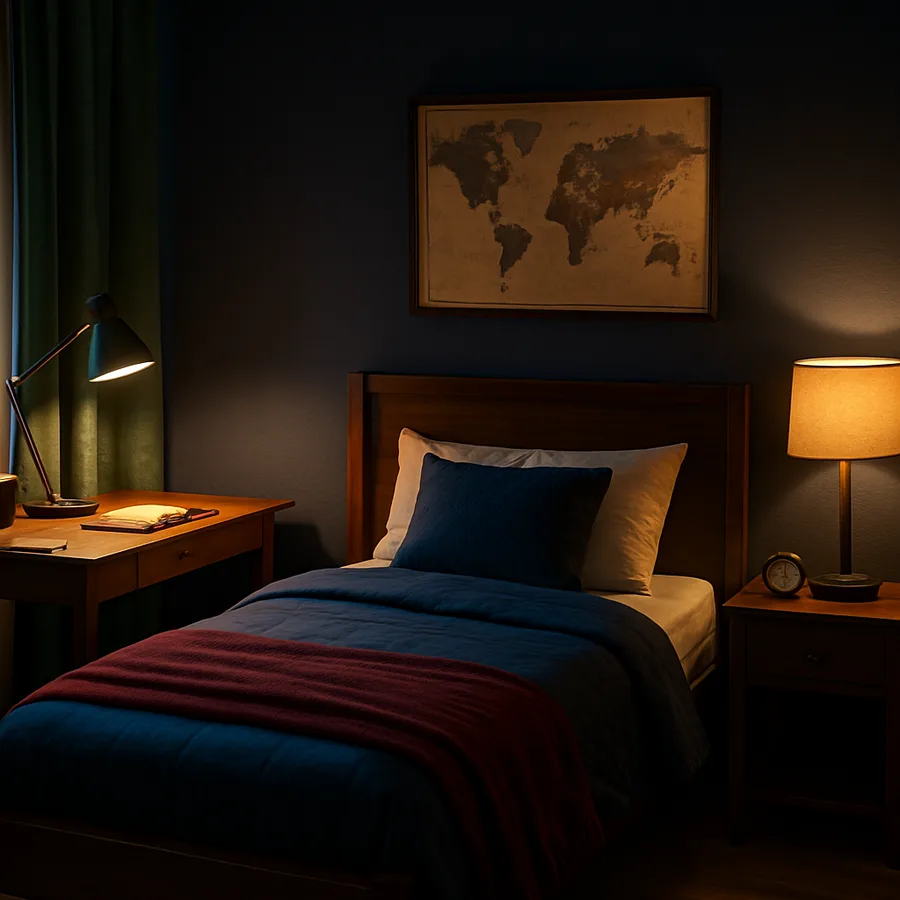
Walk into a typical teen bedroom at midnight and you will find one of two extremes. Either a single overhead fixture is blasting cool white light onto a hunched figure trying to finish an essay, or every light is off except the harsh blue glow of a phone illuminating a face from below. Both scenarios are lighting failures, and both contribute to the chronic sleep deprivation that dominates adolescent health conversations. Layered lighting is the antidote, and it costs less than most parents assume to implement well.
The principle is simple. A bedroom needs at least four distinct lighting layers, each serving a different purpose, each independently controllable. The layers shift across the day from bright and stimulating in the morning to dim and warm in the late evening, supporting the natural circadian rhythm rather than fighting it. A teenager who can dial their bedroom lighting from focused-study mode at 9 p.m. to wind-down mode at 10:30 p.m. to sleep-prep mode at 11 p.m. is a teenager who falls asleep faster, sleeps more deeply, and wakes more easily. The bedroom lighting system is, in functional terms, a sleep-quality intervention disguised as decor.
Why a Single Overhead Light Will Always Fail
The standard builder-grade bedroom installs a single ceiling fixture controlled by a switch at the door. This setup is a holdover from an era when bedrooms were primarily used for sleeping. Modern teen bedrooms are study halls, social spaces, gaming arenas, video-call studios, and creative workshops in addition to being places to sleep. A single overhead fixture cannot serve all those modes, and trying to make it serve them creates a lighting environment that fails at every task.
The geometry of overhead lighting is also wrong for most teen activities. Light cast straight down creates harsh shadows under the brow and chin, which makes faces look severe in mirrors and on video calls. Light hitting a desk surface from directly above produces glare on screens and shadows on hands while writing. The cool color temperature of most ceiling bulbs, around 4000K to 5000K, is fine for morning alertness but actively suppresses melatonin in the evening, which delays sleep onset.
The American Academy of Pediatrics (AAP) has documented that adolescent sleep onset is unusually sensitive to evening light exposure compared to younger children and adults. The body's natural sleep timing during adolescence is already shifted later, and bright cool light in the bedroom in the late evening pushes that already-late onset even later. Have you noticed your teen seems wired at 11 p.m. and exhausted at 6 a.m.? The bedroom lighting environment is almost certainly contributing to that mismatch in ways that no amount of nagging about screen time will fix.
Layer One: Ambient General Light
The first layer is general ambient light that fills the room with even illumination. This is the layer the overhead fixture was supposed to deliver but cannot do alone. The smartest approach is to demote the existing overhead fixture to a supporting role rather than removing it entirely. Replace the bulb with one rated at 2700K to 3000K with high color rendering, install a wall dimmer or a smart bulb that allows dimming, and use this fixture only when whole-room illumination is genuinely needed.
The real ambient layer comes from indirect sources. A floor lamp that throws light upward against the ceiling reflects soft, even illumination back into the room with no harsh shadows. A torchiere style lamp in the corner is one of the most flattering ambient sources you can install. Wall sconces flanking the bed deliver similar indirect quality and free up nightstand surface area. The Illuminating Engineering Society (IES) has published extensive guidance on residential ambient lighting, and the recurring recommendation is to bounce light off ceiling and walls rather than directing it down from a single point.
Smart bulbs in the ambient layer are worth the investment because they let your teen schedule the lighting to match circadian needs without requiring conscious adjustment. A schedule that gradually warms and dims the ambient light from 8 p.m. through 11 p.m. trains the body to recognize the wind-down phase. Look for bulbs that support dim-to-warm behavior, which mimics the way incandescent bulbs used to glow warmer as they dimmed. This single feature is the biggest qualitative upgrade smart lighting offers and is worth choosing brands that include it.
Layer Two: Task Lighting for Real Work
Task lighting is direct, focused illumination on the surfaces where work happens. The desk is the obvious candidate, but the bed itself is also a task zone for reading, journaling, or scrolling. Each task zone needs its own dedicated fixture with its own switch, and each fixture should be sized for the actual work that happens there. A skinny LED puck mounted under a shelf is fine for accent but inadequate for two hours of essay writing.
For the desk, the gold standard is an articulating desk lamp with adjustable color temperature and an adjustable head. Aim for a lamp with at least 800 lumens at full brightness and a head wide enough to illuminate the entire working area without spotlighting. The color temperature should be tunable from a warm 2700K for evening relaxation to a cooler 4000K for focused study sessions. Positioning matters as much as the lamp itself. The light should come from the side opposite the dominant writing hand to prevent shadows from the hand falling onto the page or screen.
For the bed, a wall-mounted or clip-on reading light is more useful than a bedside table lamp. The wall-mounted version frees the nightstand for water, a book, and a phone, and it directs light downward onto the page rather than across the entire bed. Look for a model with a narrow beam angle so a partner or sibling is not disturbed by spillover light. The reading task lamp is the single fixture that most teen bedrooms lack and most need. Better Homes and Gardens (BHG) has featured many bedroom lighting articles over the years, and the addition of a proper reading light consistently appears in the makeovers that genuinely improve nightly use of the room.
Layer Three: Accent and Atmosphere
Accent lighting is decorative and atmospheric. It includes the bias light behind the monitor, the gallery wall picture light, the LED strip under the bed frame, and the small lamp on the bookshelf that is on more for mood than for visibility. Accent lighting is where teens get to express personality, and where parents often overcorrect by either banning it entirely or letting it run wild. The right approach is to encourage accent lighting but to budget the visual energy, treating it like accessories on an outfit.
One or two accent fixtures, thoughtfully placed, transform the mood of the room without crossing into chaos. A picture light on a piece of meaningful art elevates the gallery effect. A small lamp on a shelf or windowsill creates a soft pool of warmth that the eye returns to. An LED strip under a floating shelf or behind a headboard provides a glow that softens the room without becoming a lightshow. The discipline is to limit the count, because every additional accent fixture dilutes the impact of the others and tips the room from intentional to cluttered.
Color-changing accent lights are appealing to teens and not inherently bad, but they require restraint. Use saturated colors like deep violet or warm amber for evening atmosphere rather than the eye-popping primary colors that look good on a screenshot but live poorly in the actual room. Have you walked into your teen's room and felt instantly visually exhausted? The accent layer is almost always the culprit, and the fix is to dim or eliminate at least half of what is currently glowing. Less light, used more thoughtfully, is the consistent rule across professional residential lighting design.
Layer Four: Late-Night Navigation Light
The fourth layer is the one almost no one thinks about until they trip over a backpack at 2 a.m. Navigation lighting is dim, warm, motion-activated illumination that lets your teen move through the room in the middle of the night without flipping on a stimulating overhead light or reaching for a phone screen that destroys their melatonin. This layer is small, cheap, and disproportionately impactful on sleep quality.
The simplest version is a battery-powered motion sensor LED puck mounted near the bedroom door, the closet door, and along the path to the bathroom if applicable. Choose models with warm amber light at 1800K to 2200K, which is the color temperature that least disrupts melatonin production. Cool white motion lights at 4000K and above will wake the brain even at low intensity, completely defeating the purpose. The amber tone is gentle enough that the teen can return to sleep within minutes of using the bathroom.
For teens with closets in their bedrooms, a motion-activated closet light with the same amber tone makes a 4 a.m. blanket retrieval painless. For teens whose desks face a window with streetlights or moonlight, blackout curtains or shades complete the navigation lighting strategy by ensuring that ambient light from outside does not interfere with sleep. The Architectural Digest editorial team has covered the rise of dedicated bedroom navigation lighting as part of the broader wellness-focused interior trend, and the techniques scale from luxury custom builds to inexpensive renter-friendly setups using only battery puck lights.
Smart Controls That Actually Get Used
Smart lighting only works if the control system is so easy that it disappears into the background. A teen who has to open three apps and pick a scene from a menu will simply leave the lights on whatever was last set. The two control approaches that actually get used in real teen bedrooms are physical scene buttons and voice control. Both work even when a phone is dead or out of reach, and both reduce the friction that kills most smart home adoption.
A wall-mounted scene controller with three or four buttons, each programmed to a complete lighting scene, transforms the bedroom in seconds. One button for study mode at full brightness with neutral color temperature. One button for chill mode with dimmed warm ambient and one accent. One button for wind-down mode with very dim warm light only. One button for sleep, which turns everything off except the navigation puck. This single device replaces the cognitive load of managing each fixture independently and is the single best smart-home upgrade for a teen bedroom.
Voice control through a small speaker on the nightstand handles the in-bed adjustments without requiring a phone. Saying dim the lights from under the covers is dramatically more pleasant than reaching for a switch. Privacy considerations matter, so a microphone-mute switch or a speaker that processes commands locally is worth the small premium. The American Society of Interior Designers (ASID) has noted in recent residential trend reports that voice and scene control are the two smart-lighting features with the highest sustained usage rates, while phone-app-only systems show high abandonment within the first year.
Conclusion: Lighting Is the Quiet Wellness Upgrade
A teen bedroom that is properly lit feels different the moment you walk into it. The harsh shadows are gone. The desk is illuminated for real work. The bed is dim and warm and inviting in the late evening. The room can shift from study mode to wind-down mode with a single tap, supporting rather than fighting the teenager's sleep biology. This is what layered lighting delivers, and it is the most underrated wellness intervention available in residential design.
The investment is modest. A few smart bulbs, an articulating desk lamp, a wall-mounted reading light, a couple of motion pucks, and a scene controller will transform almost any teen bedroom for the price of a single nice piece of furniture. The maintenance is essentially zero once the scenes are programmed and the schedules are set. The benefit accrues nightly across the entire decade of adolescence, and the habits it instills carry into college and adult life.
Tonight, walk into your teen's bedroom at the time they would normally be doing homework. Notice every light source. Ask whether each one is doing its job. Ask whether the color temperature feels right for the time of day, and whether the brightness matches the activity. The answers will reveal exactly where to start, and the first upgrade can happen this week with a single new fixture or a single smart bulb. Light shapes how a room feels, how a teen thinks, and how a body sleeps, and it deserves the same attention you give to paint and furniture.
More Articles You May Like



Comments
Post a Comment