Solar Tube Skylights Indoor Brightness vs Standard Skylights
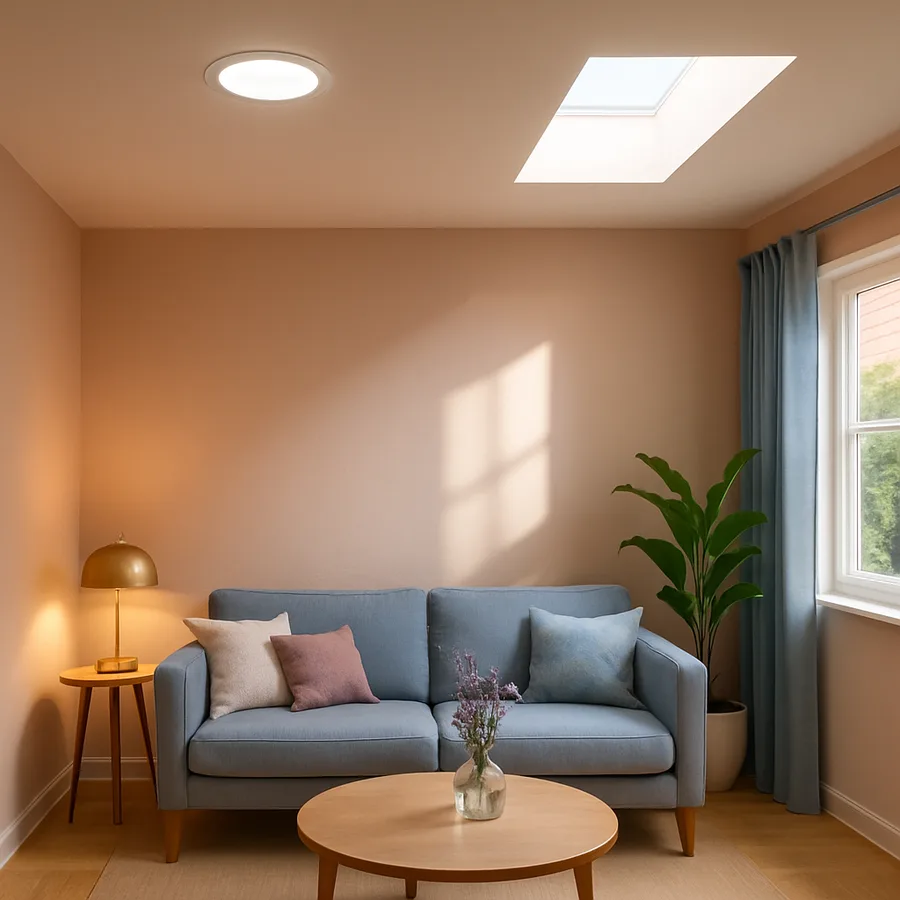
Walking into a sun-drenched room changes how a home feels in seconds. Bright daylight lifts moods, reveals colors honestly, and reduces the need for electric lighting during the day. For homeowners who want to bring more natural light into dim hallways, windowless bathrooms, walk-in closets, or interior kitchens, two daylighting technologies dominate the conversation: solar tube skylights and traditional skylights. Both deliver sunlight through the roof, but they differ dramatically in cost, brightness pattern, installation footprint, and energy performance. The right choice depends on the room you are lighting, the framing above it, and the climate where you live.
This guide breaks down the practical differences between the two systems so you can make a confident decision. We will look at how much light each option actually delivers, the installation realities most contractors will not mention upfront, the energy gains and losses, and the long-term maintenance picture. Have you ever wondered why some skylit rooms feel sticky in summer and freezing in winter while others feel perfectly balanced? Or whether a smaller solar tube can really replace a traditional 2x4 skylight unit in terms of usable brightness? Read on to find clear, evidence-based answers.
How Solar Tubes Deliver Light Compared to Standard Skylights
A solar tube, also called a tubular daylighting device or TDD, captures sunlight at the roof through a small clear acrylic dome, channels it down a highly polished reflective tube, and releases it through a flush diffuser mounted in the ceiling. The reflective tube interior typically achieves 98 to 99.7 percent specular reflectance, which means very little light is lost on the journey from roof to room. Most residential solar tubes measure 10 inches or 14 inches in diameter, and they can navigate around rafters, ductwork, and electrical runs using flexible or angled extension pieces.
A standard skylight is essentially a window installed in a sloped or flat roof. Light passes through a single rectangular or square glazing unit and enters the room through a built-out shaft or directly through the ceiling plane. Sizes commonly range from a compact 14 by 22 inch unit up to expansive 4 by 6 foot fixed assemblies. Because the glazing area is much larger, traditional skylights deliver a strong, directional beam of light along with a meaningful view of sky, clouds, and tree canopy.
The U.S. Department of Energy notes that well-designed daylighting can replace artificial lighting during much of the day, and skylights typically provide three to ten times the daylight of a vertical window of the same size. According to DOE energy efficiency guidance, both technologies can dramatically cut daytime lighting needs, but they distribute that light very differently. Solar tubes deliver a soft, diffused glow that spreads evenly across a room. Standard skylights deliver a stronger, more focused shaft of light that moves and shifts as the sun travels. For ambient daytime brightness, both work. For drama, color play, and a connection to the sky, only a traditional skylight delivers.
Lumen Output and Real-World Brightness Differences
Marketing claims around solar tubes often suggest a 10-inch unit equals roughly the brightness of three 100-watt incandescent bulbs, while a 14-inch unit approaches the output of five. In real-world residential use, a 10-inch tube typically delivers between 1,000 and 1,500 lumens at peak midday under clear skies, dropping to 200 to 400 lumens under heavy overcast. A 14-inch tube can push 2,500 to 3,000 lumens in full sun. Those numbers are highly conservative compared to a traditional skylight: a 2 by 4 foot fixed unit can deliver more than 8,000 lumens of usable indoor brightness on a sunny day, often more than enough to fully illuminate a 200 square foot room.
That gap matters less than you might think for many homeowners, however. Lumens alone do not describe how a space feels. Solar tubes excel at even ambient lighting, particularly in small spaces where a rectangular skylight would create harsh hot spots and deep contrast. A 10-inch tube above a 5 by 7 foot bathroom delivers a daylit feel that is visually nearly indistinguishable from a much larger skylight, because the room is small enough for the diffused light to fill it completely. In contrast, dropping the same tube into an open-plan living room would feel like a faint glow against the surrounding daylight from windows.
Consider room volume, ceiling height, and surface reflectivity when choosing. White or light-colored walls and ceilings can boost perceived brightness by 20 to 30 percent, allowing a smaller tube or skylight to perform like a larger one. Dark wood paneling, painted ceilings, and tall vaulted volumes absorb light and force you up to a bigger unit. Ask yourself: what is the smallest unit that will visibly transform this space, and is the upgrade to a larger system worth the structural and budget commitment?
Installation Realities and Roof Framing Considerations
Installation is where the two systems diverge most sharply. A standard skylight requires cutting and reframing a hole in the roof and ceiling that is typically 21 to 48 inches wide. That work involves trimming roof rafters, installing structural headers, building a light shaft if the attic is deep, and finishing the shaft with drywall, paint, and trim. A reputable installer will follow the framing requirements outlined in the International Residential Code for headers, blocking, and load transfer. Total installation typically takes one to two days and costs between $1,500 and $3,500 for the unit plus labor in most U.S. markets, with high-end venting and electric units pushing past $5,000.
A solar tube, by comparison, requires only a 10 or 14 inch round hole through the roof and ceiling. No rafter cutting is needed in most cases, because standard rafter spacing of 16 or 24 inches on center allows the tube to slip between framing members. Installation is usually complete in two to four hours by a single experienced installer. Total cost ranges from $500 to $1,500 for a typical 10-inch unit installed, making solar tubes one of the most affordable daylighting upgrades a homeowner can make.
The framing advantage matters even more in homes with engineered roof trusses. The National Association of Home Builders highlights that cutting through trusses to install a traditional skylight requires a structural engineer's review and reinforcement plan, a process that adds cost and delay. A solar tube usually slides between truss webs without any structural modification at all, making it the practical choice in modern truss-framed homes. Resources from the National Association of Home Builders reinforce that routing flexibility is one of the biggest practical wins for tubular daylighting.
Energy Performance and Heat Gain
Traditional skylights have historically been notorious for energy loss. A poorly insulated unit acts as a thermal hole in the roof, allowing heat to escape in winter and solar gain to bake the room in summer. Modern double-glazed and triple-glazed skylights with low-E coatings, argon fill, and warm-edge spacers have closed much of that gap, but a typical residential skylight still has a U-factor between 0.30 and 0.50, compared with around 0.20 for a high-performance roof assembly.
Solar tubes generally outperform standard skylights on insulation, particularly in heating-dominated climates. The reflective tube provides a measure of thermal break, and the small dome footprint means far less surface area for heat exchange. Many ENERGY STAR certified solar tubes achieve U-factors near 0.30 with solar heat gain coefficients around 0.20 to 0.40. The ENERGY STAR program publishes climate-zone specific recommendations for both skylight and tubular daylighting devices, and homeowners should verify ratings before purchase.
One frequently overlooked detail: condensation. A skylight or solar tube is the coldest surface in a room during winter, and humid air will condense on it first. Bathrooms, kitchens, and laundry rooms benefit from units rated specifically for high-humidity environments, with thermal breaks built into the frame. Have you experienced unexplained drips around an existing skylight on cold mornings? That is almost always interior condensation, not a leak, and it points to either an undersized unit, missing thermal break, or an indoor humidity level that needs ventilation help.
Light Quality, Glare Control, and Daily Use
The visual character of light is where personal preference matters most. Solar tubes produce remarkably even, diffused daylight with minimal glare. The diffuser acts much like a frosted lens, scattering rays across the ceiling and walls. There are no harsh shadows, no moving sun patterns crossing the floor, and no need for shades or blinds. Solar tubes are the daylighting answer for spaces where you want bright, neutral working light without distraction: home offices, walk-in closets, hallways, pantries, laundry rooms, and small bathrooms.
Standard skylights deliver something fundamentally different: a connection to the sky. You see passing clouds, changes in weather, the warm tone of late afternoon light, and the cool blue of a clear morning. The trade-off is glare and heat. Without proper shading, a south or west-facing skylight can throw uncomfortable hot spots onto floors and furniture and fade fabrics over time. Many manufacturers now offer integrated motorized shades, electrochromic glazing that tints automatically, or remote-controlled blinds that solve the glare issue elegantly but add cost.
For dramatic spaces such as great rooms, stair halls, primary suites, and dining areas, the experiential value of a real skylight is worth the trade-offs. For service spaces, transitional areas, and small windowless rooms, solar tubes provide better daily comfort with simpler installation. Many architects and interior designers now combine the two: a single dramatic skylight in a featured room, plus solar tubes in three or four supporting spaces.
Long-Term Maintenance and Lifespan
Both technologies are designed for long service lives, but maintenance demands and failure modes differ. A quality solar tube with a sealed acrylic dome and gasketed flashing should last 20 to 25 years before any meaningful service is needed. The most common issue is dome yellowing or hairline cracking from UV exposure, an inexpensive replacement part. Some homeowners report minor dust accumulation inside the tube over a decade, which can be cleaned with a long-handled microfiber tool through the diffuser.
Standard skylights have more moving parts and sealed glazing units that can fail. The most common problems include seal failure between glass panes (leading to interior fogging), gasket deterioration, flashing leaks, and motor failures in venting models. The American Institute of Architects notes that flashing detail is the single biggest predictor of skylight longevity in residential roofs. A quality skylight unit with proper step-flashing and counter-flashing can last 25 to 30 years; a poorly flashed installation may leak within five. Guidance from the American Institute of Architects and ASHRAE both reinforce that installation quality often outweighs product quality in long-term performance.
Whichever system you choose, plan for a roof inspection every two to three years that specifically examines the daylighting unit, its flashing, and the sealant around the perimeter. A small investment in preventive maintenance is the difference between a 25-year asset and a five-year liability. Ready to explore daylighting for your own home? Contact a licensed daylighting installer for a roof assessment and an in-home demonstration before committing to either technology.
Conclusion
Choosing between solar tube skylights and standard skylights is not really a question of which is better in absolute terms. It is a question of which technology suits the room, the framing above it, and the experience you want. Solar tubes win on cost, installation simplicity, energy performance in cold climates, even ambient brightness, and compatibility with truss-framed roofs. They are the obvious answer for small spaces, transitional areas, and any room where you want bright daylight without glare, fading, or heat gain.
Standard skylights win on raw light volume, sky views, architectural drama, and the emotional pull of watching weather move overhead. They are the right call for vaulted great rooms, sculptural stair halls, primary bathrooms, and any space where the skylight itself becomes a design feature. The cost and complexity are higher, but so is the impact when the design and installation are executed well.
For most homes, the smartest approach is a hybrid: one or two carefully placed standard skylights in featured spaces, complemented by solar tubes in hallways, closets, laundry rooms, and interior bathrooms. That combination delivers the architectural punch of traditional skylights along with the practical brightness and energy efficiency of tubular daylighting, all at a more reasonable total budget than fitting traditional skylights everywhere. Before making any decisions, schedule a daylighting consultation with a licensed contractor or daylighting specialist who can assess your roof framing, attic depth, climate zone, and room-by-room goals.
Whichever path you choose, the long-term reward is a home that feels brighter, lighter, and more alive every single day. Daylight is one of the few interior upgrades that compounds in value over time: every season, every clear morning, every soft overcast afternoon, your daylit rooms will give back what you invested. Start by walking each room and asking where natural light is missing today, and you will quickly see where solar tubes belong, where a standard skylight will transform the space, and where the right combination of both will make your home feel newly opened to the sky.
More Articles You May Like



Comments
Post a Comment